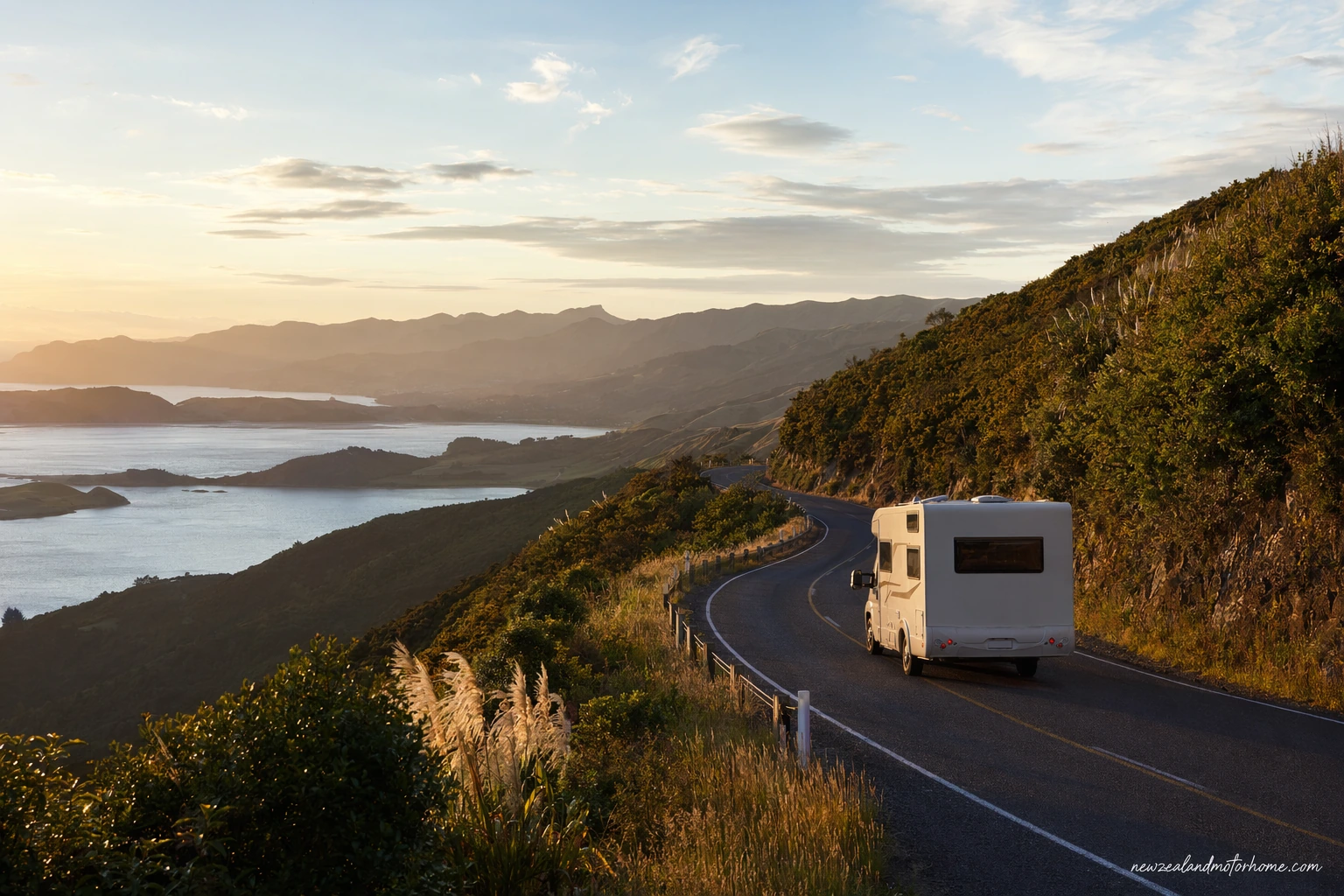
- Allow 5–7 days
- Includes Cook Strait ferry
- Best with booked powered stops
- Certified self-contained for freedom camping
- Main highways suit most vans
The Dunedin to Napier campervan route is a proper cross-island journey: Otago harbour light, wide Canterbury plains, a ferry crossing, then the sweep of the lower North Island up to Hawke’s Bay. It is not the shortest way to spend a few days in a van, but it is a satisfying point-to-point route if you like changing landscapes and unhurried overnights.
This guide is written for travellers driving and sleeping in their own hired campervan or motorhome. You will find sensible legs, places where it is easier to park the van, notes on powered and unpowered stops, dump stations, fresh water, LPG planning, road conditions, and where to slow down rather than push on tired.
How many days to allow for the Dunedin to Napier drive
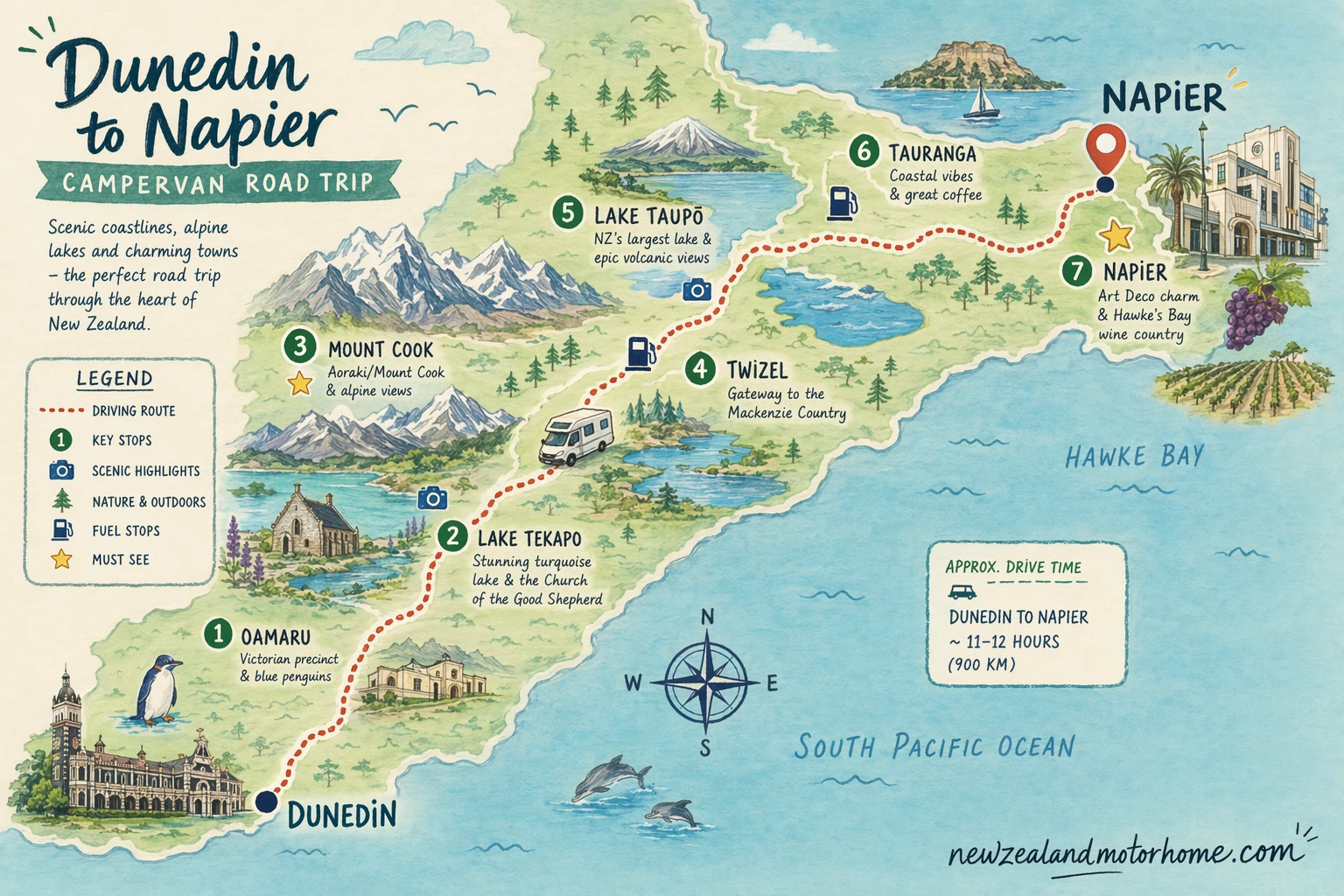
You can drive Dunedin to Napier in a few long days if every connection behaves, but that is rarely the best rhythm in a campervan. Between Dunedin and Picton you have several big South Island legs, then the Cook Strait ferry, then a North Island run that is slower than it looks once you add hills, towns, fuel stops and parking a larger vehicle.
For most self-drive motorhome travellers, allow five to seven days. Five days keeps the route moving; seven gives you time to sit out a rough ferry window, take a riverside night near Kaikōura or Blenheim, and arrive in Napier with the tanks emptied and the fridge restocked.
- Fast but workable: 4–5 days, with pre-booked overnight stops and ferry timing locked in.
- Comfortable: 6–7 days, better for a larger motorhome or first NZ van trip.
- Best pace: add an extra night around Kaikōura, Marlborough or Hawke’s Bay if you want walks, wineries or beach time.
If you would like help turning this into a dated itinerary with van-suitable overnights, use the soft planning step at /talk-to-us/ and tell us your van length, travel month and ferry preference.
Suggested campervan legs and overnight stops
A tidy Dunedin to Napier motorhome road trip usually breaks into six practical legs: Dunedin to Ōamaru or Timaru, Timaru to Christchurch, Christchurch to Kaikōura, Kaikōura to Picton, Wellington to Palmerston North or the Wairarapa edge, then on to Napier. This keeps most driving days manageable and leaves space for food shopping, dumping grey water, and arriving at camp before dark.
In Dunedin, start with a full fresh-water tank and empty waste if your hire depot or first holiday park allows it. Around Ōamaru, Timaru, Christchurch, Kaikōura, Blenheim/Picton, Wellington and Napier, use holiday parks or council-listed dump stations rather than assuming you will find one on the road shoulder. In busier summer weeks, book powered sites ahead in Kaikōura, Picton and Napier; unpowered sites are easier to find, but large vans still need a confirmed bay.
- Night 1: Ōamaru or Timaru — good if you want a gentle first day out of Dunedin and an easy powered-site reset.
- Night 2: Christchurch or north of the city — useful for supermarkets, LPG bottle swap points and vehicle supplies.
- Night 3: Kaikōura — coastal camping, but book early and check access if your motorhome is long.
- Night 4: Picton or Blenheim — sensible before an early ferry or if you want to avoid arriving rushed.
- Night 5: Wellington, Kāpiti, Wairarapa or Manawatū — choose based on ferry arrival time and weather.
- Night 6: Napier/Hastings area — arrive with enough daylight to park, plug in and sort dinner.
Road notes for vans: Dunedin to Picton
From Dunedin, most travellers follow State Highway 1 north. The road out of the city is straightforward, but give yourself room on the hills and keep an eye on wind around the coast and open farmland. A tall campervan feels crosswinds more than a car, especially when passing trucks or crossing exposed bridges.
North of Christchurch, the drive to Kaikōura is one of the scenic highlights of the route, with the sea close on one side and steep country on the other. It is also a road where patience matters: there can be road works, slower trucks, rail-side curves and limited safe pull-offs for a long vehicle. Use marked rest areas and proper lay-bys, not narrow shoulders, when you stop for photos.
From Kaikōura to Picton, the route opens into Marlborough. If your campervan is high or long, avoid wandering onto small coastal side roads unless you have checked turning space and bridge limits. Picton has ferry traffic and compact streets, so plan your fuel, water and supermarket stop before you are boxed in near sailing time.
Ferry crossing with a campervan
The Cook Strait ferry is the hinge of the route. Book the vehicle length and height accurately, including bike racks, tow bars or roof gear supplied with the van. If you understate the dimensions, you may create problems at check-in, and changing sailings with a motorhome space is not always simple in peak periods.
Before boarding, turn off gas at the bottle as instructed by the ferry operator and secure loose items inside the van. Fridge settings, LPG, pets, gas bottles and access to the vehicle deck are all handled according to the ferry company’s rules on the day, so follow the crew rather than relying on old advice.
- Before Picton: empty grey and black water where permitted, fill fresh water if needed, and arrive with fuel in the tank.
- At check-in: allow more time than you would in a car; queues of larger vehicles move differently.
- After Wellington: do not plan a long night drive straight off a late sailing. Book a nearby powered or unpowered site if arrival is late.
Wellington to Napier: choosing your North Island line
From Wellington, there are a couple of sensible van-friendly approaches to Napier. The common route heads north through Kāpiti and Manawatū, then across to Hawke’s Bay. Another option is to spend time through the Wairarapa before cutting back towards the east, but check road conditions carefully, especially after heavy rain, as slips and closures can affect regional roads.
The final approach into Hawke’s Bay can include hill country, open straights and busy town approaches. Keep your speed conservative on descents, use lower gears rather than sitting on the brakes, and let faster traffic pass where it is safe. In Napier itself, streets near the waterfront, cafés and Art Deco blocks can be tight for a motorhome, so park in larger marked areas and walk in rather than hunting for a kerbside space in the centre.
For the first Napier night, a powered site is often worth it after several days on the move. It gives you a clean reset: charge devices, run laundry, empty tanks at the facility if available, refill fresh water, and check whether you need LPG before continuing around Hawke’s Bay.
Freedom camping, self-containment and practical resets
Freedom camping rules vary by district, and this route crosses several councils. A certified self-contained vehicle is essential if you want to use designated freedom camping areas, but certification alone does not let you park anywhere. Always check local signs and current council maps before settling in for the night.
Because this is a long point-to-point journey, plan your service stops rather than waiting for warning lights. Dump stations are commonly found at many holiday parks, some service stations and council facilities, but access rules differ. Carry drinking water separately if you are unsure of a fill point, and never use non-potable taps for your fresh tank.
- Powered sites: best in cities, before/after the ferry, and after cold or wet driving days.
- Unpowered sites: fine if your house battery is healthy and you are moving daily.
- Freedom camping: use only legal, signposted places suitable for your vehicle size.
- LPG: check bottle levels before leaving larger centres; do not assume small towns can refill or swap your exact bottle.
- Waste: empty the toilet cassette before it is urgent, especially before ferry day or remote detours.
Keep planning
Common questions
How long is the Dunedin to Napier campervan route?
It is a long inter-island drive, including the Cook Strait ferry, so think in days rather than a single distance target. Most campervan travellers are happiest allowing five to seven days, depending on ferry timing, weather and how many overnight stops they want.
Is the Dunedin to Napier drive suitable for a large motorhome?
Yes, if you stay mostly on main highways, book suitable campsites, and drive conservatively on hills and exposed coastal sections. Be cautious with small scenic detours, tight town parking, low branches and narrow pull-offs, especially with a longer or higher vehicle.
Should I book powered sites in advance?
Book powered sites ahead in Kaikōura, Picton, Wellington-area stops and Napier during summer, school holidays and long weekends. Unpowered sites can be more flexible, but a confirmed bay is still wise when you have a larger van or are arriving late.
Can I freedom camp on this route?
You can only freedom camp where local rules allow it, and usually only in a certified self-contained campervan or motorhome. Check current council signage and apps before stopping, as rules can change between Dunedin, Canterbury, Marlborough, Wellington, Manawatū and Hawke’s Bay.
Where should I empty waste and fill fresh water?
Use recognised dump stations at holiday parks, council facilities or approved service points in the main towns along the route. A good rhythm is to reset tanks around Christchurch, Picton or Blenheim, Wellington, and again on arrival in Napier.
Do I need to do anything special for the ferry in a campervan?
Book the correct vehicle length and height, arrive early, secure loose gear and follow the ferry operator’s instructions for LPG and vehicle-deck access. If your sailing arrives late into Wellington, it is better to have a nearby overnight stop booked than to start a tired drive north.
Have a planner shape this for your dates
Send a short outline — your dates, party size, and the kind of trip you want. A planner replies with a vehicle recommendation, a paced route, and the realistic budget.