Dunedin to New Plymouth campervan route: ferry, stops and roads
- Allow 7–10 days comfortably
- About 1,100 km plus ferry
- Certified self-contained needed for freedom camping
- Book ferry with full van dimensions
- Powered sites wise in Picton and New Plymouth
A dunedin to new plymouth campervan trip is a proper cross-country run: Otago harbour roads, the Canterbury plains, the Kaikōura coast, Cook Strait, then the long westward sweep through Whanganui and Taranaki. It is not a route to rush unless you enjoy spending your holiday staring at the windscreen from the driver’s seat.
This guide is written for travellers driving and sleeping in their own hired campervan or motorhome. You will find a practical leg-by-leg plan, where to break the drive, what to think about for powered and unpowered nights, and the ferry, dump station, LPG and road details that matter when the van is your home.
How many days to allow for the route
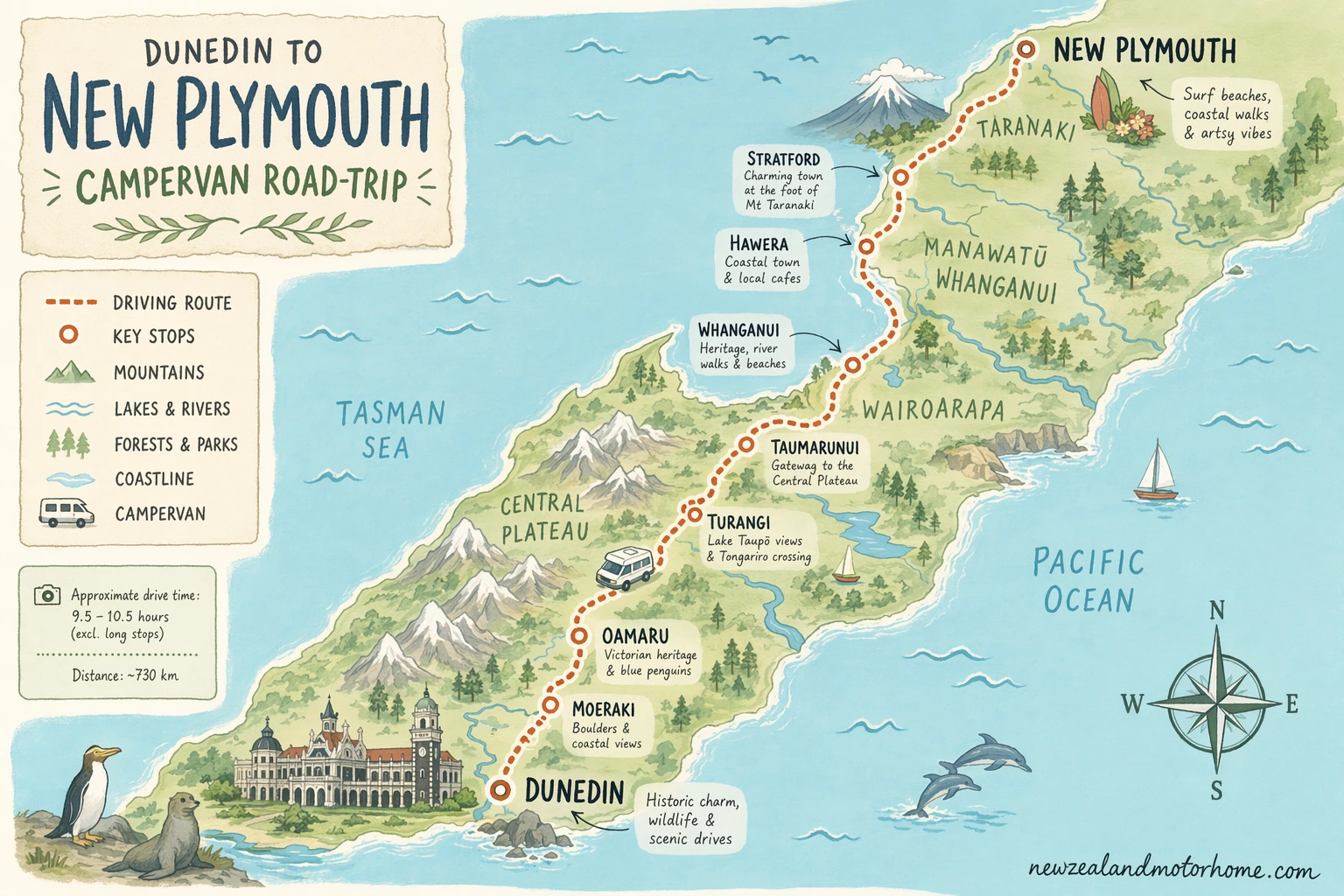
The most direct dunedin to new plymouth drive is around 1,100 kilometres of road driving, plus the Cook Strait ferry. In a small campervan you could cover it in four or five long travel days, but that leaves very little time for weather, ferry delays, supermarket stops, dump stations or simply pulling over for a walk.
For a relaxed dunedin to new plymouth motorhome road trip, allow seven to ten days. That gives you room to sleep beside the Waitaki coast, pause in Kaikōura, board the ferry without stress, and take the slower Taranaki coastal approach if the forecast is kind.
- Fast transit: 4–5 days, mostly driving, best for experienced van travellers.
- Comfortable pace: 7–10 days, with shorter legs and proper overnight stops.
- Best with detours: 10–14 days if you want Banks Peninsula, Marlborough or Surf Highway 45.
If you would like the daily distances tuned to your van size, ferry time and preferred campsite style, use the plan-your-trip step before you lock in overnights.
Leg 1: Dunedin to North Otago or South Canterbury
Leaving Dunedin, SH1 climbs and rolls north through Waikouaiti, Palmerston and the Waitaki district. This is straightforward sealed highway for campervans, but the first hour has bends, exposed ridges and truck traffic, so do not plan a dawn getaway after a late van pick-up.
Oamaru is a useful first stop if you want a gentle start. Look for legal town parking for the van before walking the Victorian precinct or the harbour area; do not squeeze a long motorhome into small central angle parks. Further north, Timaru gives you a bigger service stop with supermarkets, fuel, LPG bottle swaps and holiday park options.
- Overnight style: powered holiday park sites in Oamaru or Timaru are easiest for the first night.
- Unpowered: suitable if your batteries are full and the weather is mild.
- Freedom camping: only use signed or council-listed areas, and only if your vehicle is certified self-contained.
- Van chores: top up fresh water and use a dump station before pushing into the longer Canterbury leg.
Leg 2: Canterbury to Kaikōura, Blenheim or Picton
The Canterbury section is open and generally van-friendly, but it can feel tiring in crosswinds. Christchurch is the main place to restock properly: groceries, LPG, spare hoses, tyre checks and powered sites are easier to sort here than in smaller coastal towns.
North of Christchurch, the road to Kaikōura becomes more interesting and less forgiving. The coast road has rail crossings, tighter bends, seal pull-offs that can fill quickly, and sections where a high-sided motorhome feels the wind. Use slow vehicle bays and give yourself time; this is not a leg for racing the ferry clock.
- Good overnight breaks: Christchurch, Rangiora/Woodend, Kaikōura, Blenheim or Picton.
- Parking note: in Kaikōura, choose marked larger-vehicle parking and avoid blocking waterfront access.
- Dump and water: holiday parks and council facilities are available through the main towns; confirm access on the day.
- Ferry buffer: sleep in Picton or nearby if you have a morning sailing.
Picton is the easiest place to reset before crossing Cook Strait. Arrive with your grey water emptied, toilet cassette sorted and gas bottles secure, because ferry queues are not the place to reorganise the back of the van.
Cook Strait ferry with a campervan or motorhome
The ferry is the hinge of this route. When booking, enter the full length of your campervan or motorhome, including bike racks, tow bars or rear storage boxes, and check the height if you are in a larger vehicle. Turning up with the wrong dimensions can cause delays or changes at check-in.
Before boarding, switch LPG off at the bottle, secure loose gear, and keep your overnight bag, medication, chargers and warm layers with you. You normally cannot return to the vehicle deck during the crossing, so treat the van like checked luggage until you reach Wellington.
- Allow time: arrive early enough for vehicle check-in, especially in summer and school holidays.
- Weather: Cook Strait can be rough; keep breakables low in cupboards.
- After arrival: do not plan a long night drive out of Wellington if your sailing lands late.
- Overnight option: book a powered site in the Wellington, Porirua or Kāpiti area if you want an easy reset.
Leg 3: Wellington to Whanganui and New Plymouth
From Wellington, most campervan travellers head north on SH1, then west via the lower North Island towards Whanganui before joining SH3 into Taranaki. The road is suitable for standard rental campervans and motorhomes, but it is busy around the capital and exposed in places through Kāpiti and the Manawatū.
Whanganui is a sensible overnight stop: it breaks the North Island drive, has river walks that are easy from central parking, and gives you another chance to empty tanks and refill fresh water. From there, SH3 runs through Hāwera and on to New Plymouth, with mountain views on clear days and plenty of rural driving.
- Direct finish: Whanganui to New Plymouth via SH3 is the simplest motorhome route.
- Scenic finish: Hāwera to Ōpunake and around Surf Highway 45 is slower, with coastal stops and narrower local roads.
- Services: plan LPG, fuel, dump station and supermarket stops in Whanganui, Hāwera or New Plymouth rather than relying on small settlements.
- New Plymouth arrival: book ahead for powered sites near the city or coast in peak periods.
In New Plymouth, be careful with seaside parking. Some beach and walkway car parks have height barriers, time limits or no-overnight rules, so read signs before leaving the van and use designated camping areas for the night.
Keep planning
Visiting larnach castle dunedin by campervan
Read onHoliday parks new plymouth
Read onHoliday parks dunedin
Read onCampervan supplies new plymouth
Read onCampervan supplies dunedin
Read onCampervan hire new plymouth
Read onCommon questions
Can I freedom camp the whole way from Dunedin to New Plymouth?
Is the route suitable for a large motorhome?
Where should I book powered sites?
Do I need to book the Cook Strait ferry in advance?
What is the best season for this campervan route?
Have a planner shape this for your dates
Send a short outline — your dates, party size, and the kind of trip you want. A planner replies with a vehicle recommendation, a paced route, and the realistic budget.