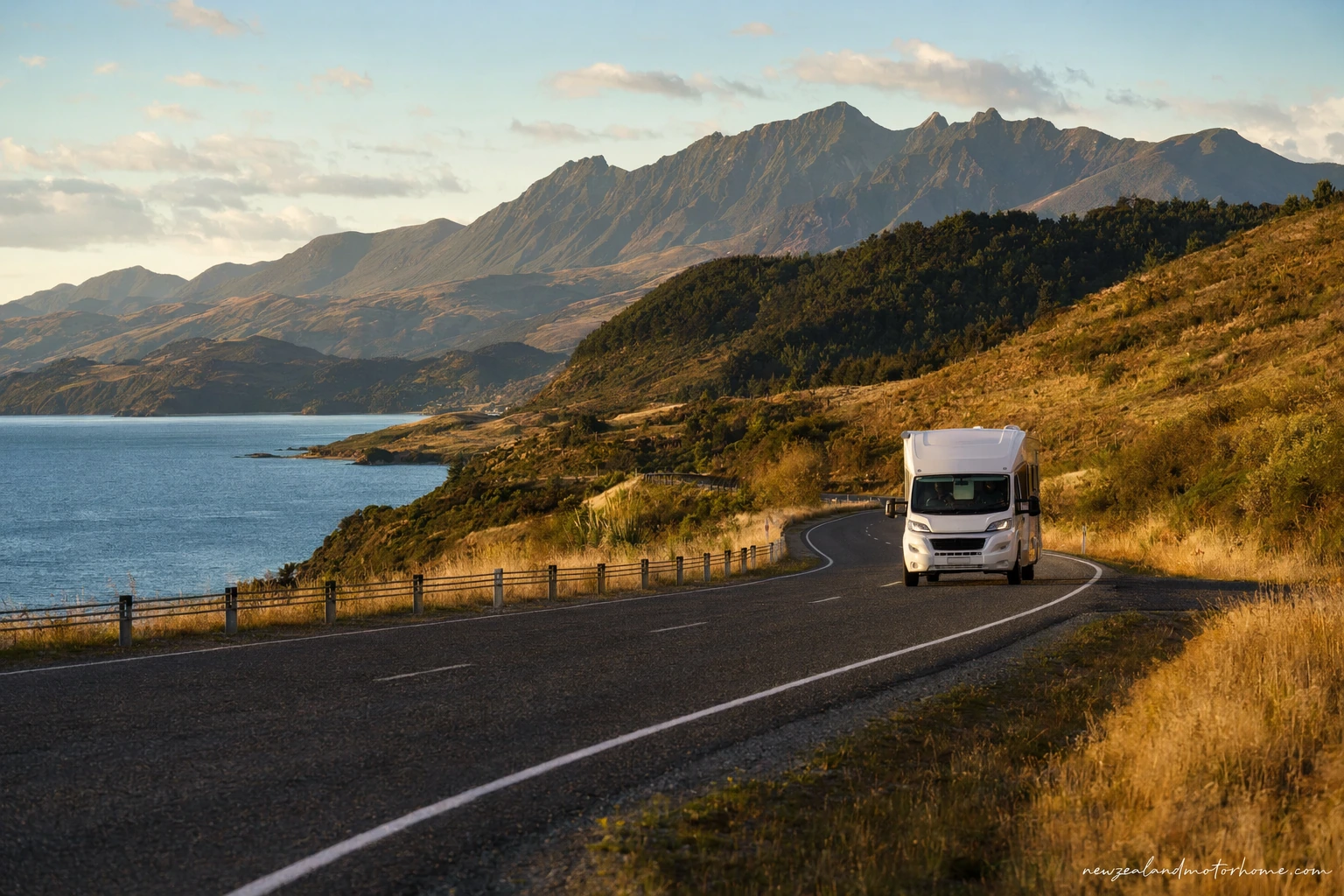
Dunedin to Picton campervan route: coast, plains and ferry timing
- Best pace: 3 days
- Main route: SH1
- Good for certified self-contained vans
- Book Picton before ferry
- Watch wind on Canterbury Plains
The dunedin to picton campervan route is one of those South Island drives where the overnight stops matter as much as the kilometres. You are moving from Otago harbour country through the Waitaki, Canterbury Plains, Kaikōura coast and Marlborough, with the Cook Strait ferry waiting at the top.
This guide is written for travellers driving and sleeping in their own hired van: where the road feels easy, where a longer motorhome needs patience, how to break the dunedin to picton drive into sensible legs, and where to think about powered sites, water, LPG, dump stations and freedom camping rules.
How many days to allow in a campervan
You can drive Dunedin to Picton in one long day on paper, but it is not a pleasant motorhome day, especially if you are catching a ferry or travelling with a taller van. A better pace is two to four days, depending on whether you want a quick relocation-style run or a proper dunedin to picton motorhome road trip with coast walks and unhurried overnight stops.
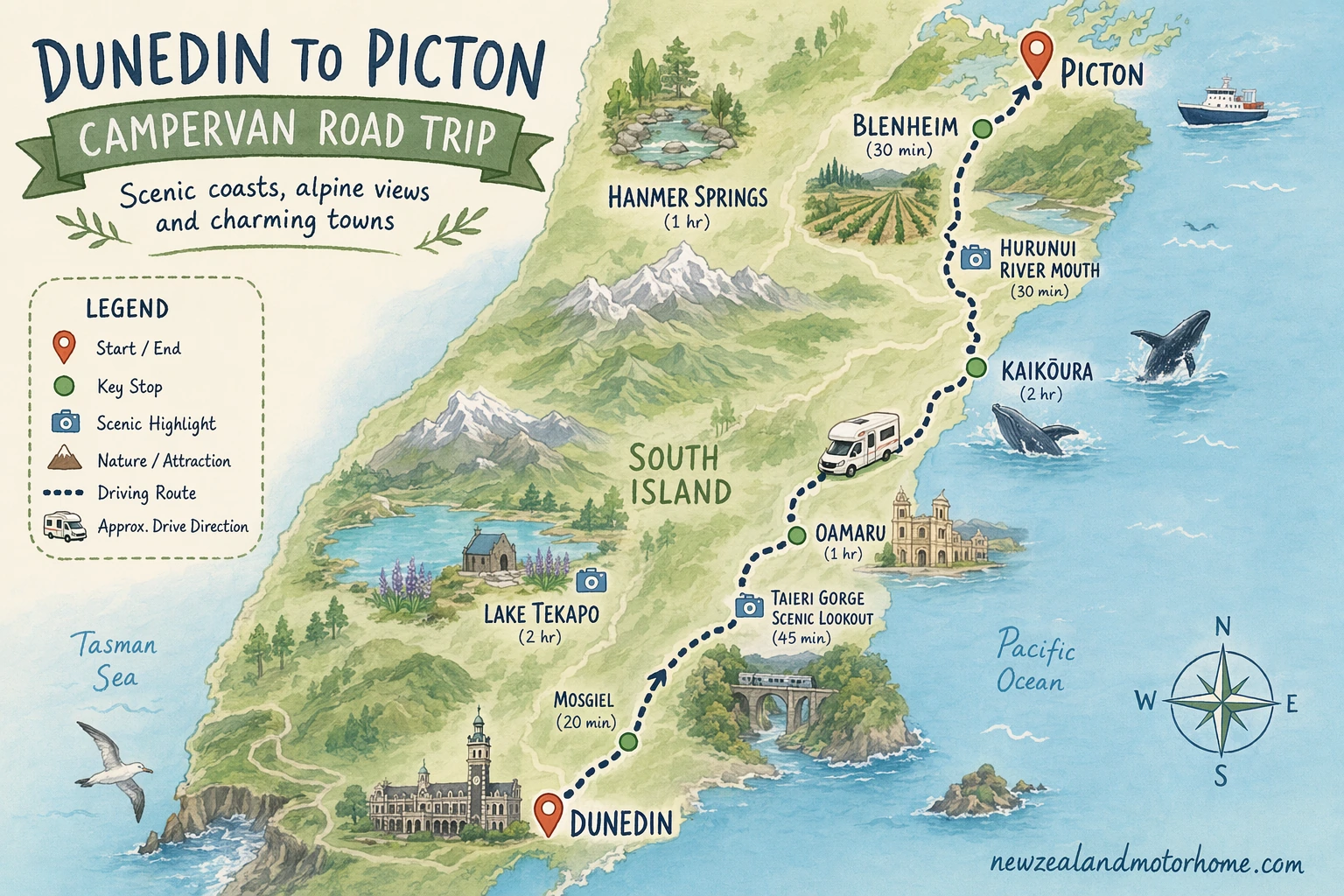
For most campervan travellers, three days is the sweet spot: Dunedin to Oamaru or Timaru, then Kaikōura, then Picton. That keeps driving blocks manageable and gives you time to empty the toilet cassette, refill fresh water, top up LPG if needed and arrive at the ferry without feeling squeezed.
- Fast but doable: 2 days, with a long middle section and little sightseeing.
- Comfortable: 3 days, using Oamaru/Timaru and Kaikōura as natural stops.
- Slow travel: 4–5 days, adding the Moeraki coast, Christchurch, Waipara or Blenheim.
- Ferry day rule: sleep within easy reach of Picton the night before if your sailing is early.
Leg 1: Dunedin to Oamaru or Timaru
Leaving Dunedin, State Highway 1 climbs out of the city and then settles into rolling Otago farmland. In a campervan, take your time through the northern suburbs and avoid rushing the hillier sections if the van is heavy or the weather is wet. The road is sealed and main-highway standard, but passing opportunities come and go, so let faster traffic by when safe.
Moeraki is the obvious coastal pause. The boulders car park is suitable for standard campervans, though longer motorhomes should park neatly and avoid blocking turning space. If you stop for a walk, keep valuables out of sight and remember you are still a large vehicle in a popular day-visitor area.
Oamaru makes an easy first night, with holiday park options for powered and unpowered sites and town services close by. Timaru is a longer first leg but works well if you want to shorten the next day. Before settling in, check whether your chosen campground has a dump station and fresh-water fill; if not, use a public dump station on the way through rather than leaving it until the morning rush.
Leg 2: Oamaru or Timaru to Christchurch, Waipara or Kaikōura
North of Timaru, the drive opens onto the Canterbury Plains. It is not the most dramatic part of the route, but it is good motorhome country: mostly straight, sealed, and easy to pace. Crosswinds can be tiring in a high-sided campervan, so keep both hands on the wheel and be prepared to slow down rather than sit on the speed limit.
Christchurch is useful if you need supplies, repairs, LPG bottle swap, groceries or a proper laundry night, but city driving in a large motorhome can be slower than the map suggests. If you are simply passing through, plan your fuel and supermarket stop on the edge of town where access and parking are easier.
For a quieter overnight, Waipara gives you a rural break before the coast, while Kaikōura is the more scenic choice if you are happy with the extra driving. Freedom camping rules vary by district and site, and usually require a certified self-contained vehicle, so check current local signage before assuming you can stay by the sea.
- Christchurch stop: best for supplies, dump station planning and van admin.
- Waipara stop: good if you want a shorter day before Kaikōura.
- Kaikōura stop: best scenery, but book powered sites early in busy periods.
Leg 3: Kaikōura coast to Blenheim and Picton
The Kaikōura to Picton section is the most memorable part of the route, with the highway squeezed between sea, rail line and hills in places. It is fully suitable for campervans and motorhomes, but it asks for steady driving: watch for roadworks, seals of loose chip after maintenance, cyclists, tight shoulders and tourists pulling into viewpoints.
Use proper pull-offs rather than stopping on the verge for photos. Some coastal parking areas are fine for a campervan, but longer motorhomes may need to skip smaller bays if turning space is limited. North of Kaikōura, allow extra time for seal colony stops, short walks and traffic delays, especially after heavy rain or during holiday periods.
Blenheim is the practical final service town before Picton. It is a good place to fill fresh water where permitted, use a dump station, restock food and check ferry details. Picton itself has holiday parks and designated camping options, but it is a small ferry town, so do not rely on turning up late in peak season with a large van and needing a powered site.
Overnight stops, dump stations and freedom camping
The best overnight pattern is to alternate scenic stops with service stops. A powered site every second night is handy for charging devices, running a heater safely in cooler months and giving the house battery a proper top-up. Unpowered sites are fine if your battery and solar are coping, but the east coast can be cloudy and windy, so keep an eye on your power use.
Public dump stations are found in the main towns along this corridor, commonly near holiday parks, service areas or council facilities. Always confirm current access before you commit, as some are for guests only or have changed conditions. Do not leave cassette emptying until Picton ferry morning; queues and tight timing make that a poor plan.
Freedom camping between Dunedin and Picton is possible in places, but it is highly localised. You need a certified self-contained vehicle, you must follow council signage, and some attractive seaside areas are day-use only. If you want help matching your van, ferry time and preferred camping style, you can send your dates through the plan-your-trip step and we will shape the route around what is realistic.
Road notes for larger motorhomes and ferry timing
State Highway 1 is the simplest and most van-suitable line for this route. The main things to manage are fatigue, wind, urban traffic around Christchurch, and the coastal highway north of Kaikōura. If your motorhome is longer than you are used to driving, allow more room at fuel stops and avoid small beach access roads unless you can see a clear turning area.
Check your vehicle height before entering covered parking, fuel station canopies or tight town car parks. Most route stops have open-air parking, but older streets in Oamaru, central Christchurch and Picton can feel narrow in a wide van. Use supermarket-edge parking and walk in where needed.
For the ferry, arrive with the grey water dealt with, the toilet cassette empty, LPG secured as required by ferry instructions, and loose gear stowed inside the van. Picton’s ferry approach is straightforward, but traffic can queue, so give yourself a calm buffer rather than treating the final kilometres as spare time.
Keep planning
Common questions
Can I drive Dunedin to Picton in one day in a campervan?
Where should I stay overnight between Dunedin and Picton?
Is the Kaikōura coast road suitable for motorhomes?
Should I stay in Picton the night before the ferry?
Are there dump stations on the Dunedin to Picton drive?
Do I need to book campsites ahead?
Have a planner shape this for your dates
Send a short outline — your dates, party size, and the kind of trip you want. A planner replies with a vehicle recommendation, a paced route, and the realistic budget.