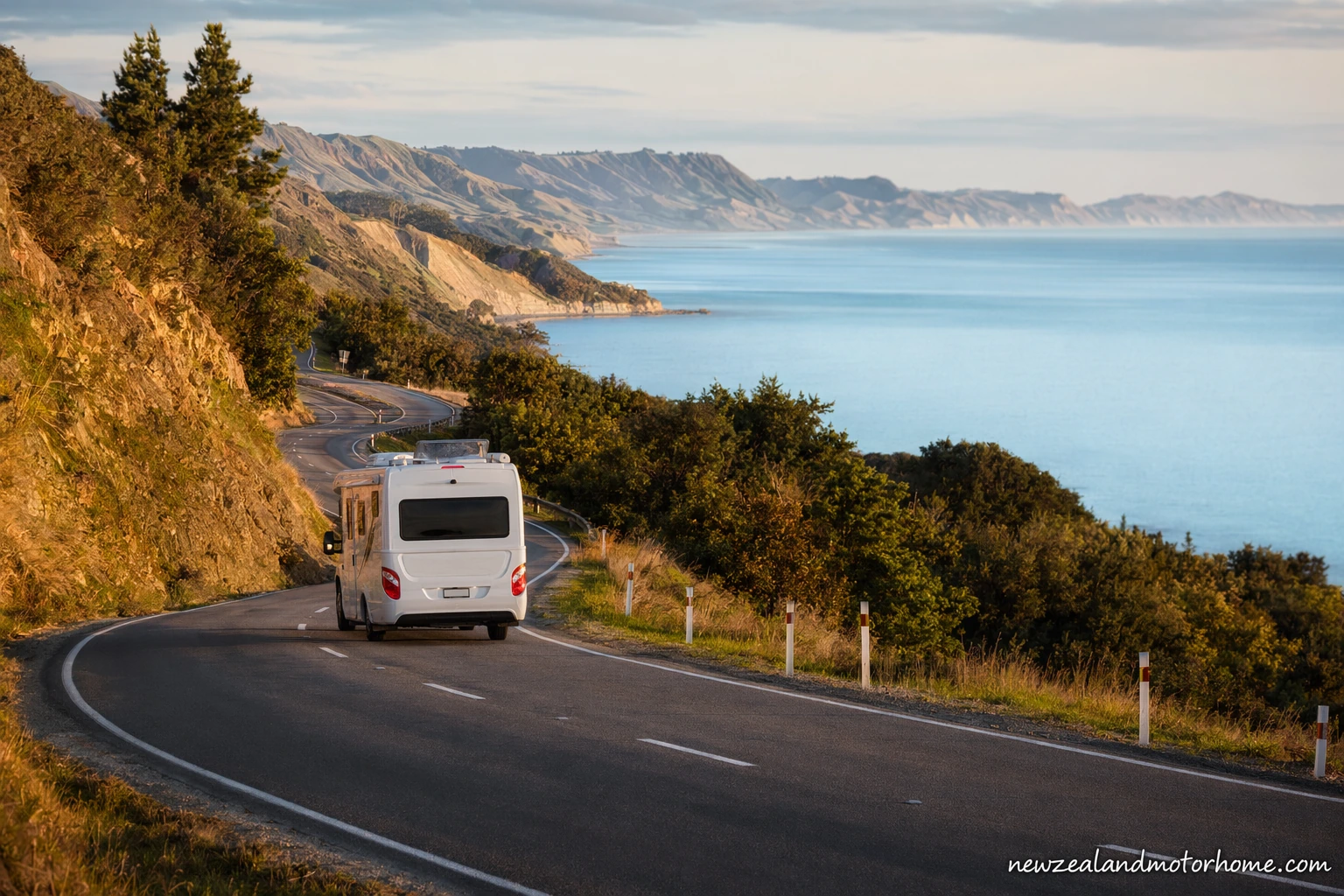
Hamilton to Gisborne campervan route via Rotorua and the Waioeka Gorge
- Best in settled weather
- Allow 2–3 days
- Powered sites in Rotorua and Gisborne
- Waioeka Gorge: winding SH2
- Service the van before Ōpōtiki
A Hamilton to Gisborne campervan trip is a proper North Island crossing: farmland out of the Waikato, geothermal steam around Rotorua, Bay of Plenty beaches, then the slow, green run through the Waioeka Gorge before you roll into Tairāwhiti. It is not a route to rush in a big van, especially if you want comfortable overnights and time for water, LPG, groceries and dump-station stops.
This guide is written for self-drive campervan and motorhome travellers, not people hopping between motels. You will find sensible driving legs, where to base the van overnight, what to expect from SH2 through the gorge, and how to arrive in Gisborne with fresh water, empty waste tanks and a plan for parking near the beach.
Route snapshot: how many days to allow
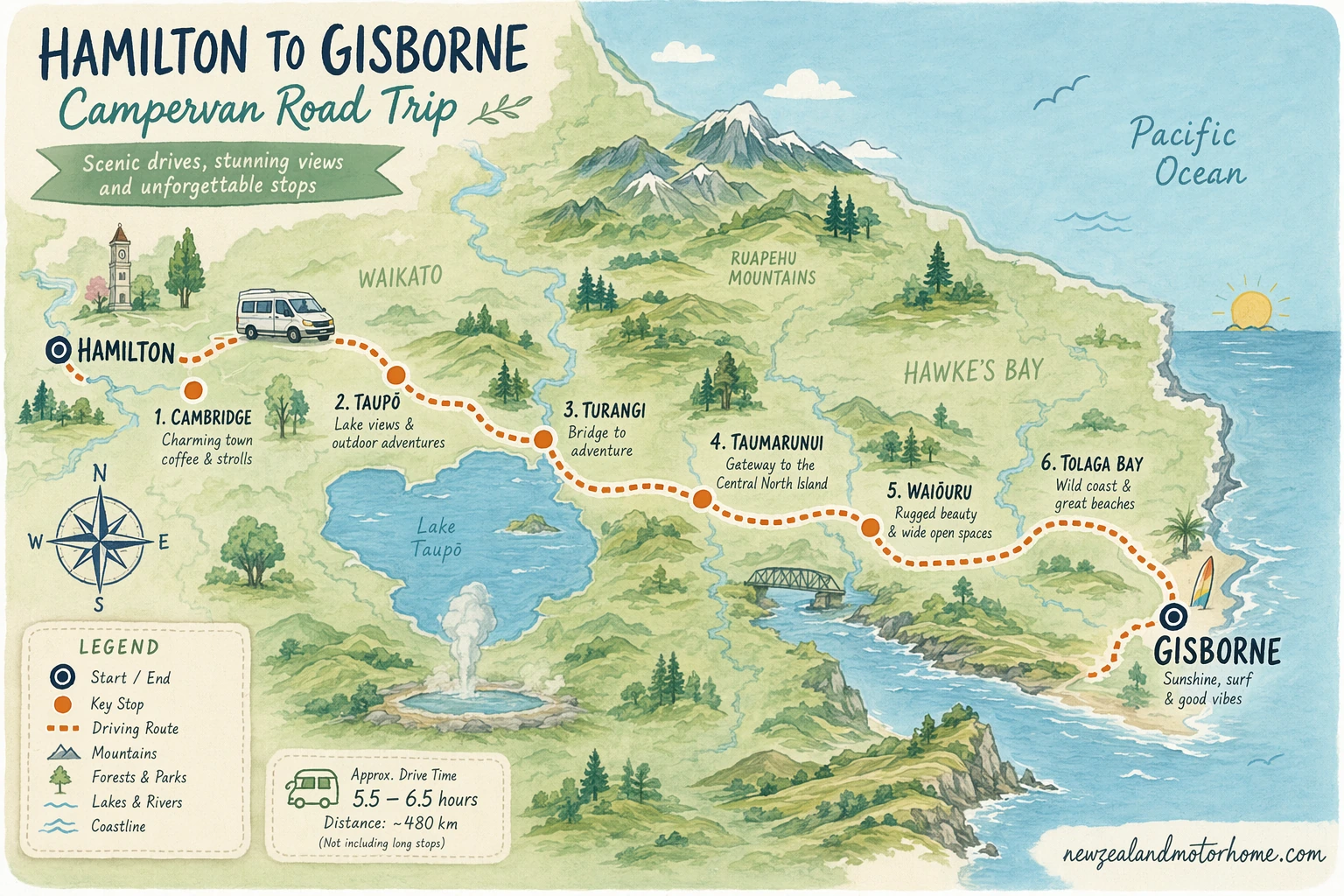
The direct Hamilton to Gisborne drive is usually treated as a long day by car, but in a campervan it is much kinder over two or three days. You are dealing with changing road widths, town traffic through Rotorua and Whakatāne/Ōpōtiki, and a long inland gorge where you will want your fuel and water sorted before you enter.
For most hired campervans, a relaxed Hamilton to Gisborne motorhome road trip works best as Hamilton to Rotorua, Rotorua to Ōpōtiki or Ōhope, then Ōpōtiki to Gisborne. If you are picking up late in the day or travelling with children, add another night around Rotorua or the Bay of Plenty coast.
- Fast but tiring: 1 long driving day, only if you are confident and the weather is settled.
- Comfortable: 2 nights, using Rotorua and Ōpōtiki/Ōhope as practical stops.
- Best for exploring: 3 to 4 nights, with time for hot pools, forest walks, beaches and Gisborne wineries or surf beaches.
- Van services: dump and refill before the Waioeka Gorge rather than leaving it to chance.
Leg 1: Hamilton to Rotorua, with an easy first night
Leave Hamilton with the van stocked and balanced: groceries packed low, fresh water topped up if you need it, LPG checked, and grey-water capacity in mind. The drive to Rotorua is straightforward for most campervans via Cambridge, Tirau and SH5, with rolling farmland and a few steeper sections where slower vehicles should use pull-over bays when safe.
Rotorua is the easiest first overnight because it has powered sites, dump stations, supermarkets, fuel and plenty of room to reset the van. Holiday parks around town and the lakes are the simplest choice if you want showers, laundry, kitchen space and a legal powered site. Day parking near the lakefront and forest areas can get busy; take the longer marked bays where available and avoid squeezing a high-roof van under trees or height-restricted car parks.
- Good for: first-night powered sites, fresh-water fills, dumping grey/black water and restocking.
- Watch for: geothermal areas where parking is popular and bays may be tight for longer motorhomes.
- Campervan tip: if you arrive after dark, book a powered site rather than hunting for freedom camping rules in an unfamiliar district.
Leg 2: Rotorua to the Bay of Plenty coast and Ōpōtiki
From Rotorua, you can angle towards the Bay of Plenty through lakeside and forestry country before linking towards Whakatāne, Ōhope and Ōpōtiki. This section gives you a useful pause before the more remote part of the Hamilton to Gisborne drive, and it is where many campervan travellers choose a beach night.
Ōhope is a good place if you want a coastal feel and a powered or unpowered holiday-park-style stop close to the sand. Ōpōtiki is more practical if your priority is an early start into the Waioeka Gorge, with fuel, food and van services easier to handle before you turn inland. Freedom camping rules vary between districts and can change seasonally, so only stay where signs allow it and only if your vehicle meets the self-containment requirements displayed for that site.
- Overnight style: powered coastal sites at Ōhope, simpler unpowered options in permitted areas, and practical town stops around Ōpōtiki.
- Before leaving: fill fuel, check LPG, top up fresh water and empty waste tanks.
- Parking note: beach car parks can have soft edges and low branches; walk the entry first if your motorhome is long or heavy.
Leg 3: Ōpōtiki to Gisborne through the Waioeka Gorge
The Ōpōtiki to Gisborne section on SH2 is the reason not to overload your day. The Waioeka Gorge is beautiful, shaded and winding, with river views, one-lane bridges in places, rock faces, and sections where slips or roadworks can slow traffic after heavy rain. It is suitable for campervans and motorhomes, but it asks for patience and steady speed rather than late braking.
There are bush-style stopping places through the gorge, but do not rely on them for full van services. Some basic conservation-style camps in the wider gorge area may suit self-contained vans looking for a quiet unpowered night, but access, length limits and availability should be checked before you commit. For a hired motorhome, many travellers find it simpler to leave Ōpōtiki serviced, drive the gorge in daylight, and overnight in Gisborne.
- Drive in daylight: shadows, corners and damp patches are easier to read.
- Use low gears: especially on descents, so you are not riding the brakes in a heavy van.
- Fuel planning: do not enter the gorge close to empty; services are limited compared with the coast.
- Length and height: keep left, swing wide only where safe, and watch mirrors on narrow bends and bridge approaches.
Arriving in Gisborne: where to park, sleep and service the van
Gisborne is a pleasant finish to the route because the town sits close to beaches, riverside paths and food supplies, but the best campervan stays still need planning. Holiday parks and formal campgrounds are the most reliable option for powered sites, fresh water, laundry and dump-station access, especially in summer when beachfront parking is busy.
For daytime exploring, look for marked larger bays near beach reserves and avoid blocking boat ramps, shared paths or resident access. Waikanae and Midway areas are popular for walking and swimming, so a long motorhome can be awkward at peak times. If you are freedom camping, read the current Gisborne/Tairāwhiti council signs carefully; self-containment certification, time limits and seasonal restrictions matter here.
- Best first stop: a formal campground if you need power, showers and a dump station after the gorge.
- Day parking: arrive early for beach areas and avoid soft grass after rain.
- Van reset: empty grey/black water, refill fresh water, then decide whether to linger on the coast or continue south/north.
Practical campervan planning for this route
This route rewards a tidy pre-drive routine. Before you leave Hamilton, make sure the fridge is latched, cupboards are secured, tyres look sound, and the gas bottle is not near empty if you plan to cook off-grid. The most useful service hubs are Hamilton, Rotorua, Whakatāne/Ōpōtiki and Gisborne; between those places, treat dump stations and potable water as planned stops rather than last-minute discoveries.
Weather is the main variable. Heavy rain can make the Waioeka Gorge slower, and summer holiday traffic can make Bay of Plenty beach towns tight for parking a larger van. If you would like the driving days matched to your van size, travel dates and comfort level, you can talk to us before you lock in your overnights.
- Self-containment: carry proof of certification and follow local signs for overnight stays.
- Dump stations: use official facilities only; never drain grey water roadside or in car parks.
- Water: fill with potable water where clearly marked, especially before bush or beach stops.
- Road courtesy: let faster traffic pass when safe; locals use these roads every day.
Common questions
Can I drive from Hamilton to Gisborne in one day in a campervan?
You can, but it is a long and tiring day in a high-roof vehicle. Two or three days is better, especially if you want to service the van properly and drive the Waioeka Gorge in daylight.
Is the Waioeka Gorge suitable for motorhomes?
Yes, SH2 through the Waioeka Gorge is used by campervans and motorhomes, but it is winding and can be narrow in places. Drive steadily, use pull-over areas when safe, and check road conditions after heavy rain.
Where should I overnight between Hamilton and Gisborne?
Rotorua is the easiest first overnight for powered sites and van services. For a second night, Ōhope or Ōpōtiki works well before the gorge, depending on whether you want a beach stop or a practical early start.
Can I freedom camp on the Hamilton to Gisborne route?
Only where local rules and signs allow it, and usually only in a certified self-contained vehicle. Rules differ between Waikato, Rotorua, Bay of Plenty and Gisborne/Tairāwhiti districts, so check each stop rather than assuming one rule applies all the way.
Where should I dump waste and refill water?
Use the larger service towns: Hamilton, Rotorua, Whakatāne/Ōpōtiki and Gisborne are the sensible hubs. Do not leave dumping or potable water until the Waioeka Gorge section, where full campervan services are limited.
What size campervan is best for this route?
A standard 2-berth or 4-berth campervan is straightforward if driven carefully. Larger motorhomes can still do the route, but allow more time for bends, parking, fuel stops and beach-town manoeuvring.
Have a planner shape this for your dates
Send a short outline — your dates, party size, and the kind of trip you want. A planner replies with a vehicle recommendation, a paced route, and the realistic budget.