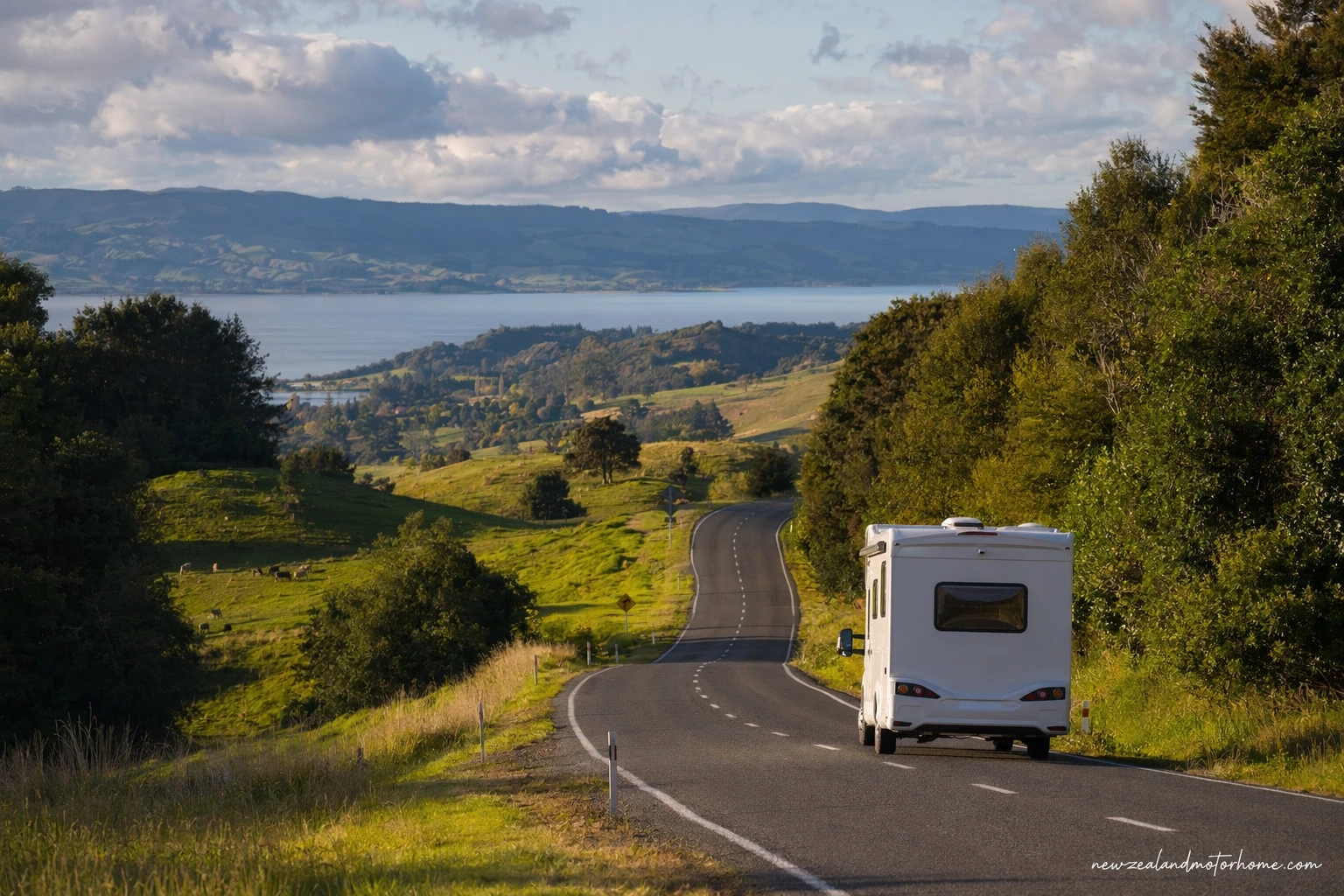
- Approx. 105 km via SH1 and SH5
- Allow 1.5-2 hours driving time
- Best as a 1-3 day campervan route
- Powered sites easiest in Rotorua
- Freedom camping by signed areas only
The Hamilton to Rotorua campervan route is a short North Island run with plenty of reasons not to rush it: gardens and river paths in Hamilton, Cambridge cafés, Lake Karāpiro, the Tirau turn-off, then the forested SH5 approach into Rotorua’s geothermal basin.
For a hired motorhome or campervan, the practical bits matter as much as the sightseeing. This guide covers the Hamilton to Rotorua drive in van-friendly legs, where to park without squeezing into tiny bays, what to expect on SH1 and SH5, and how to think about powered sites, dump stations, fresh water, LPG and freedom camping rules.
How long to allow for the Hamilton to Rotorua drive
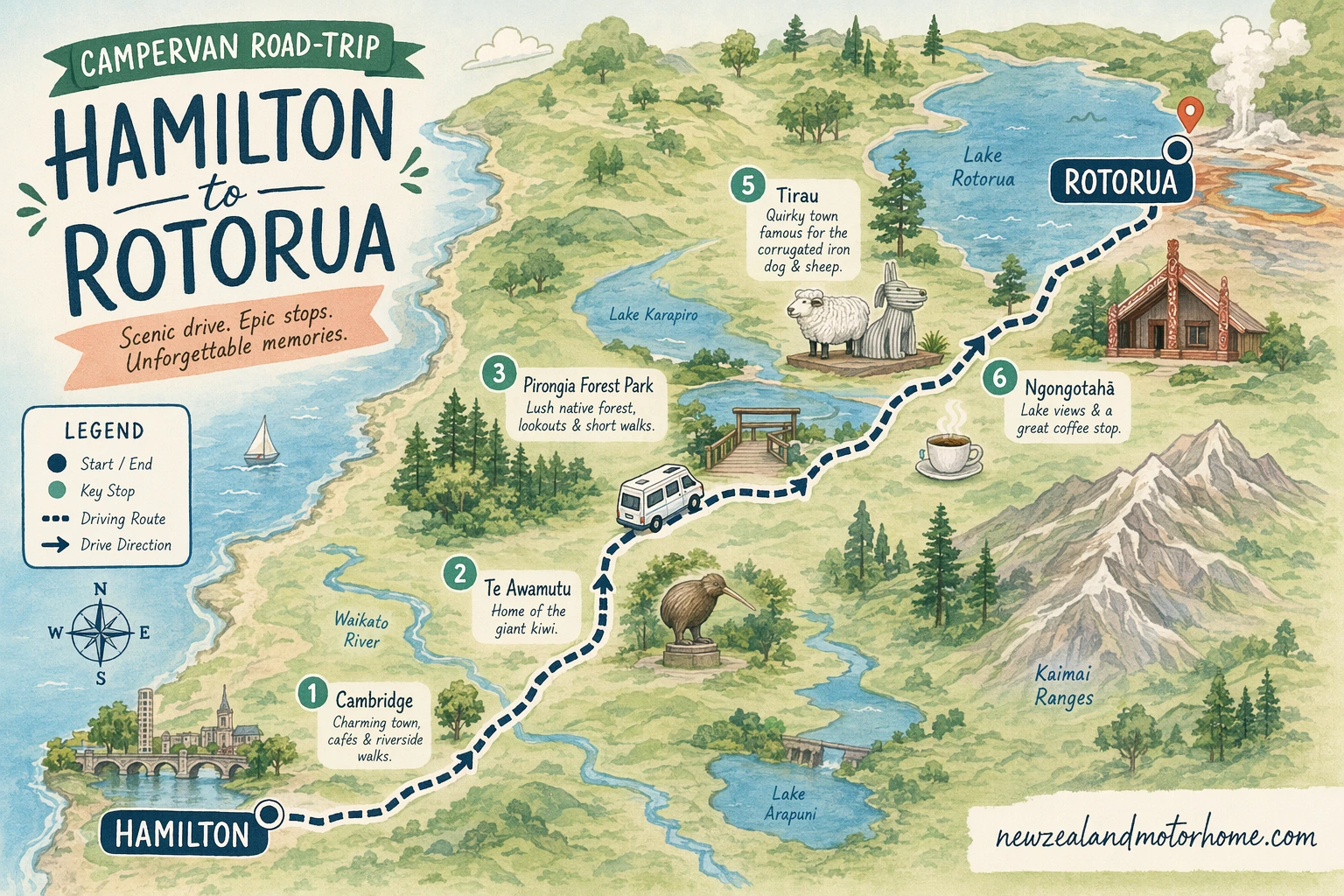
Without long stops, the Hamilton to Rotorua drive is usually around 105 kilometres and roughly 1 hour 30 minutes to 2 hours in a campervan, depending on traffic around Hamilton and how carefully you take the SH5 bends near Mamaku. In a motorhome, it is a better half-day drive than a quick dash.
If you have only one night, leave Hamilton after breakfast, stop at Cambridge or Lake Karāpiro, then roll into Rotorua with enough daylight to check into a site and plug into power. With two or three days, the Hamilton to Rotorua motorhome road trip becomes much easier: you can add a Waikato overnight, a slow scenic stop near Tirau or Putāruru, and still arrive in Rotorua without driving tired.
- Fast plan: Hamilton to Rotorua in one day, with one or two daylight stops.
- Comfortable plan: 2 days, overnighting around Cambridge, Karāpiro or Rotorua.
- Slow plan: 3 days, adding river walks, lake time, geothermal stops and a rest afternoon.
- Driving style: allow extra time for fuel, dump station visits, supermarket stops and slower van handling on SH5.
Route legs: Hamilton, Cambridge, Tirau and SH5
From central Hamilton, follow the signs south-east towards Cambridge and SH1. The expressway section is straightforward for campervans, with good lanes and service access, but keep your following distance generous; traffic can bunch around on-ramps and roundabouts.
Cambridge is the easiest first pause. Park the van in larger edge-of-town spaces rather than trying to squeeze into the tightest main-street bays, especially if you are in a 6-berth motorhome. It is a good place for groceries, coffee, a walk beside the river, and a quick check of LPG or fuel before you continue.
South of Cambridge, Lake Karāpiro makes a scenic break if you want fresh air and a leg stretch. From there, continue through the Waikato dairy country towards Tirau, then turn onto SH5 for Rotorua. SH5 is sealed and suitable for standard hire campervans, but it is more winding and forested than the expressway; use pull-offs where safe if faster traffic builds behind you.
- Hamilton to Cambridge: easy expressway driving, good for settling into the van.
- Cambridge to Tirau: open rural roads with fuel and food options in towns.
- Tirau to Rotorua on SH5: sealed, scenic, more bends, watch speed on descents.
- Weather note: fog, heavy rain and low winter sun can make this short route feel slower in a large van.
Where to stop and park the van along the way
Hamilton Gardens is a worthwhile start if you have not been before. Use the larger public parking areas and arrive early if you are travelling in peak season; longer motorhomes can be awkward if the car park is already full. This is a day stop, not an overnight spot, so plan your sleeping site separately.
Cambridge works well for a tidy mid-route reset. If you are towing bikes or driving a high-roof camper, avoid tight kerbside parks where the rear overhang sits into traffic. Lake Karāpiro is better for a picnic and view, but check signs carefully around reserves and boat ramps, as overnighting is not automatically allowed just because there is space.
Tirau is small but useful: fuel, food, public toilets and a quick look at the corrugated-iron buildings. If you detour towards Matamata for film-set tours or towards Te Waihou Blue Spring near Putāruru, check current access and parking rules before committing; some rural car parks are limited, and large motorhomes can struggle when day-visitor numbers are high.
- Good day stops: Hamilton Gardens, Cambridge, Lake Karāpiro, Tirau and Rotorua lakefront areas.
- Van parking tip: choose edge spaces where you can drive out forwards rather than reversing blind.
- No-assumption rule: picnic reserves, boat ramps and lakefront car parks are not automatically freedom camping areas.
- Arrive in daylight: Rotorua’s one-way streets and busy lakefront are easier before dark.
Overnight stops: powered sites, unpowered sites and freedom camping
For the easiest first night, use a holiday park or campground in Hamilton, Cambridge, around Lake Karāpiro or in Rotorua. Powered sites are helpful if you want to recharge house batteries fully, run the heater or use mains appliances. Unpowered sites suit self-contained vans with good battery management, especially outside winter.
Rotorua has several established campground and holiday park options around town and the lakes, and these are the simplest choice if you need showers, laundry, a dump station and fresh-water fill in one stop. If you are arriving late in a larger motorhome, book ahead where possible and ask for a site that suits your vehicle length rather than assuming every pitch is roomy.
Freedom camping rules vary by council area and are enforced. You need a certified self-contained vehicle and must follow local signs, time limits and exclusion zones. Around Rotorua’s lakes, do not treat a quiet lakeside pull-off as an overnight site unless it is clearly permitted.
- Powered site: best for first or final nights, cold weather, or when batteries need a proper top-up.
- Unpowered site: fine for efficient vans if you have enough water, gas and battery.
- Freedom camping: only in permitted areas, with current self-containment certification displayed.
- Best arrival habit: reach your overnight stop before dusk, level the van, then sort water, waste and dinner.
Dump stations, fresh water, LPG and road practicality
Hamilton and Rotorua are the best places to deal with van admin. Before leaving Hamilton, empty the cassette and grey-water tank if you are due, top up drinking water from a designated potable tap, and check LPG if your cooking, hot water or heating relies on it. Cambridge and Tirau have fuel options, but do not assume every stop can refill every gas bottle type.
In Rotorua, plan to use a proper dump station rather than waiting until you are near a lake. Many holiday parks have guest facilities for waste and fresh water, and public dump stations are signposted or listed through council and camping information sources. Never empty grey water into roadside drains, reserves or geothermal areas.
Road-wise, this route is friendly for most hire campervans, including larger motorhomes, but SH5 still deserves respect. Secure cupboards before the bends, keep the fridge latched, and watch for trucks, cyclists and tourist traffic near Rotorua. If your van is especially long, take extra care in small-town car parks and when turning into older campground entrances.
- Fresh water: fill from marked potable taps only, not lakes, streams or bathroom basins.
- Waste: use official dump stations for toilet cassette and grey water.
- LPG: check levels before leaving Hamilton if you are planning unpowered nights.
- Vehicle size: the main route suits normal hire campers, but longer vans need wider turning space in towns.
Rotorua arrival: where to base yourself with a campervan
Rotorua is compact, but a campervan base makes a difference. If you want to walk to cafés, the lakefront, Kuirau Park and Government Gardens, look for an in-town powered or unpowered site and leave the van parked while you explore. If you are here for mountain biking, forest walks or lake time, a site nearer the Redwoods or the eastern lakes may suit better.
Geothermal attractions, forest trails and lake reserves usually have day parking, but larger motorhomes should arrive early and park in marked long bays where provided. Sulphur steam can hang around low areas in still weather, so keep vents managed when parked near geothermal zones and do not leave food scraps outside the van.
If you want help turning this into a tidy day-by-day plan with overnight stops that match your van size and travel pace, use the talk-to-us step before you lock everything in. A little route planning avoids the classic mistake on this short drive: arriving in Rotorua with full waste tanks, flat batteries and no booked site on a busy weekend.
- Town base: best for walking, food, lakefront and geothermal city parks.
- Forest base: better for biking, walking and quieter evenings.
- Lake base: scenic, but check overnight rules closely and book legal sites.
- First Rotorua job: confirm your overnight, then handle water, waste and charging.
Keep planning
Visiting polynesian spa rotorua by campervan
Read onVisiting agrodome rotorua by campervan
Read onHoliday parks rotorua
Read onHoliday parks hamilton
Read onFarmers markets rotorua
Read onCampervan supplies rotorua
Read onCommon questions
Can I drive from Hamilton to Rotorua in one day in a campervan?
Yes. It is a short, sealed route and manageable in one day, but allow extra time for stops, fuel, dumping waste and slower driving on SH5. If you want a relaxed trip, make it a two-day campervan route with an overnight around Cambridge, Karāpiro or Rotorua.
Is the Hamilton to Rotorua route suitable for a large motorhome?
Yes, the main route via Cambridge, Tirau and SH5 is suitable for typical hire motorhomes. The road is sealed, but SH5 has bends and forest sections, so drive below the limit where needed and let faster vehicles pass safely.
Can I freedom camp between Hamilton and Rotorua?
Only where local bylaws and signs allow it, and only if your vehicle is certified self-contained. Do not assume lake reserves, boat ramps or quiet rural car parks are legal overnight spots. A holiday park or designated campground is the simplest option if you are unsure.
Where should I empty waste and fill fresh water on this route?
Hamilton and Rotorua are the easiest service points for dump stations, potable water and LPG planning. Many holiday parks provide these facilities for guests, and public dump stations should be checked through current council or camping information before you travel.
What is the best overnight stop for this campervan route?
If you want a short first day, Cambridge or Lake Karāpiro works well. If you prefer to get most of the driving done, go straight to Rotorua and choose a powered site so you can recharge batteries, fill water and settle in for geothermal and lake exploring.
Have a planner shape this for your dates
Send a short outline — your dates, party size, and the kind of trip you want. A planner replies with a vehicle recommendation, a paced route, and the realistic budget.