- 7–10 days recommended
- Approx. 1,250–1,350 km plus ferry
- Best for self-contained vans
- Book ferry by van size
- Powered nights before and after ferry
This Invercargill to New Plymouth campervan route is a proper two-island haul: Southland farmland, the Otago coast, Canterbury plains, the Kaikōura shoreline, a Cook Strait ferry crossing, then the west coast of the North Island into Taranaki. It is not a route to rush in a hired motorhome, especially once ferry check-in, weather, laundry, dump stations and slower van speeds are part of the day.
Below you will find a practical self-drive plan with sensible legs, overnight stop ideas, road notes for larger vehicles, and where to think about powered sites, fresh water, LPG and waste. If you want the ferry timing and campsites stitched around your van size and travel dates, you can also talk to us before you lock it in.
How long to allow for the route
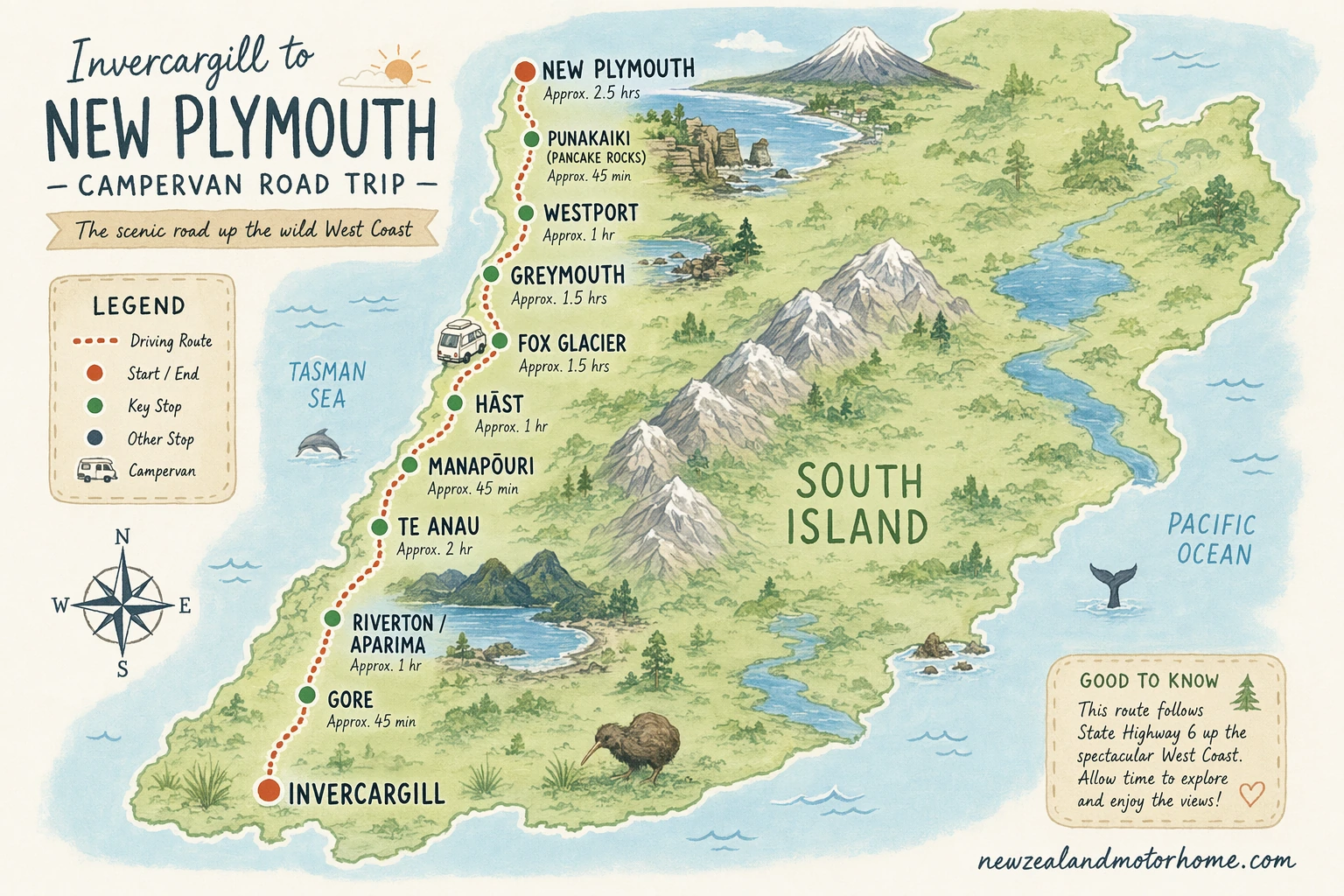
The Invercargill to New Plymouth drive is roughly 1,250–1,350 kilometres of road travel, plus the Cook Strait ferry between Picton and Wellington. In a campervan, the comfortable version is usually 7 to 10 days. You can do it faster, but it becomes a chain of fuel stops and late arrivals rather than a usable motorhome road trip.
A good rhythm is to avoid more than one very long driving day in a row. Build in one night before the ferry and one night after it, because wind, ferry delays and Wellington traffic can all chew up more time than expected.
- Minimum practical time: 5 to 6 days if you are mainly relocating the van.
- Better touring time: 7 to 10 days with Kaikōura, Whanganui and Taranaki stops.
- Easy pace: 12 days or more if you add the Catlins, Banks Peninsula or extra coastal nights.
- Van note: book the ferry with your exact length and height, including bike racks, roof boxes or rear storage.
Leg 1: Invercargill to Dunedin or Oamaru
From Invercargill, the straightforward motorhome route is SH1 through Gore, Balclutha and on to Dunedin, then north to Oamaru if you want a longer first leg. The road is generally van-friendly, with regular town stops for fuel, groceries and a leg stretch. Watch for strong crosswinds across open Southland and South Otago farmland, especially in a high-top campervan.
If you are tempted by the Catlins, treat it as a scenic detour rather than the main through-route. It is beautiful, but it adds time, tighter corners and some side roads that are not as relaxed in a larger motorhome. Fill fresh water and fuel before heading in, and do not leave your dump station stop until the end of a wet, windy day.
- Overnight options: powered holiday park sites in Dunedin, Portobello or Oamaru; unpowered sites suit mild weather if your house battery is healthy.
- Useful van tasks: dump and refill in Invercargill or Dunedin before continuing north.
- Parking tip: in Dunedin, avoid squeezing a long van into steep central streets; use larger waterfront, beach or holiday park parking where signed.
- Road note: allow slower speeds on hills south of Dunedin and keep left on passing lanes so faster traffic can clear safely.
Leg 2: Oamaru, Christchurch, Kaikōura and Picton
This is the South Island backbone of the invercargill to new plymouth motorhome road trip. Oamaru to Christchurch is mostly open SH1 driving, then the road north tightens and becomes more scenic as you approach the Kaikōura coast. In a motorhome, it is worth stopping before you feel tired; long straight roads can be just as draining as winding ones.
Kaikōura is a natural overnight break before Picton. The coastal section of SH1 has tunnels, sea walls, rail crossings and occasional works, so keep your speed modest and use pull-outs only where they are formed and safe for your vehicle length. Do not stop half-on the shoulder for photos; there are proper viewing areas and town car parks that suit vans much better.
- Good overnight pattern: Oamaru or Christchurch, then Kaikōura, then Picton or Blenheim before the ferry.
- Powered site value: useful before the ferry so you can charge devices, run laundry and chill the fridge properly.
- Dump and water: plan a service stop around Christchurch, Kaikōura, Blenheim or Picton using official council or campsite facilities.
- Large van caution: central Christchurch parking can be awkward; choose signed longer-vehicle spaces or park out and walk in.
Cook Strait ferry with a campervan
The ferry is the hinge of this route, and it needs to be planned like a driving leg rather than a scenic extra. When booking, enter the full motorhome length, height and any rear-mounted gear. Arrive with time to spare, because late ferry check-in with a hire campervan is stressful and not worth the few minutes saved.
Follow the ferry operator’s instructions for gas, alarms and vehicle access. In practice, expect LPG bottles to be turned off and no access to the vehicle deck during sailing, so pack any medication, warm layers, snacks and chargers into a day bag before you board. Secure loose items inside the van before check-in; Cook Strait can be lumpy even on a fine-looking day.
- Night before sailing: Picton or Blenheim is the easiest base if you have a morning ferry.
- Night after sailing: use an approved Wellington-area campsite or holiday park rather than trying to free-camp in the city.
- Before boarding: empty rubbish, check fridge settings, close roof vents and make sure cupboards latch.
- After arrival: take your time leaving Wellington; hills, wind and tight urban lanes are a sharp change after the ferry queue.
Leg 3: Wellington to Whanganui and New Plymouth
From Wellington, the most practical route for a campervan is north through the Kāpiti Coast and Levin, then on towards Whanganui before following SH3 through South Taranaki to New Plymouth. This section gives you a gentler re-entry after the ferry: beaches, river stops and open dairy country, with Mount Taranaki gradually taking over the horizon.
Whanganui makes a strong overnight stop because it breaks the North Island drive neatly and gives you proper services. If you want a coastal pause before New Plymouth, look around Hāwera, Ōpunake or other signed camping areas, but check local bylaws carefully. Freedom camping rules vary by district and are usually stricter near beaches, reserves and town centres.
- Road note: expect traffic around Wellington and the Kāpiti Coast, then more open SH3 driving north of Whanganui.
- Best break points: Kāpiti Coast beaches, Whanganui riverfront, Pātea and South Taranaki coastal viewpoints where parking is signed and level.
- Van services: use holiday parks, public dump stations and service towns for water and waste rather than arriving in New Plymouth full.
- Wind caution: exposed coastal stretches can be gusty; reduce speed early in a high-sided motorhome.
Arriving in New Plymouth with the van
New Plymouth is a rewarding finish because you can park the van and actually use your legs for a while. The Coastal Walkway, Ngāmotu Beach area and central waterfront are good places to aim for, but always obey posted time limits and overnight restrictions. A long motorhome is much easier to manage if you choose the edge of a car park rather than nosing into compact central spaces.
If you are heading towards Mount Taranaki, check the weather before committing. Roads into Egmont National Park can be narrow, shaded and wet, and overnight camping is not something to assume inside protected areas. Leave the big van at a suitable base and drive only the access roads you are confident reversing or turning around on.
- Overnight style: powered sites are useful in Taranaki’s damp or cooler weather; unpowered works well in settled summer conditions.
- Freedom camping: only use places where it is specifically permitted and your van meets current self-containment requirements.
- Before exploring: dump grey and black water, refill fresh water, and top up LPG if you have several nights ahead.
- Parking tip: for the Coastal Walkway, park once in a legal larger space and walk or cycle rather than shifting the van between short stops.
Keep planning
Holiday parks new plymouth
Read onHoliday parks invercargill
Read onCampervan supplies new plymouth
Read onCampervan supplies invercargill
Read onCampervan hire new plymouth
Read onCampervan hire invercargill
Read onCommon questions
How many days do I need for an Invercargill to New Plymouth campervan route?
Can I freedom camp the whole way?
Is this route suitable for a large motorhome?
Should I book the Cook Strait ferry in advance?
Where should I service the campervan on this trip?
What is the best season for the Invercargill to New Plymouth drive?
Have a planner shape this for your dates
Send a short outline — your dates, party size, and the kind of trip you want. A planner replies with a vehicle recommendation, a paced route, and the realistic budget.