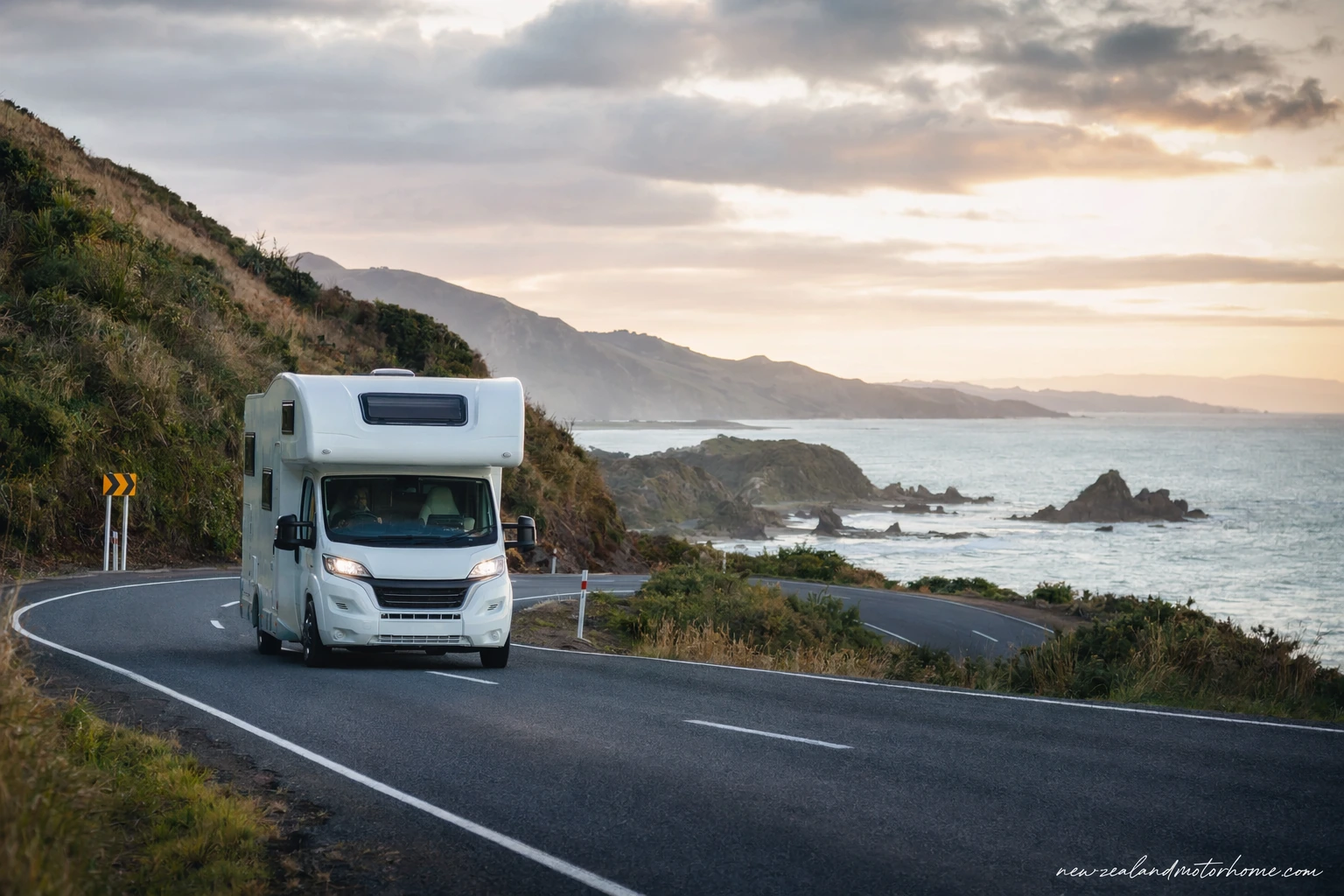
- Allow 10–14 days
- Cook Strait ferry required
- Best with self-containment
- Powered resets recommended
- Watch Auckland peak traffic
An Invercargill to Whangarei campervan trip is a proper end-to-end New Zealand drive: Southland flats, Otago coast, the Kaikōura shoreline, Cook Strait, central North Island roads, Auckland motorway patience, then the warm roll into Northland. It is not a route to rush if you are sleeping in the van, topping up water, finding dump stations, and giving yourself time to arrive before dark.
This guide is written for self-drive motorhome travellers, with practical notes on where the van fits, how to break the legs, when powered sites are useful, and what to watch for on long SH1 days. Use it as a backbone for your Invercargill to Whangarei drive, then add side trips depending on your season, vehicle size, ferry timing, and appetite for slow mornings beside the coast.
How long to allow for the full South-to-North crossing
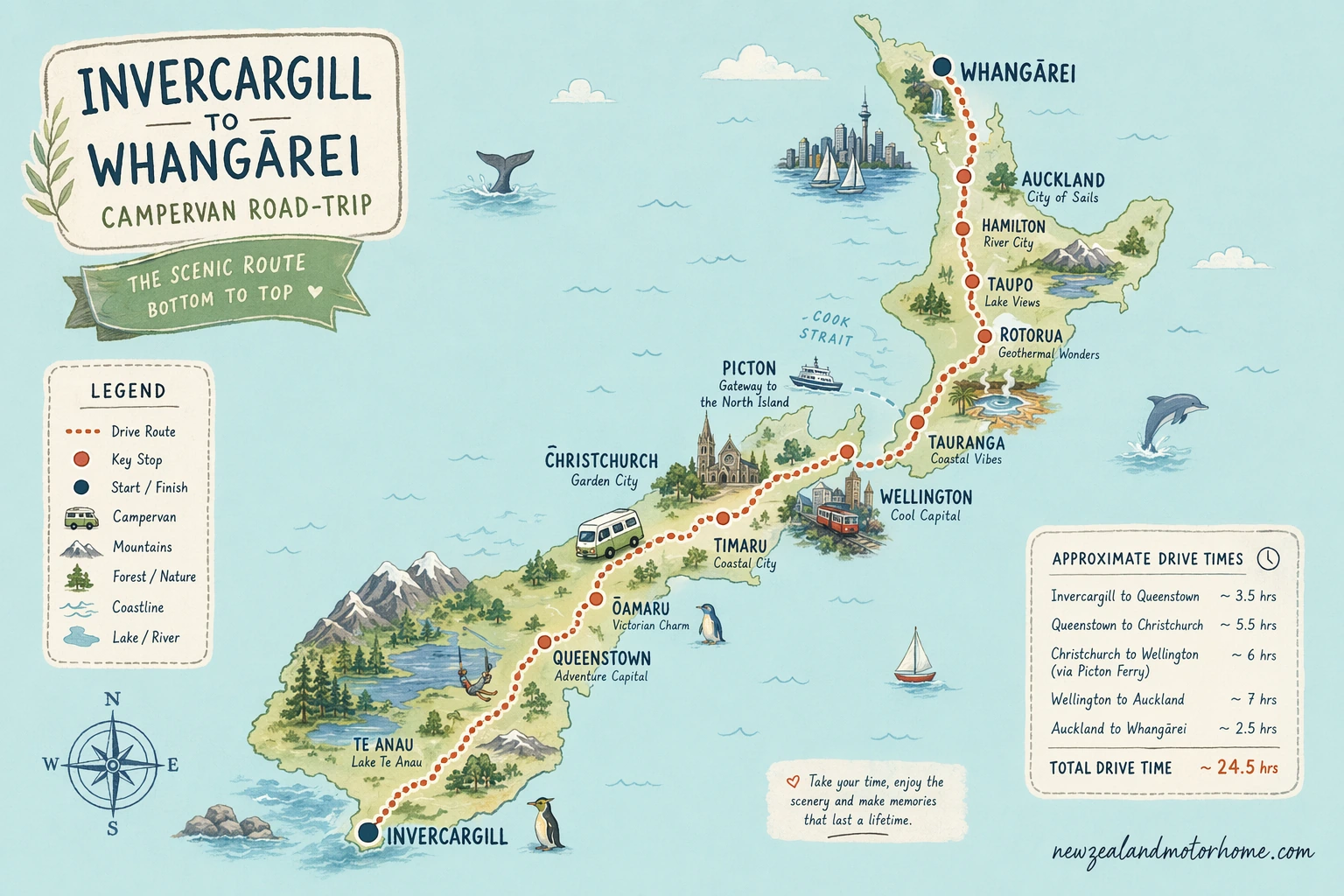
The direct Invercargill to Whangarei motorhome road trip is a big commitment: roughly 2,000+ kilometres of driving, depending on detours, plus a Cook Strait ferry crossing. In a campervan, the comfortable version is usually 10 to 16 days, not because the roads are impossible, but because packing up, emptying waste, filling fresh water, grocery stops, and ferry check-in all take real time.
If you only have a week, keep the route very direct and choose powered holiday park stays most nights so you can reset quickly. With two weeks or more, you can add slower coastal breaks around the Catlins, Oamaru, Kaikōura, Taupō, or Northland beaches without feeling as if every day is just a relocation day.
- Fast but tiring: 7–9 days, mostly one-night stops and longer driving blocks.
- Balanced: 10–14 days, with a rest day in either Christchurch, Wellington, Taupō, or Whangārei.
- Slow touring: 15+ days, better for families, larger motorhomes, and anyone new to driving a wide vehicle in NZ.
- Best rhythm: drive in the morning, arrive mid-afternoon, then sort laundry, power, water, and dinner before dark.
Suggested driving legs and overnight stops
A practical first stage is Invercargill to Dunedin or Oamaru via SH1. Dunedin is good if you want a shorter first day and a powered site after collecting or packing the van; Oamaru makes sense if you are already road-ready and want to push further north. Larger motorhomes should take care in Dunedin’s steeper streets and avoid assuming every central car park suits a tall vehicle.
From Oamaru or Dunedin, continue towards Christchurch, then Kaikōura or Picton. The Kaikōura coast is one of the best-looking sections of the trip, but use marked pull-offs only and give yourself space when rejoining SH1. Before boarding the ferry at Picton, it is worth emptying grey and black water and topping up fresh water if your next night is a basic or unpowered camp.
Once in Wellington, avoid hunting for central street parking in a long van unless you have checked height and length restrictions. Many travellers do better staying at a holiday park on the city edge, using public transport for sightseeing, then heading north refreshed. From there, good overnight stepping stones include Taupō, Rotorua, Hamilton, or an Auckland fringe stop before the final run through Northland to Whangārei.
- Southland/Otago: Invercargill, Dunedin, Oamaru.
- Canterbury/Marlborough: Christchurch, Kaikōura, Blenheim or Picton.
- Lower North Island: Wellington edge, Kāpiti Coast, Whanganui or Taupō depending on route.
- Upper North Island: Hamilton, Auckland outskirts, Warkworth or Waipū before Whangārei.
Ferry, road and vehicle-size notes
The Cook Strait ferry is the hinge of the whole route. When booking, enter your campervan’s full length and height, including bike racks, roof vents, solar panels, roof boxes, or rear storage. Ferry staff are used to motorhomes, but you still need to arrive with time to spare, secure loose items inside, and switch LPG off as instructed.
Most of the Invercargill to Whangarei drive follows major state highways, but that does not make it effortless. SH1 has open rural stretches, coastal wind, roadworks, narrow bridges in places, and busy urban approaches. A high-sided motorhome can feel the wind around exposed South Island plains, Cook Strait weather systems, and the Auckland Harbour Bridge, so slow down early rather than making late corrections.
- SH1 South Island: generally suitable for campervans, with care through towns, roadworks, and coastal pull-offs.
- Kaikōura coast: scenic but busy; use official parking bays and watch for cyclists and seals near stopping areas.
- Wellington: tight central streets and height-limited parking buildings; pre-plan where the van will sleep.
- Auckland: avoid peak commuting times if possible, keep left early for motorway exits, and do not rely on inner-city parking for tall vans.
- Northland: roads can become narrower and more winding away from SH1, especially towards beaches and heads.
Powered sites, freedom camping and dump-station planning
For a route this long, mix powered holiday park nights with simpler unpowered or freedom-camping stops where allowed. Powered sites are especially useful after cold southern nights, wet laundry, long driving days, or several days off-grid. If your van has certified self-containment, you will have more options, but you still need to follow each council’s local signs and stay limits.
Dump-station planning matters more than people expect on a cross-country trip. Do not leave grey water or cassette emptying until the tank is urgent, particularly before remote coastal detours or a ferry day. Larger towns on this route commonly have public dump points or holiday park facilities, and many service areas can help with fresh water, but access and rules vary, so check current local information as you travel.
- Before Picton: empty waste and fill fresh water so the ferry day is less pressured.
- Before Wellington city time: decide where you will overnight rather than trying to wing it in central streets.
- Before Auckland: consider a powered stop on the edge of the city and tackle the motorway in daylight.
- Before Northland beaches: refill LPG, groceries, and water in larger towns such as Whangārei, Warkworth, or nearby service centres.
If you want this route shaped around your exact van size, ferry date, and preferred mix of powered and unpowered nights, you can use the talk-to-us step and we will help turn the broad line into a workable touring plan.
What to see without making the drive too busy
Start with Southland properly if you can: Queens Park in Invercargill is easy-going, and Bluff is a satisfying southern marker before pointing the van north. The Catlins are tempting, but they add time and smaller-road driving; they suit travellers with spare days, daylight, and a motorhome they are comfortable manoeuvring on rural roads.
Further north, Oamaru works well for an evening wander from a nearby camp, while Christchurch is a good reset stop for laundry, groceries, LPG, and repairs if anything in the van needs attention. Kaikōura is worth slowing for, particularly if you can park in a proper beachside or town-edge camping area rather than trying to squeeze into casual roadside spaces.
In the North Island, choose one main inland pause rather than trying to see everything. Taupō gives lakefront walks and geothermal detours, Rotorua suits hot pools and forest trails, and the Kāpiti or Whanganui route gives a gentler west-side rhythm. At the finish, Whangārei is more than a fuel-and-food stop: park the van near your overnight base, then walk the Town Basin and Hātea Loop, or continue later to Whangārei Heads, Waipū, or Tutukaka once you have dumped waste and topped up water.
Keep planning
Common questions
Can I drive from Invercargill to Whangarei in a week in a campervan?
You can, but it will feel like a relocation rather than a holiday. Seven days means long driving blocks, a fixed ferry day, and little room for weather, laundry, dump stations, or slower roads. Ten to fourteen days is a much better fit for most campervan travellers.
Do I need to book the Cook Strait ferry for my motorhome?
Yes, especially in summer, school holidays, and around public holidays. Book using the van’s full length and height, including anything on the roof or rear. Arrive early, follow LPG instructions, and allow time for loading and unloading delays.
Is freedom camping possible on this route?
It is possible in some places if your campervan is certified self-contained, but rules change by district and many popular coastal areas have restrictions. Always follow local signs and council information. For a long route, plan a few powered holiday park nights as a practical reset.
Where should I empty waste and refill water?
Use official dump stations at holiday parks, council facilities, or marked service points in larger towns. Good habits are to dump before the ferry, before remote side trips, and before entering big cities where access can be awkward. Never empty grey water or toilet waste anywhere other than an approved dump point.
Is the road suitable for a large motorhome?
The main route via SH1 is generally suitable for large motorhomes, but you need to respect wind, roadworks, urban traffic, and tight parking. Be cautious in Dunedin’s hillier streets, Wellington’s central lanes, Auckland motorway traffic, and narrower Northland side roads. Check height before entering any covered parking.
Have a planner shape this for your dates
Send a short outline — your dates, party size, and the kind of trip you want. A planner replies with a vehicle recommendation, a paced route, and the realistic budget.