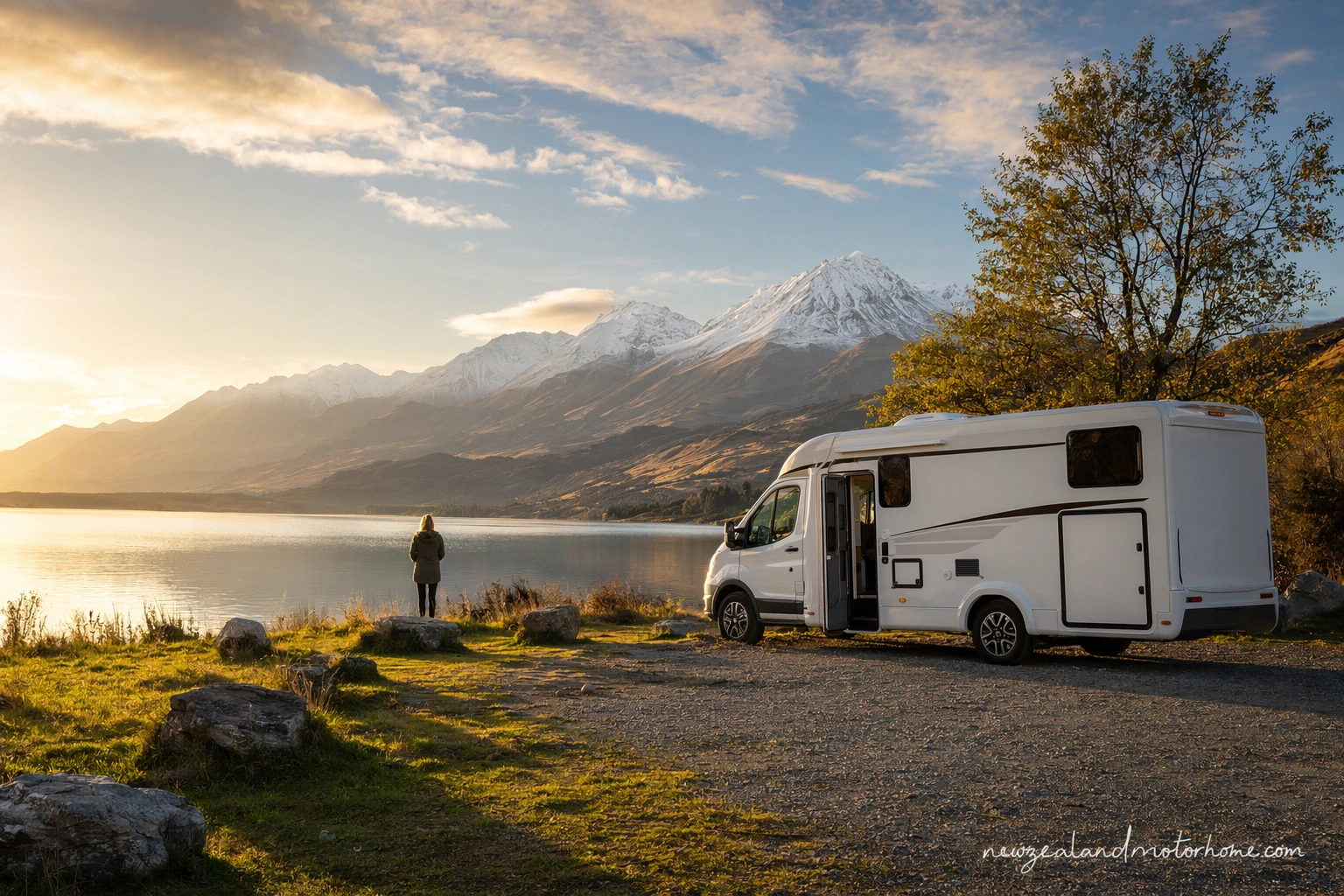
A New Zealand photography campervan tour built around the light
- Best pace: 14–21 days
- Powered nights for charging gear
- Self-contained van recommended
- Two-night photo bases included
- Works best with flexible weather days
This is a self-drive New Zealand photography campervan tour for travellers who want the van to be part of the shot, not a rush between hotels. We shape the days around first light, last light, cloud gaps, short walks with camera gear, and overnight stops that make sense in a hired motorhome.
The package thinking is practical: the right campervan size for narrow scenic roads, campsites close to dawn locations, powered nights when batteries and laptops need a proper charge, and regular places to empty the toilet cassette, refill fresh water and top up LPG. You still drive your own route and sleep in your own van — we simply make the light, the distances and the camping logistics work together.
The shape of the trip: light first, kilometres second
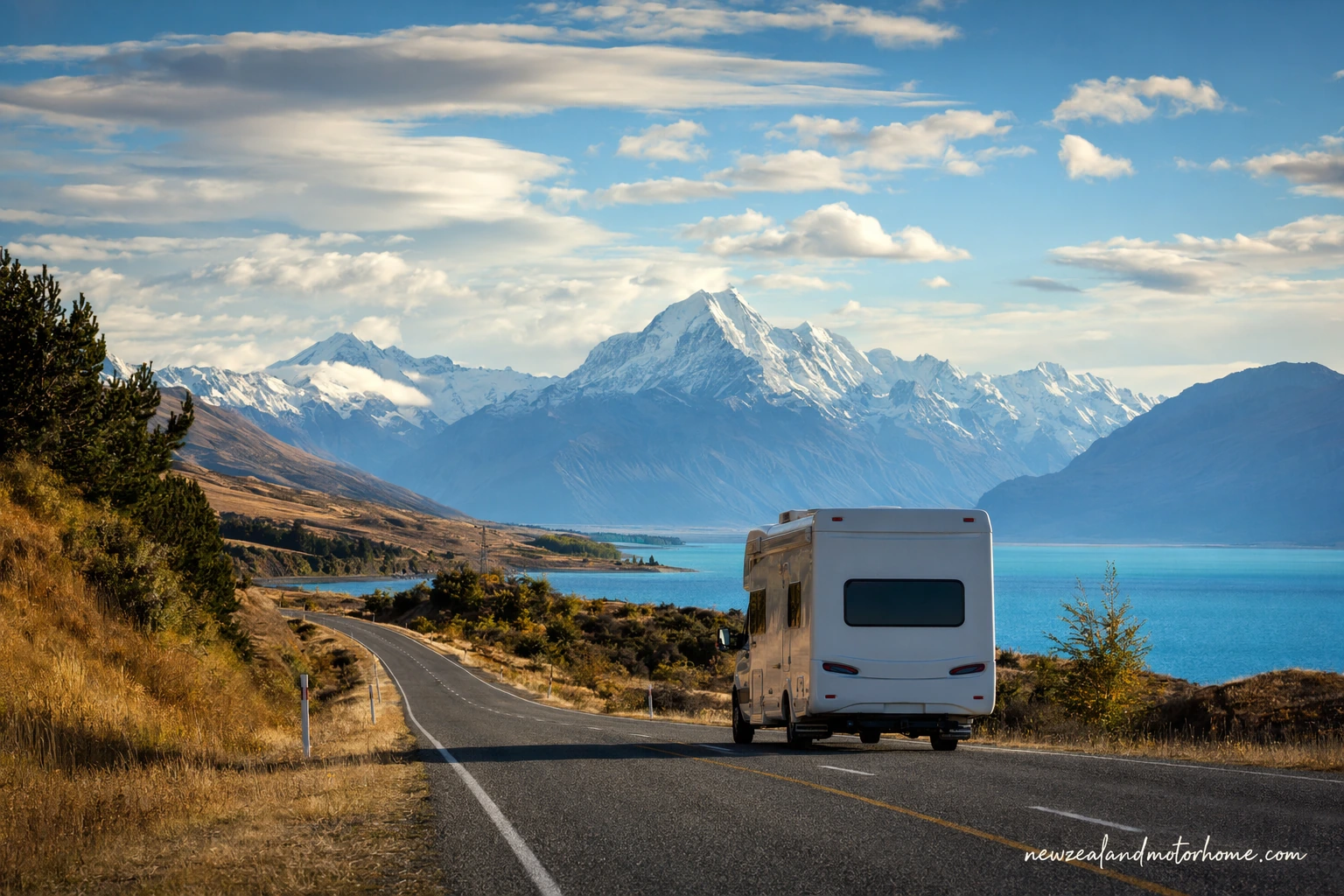
A good photography campervan holiday in New Zealand does not try to tick off every famous viewpoint in one sprint. The best images often come from staying two nights, watching the weather move, and being able to step from the van into cold blue hour with a hot drink already made.
We usually build this package as a 14 to 21 day self-drive route, either one island at a relaxed pace or both islands with a ferry crossing and a few carefully chosen long driving days. Overnight stops are chosen so you are not hunting for legal camping after sunset, and so the van is parked somewhere sensible before the tripod comes out.
- Two-night stays near high-value photo areas such as Tongariro, Aoraki/Mount Cook, Wānaka, the West Coast or Fiordland.
- Shorter driving legs after sunrise shoots, when you may be tired and the van needs a dump station or fresh-water fill.
- A mix of powered and unpowered sites so camera batteries, drones where permitted, phones and laptops are covered.
- Freedom camping only where your hired van is certified self-contained and local rules allow it.
Choosing the van for camera gear, roads and nights off-grid
For this style of trip, the van matters. A compact two-berth campervan is easier to park at lakeside pull-offs and older holiday parks, while a larger motorhome gives you more room for cases, wet jackets and a stable workspace for backing up files. If you are carrying long lenses or travelling in winter, that extra interior space can be worth it.
We plan around vehicle length and height, especially on winding roads, one-way bridges, tight campground lanes and city parking. Some scenic roads are sealed but narrow, and a few rental agreements restrict certain gravel or alpine access roads, so we keep the route realistic for a hired campervan rather than a 4WD photo expedition.
- Certified self-contained van recommended for flexibility with approved freedom camping areas.
- House battery capacity and powered-site nights planned around charging camera gear.
- Fresh-water, grey-water and toilet cassette routines built in every few days.
- LPG top-up opportunities considered before colder regions or longer stays away from towns.
A sample route with strong photo stops and sensible overnights
One classic version starts in Auckland, eases into the Coromandel or Rotorua, crosses the Central Plateau for volcanic landscapes, then uses the Cook Strait ferry before moving through Marlborough, Kaikōura, Mackenzie Country, Wānaka, Fiordland and the West Coast. It can also be reversed, or trimmed into a South Island-only package if mountains, lakes and dark skies are the priority.
For campervan travellers, the overnight pattern is as important as the view. Near Lake Tekapo and Lake Pukaki, for example, we favour staying close enough that a clear-sky forecast does not mean a long night drive. Around Wānaka, Queenstown and Fiordland, we plan campsites early because popular powered sites can fill in peak season and larger motorhomes need easier access.
- Central Plateau: moody volcanic weather, safe campground base nights, and careful road planning in winter conditions.
- Kaikōura: coastal sunrise, mountain backdrops, and parking choices that suit a van rather than roadside stopping on bends.
- Mackenzie Country: open skies, lake reflections, dark-sky evenings, and cold-night power needs.
- Wānaka and Haast Pass: early starts, wet-weather gear, and enough time for roadside waterfalls without rushing the drive.
- Fiordland: dramatic weather, long day trips from a campground base, and a full fuel, water and LPG check before heading in.
Campsite rhythm: powered nights, freedom camping and resets
Photography trips are hard on batteries and storage. We normally alternate scenic unpowered nights with practical powered-site resets, so you can recharge camera batteries, run a laptop, dry jackets, empty memory cards and warm the van properly after a dawn shoot.
Freedom camping can be a brilliant part of a New Zealand photography campervan tour, but it is never assumed. Your van must meet self-containment requirements, and local council rules change from place to place. We help you build a route that uses legal overnight areas, holiday parks, conservation-style campsites and dump stations in a way that feels calm rather than improvised.
- Powered sites placed after big shooting days or before multi-night off-grid sections.
- Dump stations planned before remote stretches, not as an afterthought.
- Fresh-water fills included where you are likely to be cooking in the van and using the shower.
- Late arrivals avoided, because reversing a motorhome into an unfamiliar site after dark is no one’s best work.
Road and weather notes for photographers in a campervan
New Zealand rewards patience. A grey afternoon can turn into a ten-minute burst of light, and a forecast that looks ordinary inland may be perfect on the coast. The route needs room for that, especially when you are driving a wider vehicle and cannot simply swing into every small lay-by.
We factor in slower driving times on roads such as the West Coast, the Milford Road, alpine passes and lake-edge routes where you will want to stop often. In winter, snow, ice and chain requirements can affect access; in summer, popular viewpoints may have full car parks, so we plan early arrivals and nearby legal overnight stops where possible.
- Use proper parking bays rather than stopping the van on narrow shoulders for a quick photo.
- Check rental-vehicle restrictions before any unsealed road or remote access track.
- Allow for wind when parking near exposed beaches, lake edges and alpine viewpoints.
- Keep headlights on in low cloud and give yourself more braking room on wet rural roads.
What is included in the package planning, and how we tailor it
This package is not about being herded from viewpoint to viewpoint. It is a self-drive plan for your hired campervan, with a route, pace and camping pattern shaped around photography. We think through where you will park the van, how far you will drive after sunset, where the next dump station sits, and when a powered site is worth booking.
We can tailor the trip around aurora hopes, bird photography, landscapes, family travel, drone restrictions, mobility, winter comfort, or simply wanting more quiet mornings and fewer one-night stops. If you are unsure how much distance is realistic in your van, start with the /talk-to-us/ plan-your-trip step and tell us what you like to photograph.
- Route structure with daily driving time kept realistic for a campervan.
- Suggested overnight areas, including when to choose powered over unpowered.
- Notes for water, LPG, fuel and toilet cassette resets.
- Seasonal adjustments for daylight, weather risk and campsite demand.
Common questions
How many days should I allow for a New Zealand photography campervan tour?
Allow at least 14 days for one island or a tighter two-island highlights route. For a calmer photography pace with two-night stops and weather flexibility, 18 to 21 days works much better in a campervan.
Do I need a powered campsite every night?
No, but you should plan powered nights regularly if you are charging cameras, phones, laptops, lights and drone batteries where legal to fly. A good rhythm is to mix scenic unpowered nights with powered resets every few days.
Can I freedom camp for sunrise photo locations?
Sometimes, but only in legal areas and usually only with a certified self-contained campervan. Local rules vary, so the route should never rely on parking overnight at a viewpoint unless it is clearly permitted.
Is a large motorhome suitable for photography stops?
It can be, especially if you want more room for gear and editing, but parking takes more planning. We avoid routes and overnight stops that are awkward for your vehicle length, height or rental conditions.
What season is best for campervan photography in New Zealand?
Autumn has settled light and colour, winter brings snow and clear dark skies, spring is changeable and fresh, and summer gives long days but busier campsites. The best season depends on whether you want mountains, coast, wildlife, night skies or easier driving.
Will the plan include dump stations and fresh-water stops?
Yes. A photography route still has to work as a campervan holiday, so we build in practical resets for fresh water, grey water, toilet cassette emptying, rubbish and LPG where needed.
Have a planner shape this for your dates
Send a short outline — your dates, party size, and the kind of trip you want. A planner replies with a vehicle recommendation, a paced route, and the realistic budget.