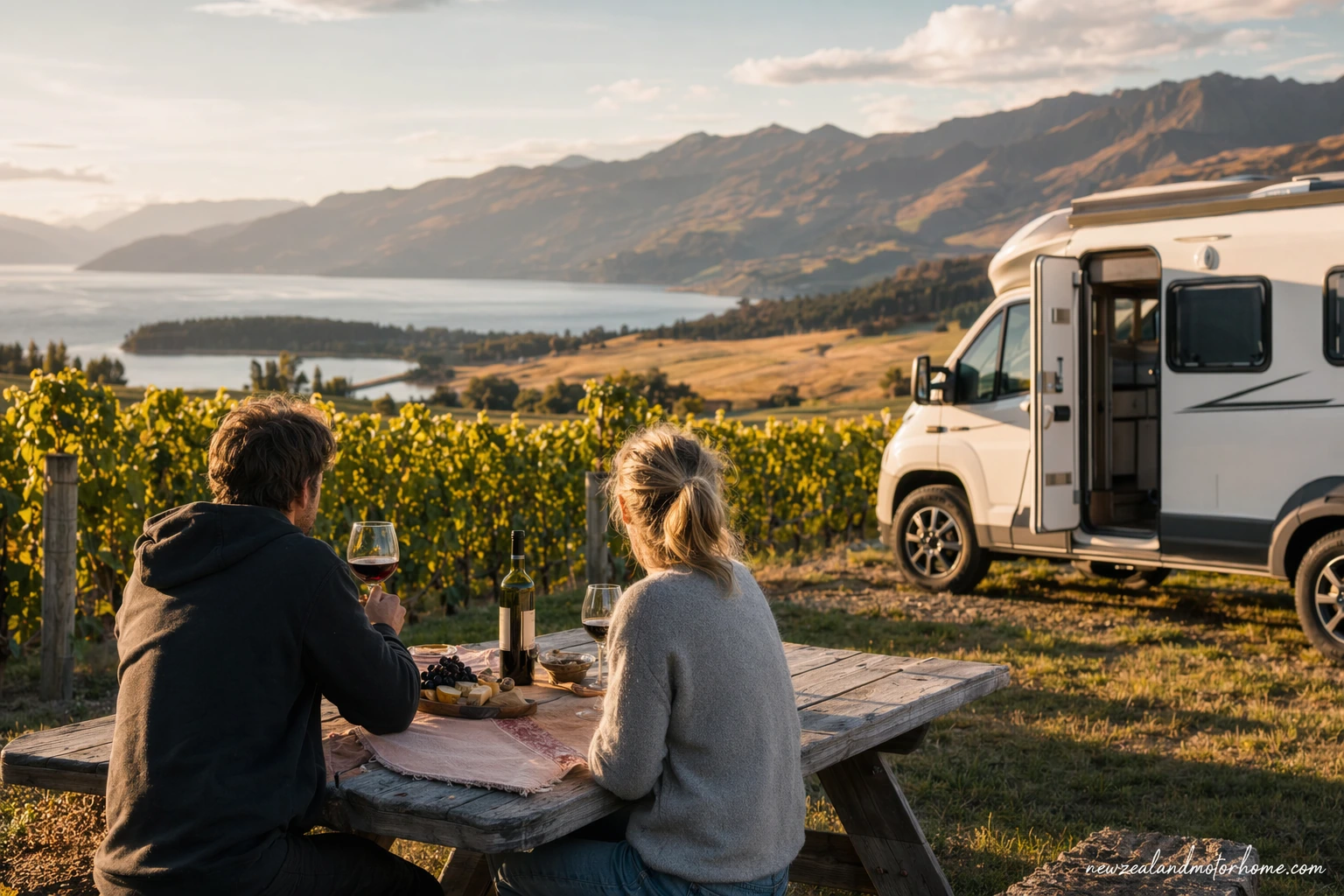
A New Zealand wine trail campervan tour built for easy self-drive days
- Best pace: 10-14 days
- Regions: Hawke’s Bay to Nelson
- Van: certified self-contained recommended
- Sites: mix of powered and selected unpowered
- Ferry: allow for vehicle length and height
This New Zealand wine trail campervan tour is for travellers who want the freedom of their own hired van, not a rushed tasting itinerary with a fixed seat on a coach. You drive between the wine regions, sleep close to the vines or in well-placed holiday parks, and keep the pace gentle enough for market stops, coastal detours and a proper afternoon with the van parked up.
The package shape can run north-to-south or south-to-north, commonly linking Hawke’s Bay, Martinborough, Marlborough and Nelson, with the Cook Strait ferry built in if you are crossing islands. We plan it around campervan realities: vehicle length on rural roads, powered versus unpowered nights, dump stations, fresh-water fills, LPG top-ups, and safe options for enjoying wineries without driving afterwards.
The route: wine country without overloading the driving days
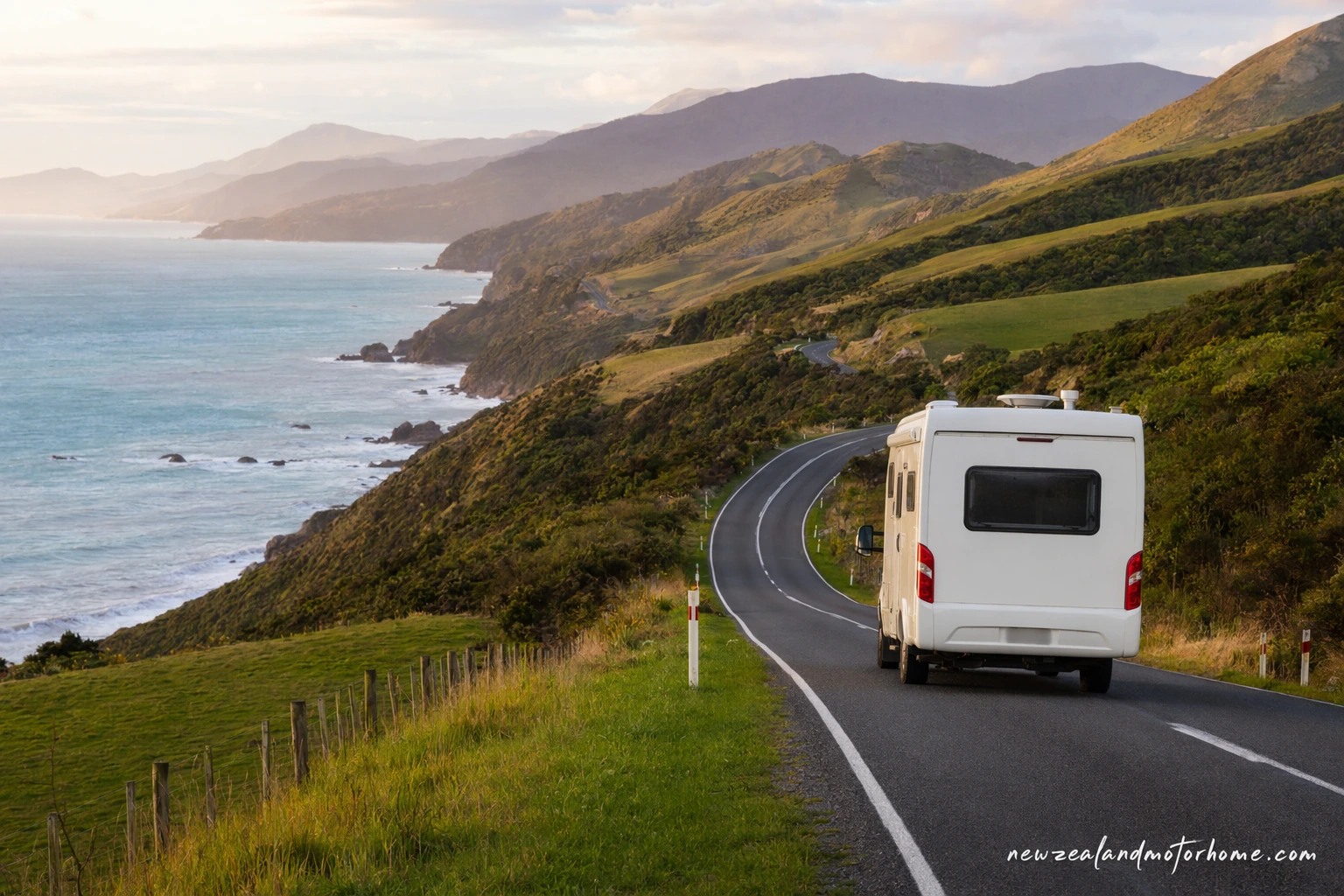
A comfortable wine trail by campervan usually needs around 10 to 14 days, depending on whether you start in Auckland, Wellington, Christchurch or Nelson. The best version avoids long tasting days followed by late driving; instead, you move the van in the morning, settle into a site, then explore from there.
A typical flow might include Napier and the Gimblett Gravels area in Hawke’s Bay, the compact cellar doors around Martinborough, the ferry across Cook Strait, then Blenheim and Renwick in Marlborough before finishing with Nelson’s smaller vineyards and coastal food stops. If you want less distance, we can tighten the route to one island and give you more two-night stays.
- Hawke’s Bay: flat cycleways, seafront holiday parks, good access to supermarkets, fuel, water and dump stations.
- Martinborough: compact wine village, best enjoyed once the van is parked for the night.
- Marlborough: easy driving between Blenheim and Renwick, but watch narrow rural shoulders and busy harvest-season traffic.
- Nelson: slower roads, sunny campsites, and useful add-ons toward Mapua, Motueka or Abel Tasman if your van booking allows extra days.
How the campervan package is shaped
This is not a one-size-fits-all lap of the country. The package thinking starts with your travel dates, arrival city, van size, ferry needs and how many nights you actually want to spend in wine regions rather than just passing through them. We also look at whether you prefer powered sites most nights or are comfortable mixing in unpowered stays where permitted.
For most wine trail travellers, a certified self-contained campervan gives the right balance of comfort and flexibility. It lets you use holiday parks for showers, laundry and charging, while still being eligible for some council-approved or private low-facility overnight areas where local rules allow. Larger motorhomes are fine on this route, but we plan parking and turns more carefully around village streets, cellar door entrances and older holiday park layouts.
What is usually considered in the plan:
- Campervan hire duration, pick-up and drop-off city options.
- Suggested overnight stops near wine areas, with powered-site nights where they make sense.
- Cook Strait ferry timing and vehicle-length notes if the route crosses islands.
- Practical spacing for dump stations, fresh-water fills, fuel and LPG.
- Wine days arranged so the van can stay parked before tastings begin.
Where to park, sleep and reset the van
Wine regions can be deceptively rural: beautiful open roads, but not always obvious places to turn a long vehicle or stop overnight. We favour bases where you can park the van once and then use bikes, walking paths, local shuttles or pre-arranged transport for tastings. That keeps the holiday relaxed and avoids any temptation to drive after wine.
Holiday parks are the backbone of this itinerary because they give you reliable powered sites, dump stations or nearby dump access, drinking-water taps, laundry and room to repack. In Hawke’s Bay, coastal and town-fringe parks work well. Around Martinborough, staying close to the village is valuable. In Marlborough, Blenheim and Renwick both make practical bases, while Nelson rewards an extra night if you want a slower reset before returning the van.
Freedom camping is not something to assume on a wine trail. Rules vary by council, and some popular areas restrict overnight stays to certified self-contained vehicles in specific marked places only. We build the route so you know which nights should be booked, which nights may be flexible, and where to empty grey water before it becomes a chore.
Road notes for a wine trail campervan holiday
The driving is scenic rather than difficult, but a wine trail still needs a little respect in a campervan. Rural roads near vineyards can be narrow, with soft verges, irrigation channels, cyclists and slow farm traffic. If you are in a longer motorhome, it is worth entering cellar door car parks slowly and avoiding any driveway where turning space is not obvious.
The Napier to Martinborough leg is longer than it looks on a map, especially with food stops and photo breaks. The Remutaka Hill road between Wairarapa and Wellington is sealed and well used, but it is winding; take it steadily, use pull-outs when safe, and secure loose items in the van before you climb. The Cook Strait ferry also needs accurate vehicle length and height when booked, including bike racks or rear storage if fitted.
- Plan tasting days after short drives, not before a mountain pass or ferry deadline.
- Keep an eye on fuel in rural Wairarapa and on weekend evenings.
- Use dump stations before leaving larger towns rather than hunting for one late in the day.
- Allow more time in harvest season, when vineyard machinery and trucks are moving about.
Tailoring your New Zealand wine trail campervan tour
Your route can be softened for first-time motorhome travellers or stretched for people who have already driven in New Zealand and want smaller back roads. Some travellers want cellar doors and restaurant nights; others want farmers’ markets, easy cycle trails, coastal swims and one good bottle in the van fridge at sunset. The best package balances those moments with practical van care.
If you are travelling in summer, we usually suggest booking key powered sites early and adding shaded or coastal stops where possible. In autumn, the vines are beautiful and the days are often settled, but nights cool down, so powered sites can be useful for heating and charging. Winter works for a slower food-and-wine trip too, provided you are realistic about daylight and check weather around higher roads.
To shape the route around your dates, van style and comfort level, you can talk to us before locking anything in. We will help you decide whether the full cross-island trail is worth it for your timeframe, or whether a shorter Hawke’s Bay-Wairarapa or Marlborough-Nelson version will feel better from behind the wheel.
Common questions
Can we visit wineries without driving the campervan after tastings?
Yes, and that is how we recommend planning it. Base the van in a holiday park or legal overnight stop, then use walking routes, bikes where appropriate, local transfers or a pre-arranged tour for the tasting part of the day.
Do we need a certified self-contained campervan for this wine trail?
A certified self-contained van gives you more flexibility, especially where councils allow only certified vehicles in designated overnight areas. Even so, many wine-region nights are best spent in holiday parks for power, showers, water and dump facilities.
Is the route suitable for a larger motorhome?
Yes, but we would plan it a little more carefully. Longer vehicles need accurate ferry measurements, easier overnight access, and more caution around rural cellar door driveways, village parking and narrow vineyard roads.
How many days should we allow for a New Zealand wine trail campervan tour?
Allow 10 to 14 days for a relaxed cross-island route including Hawke’s Bay, Martinborough, Marlborough and Nelson. With less time, it is better to focus on one or two regions rather than spend the holiday moving the van every day.
Are powered sites necessary every night?
No, not every night, but they are useful on this itinerary. Powered sites help with charging, heating or cooling, laundry, and resetting the van between wine regions, especially if you are carrying food and bottles in the fridge.
Have a planner shape this for your dates
Send a short outline — your dates, party size, and the kind of trip you want. A planner replies with a vehicle recommendation, a paced route, and the realistic budget.