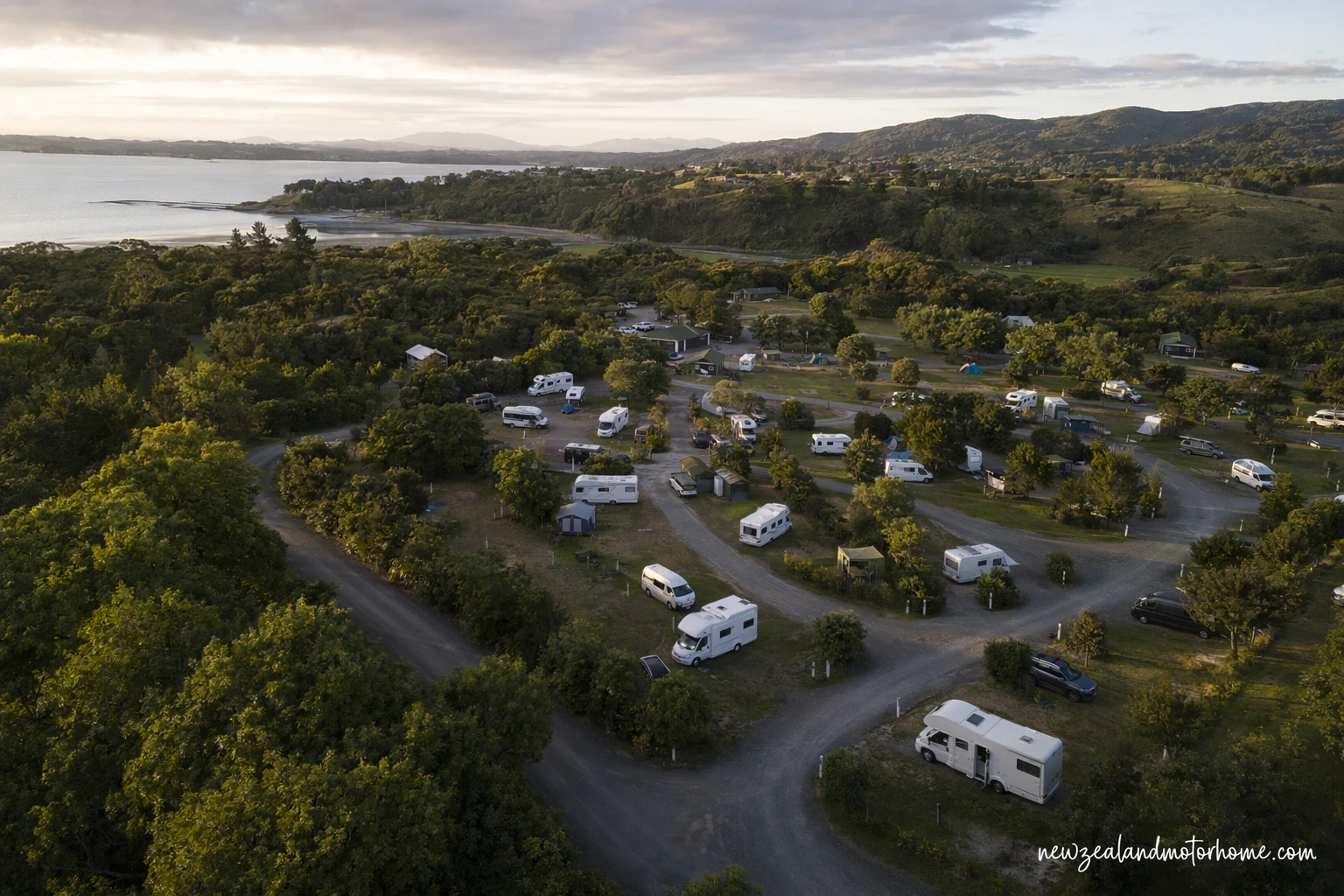
- Best booked early in Dec-Jan
- Powered and unpowered sites
- Check van length before booking
- Dump and fresh-water planning
- Self-contained rules still apply
The top holiday parks New Zealand travellers remember are not always the flashiest ones. For a self-drive campervan trip, a good park is the one where you can reverse onto a level site without fuss, plug into power if you need it, empty the cassette, refill fresh water, and still walk to the beach, lake, town wharf or bush track before dinner.
This hub is for people driving and sleeping in their hired van. It explains the main types of overnight stops, how powered and unpowered sites differ, what self-contained rules mean on the ground, and how to choose holiday parks by both facilities and surroundings — because a tidy dump station matters, but so does waking up with the sliding door facing the right view.
What makes a holiday park work well for a motorhome
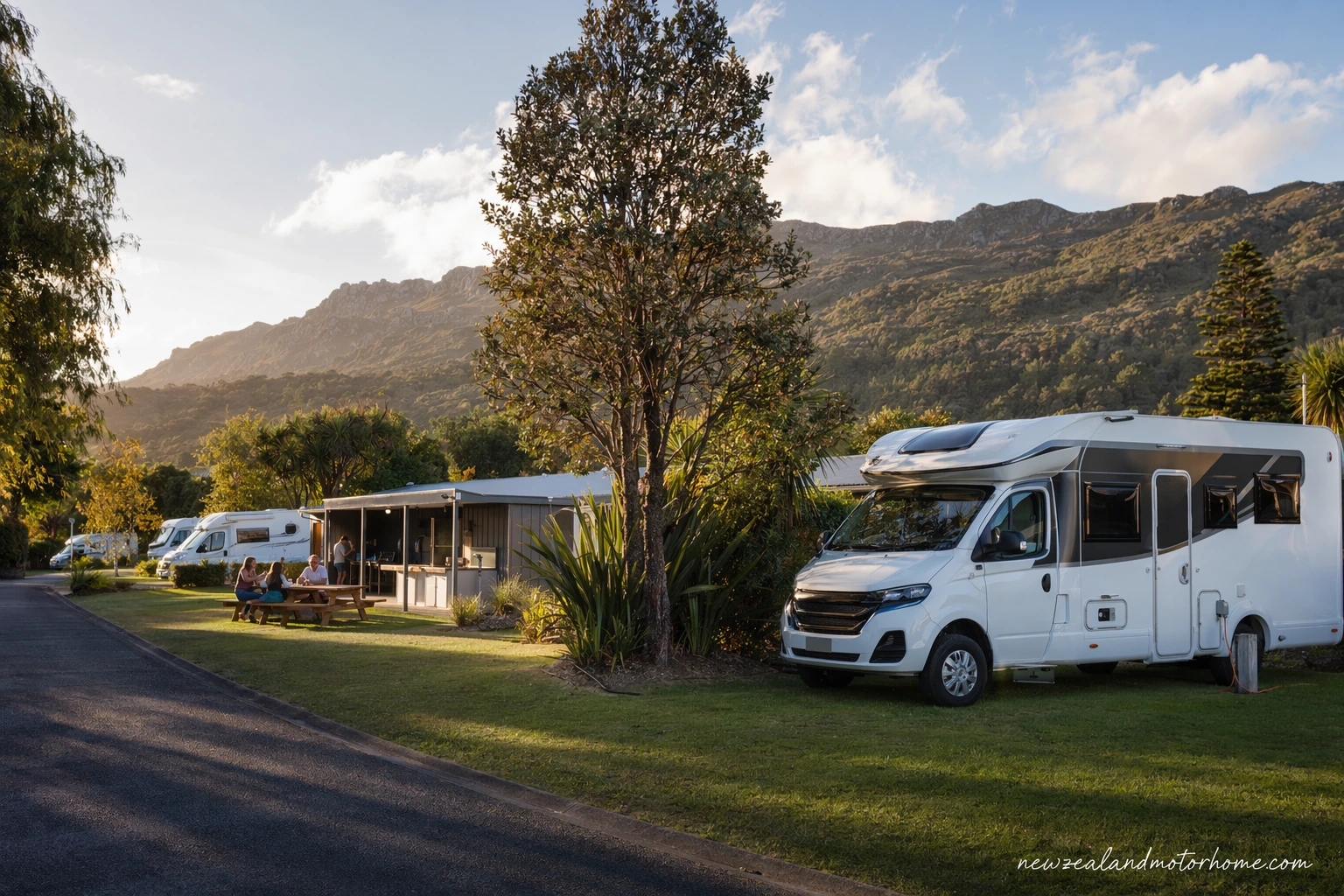
A holiday park suits a campervan trip when the basics line up: clear vehicle access, sites that are long enough for your van, practical services, and a setting that lets you leave the keys in the bowl for a while. In New Zealand, that might mean a grassed site behind the dunes, a gravel pad beside a lake, or a sheltered town park close enough to walk to groceries and a bakery.
For larger motorhomes, the best parks are often the ones with simple, obvious circulation. Tight corners, low branches and sloping grass can turn an easy arrival into a three-point shuffle, especially after rain. When booking, check whether your site is suitable for your vehicle length and whether awnings or slide-outs need extra room.
- Easy access: wide internal roads, clear arrival signs, and no awkward reversing from a busy road.
- Level parking: firm sites are easier for sleeping, fridge operation and stabilising the van.
- Useful facilities: dump station, potable water, rubbish and recycling, laundry, kitchen and showers.
- Good surroundings: a safe walk to the beach, harbour, lake edge, town centre or trailhead.
Powered, unpowered and what you actually use overnight
A powered site gives you a mains hook-up for the van, which is handy when you want to recharge devices, run heating or keep the fridge steady after a few days off-grid. In winter, in wet weather, or when travelling with family, the extra comfort can be worth planning around. Use only the approved camping power lead supplied with your hire van, and make sure it is fully uncoiled and kept out of puddles.
Unpowered sites suit shorter stops, mild evenings and vans with decent house batteries or solar. They are often quieter and may sit closer to a river, dunes or trees, but you need to watch battery levels, water use and grey-water capacity. A self-contained van gives you more flexibility, though it does not remove the need to empty and refill responsibly.
- Choose powered before or after long freedom-camping stretches, in cold regions, or when you need reliable charging.
- Choose unpowered for simple overnight stops when your battery, water and toilet cassette have plenty of capacity.
- Ask about site surface if rain is forecast; a heavy motorhome on soft grass can be hard to move.
- Arrive in daylight when possible, especially if you are new to backing a van into a narrow bay.
Dump stations, water fills and LPG: the unglamorous planning that saves the day
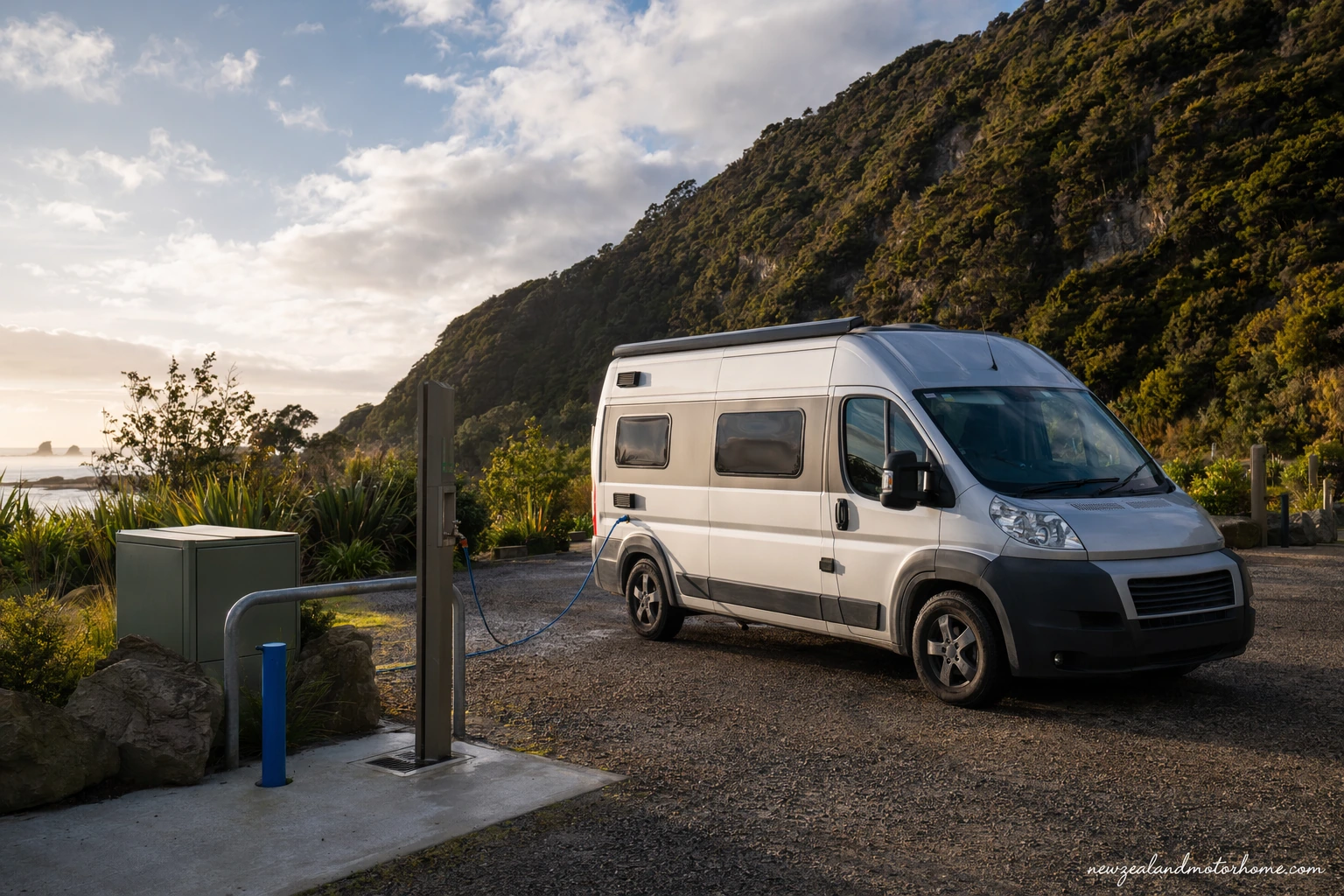
The most relaxed campervan routes have service stops built in before anything is urgent. Holiday parks are useful because many combine overnight parking with a dump station, fresh-water tap, laundry and rubbish facilities in one place. Not every park has every service, and some dump stations are easier to access with a longer motorhome than others, so check before you rely on a stop.
Grey water and toilet cassette waste must go into an approved dump station, never into a drain, stream or bush edge. Fresh-water taps should be marked as potable before you fill your tank. If your van uses LPG for cooking, heating or hot water, plan refills or bottle swaps around towns rather than remote valleys, peninsulas or alpine roads.
- Dump before remote sections: especially before the West Coast, Coromandel backroads, alpine passes or long national park approaches.
- Top up fresh water early: small tanks disappear quickly with showers, dishes and toilet flushing.
- Separate hoses: keep drinking-water gear away from dump-station areas and wash hands properly.
- Check LPG access: some places refill bottles, others only swap certain sizes, and opening hours vary.
Self-contained rules and when a holiday park is the better choice
A certified self-contained campervan gives you more overnight options in New Zealand, but it is not a free pass to park anywhere. Local councils and DOC areas set their own rules, and signs on the ground matter. If a place says no camping, or only allows certified self-contained vehicles in marked spaces, follow that even if an app comment says otherwise.
Holiday parks take the guesswork out of nights when bylaws are tight, the weather is rough, or you need showers, laundry and a proper reset. They are also a good choice near popular lakes, surf beaches and small towns where freedom-camping areas fill quickly or have limited spaces for longer vehicles.
- Carry proof of certification: your hire van should display the correct self-contained certification if it is advertised that way.
- Use marked overnight areas only: do not spread out into day-parking, boat ramps or picnic reserves.
- Respect quiet hours: sliding doors and diesel heaters carry further than you think in a packed campground.
- Leave the site cleaner: take rubbish with you if bins are full and never drain grey water on the ground.
Choosing by surroundings: beach, lake, bush or town edge
The surroundings shape the whole stay. A beachside holiday park is brilliant when you can park the van once, walk over the dunes, rinse off, and cook dinner with salty hair. A lakeside site may give you calm water and mountain views, but also sandflies in still weather. A town-edge park might not feel wild, yet it can be the smartest stop before a ferry, flight, supermarket restock or long driving day.
Match the setting to the van as much as the view. Coastal parks can be windy, so think about awnings and doors. Bush sites may have low branches and narrow access roads. Alpine and lakeside roads can be steep, icy in winter, or busy with day visitors, so allow more time and avoid arriving tired after dark.
- Beach parks: check for firm access roads, sand drift, salt spray and safe pedestrian routes to the shore.
- Lake parks: look for level ground, insect screens, and enough space to turn without nudging soft verges.
- Bush parks: watch vehicle height, roof vents, solar panels and overhanging branches.
- Town parks: useful for groceries, pharmacies, repairs, public transport links and an easy dinner without moving the van.
Booking rhythm: peak season, two-night stays and route breathing room
From late December through January, and around school holidays, Easter, ski weekends and major events, popular holiday parks can book out well ahead. This is especially true in beach towns, lake districts, ferry gateways and small places with only one or two proper campgrounds. If you are travelling with a larger motorhome, book earlier because long, level powered sites are usually limited.
A good route alternates practical nights with scenic ones. Use a full-service holiday park every few days to dump, refill, do laundry and reset batteries, then spend the next night somewhere quieter if the rules and your van setup allow. Two-night stays are often underrated; they let you explore without packing away the bed, chairs, levelling ramps and power lead every morning.
If you want help turning holiday-park choices into a sensible driving route, you can talk to us before you lock in your hire dates and overnight stops.
- Book first and last nights: especially near Auckland, Christchurch, Queenstown, Picton and Wellington.
- Hold a few flexible nights: weather can change mountain, ferry and coastal plans quickly.
- Limit big driving days: New Zealand roads are slower than the map suggests in a motorhome.
- Check arrival times: some parks have firm late-arrival procedures or locked gates.
Common questions
Do I need to book holiday parks in advance for a campervan trip?
Is a powered site necessary every night?
Can I use a holiday park dump station if I am not staying there?
What does certified self-contained mean for freedom camping?
Are holiday parks suitable for big motorhomes?
What should I check before choosing a scenic campsite?
Have a planner shape this for your dates
Send a short outline — your dates, party size, and the kind of trip you want. A planner replies with a vehicle recommendation, a paced route, and the realistic budget.