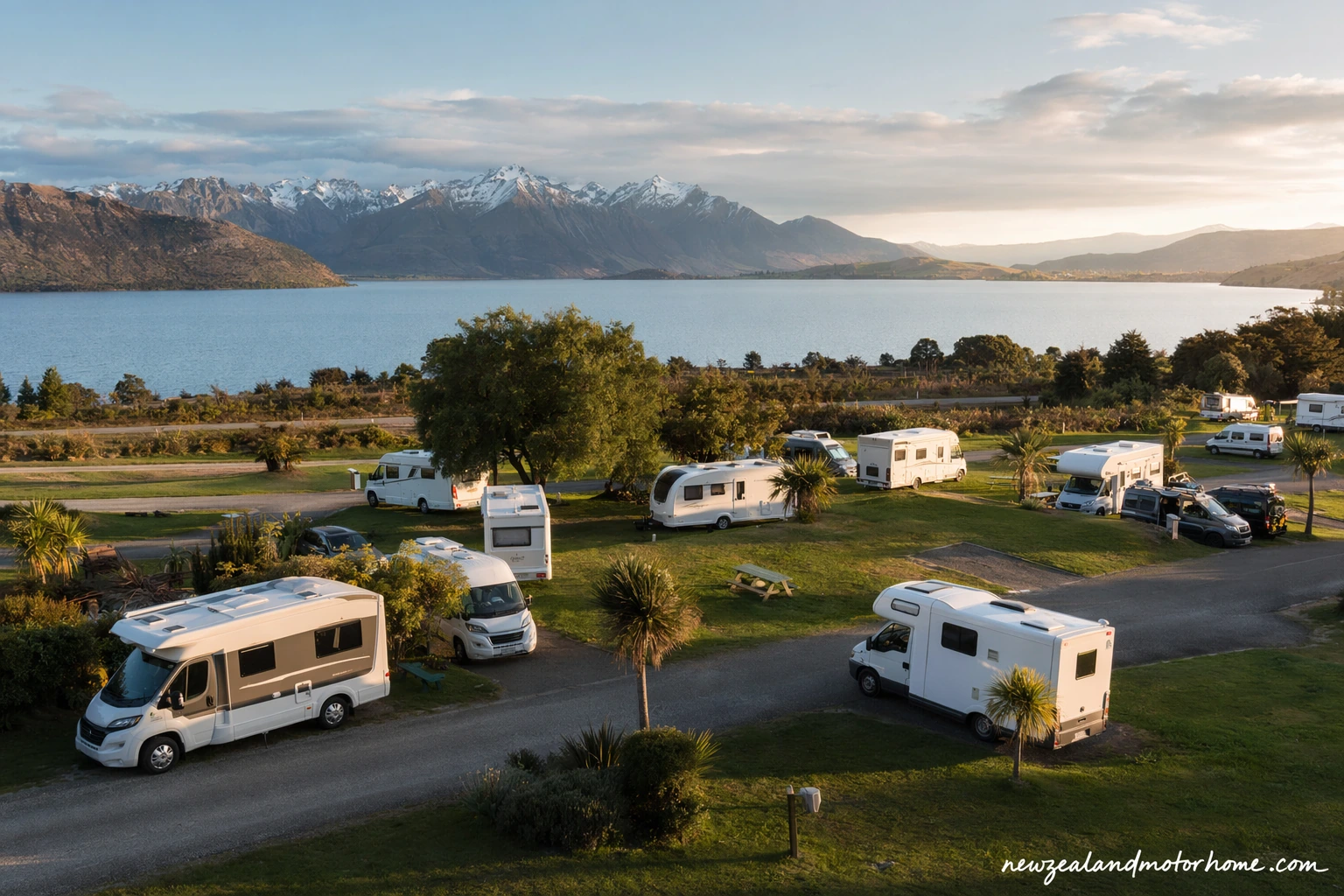
- Best season: spring to autumn
- Book early for summer powered sites
- Tell parks your van length
- Use dump stations regularly
- Mix scenic stays with service stops
The best North Island holiday parks for a campervan trip are not always the flashiest ones. They are the places where you can reverse the van without drama, plug into a safe powered site, walk to the beach or lake, empty the cassette, refill fresh water and sleep properly before the next driving day.
This hub is written for self-drive campervan and motorhome travellers planning their own route. Rather than ranking parks by hype, we look at the surroundings that matter on the road: coastal stops, geothermal towns, lakefront sites, ferry-night overnighters, dump stations, peak-season bookings and the small practical details that make a North Island loop run smoothly.
What makes a North Island holiday park worth booking
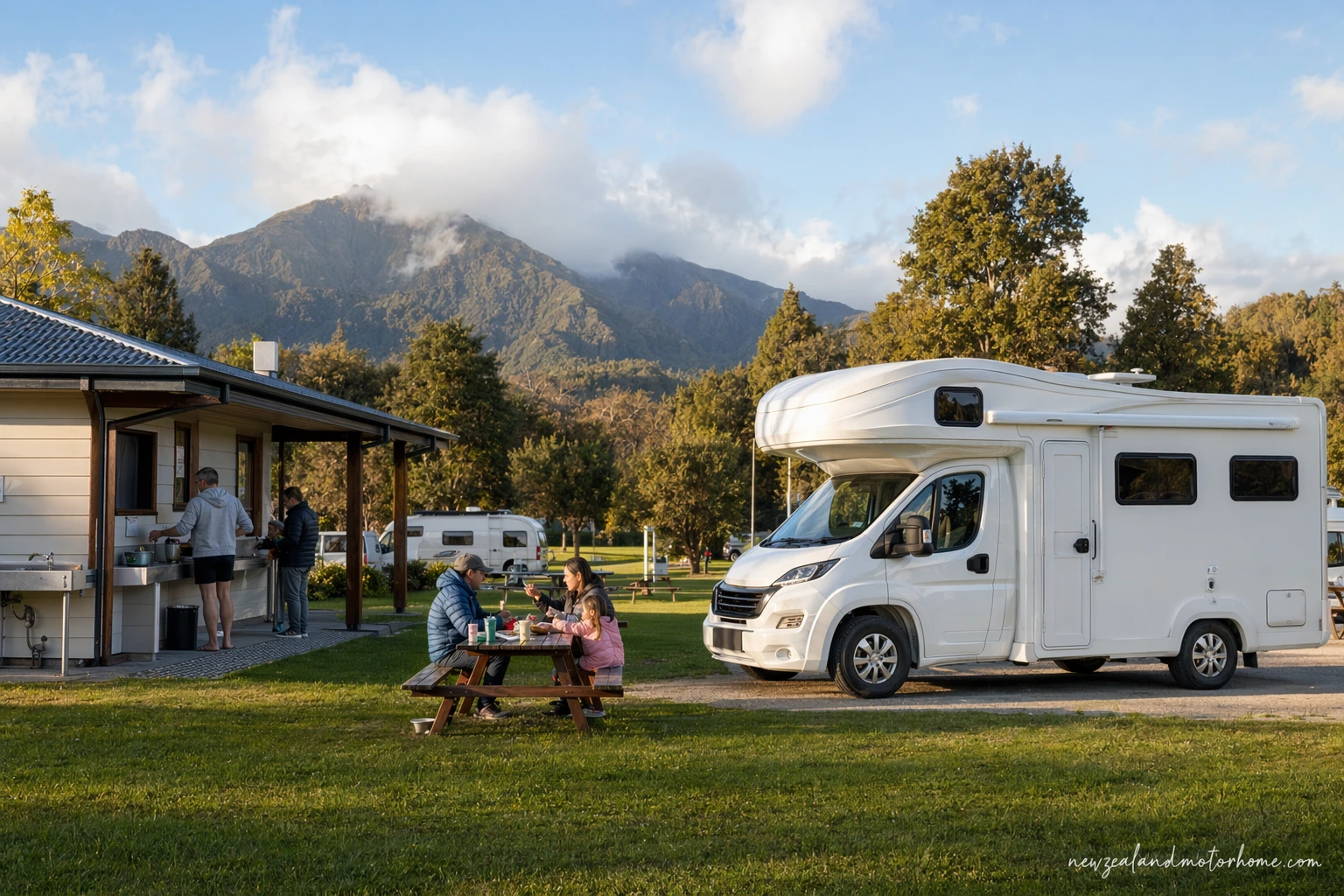
A good holiday park for a motorhome is part campsite, part service stop and part breathing space. In the North Island, that often means being close enough to water, walking tracks or town cafés that you can leave the van parked for a day and explore on foot instead of packing up again.
Look for more than a pretty photo. For campervan travel, the practical facilities are what turn a nice overnight stop into a useful one, especially after two or three nights on the road.
- Powered sites: useful for charging house batteries, running a heater in cooler months and giving the fridge an easy night.
- Unpowered sites: often quieter and more flexible, but check your battery, solar and weather forecast first.
- Dump station access: essential for cassette toilets and grey-water tanks, even if you are staying only one night.
- Fresh-water taps: check whether filling is allowed at your site or only at a designated point.
- Room to manoeuvre: longer motorhomes need wide internal roads, level pads and turning space.
Surroundings matter too. Beach parks are brilliant for relaxed two-night stays, while lake and geothermal towns tend to work well as laundry, grocery and activity stops on a longer loop.
The North Island surroundings that suit campervans best
If you are building a personal top 10 holiday parks North Island shortlist, start with the kind of places you want to wake up in. The island is compact enough that you can mix coast, forest, hot pools and city-fringe nights without huge driving days, but you still need to think about road width, hills and arrival time.
Coastal holiday parks around Northland, the Coromandel, Bay of Plenty and the Kāpiti Coast are popular because you can park the van once and spend the evening barefoot. Lake stops around Taupō and Rotorua are strong choices when you want water views, cycling, geothermal walks and reliable service facilities. Around Wellington, holiday parks and formal campgrounds become practical staging points before or after the ferry.
- Beach surroundings: choose these for swimming, short walks and slower two-night stays.
- Lake surroundings: good for kayaking, cycle trails, fresh-water views and cooler summer evenings.
- Geothermal towns: handy for activities, hot pools, groceries, laundries and dump stations.
- City-edge parks: useful when you need public transport, ferry access, repairs or a restock.
- Rural parks: often peaceful, but check road access, mobile coverage and whether large vans are suitable.
In hilly or coastal areas, avoid arriving after dark if you can. Narrow local roads, low branches and tight campground entrances are far easier to judge in daylight.
Powered or unpowered: what to book for your van
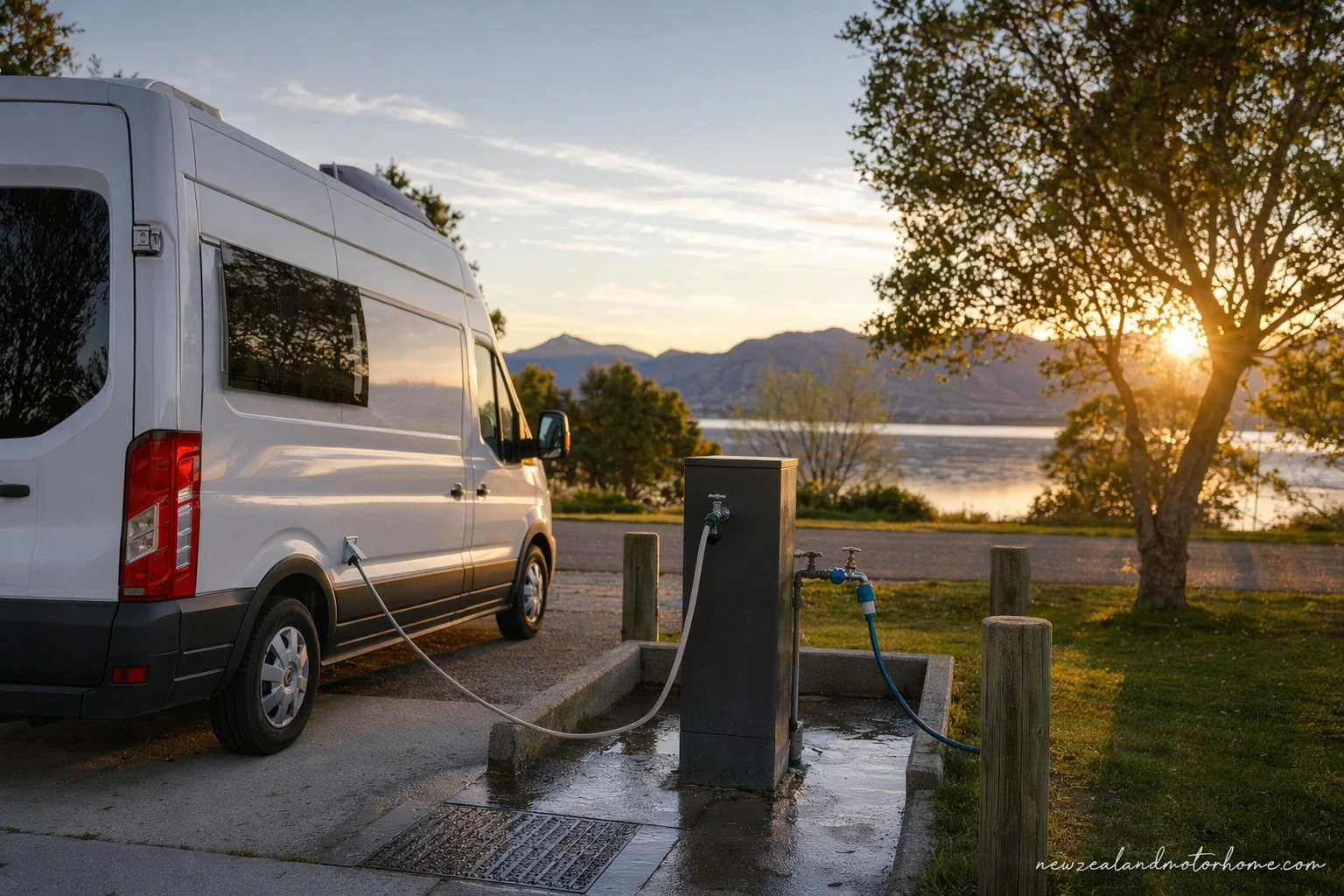
Powered sites are the safest default for new motorhome travellers, especially in winter, after a cloudy run of days, or if you are travelling with devices, e-bikes or medical equipment that needs charging. New Zealand holiday park power points are designed for proper caravan and motorhome leads, not household extension cords.
Unpowered sites can be excellent if your hire campervan has a healthy house battery, solar support and efficient appliances. They are also handy in busy parks where the powered rows are booked out, but they are not a substitute for a legal freedom camping spot unless the park has allocated them for overnight camping.
- Book powered when you want heat, reliable charging or a simple first night after picking up the van.
- Choose unpowered when you are confident with your battery use and only need toilets, showers and a safe place to sleep.
- Ask for a level site if your fridge or bed setup dislikes a slope.
- If your motorhome is long, request a drive-on or easy-reversing site rather than a tight grass corner.
After heavy rain, grass sites can soften quickly. If your van is heavy or rear-wheel drive, a gravel or sealed pad is often worth choosing where available.
Self-containment, freedom camping and why holiday parks still matter
A certified self-contained campervan gives you more flexibility, but it does not mean you can sleep anywhere. Council rules change by district, and many scenic car parks, beach reserves and town streets either prohibit overnight stays or restrict them to vehicles with current self-containment certification.
For most visitors, holiday parks are the backbone of a sensible North Island route. They let you reset the van: empty black and grey water, refill fresh water, recharge batteries, do laundry and take a proper shower. That makes the occasional legal freedom camping night far easier to manage.
- Check that your hire van carries current self-containment certification before relying on freedom camping.
- Use dump stations before tanks are full; do not wait until the warning light appears on a travel day.
- Never drain grey water onto the ground, even at a campsite.
- Top up drinking water at marked potable taps only.
- Keep LPG levels in mind before rural sections, public holidays or cold-weather hill country driving.
A practical rhythm is two or three nights moving between holiday parks, then a simple unpowered or freedom camping night only where it is clearly permitted and suitable for your vehicle.
Booking in peak season without boxing in the whole trip
North Island holiday parks fill quickly from late December through January, over long weekends and around big local events. Beach towns can be especially tight, and larger powered motorhome sites are usually fewer than small tent sites.
You do not need to lock every night months ahead, but it helps to anchor the pressure points: first night after pick-up, ferry nights, Christmas and New Year, Waitangi weekend, Easter and any beach stay you would be disappointed to miss. Between those, leave room for weather and road timing.
- Book coastal parks earlier in summer, especially if you need power.
- Tell the park your vehicle length, not just that you have a campervan.
- Ask about late arrivals if you are driving after a ferry or flight.
- Keep one shorter driving day before a popular stop so you arrive while staff are still available.
- Have a backup town in mind in case the first-choice park is full.
If you want help matching overnight stops to a realistic driving route, you can talk to us before you book the harder-to-change nights.
A simple way to build your own top 10 shortlist
Instead of chasing one universal ranking, choose holiday parks that solve a job in your itinerary. A great North Island campervan trip usually needs a mix of scenic stays and service stops, with enough short drives that you are not constantly arriving tired.
For a balanced top 10 holiday parks North Island plan, think in pairs: a beach stop, a forest or hot-pool stop, a lake stop, a cultural or food stop, and a city or ferry stop. Then check that each park fits the van, not just the map.
- First night: easy access, powered site and space to learn the van.
- Scenic two-nighter: beach, lake or bush walks close enough to leave the van parked.
- Service stop: dump station, water fill, laundry and groceries nearby.
- Weather-flex stop: somewhere with indoor options if rain arrives.
- Final night: simple drive to the depot, airport, ferry or next leg.
The best choices are the ones that reduce faff. If a park saves you an awkward morning drive to a dump station, a tight supermarket car park or a late-night search for a legal overnight spot, it has earned its place on the route.
Keep planning
North island 7 day campervan package
Read onNorth island 10 day campervan package
Read onTop 10 holiday parks south island
Read onWellington to palmerston north campervan
Read onSouth island 7 day campervan package
Read onSouth island 14 day campervan itinerary
Read onCommon questions
Do I need to book holiday parks in the North Island in advance?
In summer, school holidays and long weekends, yes, especially for powered sites near beaches, lakes and ferry routes. Outside peak periods you can often stay more flexible, but it is still wise to book your first night and any must-have stops.
Can I stay at a holiday park if my campervan is not self-contained?
Usually yes, because holiday parks provide toilets and waste facilities. Self-containment matters more for freedom camping and some low-facility campsites, but you should still confirm your van setup and use dump stations properly.
Are powered sites necessary for a hired motorhome?
Not every night, but they make the trip easier. A powered site helps recharge the house battery, run appliances safely and reset after cloudy days or heavy device use.
Do North Island holiday parks have dump stations?
Many do, but not all, and access may be for guests only. Check before arrival if your cassette or grey-water tank is getting full, and never assume a small campground has a dump point.
What should I tell a holiday park when booking a motorhome site?
Give your vehicle length, whether you need power, and whether you prefer a hardstand or grass site. If you are arriving late, towing bikes, or nervous about reversing, mention that too so they can allocate a suitable spot.
Is freedom camping a good alternative to holiday parks?
It can be for the odd night where it is legal and your van is certified self-contained, but it should not replace proper service stops. Holiday parks are where you recharge, refill, empty tanks and keep the trip comfortable.
Have a planner shape this for your dates
Send a short outline — your dates, party size, and the kind of trip you want. A planner replies with a vehicle recommendation, a paced route, and the realistic budget.