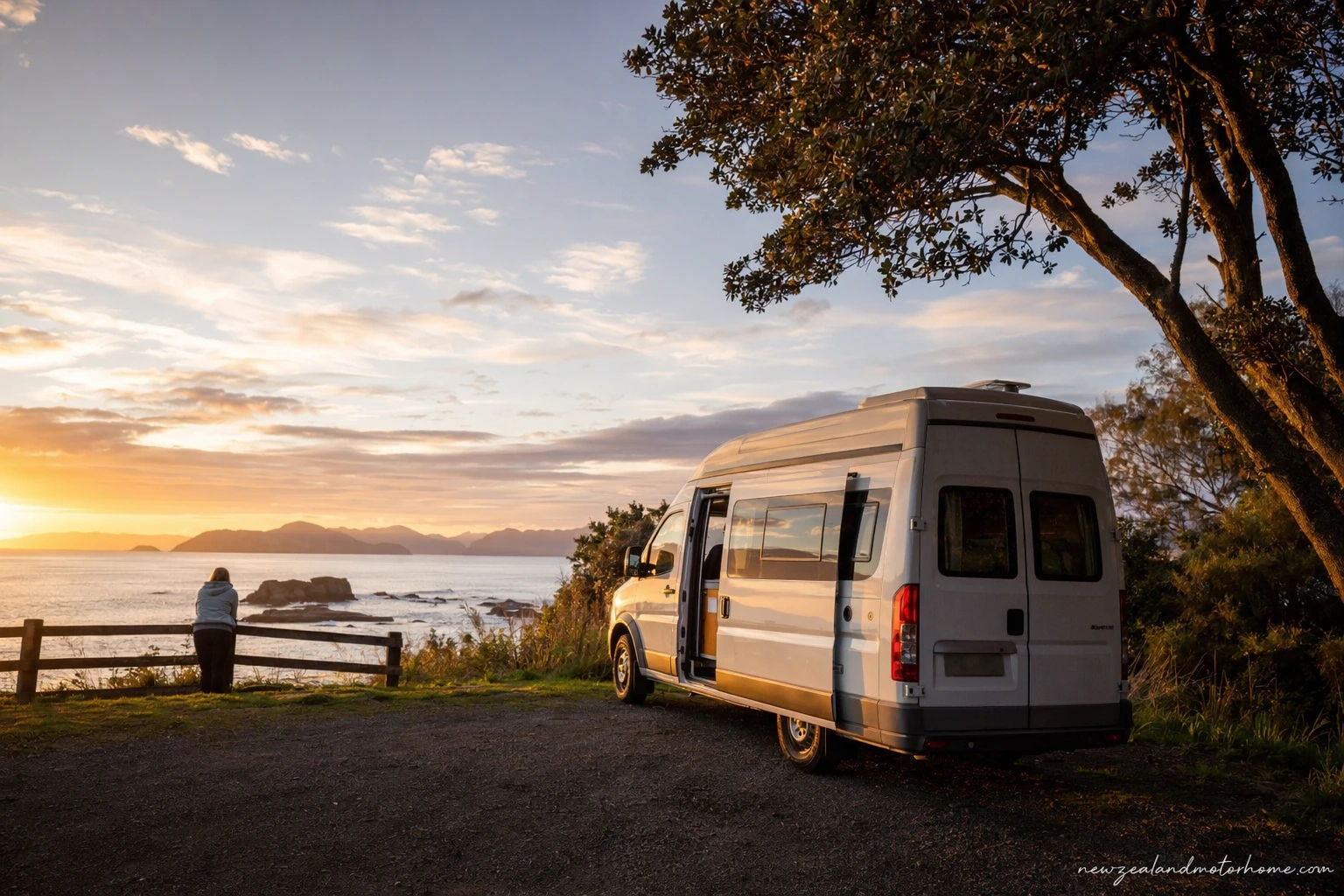
A north island 7 day campervan package for self-drive travellers
- 7 days Auckland loop
- Best with a certified self-contained van
- Powered and unpowered site mix
- Rotorua, Taupō and Waitomo focus
- Easy to moderate driving pace
This north island 7 day campervan package is built for travellers who want a planned week, but not a rushed checklist. You collect your van, sleep in your own space each night, and follow a loop that keeps the driving sensible while still giving you geothermal country, lake edges, glow-worm caves, surf coast and a proper taste of small-town North Island.
The idea is simple: a self-drive campervan holiday with the route, overnight rhythm and van logistics already thought through. We look at where a motorhome can actually park, when a powered site is worth booking, where fresh water and dump stations fit naturally, and how to avoid squeezing a tall van into the wrong town car park at the end of a long day.
The shape of the 7-day North Island loop
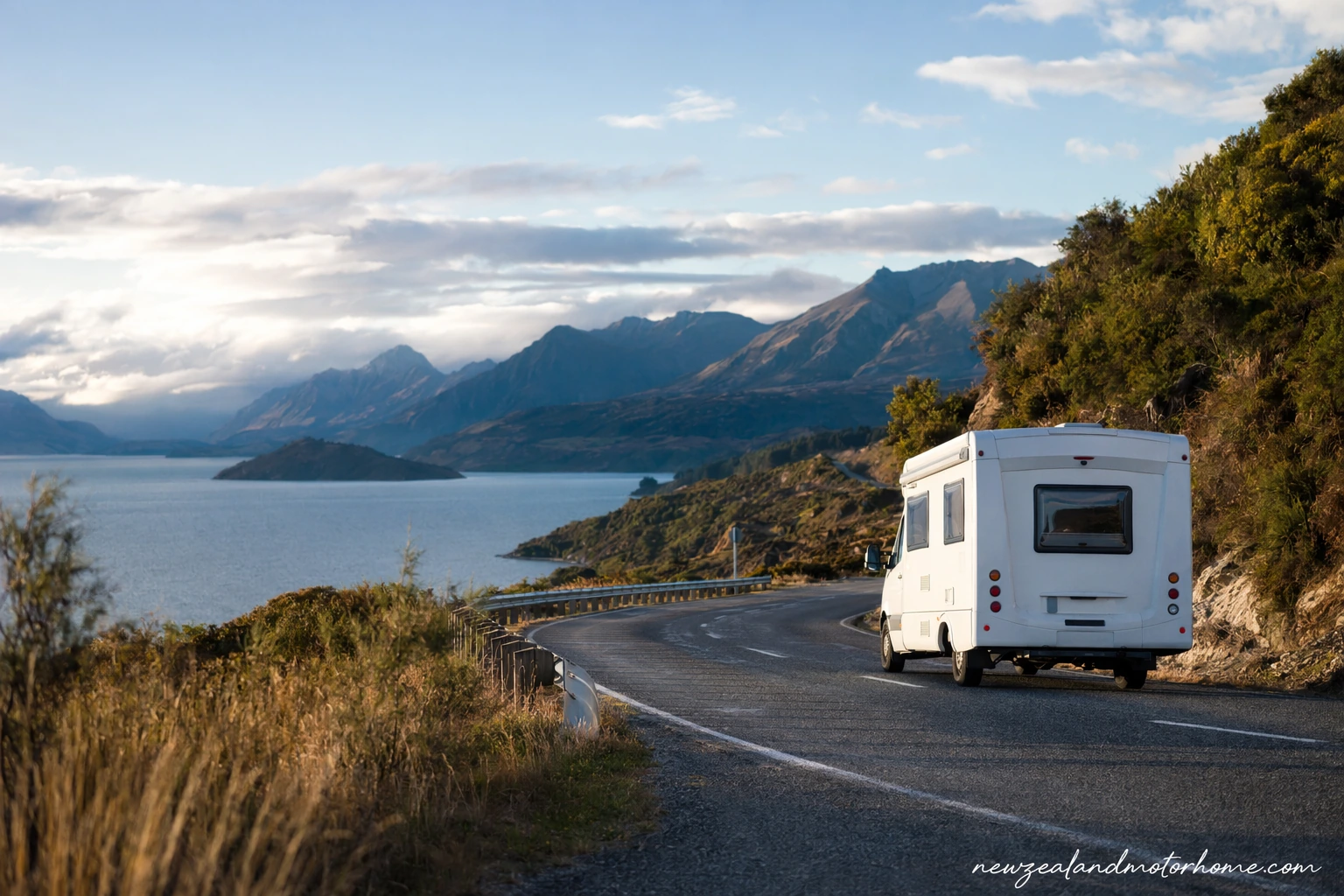
A good one-week North Island motorhome loop usually starts and finishes in Auckland, then runs south through Waikato, Rotorua, Taupō and Waitomo, with a coastal night added where the season and your flight times allow. It is not the whole island in seven days; it is a clean, driveable route that lets you unpack once each night and still have daylight left when you plug in.
For many vans, the sweet spot is two shorter driving days, three medium days, and one flexible day where you can choose a lake walk, thermal soak, cave tour, or quiet campsite afternoon. That balance matters when you are managing groceries, grey water, LPG, batteries and the reality of parking a 6 to 7.5 metre vehicle in visitor towns.
- Day 1: Auckland collection, supermarket stop, short run to the Waikato or Coromandel side depending on arrival time.
- Days 2-3: Rotorua for geothermal parks, forest trails and a powered-site reset.
- Day 4: Taupō or southern lake country, with time for a lakefront walk and dump station stop.
- Day 5: Waitomo or King Country, keeping the road pace gentle through rural highways.
- Days 6-7: Raglan, Hamilton surrounds or an easy Auckland return, depending on your departure time.
What the package planning includes
This is packaged thinking rather than a rigid coach-style itinerary. Your campervan is the base: the bed, kitchen, luggage space and evening shelter all travel with you, so the plan has to consider more than kilometres on a map. We shape the trip around your van size, confidence on New Zealand roads, preferred campsite style and whether you want mostly powered holiday parks or a mix of unpowered and freedom camping where permitted.
We can help line up the practical pieces: a suitable self-contained campervan or motorhome, a route that matches your arrival and departure times, suggested overnight areas, and reminders for water, waste and LPG. If you are travelling in school holidays or summer, the package should lean more heavily on booked campsites; outside peak periods, there is usually more room to keep a flexible night or two.
- Van choice: compact 2-berth for easier town parking, or a larger motorhome if you need fixed beds and more indoor space.
- Campsite mix: powered sites for battery and laundry resets, unpowered sites for quieter nights, and legal freedom camping only where your van certification and local rules allow.
- Road notes: guidance for narrow access roads, hill sections, visitor car parks and realistic daily drive times.
- Van logistics: fresh-water fills, dump stations, rubbish, LPG top-ups and when to plan a supermarket stop.
If you want the week shaped around your dates, van style and pace, the soft next step is to talk to us before you lock in flights or campsites.
Where the van sleeps each night
North Island camping rules are local, so the safest package uses confirmed holiday parks and recognised camping areas rather than assuming any scenic pull-off is fine. Rotorua, Taupō, Waitomo and coastal townships all have different controls on overnight parking, and signs on the ground always beat an old screenshot or forum comment.
A powered site is especially useful early in the trip while you learn the van: it gives you mains power, showers, laundry, rubbish facilities and usually an easy place to empty the cassette or grey-water tank. Unpowered sites can be excellent once you know how your fridge, lights and house battery behave overnight.
- Auckland arrival night: choose somewhere easy to reach before dark if your flight lands late.
- Rotorua: use a holiday park or approved camping ground rather than sleeping in attraction car parks.
- Taupō: check lakefront restrictions carefully, as some areas allow day parking but not overnight stays.
- Waitomo and rural Waikato: plan ahead; facilities can be more spread out than they look on the map.
Your van must be certified self-contained if you want to use sites that require it, and the certificate needs to match the current New Zealand rules. Even then, freedom camping is never automatic; it depends on the local bylaw, signage and the specific reserve or parking area.
Driving notes for a motorhome week
North Island driving is varied: motorway out of Auckland, rolling Waikato farmland, geothermal town traffic in Rotorua, lake roads around Taupō and smaller rural highways towards Waitomo or Raglan. Distances can look short, but a campervan does not move like a car, especially once you factor in fuel, photo stops, food shopping and slower hill sections.
For a first self-drive trip, avoid arriving at a new campsite after dark. Reversing onto an unfamiliar site, finding the power bollard, levelling the van and working out the dump point is all easier while there is still daylight. If you are driving a taller motorhome, watch for height bars at urban car parks, low trees around lakeside reserves and tight turns at older service stations.
- SH1 and major state highways are straightforward, but allow extra time around Auckland traffic.
- The Thermal Explorer Highway through Rotorua and Taupō is a practical spine for a 7-day loop.
- Coromandel side roads can be narrow and winding; better for confident drivers and not ideal after a late van collection.
- Raglan access is scenic but has bends and hills, so take it steadily and use pull-over areas when traffic builds behind you.
How to tailor the week
The best version of a north island 7 day campervan package depends on what you want your evenings to feel like. Some travellers want a powered site most nights, a proper shower and a short walk to dinner. Others are happy with simpler camps, cooking in the van and a quieter view, provided there is a planned dump station and fresh-water stop the next day.
Families often do better with two-night stops in Rotorua or Taupō, because packing kids back into seatbelts every morning can turn a holiday into a transfer schedule. Couples and solo travellers may prefer a more flexible loop with one coastal overnight and a later decision on the final stop near Auckland.
- Add more nature: spend longer around Taupō, forest trails and lake-edge campsites.
- Add more culture and geothermal activity: base two nights in Rotorua and book a powered site.
- Add surf and cafés: include Raglan if your return flight time allows a relaxed final drive.
- Keep it easy: skip the outer coastal roads and stay on the central loop for simpler navigation.
We will never suggest a route that only works on paper. A good campervan package leaves room for filling the water tank, drying towels, emptying waste properly and sitting outside the van with a mug of tea before the evening cools down.
Keep planning
Top 10 holiday parks north island
Read onNorth island 10 day campervan package
Read onWellington to palmerston north campervan
Read onTop 10 holiday parks south island
Read onRotorua to palmerston north campervan
Read onQueenstown to palmerston north campervan
Read onCommon questions
Is 7 days enough for a North Island campervan trip?
Yes, if the route is kept focused. A 7-day campervan trip works well as an Auckland loop through Rotorua, Taupō and Waitomo, with one coastal or rural night added if your timing allows.
Should I book powered sites for every night?
Not always, but a powered site on the first night and every second or third night is sensible. It lets you recharge, use campground facilities, do laundry and reset the van systems without worrying about the house battery.
Can I freedom camp on this package?
Only where it is legal and your campervan meets the required self-containment rules. North Island councils have different bylaws, so the package should use current signage, approved camping areas and a backup paid campsite if a freedom camping area is full or closed.
What size campervan is best for this route?
A compact 2-berth is easiest for town parking and narrow visitor roads. A larger motorhome can be more comfortable for families or longer beds, but you need to allow more space for parking, turning and campsite access.
Where do we empty the toilet and refill water?
Plan dump stations into the route rather than leaving it until the tanks are full. Holiday parks commonly have dump points and fresh-water taps, and some towns provide public facilities, but you should check access before relying on them.
Have a planner shape this for your dates
Send a short outline — your dates, party size, and the kind of trip you want. A planner replies with a vehicle recommendation, a paced route, and the realistic budget.