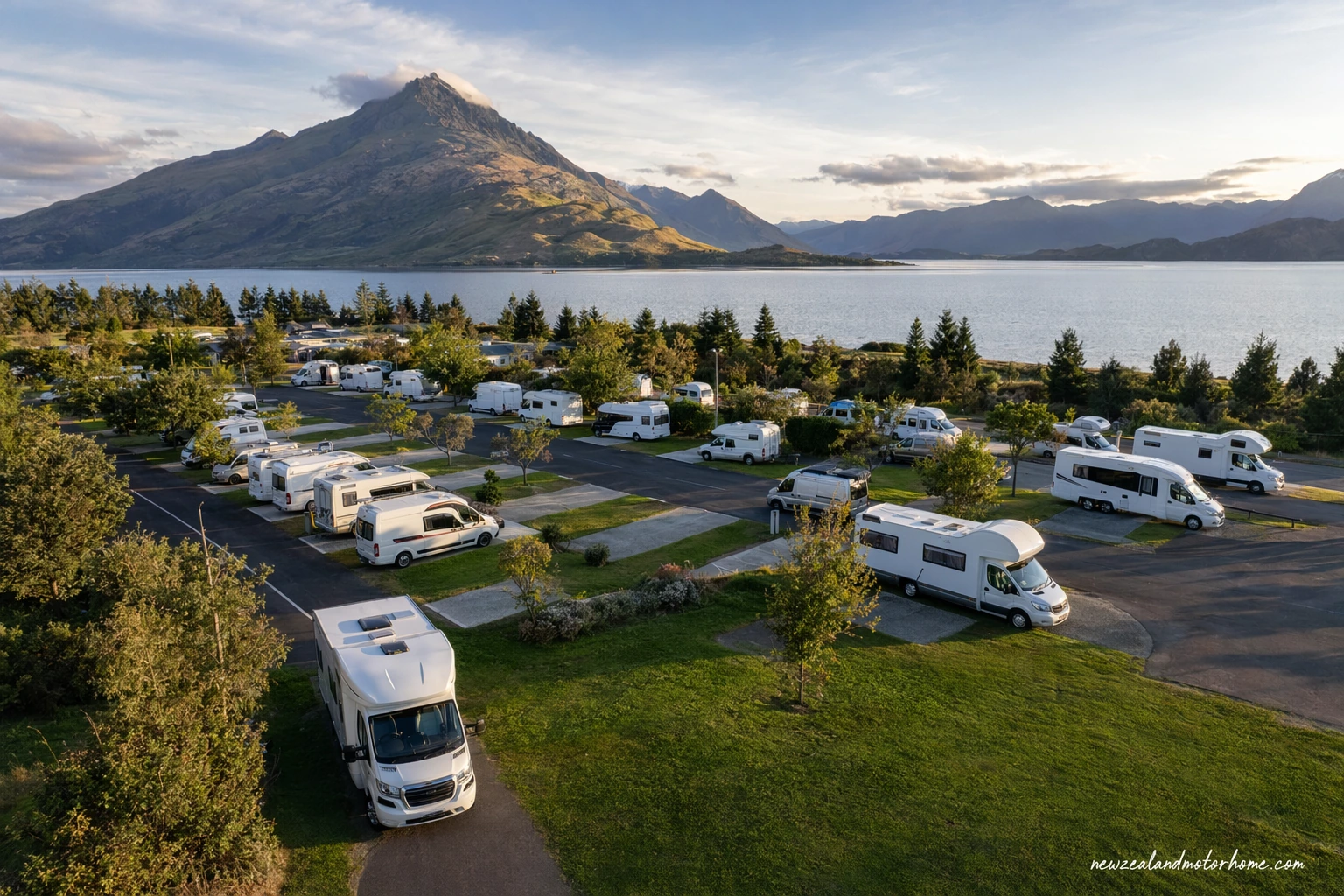
- Best season: Oct-Apr, busiest late Dec-Jan
- Site types: powered, unpowered, cabins nearby
- Van note: book length for 6-berth motorhomes
- Services: dump station and fresh water vary by park
- Plan style: mix scenic stays with service nights
The best South Island holiday park for a campervan is rarely just the one with the shiniest kitchen block. It is the place where you can reverse the van without drama, plug into power after a cold alpine day, empty the grey water legally, refill fresh water, and still step out to a beach, lake, glacier valley or small-town bakery in the morning.
This top 10 holiday parks South Island guide is written as a planning hub for self-drive motorhome travellers. Rather than naming a single winner, it helps you choose the right holiday park setting for your route, your van size, your need for powered or unpowered sites, and how much flexibility you want in peak season.
The 10 South Island settings worth shortlisting
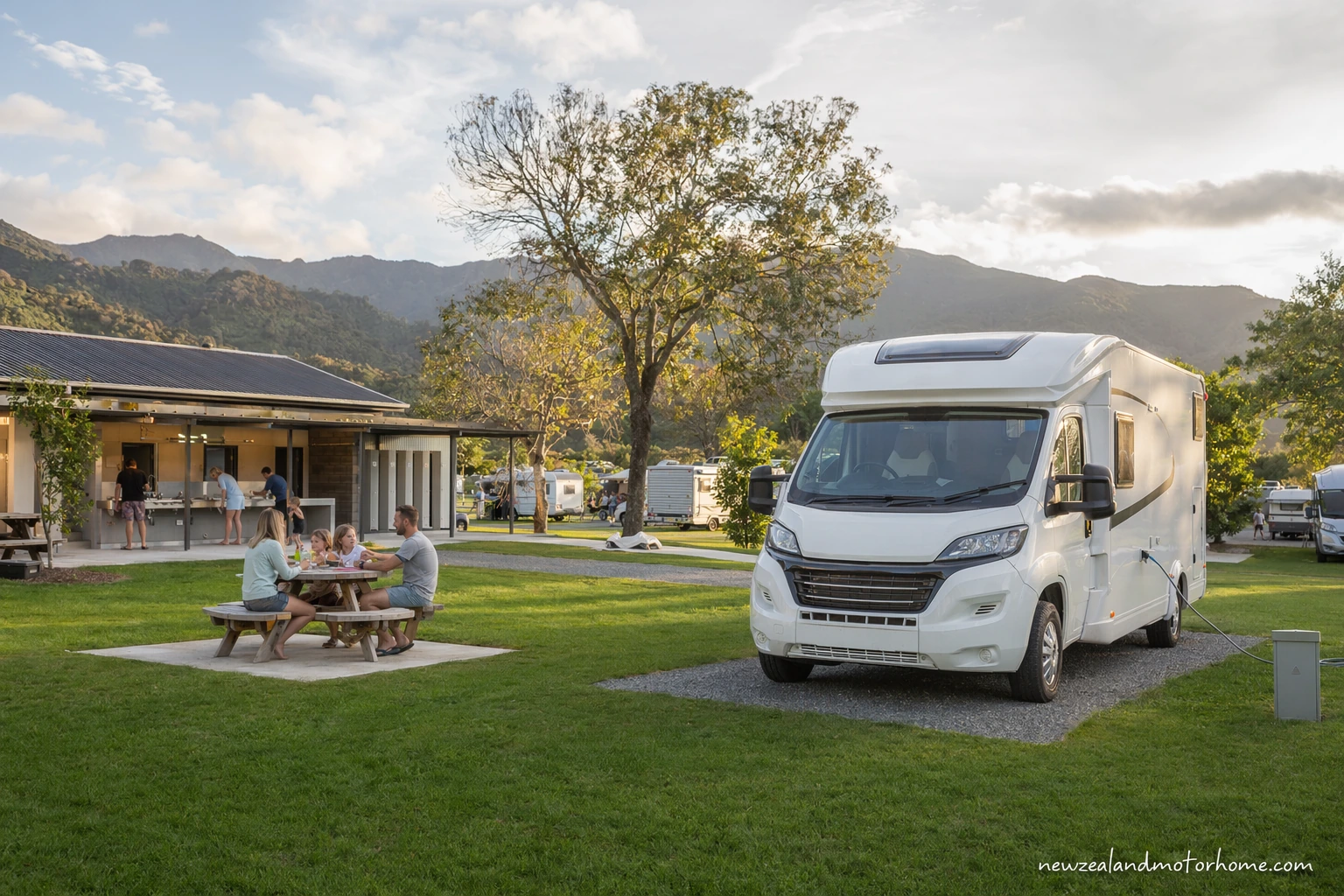
Think of this as a campervan shortlist by surroundings, not a beauty contest between individual operators. On a two-to-three week loop, you will usually mix coastal parks, lakefront parks, town-edge parks and one or two practical overnight stops near major driving links.
These are the South Island holiday park areas we would look at first when building a motorhome route:
- Nelson and Tasman Bay: sunny base for beaches, cycling and Abel Tasman day trips, with generally easier access for larger vans than tight beach lanes further north.
- Golden Bay: slower, scenic stays near Pohara, Takaka and Farewell Spit; allow for Takaka Hill and avoid arriving tired in a long vehicle.
- Kaikoura: ocean and mountain views, good as a coastal overnight between Marlborough and Christchurch.
- Hanmer Springs: a relaxed inland stop where a powered site is useful in cooler months.
- Banks Peninsula or Christchurch edge: handy before or after airport pick-up, with less stress than trying to park a tall van in the central city.
- Lake Tekapo, Twizel or Mount Cook access: big-sky Mackenzie Country stays where wind, frost and site shelter matter.
- Wānaka or Hāwea: lake and mountain camping with high summer demand; book ahead if you need a powered site.
- Queenstown, Frankton or Glenorchy access: choose for bus links, lake views or road access rather than assuming you can park easily in town.
- Te Anau or Manapouri: the practical motorhome base for Fiordland, Milford Sound departures and fresh-water top-ups.
- West Coast towns such as Hokitika, Franz Josef or Fox Glacier: useful all-weather stops where laundry, dump stations and drying rooms can matter as much as the view.
Powered or unpowered: what matters in a campervan
A powered site gives you 230V mains connection for charging devices, running a heater safely where permitted, topping up the house battery, and using appliances that draw more than your van battery comfortably handles. In winter, in Fiordland, on the West Coast, or after several freedom camping nights, power can be the difference between a pleasant reset and a damp van full of flat batteries.
Unpowered sites can be quieter and sometimes sit in more open corners of a park, but they rely on your solar, battery health and gas supply. If you are new to campervanning, alternate unpowered nights with powered nights until you understand your fridge, lights, water pump and heater use.
- Ask whether the powered site suits your vehicle length, especially for 6-berth motorhomes or vans with bike racks.
- Check if the site is grass, gravel or sealed; after heavy rain, a level gravel pad is worth having.
- Carry the correct approved power lead supplied with your hire van and never run a domestic extension cord outside.
- Park with enough room to open side doors, access LPG lockers and keep clear of neighbouring awnings.
Dump stations, fresh water and LPG are not afterthoughts
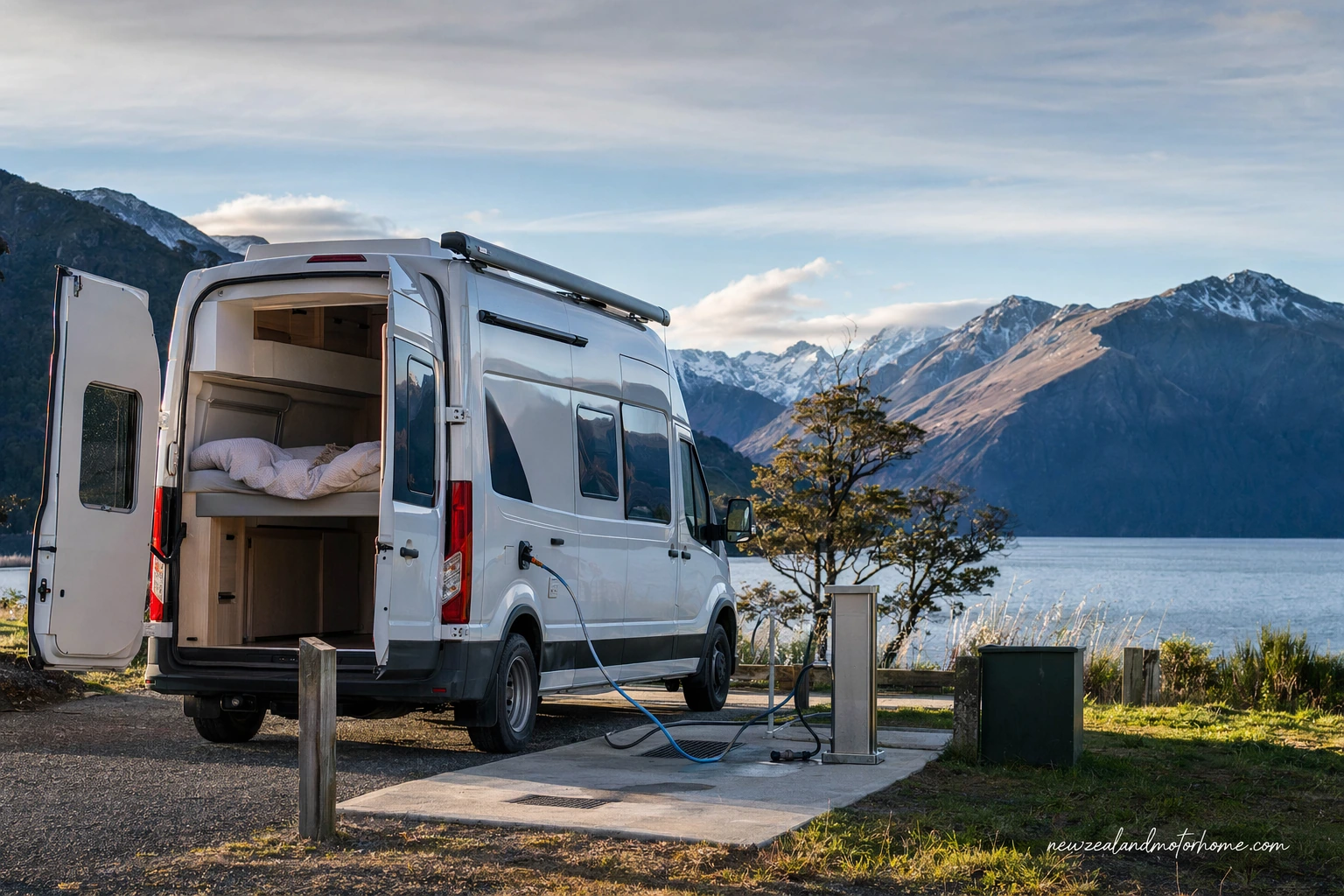
A good South Island holiday park makes van chores simple. You want a dump station that is easy to drive onto without sharp reversing, a potable water tap clearly separate from wash-down hoses, and enough space to pause without blocking other campers. Some parks keep dump stations for guests only, while public dump stations sit in many towns; either way, plan the stop before the cassette or grey tank is full.
Fresh water matters more than many first-time travellers expect. Windy Mackenzie stops, dusty summer roads and long West Coast wet days all lead to more washing, kettle boiling and shower use. Refill when it is easy rather than waiting for a remote scenic camp.
- Use only marked potable water taps for filling your fresh tank.
- Empty toilet cassettes and grey water only at approved dump stations.
- Check LPG bottle levels before heading into Fiordland, the Haast Pass or quieter coastal stretches.
- Use town stops for groceries, laundry and fuel rather than trying to do everything at a scenic campground.
If you are piecing together several regions and want help spacing these service nights, you can talk to us before locking in your route.
Self-contained rules and when a holiday park is the easier choice
Holiday parks are different from freedom camping. You can usually stay in a holiday park whether your campervan is certified self-contained or not, because you are using managed facilities. For freedom camping outside holiday parks, you must follow the local council or DOC rules for that exact place, and many areas require a current certified self-contained vehicle.
The South Island has some strict local controls, particularly near popular lakes, beaches and towns that have had heavy camping pressure. Do not assume a quiet roadside pull-off is legal just because another van is there. Fines, closed sites and unhappy locals are not worth it when a properly managed overnight stop is available.
- Check your hire van's self-containment certificate before leaving the depot.
- Use official council, DOC or holiday park information for each overnight stop.
- Keep receipts or booking confirmations handy if arriving late at a park.
- Do not drain grey water onto the ground, even on rural-looking sites.
Booking in peak season without losing all flexibility
From late December through January, and around school holidays, the best-located South Island holiday parks can fill quickly, especially in Wānaka, Queenstown, Abel Tasman, Kaikoura, Tekapo and Te Anau. Powered sites for larger motorhomes disappear sooner than simple tent spaces, so book the key nights that anchor your route.
You do not need to book every night months ahead if you prefer a looser trip, but you should protect the bottlenecks: first night after pick-up, Christmas-New Year period, Milford Sound access nights, and any town where you need a powered site plus laundry before continuing. Shoulder seasons give you more freedom, though weather can still make a powered reset worthwhile.
- Book arrival-night accommodation close enough that you are not learning the van in the dark.
- Confirm late check-in instructions if your ferry, flight or mountain-road drive could run long.
- Tell the park your van length and whether you need a powered site.
- Keep one or two practical town stops in the plan for groceries, dump station use and fresh water.
Road and parking notes for bigger vans
South Island roads are scenic but not always quick. A campervan is wider, taller and slower to stop than a car, and you will feel that on Takaka Hill, the Crown Range, the Milford Road, the Haast Pass and parts of the West Coast. Build short driving days around the most beautiful stretches so you are not rushing into a holiday park after office hours.
When choosing a park, look beyond the map pin. Check whether access is via a narrow beach road, steep driveway, low tree canopy or tight one-way lane. If you are travelling in a long motorhome, a slightly less dramatic site with easy turning space can be the better night's sleep.
- Know your vehicle height before entering covered parking, ferry lanes or older service stations.
- Use pull-outs to let faster traffic pass; locals will appreciate it and you will drive more calmly.
- Arrive before dark when sites are terraced, grassy or close to water.
- Choose town-edge parks when you want to walk or shuttle rather than hunt for central parking.
Keep planning
South island 7 day campervan package
Read onSouth island 14 day campervan itinerary
Read onSouth island 10 day campervan package
Read onTop 10 holiday parks north island
Read onNorth island 7 day campervan package
Read onNorth island 10 day campervan package
Read onCommon questions
Do I need a powered site every night in the South Island?
No, but most campervan travellers are happier mixing powered and unpowered nights. Use powered sites after cold nights, wet weather, heavy heater use, or two to three nights away from mains power.
Can I stay at a holiday park if my campervan is not self-contained?
Usually yes, because holiday parks provide toilets, showers and waste facilities. Self-containment matters most for freedom camping outside managed campgrounds, where local rules can be strict.
Are South Island holiday parks suitable for large motorhomes?
Many are, but you should state your vehicle length when booking. Ask for an easy-access site if you have a 6-berth motorhome, rear bike rack, limited reversing confidence or need space for slide-out doors and LPG access.
Should I book holiday parks before I start driving?
Book key nights in peak season, especially around Queenstown, Wānaka, Tekapo, Abel Tasman, Kaikoura and Te Anau. Outside peak periods, you can often stay flexible, but still book if you need power, laundry and a dump station on a specific night.
Do all holiday parks have dump stations and fresh water?
Not all, and access rules vary. Check before arrival, especially if you are using the park as a service stop after freedom camping or before driving into a more remote area.
Is freedom camping a good alternative to holiday parks?
It can be, if your van is properly certified self-contained and the site is legal for overnight camping. Holiday parks are the easier option when you need power, showers, laundry, waste disposal, fresh water or a guaranteed place to park the van.
Have a planner shape this for your dates
Send a short outline — your dates, party size, and the kind of trip you want. A planner replies with a vehicle recommendation, a paced route, and the realistic budget.