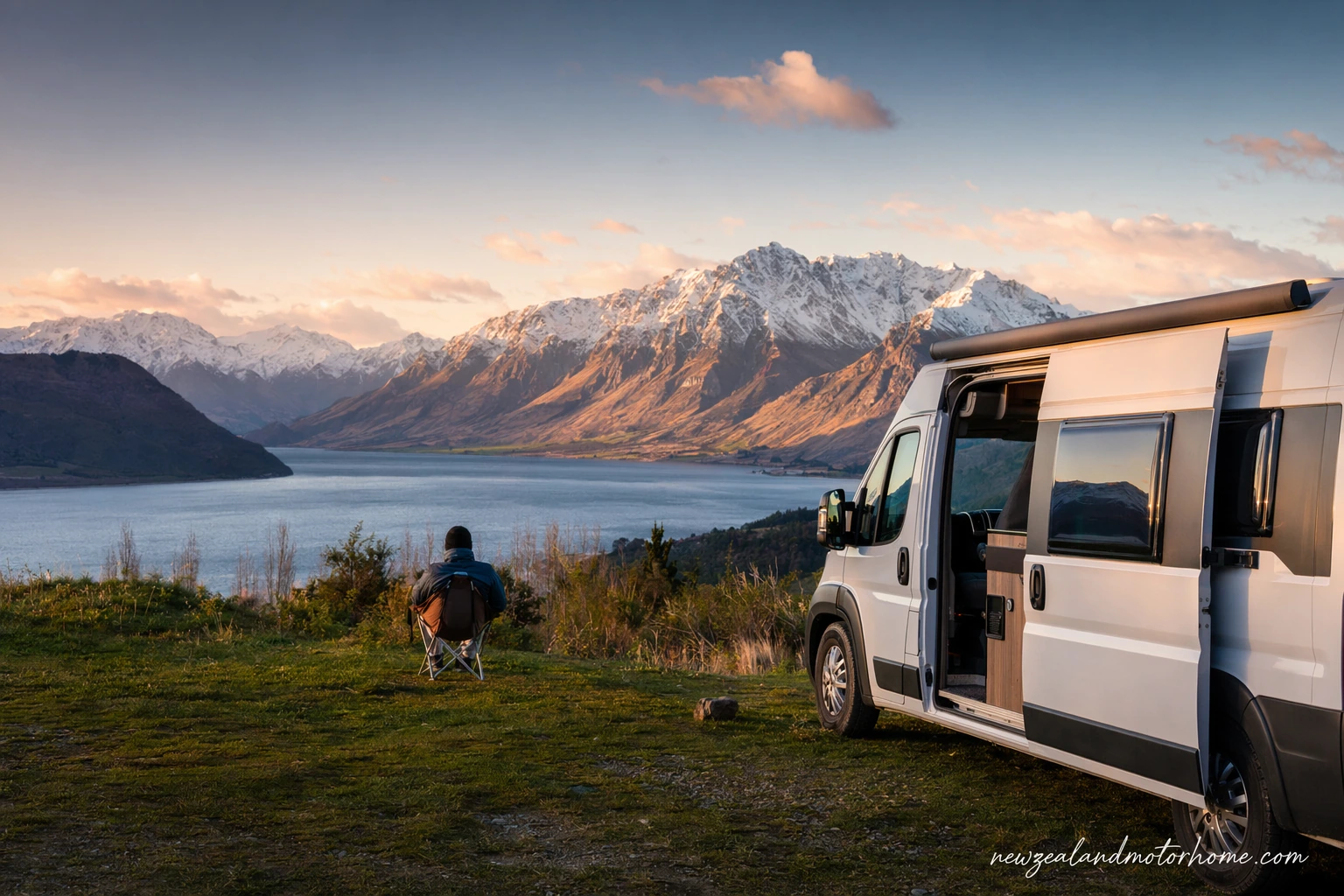
A South Island 10 Day Campervan Package Built for Steady Driving
- 10 days / 9 nights
- Best as Christchurch to Queenstown
- Powered sites every 2-3 nights
- Certified self-contained van needed
- Mountain-road weather checks
This south island 10 day campervan package is for travellers who want the freedom of their own hired van, but not the guesswork of working out every overnight, water fill and mountain-road decision from scratch.
The shape is a one-way South Island drive, usually Christchurch to Queenstown or the reverse, with time for the Mackenzie Country, Aoraki / Mount Cook, Wānaka, Queenstown and Fiordland. You still drive yourself, cook in your van when it suits, choose powered or unpowered sites, and pull over when the light is good.
We plan it around how campervans actually travel in New Zealand: shorter driving days where the roads are winding, sensible first and last nights, holiday parks when you need showers and charging, and freedom camping only where your certified self-contained van is allowed.
The 10-day route shape
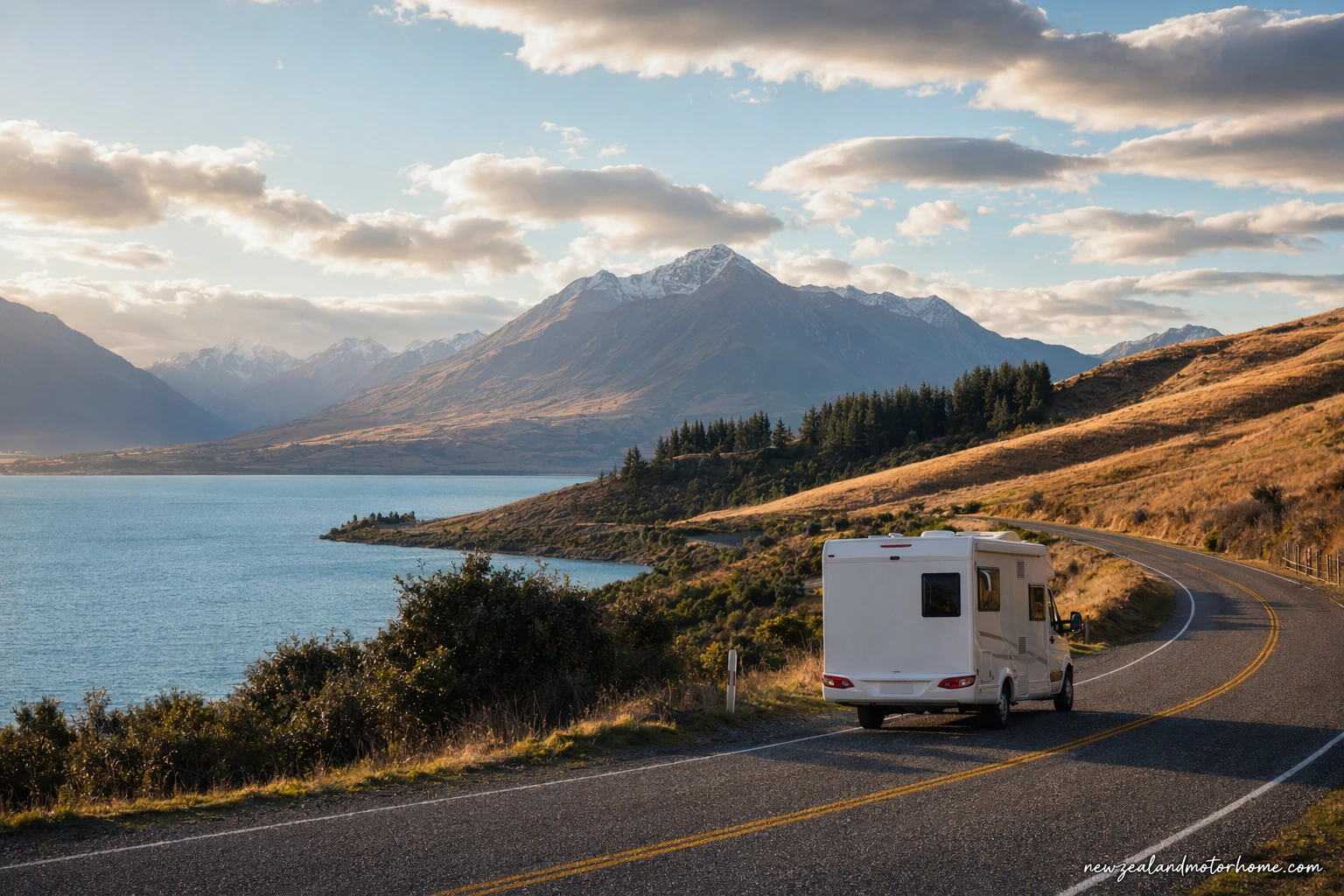
The cleanest version of this package starts in Christchurch and finishes in Queenstown, so you are not spending your last two days retracing long kilometres. It gives the trip a proper South Island feel without forcing a full-island loop into too few nights.
A typical campervan pace looks like this:
- Day 1: Pick up the van in Christchurch, stock the pantry, check how the heating, LPG and waste system work, then stay close to the city for an easy first powered site.
- Day 2: Drive to Lake Tekapo or nearby Mackenzie Country, with time to settle the van before dark and plug in if the nights are cool.
- Day 3: Head into Aoraki / Mount Cook, using designated car parks only and keeping an eye on wind exposure in high-sided vehicles.
- Days 4-5: Cross the Lindis Pass to Wānaka and stay two nights if you want a slower lake day, laundry, water top-up and battery reset.
- Days 6-7: Continue to Queenstown, using a holiday park or designated campervan parking rather than trying to squeeze a larger van into the busy town centre.
- Days 8-9: Drive to Te Anau for Fiordland, with Milford Sound treated as a full-day out-and-back only when road and weather conditions suit your hire agreement.
- Day 10: Return to Queenstown with time to empty grey water, refill fuel and hand the van back without rushing.
If flights work better the other way, the route can be reversed. We keep the same logic: do not put a long mountain drive on arrival day, and do not leave dump station tasks until the last hour.
Van choice, campsite rhythm and real comforts
A 10-day South Island trip works best when the van matches the roads and the travellers, not just the bed count. A compact 2-berth is easier around supermarket car parks, lakefront pull-offs and older holiday park lanes; a larger 4-berth gives families more storage, but needs more care with height, turning space and wind.
We usually build in a powered site every second or third night. That gives you reliable charging, a warm cabin in colder months, proper showers, laundry and a chance to reset the cassette toilet and grey-water tank without searching late in the day.
- Powered sites: Useful in Tekapo, Wānaka, Queenstown and Te Anau, especially if you are using heating, camera batteries or laptops.
- Unpowered sites: Good for clear nights and shorter stays, but only if your house battery, fridge use and water level are in good shape.
- Freedom camping: Only where local bylaws allow it and only with a certified self-contained vehicle; some lake and town areas are actively monitored.
- Servicing stops: Plan dump stations, fresh-water fills and LPG before remote legs, particularly before Aoraki / Mount Cook and the Milford Road.
The point is not to over-book every night. It is to hold the key nights where space matters, then leave breathing room where the weather or your energy level may change the day.
Road notes for a campervan, not a car
This package uses sealed State Highways, but several stretches feel very different in a campervan. The Lindis Pass is wide enough for confident drivers, yet exposed in strong wind and snow-prone in winter. The approaches to Aoraki / Mount Cook and Fiordland are spectacular, but you need to allow more time for photo stops and slower corners.
Queenstown is the place where van size matters most. Larger motorhomes are happier parked at a campground, in Frankton, or in designated larger-vehicle areas, with walking, buses or shuttles used for the compact centre. Trying to thread a long van through tight lakeside streets is rarely worth the stress.
- Crown Range: Beautiful but steep and winding; many campervan travellers choose the Kawarau Gorge route instead, especially in poor weather.
- Milford Road: Check conditions before leaving Te Anau, carry chains if required by your hire terms, and expect no last-minute fuel or dump facilities inside the national park.
- Gravel and side roads: Stay within your rental agreement; many scenic tracks are not suitable for hired campervans.
- Height awareness: Watch for trees, older service-station canopies and low branches in smaller holiday parks.
We would rather make the driving day 40 minutes longer on paper than send you over a route that feels wrong for the van you have hired.
What the package thinking includes
A campervan package is more than a van plus a line on the map. The useful work is in matching the route, overnight pattern and vehicle setup so the holiday feels self-drive, but not improvised.
When we shape this trip, we think through:
- where to collect and return the campervan so the first and last days are not wasted;
- whether a compact camper, larger motorhome or family layout suits your luggage, sleeping needs and driving confidence;
- which nights should be powered, and which can stay flexible;
- where dump stations, fresh-water taps, supermarkets and LPG refills sit naturally along the route;
- what insurance, bond and excess options you should understand before you pick up the keys;
- seasonal notes such as snow chains, shorter daylight, sandflies in Fiordland and booking pressure around school holidays.
We do not need to fill the itinerary with paid activities to make it work. Often the best value in a 10-day campervan holiday is a calmer drive, a better-positioned overnight stop and knowing where you can legally park the van for the night.
Ways to tailor the trip
The default version suits first-time South Island campervan travellers who want lakes, mountains and Fiordland without pushing too hard. From there, the package can be nudged to suit your season, flight times and appetite for long days.
For a slower trip, we would add a second night at Aoraki / Mount Cook or Te Anau and trim back Queenstown activities. For a winter version, we would favour powered sites, earlier finishes, and routes with better weather fallbacks. For a family trip, we would keep more two-night stops so the van does not have to be packed down every morning.
- Start Christchurch: Best for a gentle first day and a classic Mackenzie Country approach.
- Start Queenstown: Works well if flights are easier, but we still avoid putting Milford Sound too early in the trip.
- Add time: Twelve days lets the route breathe and makes an extra Wānaka or Fiordland night much easier.
- Shorten it: Possible, but we would usually remove a region rather than turn every day into a pack-up-and-drive day.
If you want this turned into a specific self-drive plan with van type, route order and overnight logic, use the plan-your-trip step and tell us who is travelling, your dates and how comfortable you are driving a larger vehicle.
Keep planning
Top 10 holiday parks south island
Read onSouth island 7 day campervan package
Read onSouth island 14 day campervan itinerary
Read onTop 10 holiday parks north island
Read onHoliday parks white island
Read onHoliday parks stewart island
Read onCommon questions
Is 10 days enough for the South Island in a campervan?
Yes, if you choose a focused route rather than trying to loop the whole island. A Christchurch to Queenstown plan gives you major South Island scenery while keeping most driving days manageable in a campervan.
Do I need to book campsites in advance?
Book key powered sites in busy places such as Tekapo, Wānaka, Queenstown and Te Anau, especially from late spring to early autumn. You can keep some flexibility, but do not rely on finding a legal freedom camping spot late in the day.
Can I freedom camp on this package?
Sometimes, but only in places where local rules allow it and only if your vehicle is certified self-contained. Many popular lakefront and town areas have restrictions, so the itinerary should include legal alternatives.
What size campervan is best for this route?
A compact 2-berth is the easiest for parking and winding roads. Families or travellers wanting more indoor space may prefer a larger motorhome, but we plan more carefully around campground access, town parking and exposed roads.
Should we drive the campervan to Milford Sound?
It can be done in suitable weather, but it is a long day from Te Anau and needs an early start. Check road conditions, fuel, hire agreement rules and winter chain requirements before committing.
Where do we empty waste and fill water?
The route is planned around regular dump stations and fresh-water points in gateway towns such as Christchurch, Tekapo area, Wānaka, Queenstown and Te Anau. We avoid leaving toilet cassette, grey-water or LPG tasks until remote sections.
Have a planner shape this for your dates
Send a short outline — your dates, party size, and the kind of trip you want. A planner replies with a vehicle recommendation, a paced route, and the realistic budget.