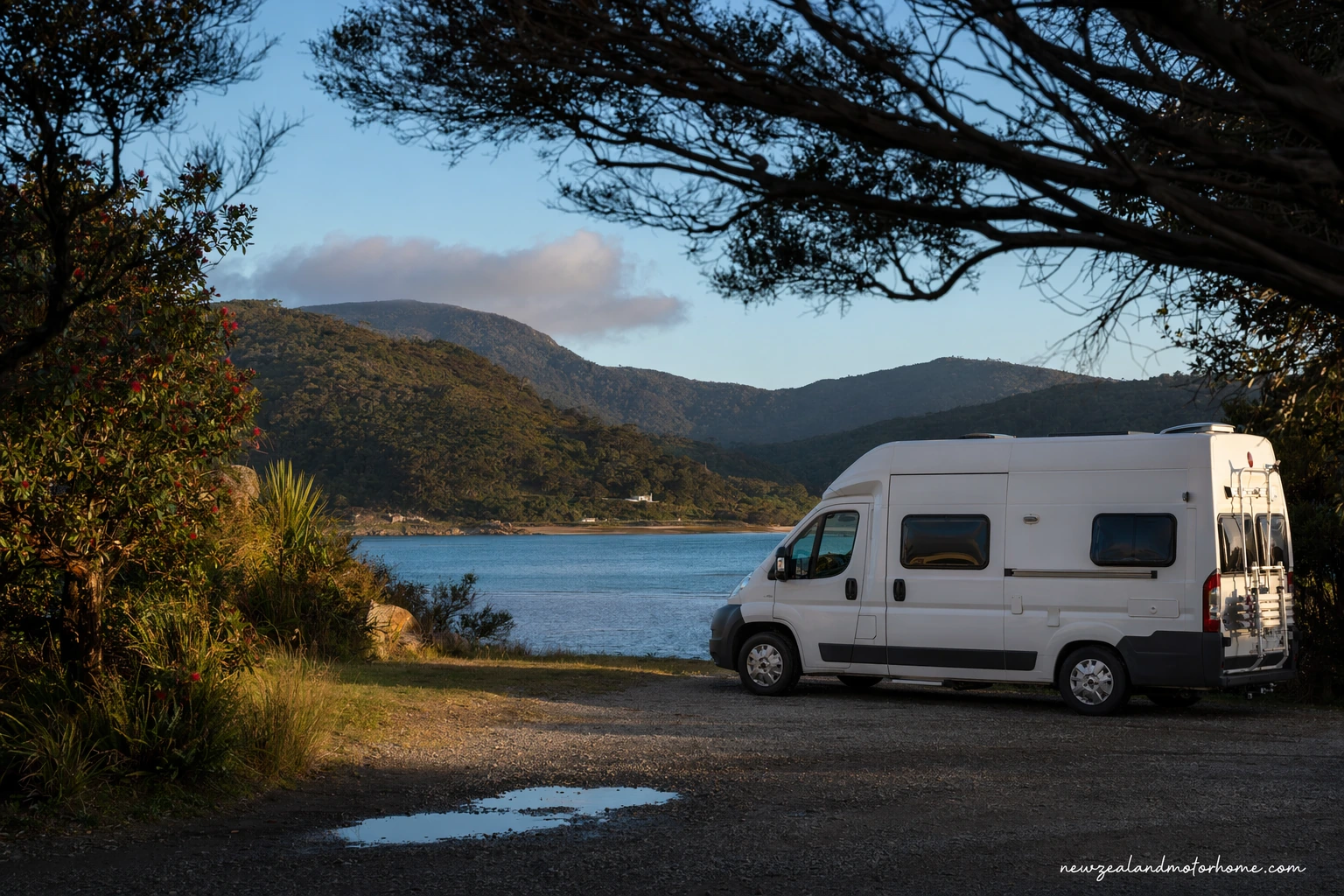
- Van usually stays on mainland
- Best bases: Bluff or Invercargill
- Use dump station before ferry
- Powered sites useful in cool weather
- Allow a weather buffer
Planning holiday parks Stewart Island in a hired campervan needs one important bit of local reality: your van normally stays on the mainland. The usual ferry to Oban is for passengers, not motorhomes, so the smooth way to do Rakiura is to book a powered or unpowered site around Bluff or Invercargill, park the van securely, and cross with a day pack or overnight bag.
This guide is written for self-drive travellers who are sleeping in their van before and after the crossing. You’ll find practical notes on where to park, when to empty the toilet cassette, how to handle fresh water and LPG, and what to see around the southern coast before you point the bonnet back north.
The honest campervan answer: base on the mainland
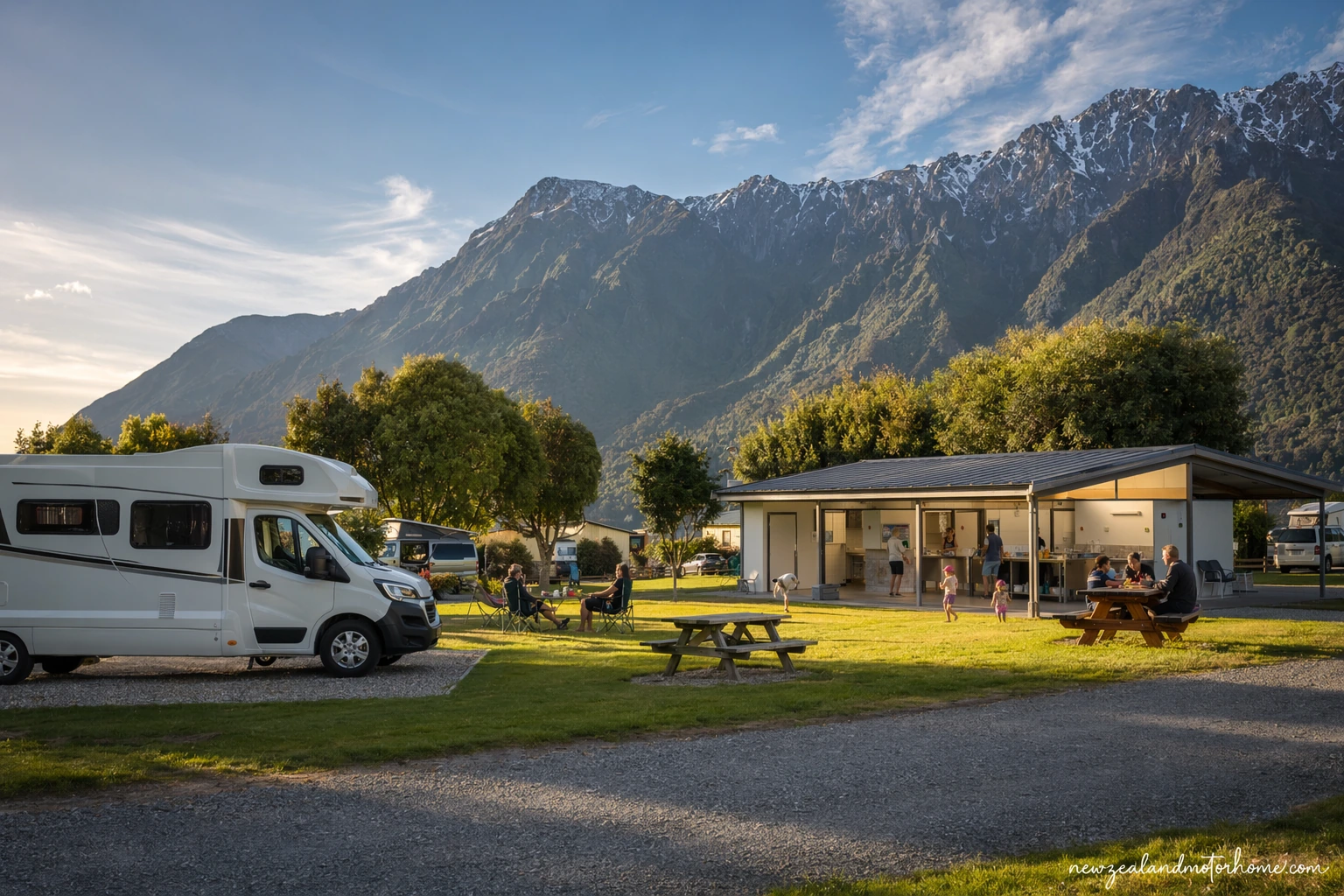
If you typed stewart island top 10 holiday park into a search bar, the useful answer is not a big resort-style motorhome park on the island. For campervan travel, Stewart Island/Rakiura is best treated as a ferry-and-foot side trip from a mainland holiday park, with your certified self-contained van left in Southland.
The regular passenger ferry lands at Oban on Halfmoon Bay. Taking a hired motorhome across by freight arrangement is not the normal visitor option, can be costly and awkward, and may sit outside your hire agreement. Oban’s roads are short, hilly in places, and not set up as a motorhome touring loop.
- Sleep in the van at Bluff or Invercargill before your ferry day.
- Empty grey water and toilet cassette before leaving the vehicle for the island.
- Top up fresh water on the mainland, especially if you are returning late.
- Check LPG and fuel before heading down to Bluff, as choices get slimmer at the end of the road.
Bluff or Invercargill: choosing your overnight stop
Bluff is the closest base for the ferry, with a salty harbour feel, big sky, and an easy run to the terminal in the morning. It suits travellers who want to wake up near the crossing and avoid an early drive. Sites may be more limited than in a larger town, so book ahead in summer and around public holidays.
Invercargill gives you more breathing room for supplies, supermarkets, fuel, LPG swaps, laundry and workshop help if the van needs attention. It is a better choice if you want a powered site, a dump station nearby, and a relaxed night before continuing the Southern Scenic Route.
- Powered sites: handy before or after a cold, damp Rakiura day when you want the heater, fridge and devices sorted.
- Unpowered sites: fine for one night if your house battery is healthy and your fridge is already cold.
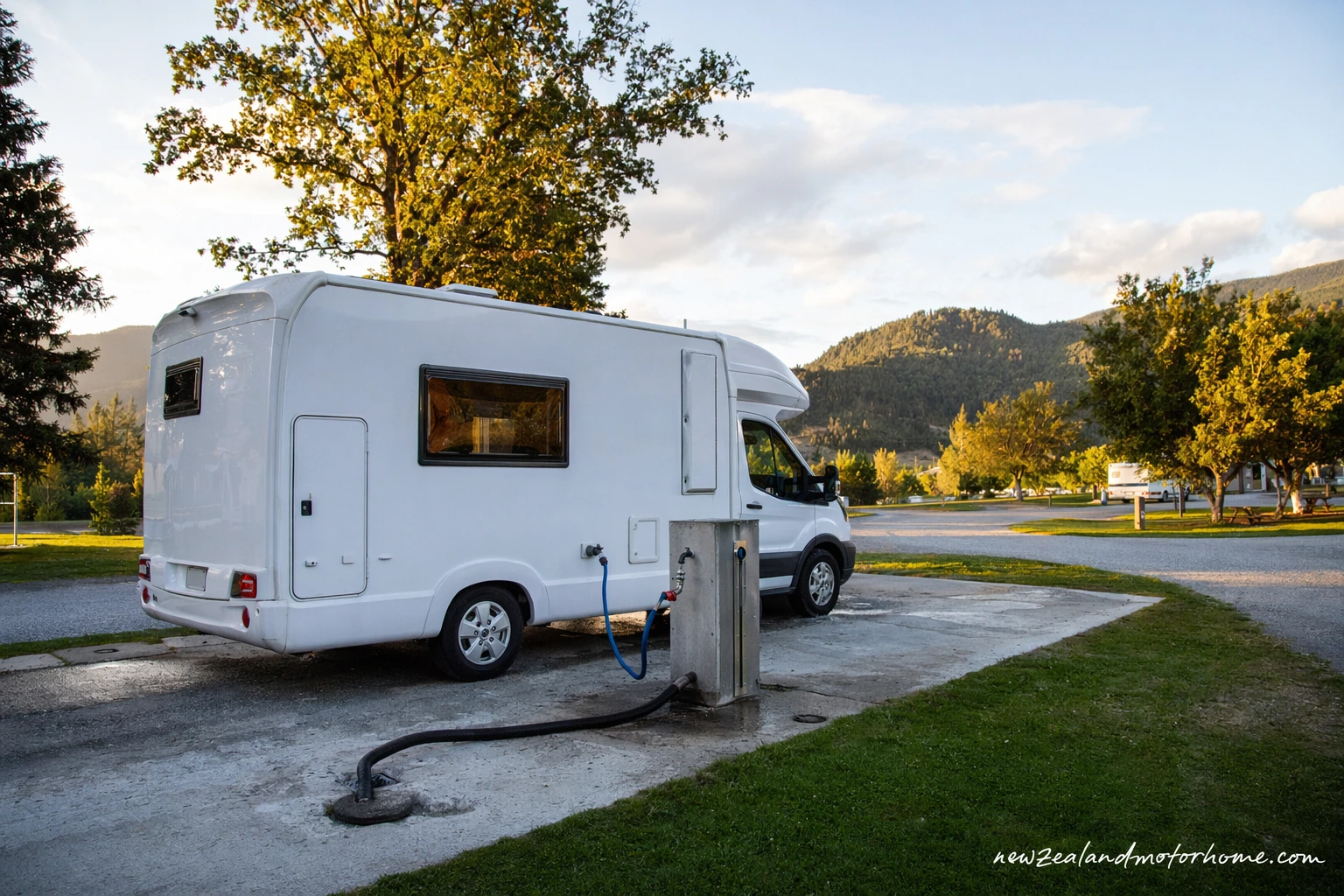
- Dump stations: use an official public or holiday park dump point before the ferry rather than trying to solve it after parking.
- Fresh water: fill from a potable tap only; do not assume every public tap is drinking water.
If you want help fitting Stewart Island into a wider Southland or Catlins loop without rushing the van days, you can talk to us before locking in ferry times and overnight stops.
Where to park the campervan for the Stewart Island ferry
The big practical question is where to park campervan Stewart Island plans revolve around. For most travellers, that means driving to Bluff, allowing time for check-in, and using the parking arrangements signed for ferry passengers. Arrive earlier than you think you need to; manoeuvring a 6–7 metre motorhome always takes longer when everyone else is also heading for the boat.
Before walking away from the van, close roof vents if the forecast is wild, switch off loose appliances, put valuables out of sight, and make sure the fridge can cope while you are away. If you are leaving the van overnight, confirm that the parking you choose allows overnight stays and is suitable for your vehicle length.
- Do not assume you can sleep overnight in the ferry car park; follow current council signs and bylaws.
- Fold mirrors in if parked in a tight row, but remember to open them before driving off.
- Leave nothing hanging near windows; Southland weather and curiosity both find weak spots.
- Keep your ferry bag separate from the gear you normally spread around the van.
Camping Stewart Island once you are off the ferry
Camping Stewart Island is a different style of trip from rolling into a powered site. Once you step off at Oban, you are travelling on foot, by water taxi, shuttle or track, and your accommodation choices shift to lodges, small stays, and Department of Conservation-style campsites for trampers rather than motorhome pitches.
If you plan to camp on the island, pack like a walker: waterproof layers, food storage, a head torch, insect repellent, and gear you can carry. Rakiura weather changes quickly, tracks can be muddy, and sandflies are not shy. Your campervan remains your mainland base, not your island bedroom.
- Check campsite and hut bookings before you ferry over, especially in peak season.
- Carry out rubbish and keep food secure around wildlife.
- Do not rely on campervan facilities such as your shower, fridge or toilet while on the island.
- Allow a buffer night on the mainland if your onward route depends on weather-sensitive ferry timing.
Things to do near Stewart Island before and after the crossing
There are plenty of things to do near Stewart Island while the van is based on the mainland. Bluff’s waterfront, harbour outlooks and short walks give you that end-of-the-road feeling without needing to move the motorhome far. The weather can be dramatic, so keep an eye on wind if you are driving a high-roof van along exposed streets or parking near the coast.
On the island side, Oban is compact and lovely for a day: wander around Halfmoon Bay, take a short coastal walk, join a guided wildlife outing, or head to Ulva Island if conditions and timing suit. Back on the mainland, Invercargill is useful for a reset night with laundry, groceries, fuel and a proper dump-and-fill before the next leg.
- Bluff: ferry departure point, harbour views, seafood stops and short scenic drives.
- Oban: easy walking from the wharf, cafés, bays and Rakiura National Park access.
- Ulva Island: a memorable birdlife side trip when sea conditions are right.
- Invercargill: the practical campervan reset for supplies, LPG, water and laundry.
Keep planning
Stewart island campervan guide
Read onTop 10 holiday parks south island
Read onTop 10 holiday parks north island
Read onSouth island 7 day campervan package
Read onSouth island 14 day campervan itinerary
Read onSouth island 10 day campervan package
Read onCommon questions
Are there holiday parks on Stewart Island for campervans?
Not in the usual mainland motorhome sense. Most campervan travellers stay at a holiday park in Bluff or Invercargill, park the van, then take the passenger ferry to Oban.
Can I take my hired campervan to Stewart Island?
For normal touring, no. The regular ferry is passenger-focused, and moving a motorhome by freight is not a standard holiday option and may not be allowed under your hire agreement.
Where should I empty the toilet cassette before visiting Stewart Island?
Use an official dump station in Bluff, Invercargill, or at your holiday park before you park for the ferry. Do it before the crossing so you are not returning to a full cassette late in the day.
Is freedom camping a good idea near the Stewart Island ferry?
Only if the site is clearly permitted for certified self-contained vehicles under current local bylaws. Do not assume ferry-area parking allows overnight sleeping; check signs and use a holiday park if in doubt.
How many days should campervan travellers allow for Stewart Island?
Allow at least two nights on the mainland if you want an unhurried day trip, or add extra nights if you are staying on the island. A weather buffer is sensible, especially if your next motorhome leg is tightly timed.
Have a planner shape this for your dates
Send a short outline — your dates, party size, and the kind of trip you want. A planner replies with a vehicle recommendation, a paced route, and the realistic budget.