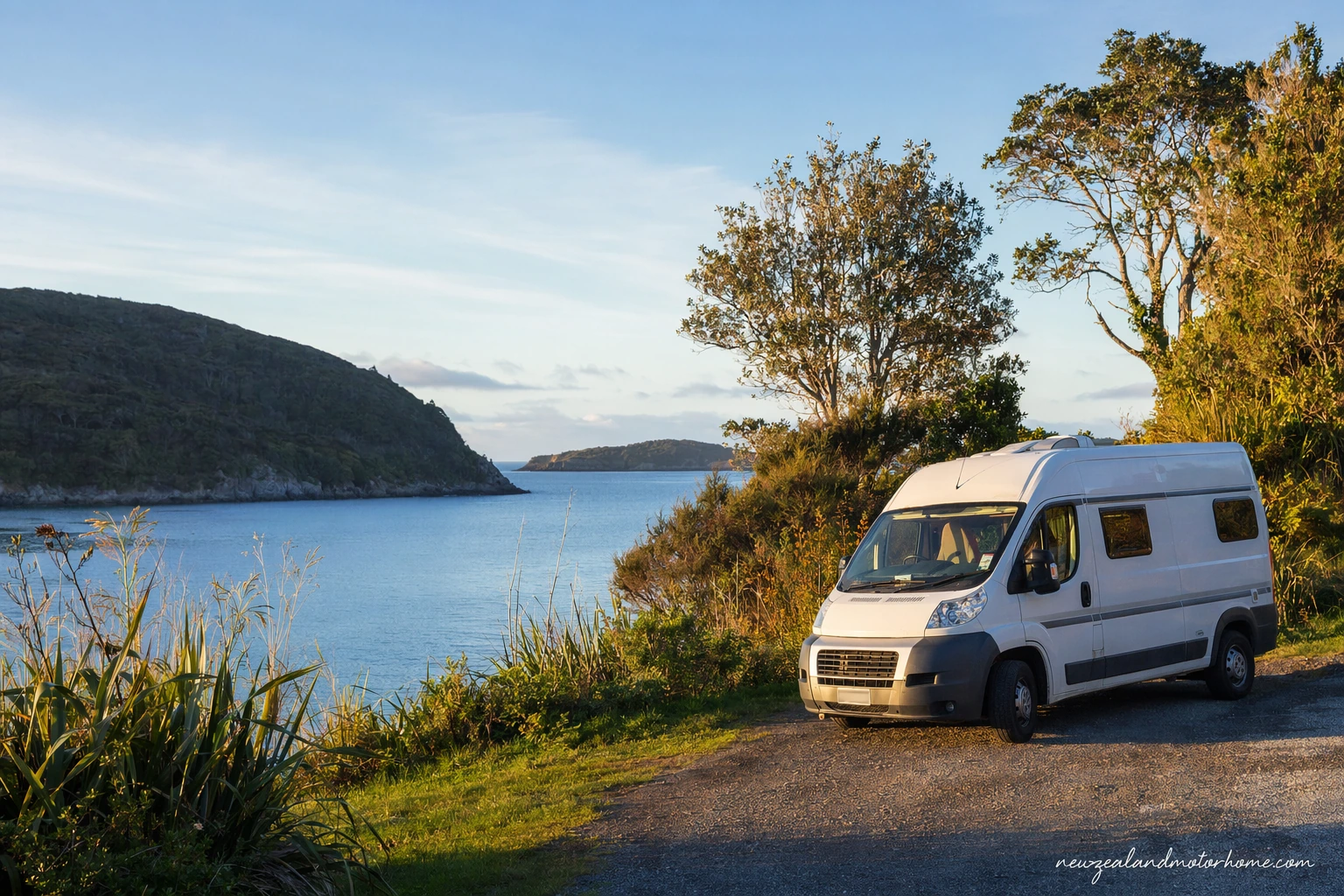
- No regular campervan ferry
- Best base: Bluff or Invercargill
- Allow 2-3 days if possible
- Powered sites on mainland
- Service van before crossing
Stewart Island/Rakiura is one of those Southland detours that suits a slow campervan trip beautifully, even though your van will not be going over with you. The island ferry leaves from Bluff, so the practical bit is working out where to park the campervan, where to sleep the night before or after, and what to carry across as a foot passenger.
This stewart island campervan guide is written for self-drive travellers heading down through Invercargill and Bluff in a hired campervan or motorhome. You will find the useful logistics here: long-stay parking, camping near Stewart Island, dump and water planning, road notes for the Bluff run, and how to fold Rakiura into a wider southern route without rushing it.
Can you take a campervan to Stewart Island?
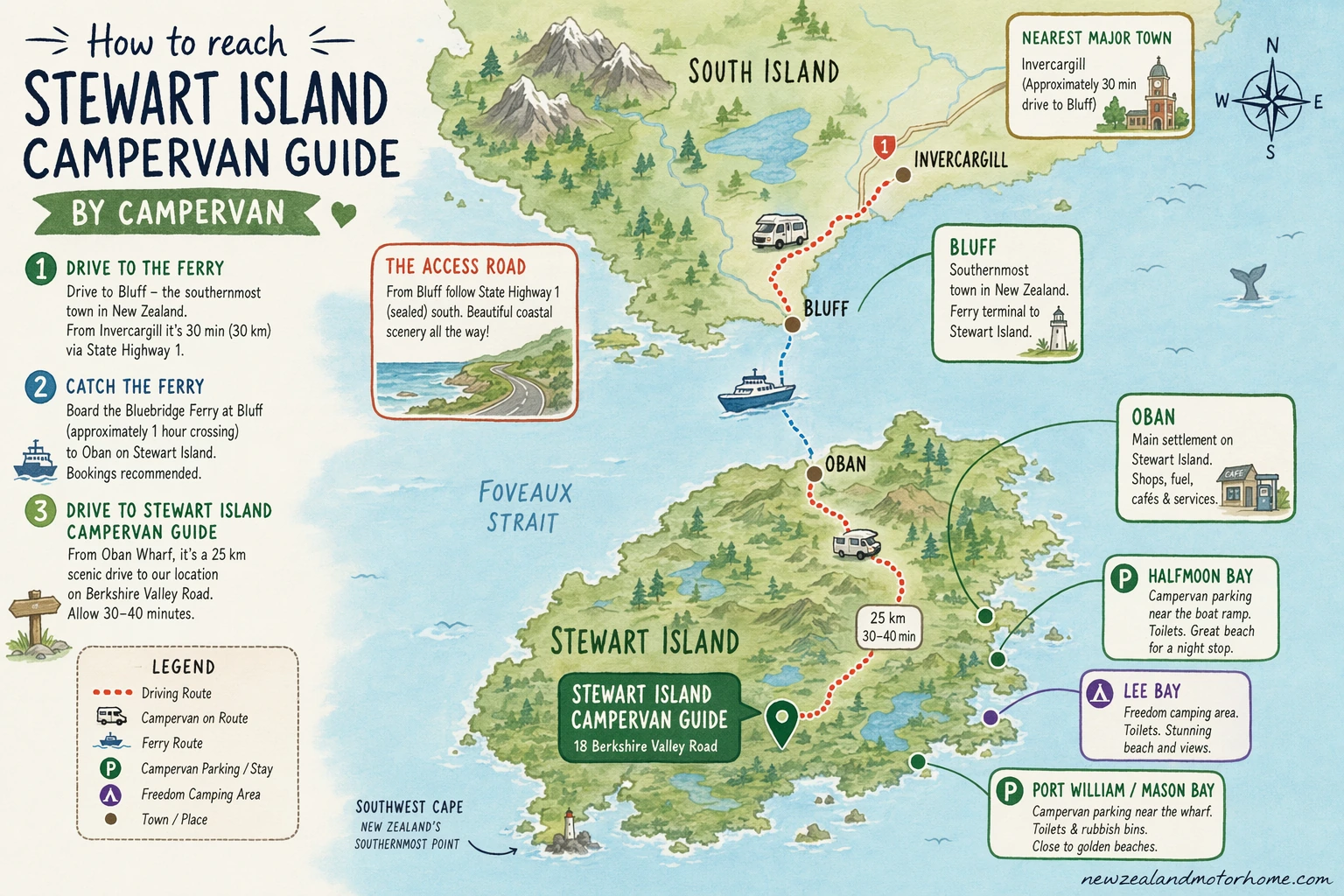
For almost all visitors, the answer is no: plan your campervan Stewart Island visit as a foot-passenger ferry trip from Bluff. There is no regular public vehicle ferry designed for touring campervans and motorhomes, and arranging vehicle freight is not a practical holiday option for a hired van.
That changes the shape of the trip in a good way. Treat Bluff or Invercargill as your van base, leave the motorhome secured on the mainland, and pack a day bag or overnight bag for Oban and the tracks around Halfmoon Bay.
- Do not book island activities assuming you can drive between them in the van.
- Check your hire agreement before leaving the vehicle in long-stay parking.
- Take valuables, wet-weather gear, medications and charging cables with you.
- If you are sleeping on the island, confirm luggage limits with the ferry operator before travel.
Where to park the van in Bluff before the ferry
Bluff is compact, and the streets around the ferry terminal can feel tight in a longer motorhome, especially when ferry traffic, locals and freight vehicles all meet at once. Give yourself time to arrive, turn around if needed, and read the current parking signs rather than assuming a kerbside space is suitable for an all-day stay.
Most campervan travellers use designated long-stay parking near the Bluff ferry area or arrange parking through their accommodation if staying the night before. If your vehicle is tall, long, or has a rear bike rack, check access and bay size before committing to a spot.
- Arrive earlier than you would in a car; manoeuvring a 6–7 metre van takes more time.
- Use signed long-stay areas rather than short-stay terminal spaces.
- Fold mirrors in when parked, and do not leave levelling ramps or gear outside the vehicle.
- Lock gas bottles, bikes and external storage, and take passports or booking documents with you.
Camping near Stewart Island: Bluff or Invercargill?
Camping near Stewart Island usually means spending the night in Bluff or Invercargill before an early ferry, or after you return. Bluff keeps you closest to the terminal and the harbour mood, while Invercargill gives you more choice for groceries, fuel, LPG and van services.
Look for established campgrounds or holiday parks if you want a powered site, showers, laundry and a fresh-water fill. If you are considering freedom camping, only use places that are currently permitted for certified self-contained vehicles and check local council signs on the day; rules can change and some areas are patrolled.
- Powered sites are useful before the ferry if you want a full fridge, charged devices and a warm dry van.
- Unpowered sites suit a one-night stop if your house battery and water are already sorted.
- Certified self-contained status does not mean you can park anywhere overnight.
- Avoid parking up late in residential streets around the terminal; use a proper overnight spot instead.
Dump stations, fresh water, LPG and food before you cross
Do the practical chores on the mainland. Oban has small-town supplies, but it is not the place to be solving campervan waste, LPG or fresh-water issues because your motorhome is not with you. Invercargill is the easiest service point before Bluff, with fuel, supermarkets and campervan-friendly facilities more widely available.
Use authorised dump stations and potable-water taps only, whether they are at a campground, a council-listed facility or another signed service point. If you are unsure which stop best matches your route and van size, our talk-to-us planning step can help you line it up with ferry timing and overnight sites.
- Empty grey and black water before parking the van for a multi-day island stay.
- Top up fresh water if you are returning late and sleeping in the van afterwards.
- Refill LPG in Invercargill or another confirmed mainland stop, not after you are already committed to the ferry.
- Stock the fridge with simple return-night food; Southland evenings can be quiet outside main centres.
What to do on Stewart Island while the motorhome waits
Once you step off at Oban, the pace changes. A motorhome Stewart Island visit works best when you stop thinking like a driver and start walking: beaches, bush tracks, birdlife and sheltered bays are all close enough to enjoy without the van.
Many campervan travellers come over for a day, but an overnight stay gives you a better chance of hearing kiwi after dark, taking a water taxi to Ulva Island, or walking part of Rakiura National Park without watching the ferry clock all afternoon.
- For a day trip, keep plans close to Oban and allow a weather buffer for the return ferry.
- For an overnight trip, book accommodation or backcountry huts/campsites before crossing.
- Carry rain gear even in settled weather; the island can turn damp quickly.
- Bring a small torch or headlamp if you are hoping for evening wildlife walks.
How Stewart Island fits a southern campervan route
Stewart Island sits naturally at the bottom of a Catlins, Invercargill and Fiordland loop. From Dunedin or the Catlins, you can roll into Invercargill, service the van, overnight near Bluff, visit Rakiura, then continue west towards Riverton, Tuatapere, Te Anau and Milford Sound/Piopiotahi.
The drive from Invercargill to Bluff is straightforward, but it is exposed and can be windy. Keep both hands on the wheel in crosswinds, watch for stock trucks and coastal weather, and remember that a high-roof campervan catches gusts more than a car.
- Allow at least two nights in the wider Bluff/Invercargill area if you want a calm ferry day.
- Build in a spare weather day if Stewart Island is a trip highlight.
- Service the van before heading west, where distances between full facilities increase.
- After returning from the island, avoid driving tired; book a nearby overnight stop if the ferry gets in late.
Keep planning
Holiday parks stewart island
Read onTop 10 holiday parks south island
Read onTop 10 holiday parks north island
Read onSouth island 7 day campervan package
Read onSouth island 14 day campervan itinerary
Read onSouth island 10 day campervan package
Read onCommon questions
Can I sleep in my campervan on Stewart Island?
No, not in normal touring terms, because you will not be taking the campervan over on a public vehicle ferry. Sleep on the mainland in Bluff or Invercargill, or book island accommodation, huts or campsites if staying on Rakiura.
Is there secure parking for campervans at Bluff?
There are long-stay parking options used by ferry passengers in Bluff, but suitability depends on current availability and your van size. Check parking details before travel, arrive early, and use signed areas rather than short-stay spaces near the terminal.
Should I stay in Bluff or Invercargill before the ferry?
Bluff is closest to the ferry and suits an early sailing. Invercargill is better if you need groceries, LPG, fuel, laundry, a dump station or a wider choice of powered sites before heading to the terminal.
Do I need a certified self-contained campervan for this trip?
It helps if you plan to use permitted freedom camping areas on the mainland, but certification does not let you stay wherever you like. Always follow local council signs and use proper campgrounds or holiday parks when you need power, showers and waste facilities.
How long should I allow for a Stewart Island campervan detour?
A quick version takes one night near Bluff plus a day trip to Oban. A more relaxed plan is two or three nights in the area, with one night on the island and enough time to service the van before continuing your Southland route.
Have a planner shape this for your dates
Send a short outline — your dates, party size, and the kind of trip you want. A planner replies with a vehicle recommendation, a paced route, and the realistic budget.