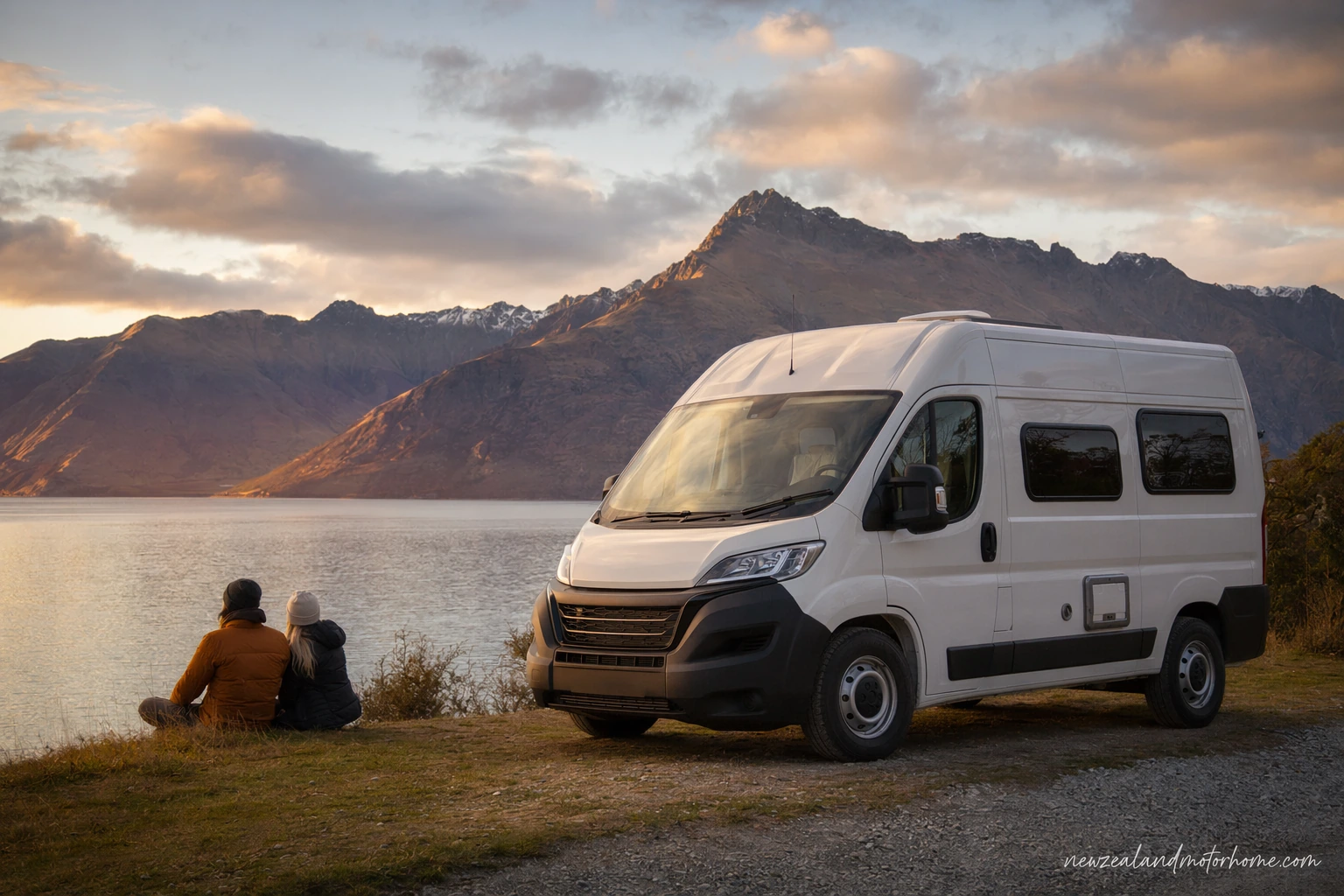
- 7 days / 6 nights
- Best from Christchurch
- Powered sites recommended
- Self-containment helpful
- Alpine road conditions
This south island 7 day campervan package is built for travellers who want the freedom of their own van without spending every evening guessing where to sleep, fill water, or empty the toilet cassette. It gives you a sensible self-drive shape through the high-country South Island, with time for lake edges, alpine roads, small-town supplies and proper campground resets.
The idea is not to race around every famous viewpoint. It is to keep the driving manageable, place overnight stops where a campervan actually works, and leave room for weather, slow breakfasts and the odd extra photo stop when the light drops over the Mackenzie Basin.
The 7-day route shape
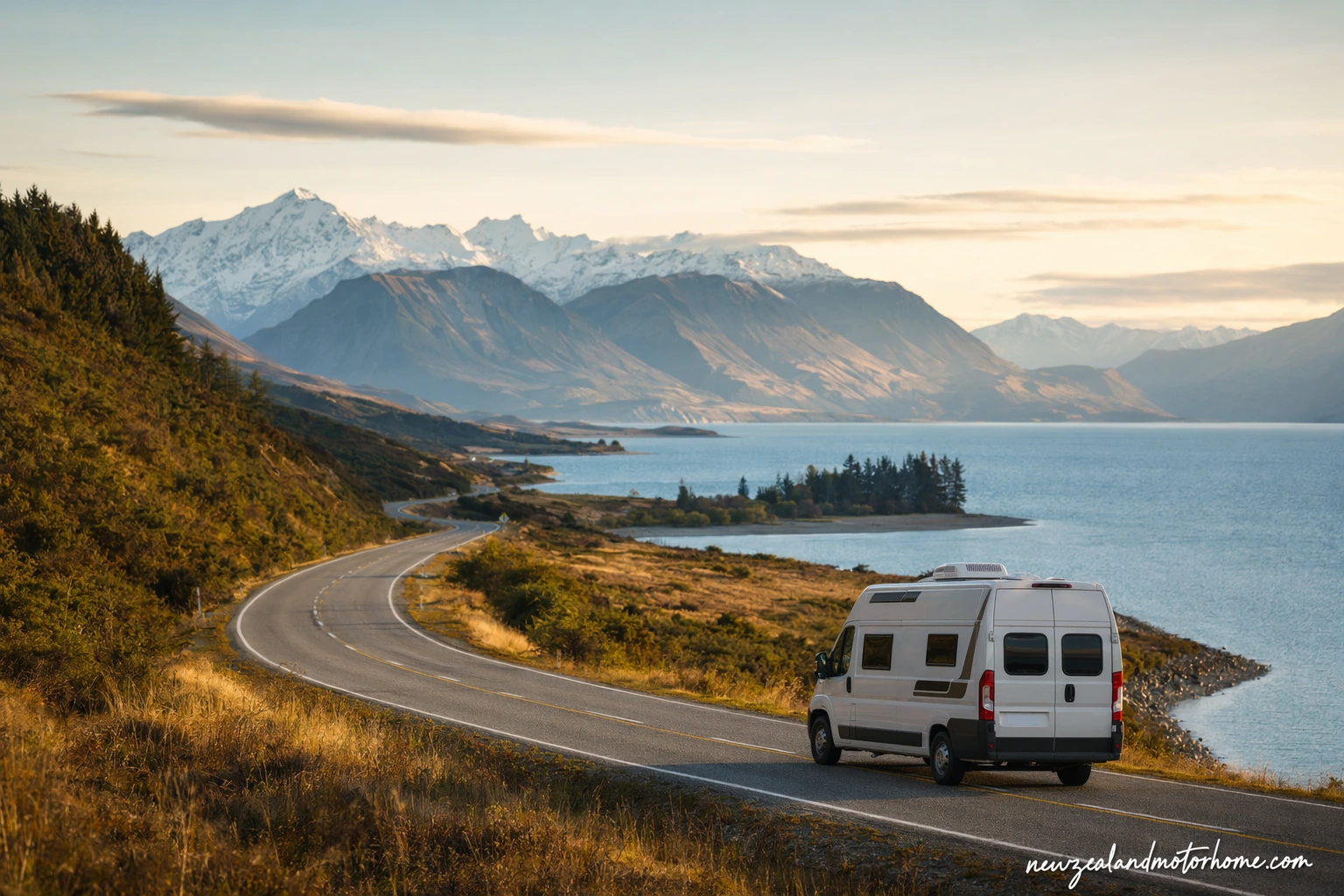
A strong one-week loop usually starts and finishes in Christchurch, because it gives straightforward van collection, supermarket stocking and a clean run onto State Highway 1 or the inland route. From there, the package can thread through Lake Tekapo or Aoraki/Mount Cook, Wānaka, Queenstown or Arrowtown, then back through the Waitaki or Mackenzie country.
For many self-drive travellers, this is the sweet spot: big South Island scenery without forcing a five-hour drive every day. The exact overnight pattern depends on your flight times, van pick-up window, season and whether you prefer powered holiday park sites or quieter unpowered camps.
- Day 1: collect the campervan in Christchurch, stock food and settle in near Geraldine or Tekapo.
- Day 2: explore the Mackenzie Basin and, if weather allows, drive towards Aoraki/Mount Cook.
- Day 3: cross the Lindis Pass towards Wānaka, allowing time for fuel and photo stops.
- Day 4: slow day around Wānaka, with an option to continue to Queenstown later.
- Day 5: Queenstown, Arrowtown or Glenorchy-style exploring, with campground booked ahead.
- Day 6: return via Central Otago, Omarama or Ōamaru, depending on your route preference.
- Day 7: easy drive back to Christchurch, dump station stop and van return.
Campervan pace, not rental-car pace
A campervan day feels different from a car day. You will move more slowly on climbs, take wider lines into parking bays, and need time for campsite check-in, fresh-water top-ups and waste disposal. This package keeps that in mind rather than stacking the map with stops that look close but feel tiring in a larger vehicle.
The longest stretches are usually broken around practical van towns such as Geraldine, Twizel, Omarama, Wānaka, Cromwell or Ōamaru. These places work well because you can buy groceries, fuel up, find public toilets, use dump stations where available, and park without squeezing into tiny city streets.
- Allow extra time over alpine passes, especially in wind, rain or winter conditions.
- Check your van height before entering covered car parks or tight motel-style driveways.
- Use designated long-vehicle parking where signed, particularly in Queenstown and Wānaka.
- Plan food shopping before smaller lake settlements, where choice may be limited.
Overnight stops, powered sites and freedom camping
Seven days is short enough that the right overnight stops make a big difference. A good package usually mixes powered holiday park nights with simpler unpowered or conservation-style camping, depending on your comfort level and whether your van has a certified self-containment set-up.
Powered sites are useful after a big driving day, especially if you want to recharge devices, run heating more comfortably, use campground showers and reset the fridge. Unpowered sites can suit warmer months and shorter stays, but you still need to manage battery levels, grey water, fresh water and toilet capacity carefully.
Freedom camping rules vary by district, and they are enforced. Even with a self-contained campervan, you must use places where overnight parking is allowed, obey time limits, and avoid camping in ordinary scenic lay-bys unless signage permits it. The package should steer you towards legal, low-stress options rather than leaving you circling at dusk.
Van size, roads and weather to allow for
The route can be planned for a compact two-berth camper or a larger motorhome, but the driving feel changes. A longer van is comfortable at night yet needs more care in town parking, supermarket car parks and narrow lakeside pull-offs. If you are new to New Zealand roads, it is worth keeping the first day gentle.
South Island weather can change fast around the Mackenzie Basin, Lindis Pass and alpine approaches. In winter and shoulder seasons, road conditions may include ice, snow warnings or chain requirements on some routes. In summer, wind can be the bigger issue, especially on open high-country roads where a tall-sided motorhome catches gusts.
- Keep fuel topped up before long inland stretches.
- Use low gears on descents rather than riding the brakes.
- Pull over only where the whole campervan is clear of the lane.
- Check daily road conditions before heading into alpine areas.
What the package thinking includes
This is a packaged holiday in the sense that the bones of the trip are already thought through: a realistic loop, practical driving days, van-friendly overnight stops, and the service rhythm that keeps a campervan comfortable. It is especially useful if you have seven days and do not want to waste the first two working out whether the next town has water, LPG or a dump station.
The planning can consider your van type, bedding needs, powered-site preference, first-night timing, supermarket stop, must-see places and how much driving you actually enjoy. If you are travelling with children, we would keep days shorter and build in playgrounds and campground facilities; if you are two adults chasing landscapes, we might give you earlier starts and quieter overnight options.
You can use the talk-to-us step to shape the route around your dates, arrival city and comfort level. The aim is a South Island week that feels self-driven, not over-managed, with enough structure to keep the van side of the trip easy.
Keep planning
Top 10 holiday parks south island
Read onSouth island 14 day campervan itinerary
Read onSouth island 10 day campervan package
Read onTop 10 holiday parks north island
Read onHoliday parks white island
Read onHoliday parks stewart island
Read onCommon questions
Is seven days enough for a South Island campervan trip?
Yes, if the route is kept tight and realistic. Seven days suits a Christchurch loop through the Mackenzie Basin, Wānaka or Queenstown area, rather than trying to include every coast and national park.
Do I need a self-contained campervan for this package?
A certified self-contained campervan gives you more overnight options, but it does not let you camp anywhere you like. You still need to follow local council rules, signs and time limits, and many travellers still choose powered holiday park nights for easy resets.
Should I book campsites before I travel?
For Queenstown, Wānaka, Tekapo and school-holiday periods, booking ahead is strongly recommended. In quieter months you may keep some flexibility, but it is still wise to know your legal backup overnight stops before you start driving.
Can this be done in a larger motorhome?
Yes, but the route should allow for slower hill driving, longer parking spaces and less spontaneous stopping. A larger motorhome is comfortable overnight, while a compact camper is often easier in town centres and scenic car parks.
What should I do before returning the van?
Allow time to empty the toilet cassette, dispose of grey water at an approved dump station, refill fuel as required and pack your bags properly. Do not leave this until the final half hour, especially if you are driving back into Christchurch traffic.
Have a planner shape this for your dates
Send a short outline — your dates, party size, and the kind of trip you want. A planner replies with a vehicle recommendation, a paced route, and the realistic budget.