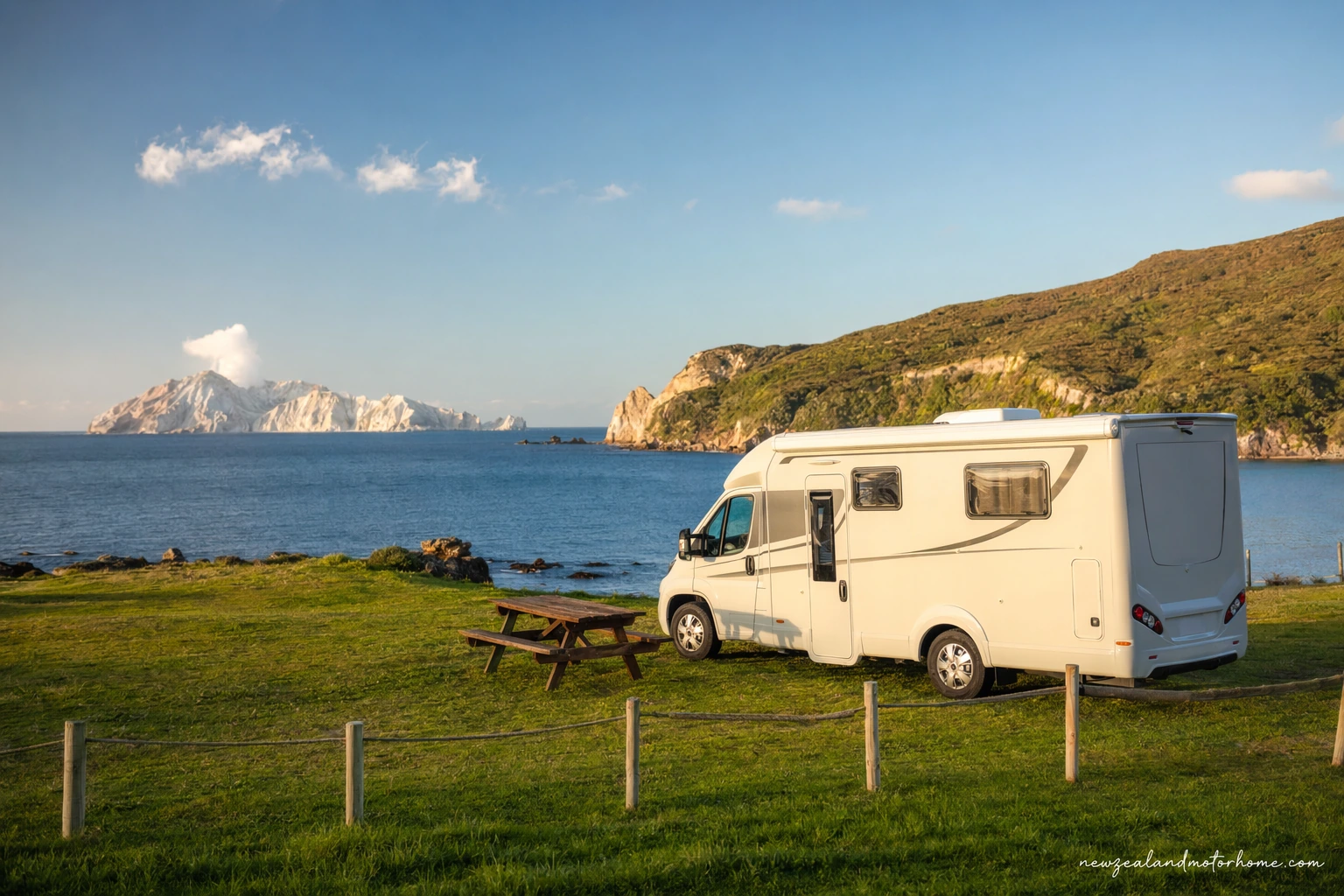
- Best base: Whakatāne or Ōhope
- Allow 2 nights minimum
- Powered and unpowered sites nearby
- Check freedom camping signs
- Good reset before East Cape
White Island, or Whakaari, sits offshore from the Bay of Plenty, seen on clear days as a low, smoking shape beyond Whakatāne and Ōhope. You cannot drive a campervan to the island itself, so the practical job is choosing a comfortable onshore base where the van can be parked, plugged in, emptied and refilled between coastal walks, harbour visits and viewpoints.
This guide is for self-drive motorhome travellers comparing holiday parks White Island visitors can use as a base. We’ll look at the best surrounding areas for powered and unpowered sites, where to park the van near the water, how the roads feel in a larger vehicle, and the useful services to line up before you roll on to the East Cape, Rotorua or Tauranga.
Base yourself in Whakatāne or Ōhope, not on White Island
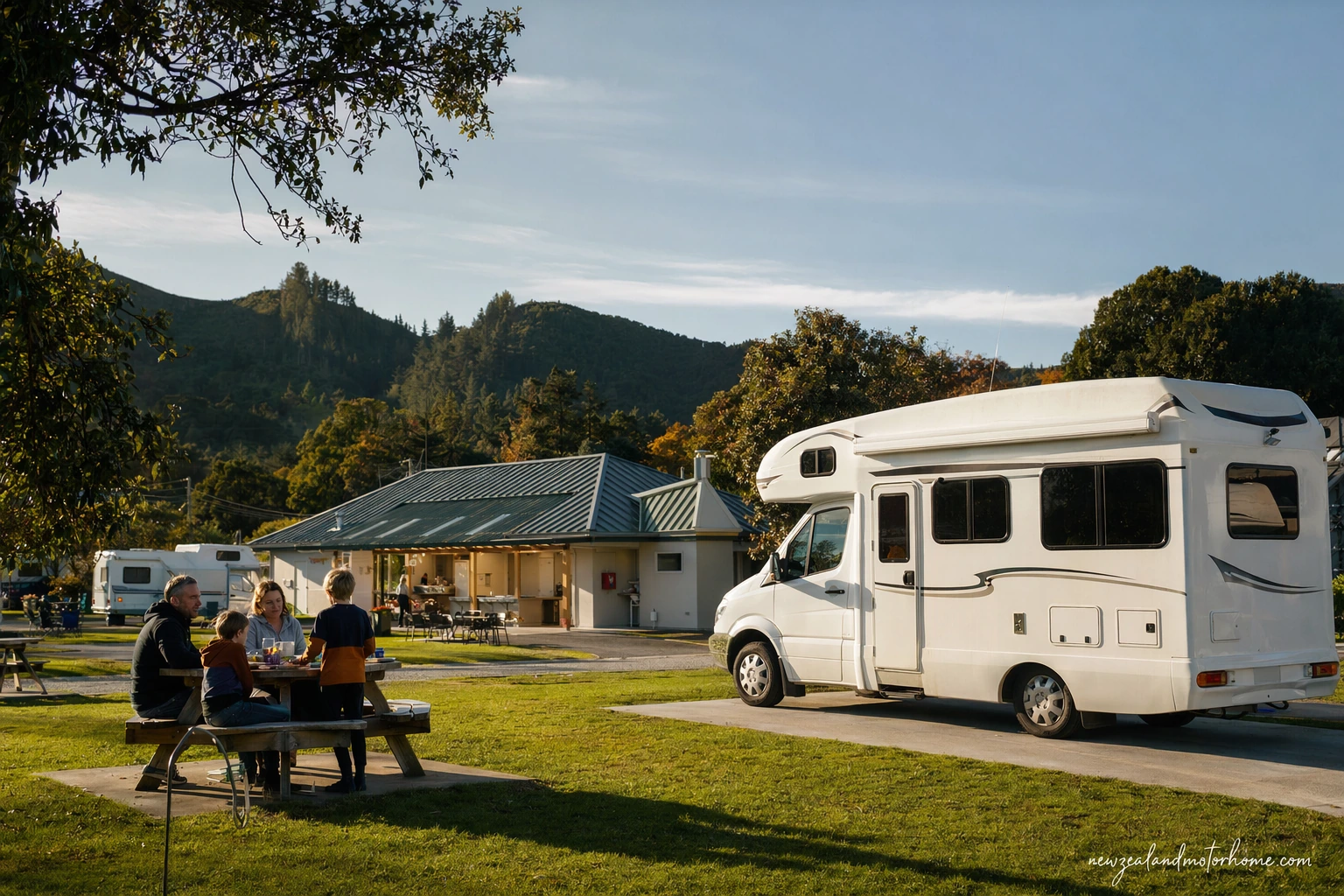
For camping White Island surrounds, the most sensible bases are Whakatāne township and Ōhope Beach. Whakatāne keeps you close to the river mouth, wharf area, supermarkets, fuel and town services. Ōhope is more beachy and relaxed, with long sand, sea views and a slower evening feel once the day visitors have gone.
If you are in a hired campervan, choose your park by how you like to travel rather than by distance alone. A powered site suits travellers running heaters, charging camera gear or staying more than one night; an unpowered site can be fine in summer if your house battery and solar are coping. Ask about dump station access and fresh-water fills when you book, as some parks keep these facilities for guests only.
- Whakatāne: handier for groceries, fuel, laundries, harbour walks and departure points for approved marine or scenic operators if available.
- Ōhope: better for a beachside overnight stop, sunrise walks, swimming conditions when safe, and a quieter van park setting.
- Self-contained vans: still need to follow local freedom camping rules; certification does not mean you can overnight anywhere with a view.
Getting there by campervan and what the roads are like
Most motorhome travellers approach Whakatāne via SH2 from Tauranga or Gisborne, or via SH30 from Rotorua. The roads are sealed and used by larger vehicles, but they are not motorway-style driving. Expect rural traffic, logging trucks, changing speed limits through small settlements and places where you will want to let faster locals pass.
From Whakatāne to Ōhope, the road climbs and drops over the hill. It is perfectly manageable in a campervan, but take it gently in a longer or heavier van, especially in wet weather. Use lower gears on descents, keep left through bends and avoid stopping suddenly for photos unless there is a proper pull-off.
- Rotorua to Whakatāne: allow time for winding sections and forested road edges where visibility changes quickly.
- Tauranga to Whakatāne: a straightforward coastal-and-rural run, but watch for congestion near bigger towns.
- Gisborne to Whakatāne: scenic but longer, with remote stretches where topping up fuel and water early is sensible.
Where to park the campervan near White Island viewpoints
If you are wondering where to park campervan White Island viewing days, think in terms of short daytime stops rather than overnight parking beside the harbour. In Whakatāne, use marked public parking areas that suit your van length, avoid blocking boat trailer spaces, and check signs carefully near the wharf, riverfront and beach reserves. A compact camper is much easier here than a long motorhome with bikes on the back.
Ōhope has several beach access points where you may be able to stop for a walk or lunch break, but not all roadside spaces suit high-roof vans or long vehicles. Arrive earlier in the day in summer, park squarely inside marked bays, and keep sand out of the van by using beach mats or a rinse bottle before you step back inside.
- For harbour strolls: park in town where signs allow and walk rather than trying to squeeze close to the water.
- For sea views: choose established lookouts or beach car parks, then check whether overnight stays are prohibited.
- For larger motorhomes: favour supermarket-sized parking areas for errands, then shift to your holiday park before dusk.
Facilities to look for: power, dump stations, water and LPG
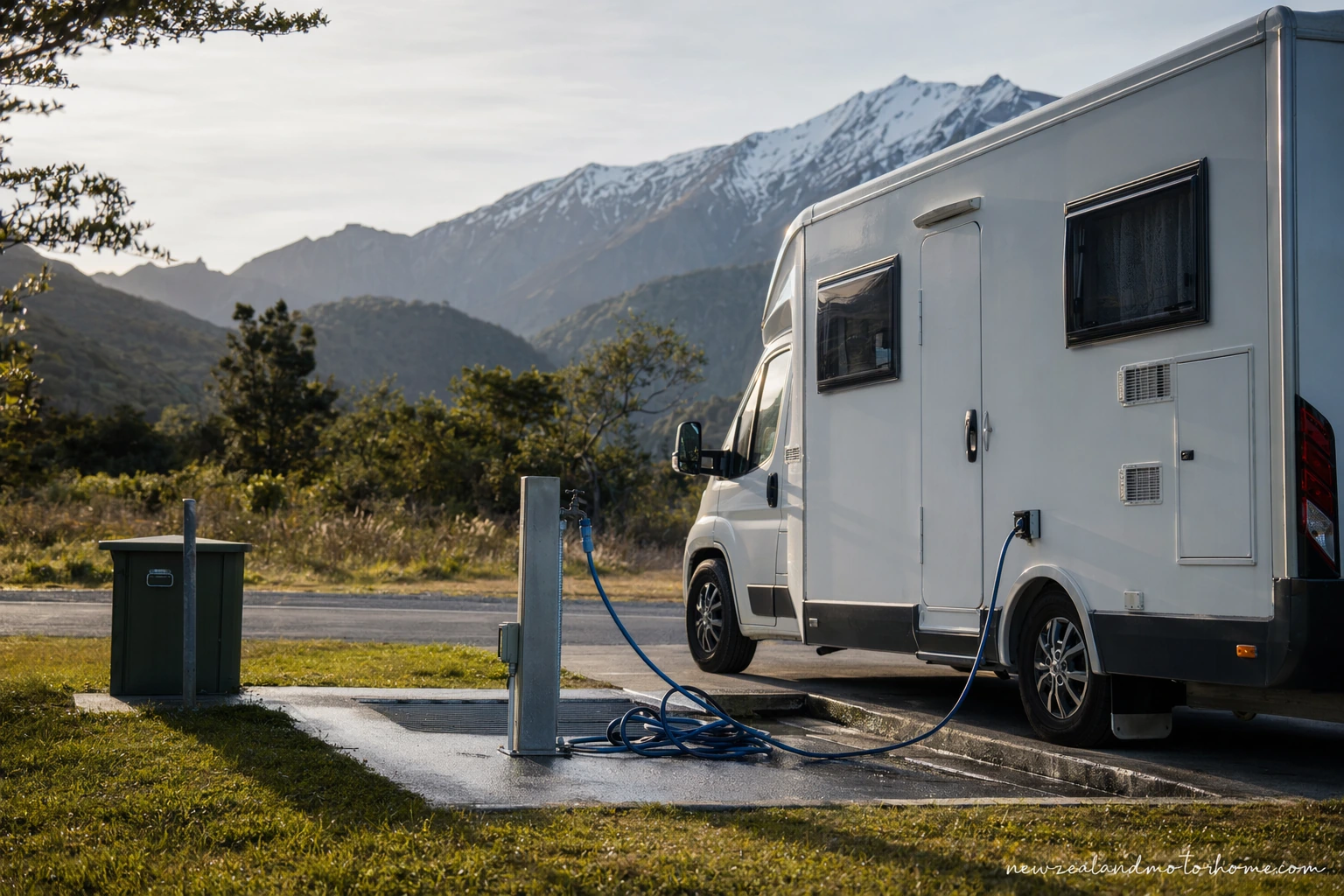
A good White Island base is less about luxury and more about keeping the van easy to live in. After a few salty beach days, powered sites help with battery recovery, laundry, fridge load and damp towels. Unpowered sites can be lovely if you are self-sufficient, but check generator rules before assuming you can run one.
Dump stations and potable water are the big ones to confirm. Do not leave grey water or cassette emptying until you are already heading into a more remote leg, particularly if your next move is around the East Cape. Whakatāne is the practical place to restock food, refill LPG where available, sort rubbish responsibly and reset the van before continuing.
- Powered sites: best for multi-night stays, winter travel, CPAP use, e-bike charging and family vans with devices.
- Unpowered sites: fine for shorter summer stops if your self-contained system is working well.
- Dump station: check access hours and whether it is guest-only before planning your morning departure.
- Fresh water: fill only from potable taps, not beach showers or random hoses.
Things to do near White Island from your van base
Even if offshore access is limited or conditions change, there are plenty of things to do near White Island without treating the van like a daily shuttle. From Whakatāne, you can walk river and coastal tracks, visit lookouts, browse the town centre, or spend a slow afternoon around the harbour. Ōhope is ideal for beach time, short walks and simply sitting outside the campervan with dinner while the light fades over the water.
Whakaari/White Island is an active volcano and access is tightly controlled for safety, cultural and environmental reasons. Do not assume tours or landings are operating; check current official advice and operator status before building your day around it. If you want help fitting Whakatāne and Ōhope into a wider motorhome loop, you can use our talk-to-us trip-planning step and we’ll keep the driving days realistic.
- Low-key days: beach walks, cafés, harbour watching and sunset viewpoints.
- Active days: coastal tracks, swimming when conditions are safe, cycling where routes suit your comfort level.
- Wet-weather backup: laundry, grocery reset, van tidy-up and a shorter scenic drive rather than a long exposed beach day.
Freedom camping and overnight etiquette around Whakatāne
Freedom camping rules around Whakatāne District can vary by reserve, season and vehicle certification, so read the signs on the ground and check the current council information before you rely on a free overnight stop. A certified self-contained sticker is a requirement in many places, not a guarantee of permission. If a sign says no overnight camping, move on even if other vans are already there.
Holiday parks remain the easiest option for a White Island stop because you can arrive after a drive, plug in, shower, empty tanks and avoid the uncertainty of finding a legal space late in the day. In busy summer periods, book ahead for powered sites, especially if you are in a larger motorhome or need a level site close to facilities.
- Arrive in daylight: it is easier to check site slope, trees, awning space and turning room.
- Keep it quiet: no late sliding doors, outdoor speakers or idling engines near other vans.
- Leave clean: use bins and dump stations properly, and never drain grey water on the ground.
Keep planning
White island campervan guide
Read onTop 10 holiday parks south island
Read onTop 10 holiday parks north island
Read onSouth island 7 day campervan package
Read onSouth island 14 day campervan itinerary
Read onSouth island 10 day campervan package
Read onCommon questions
Can I stay overnight on White Island in a campervan?
Is there a White Island TOP 10 holiday park?
Do I need a powered site near White Island?
Where should I park a larger motorhome in Whakatāne?
Are dump stations easy to find around Whakatāne and Ōhope?
How many nights should I allow for camping White Island surrounds?
Have a planner shape this for your dates
Send a short outline — your dates, party size, and the kind of trip you want. A planner replies with a vehicle recommendation, a paced route, and the realistic budget.