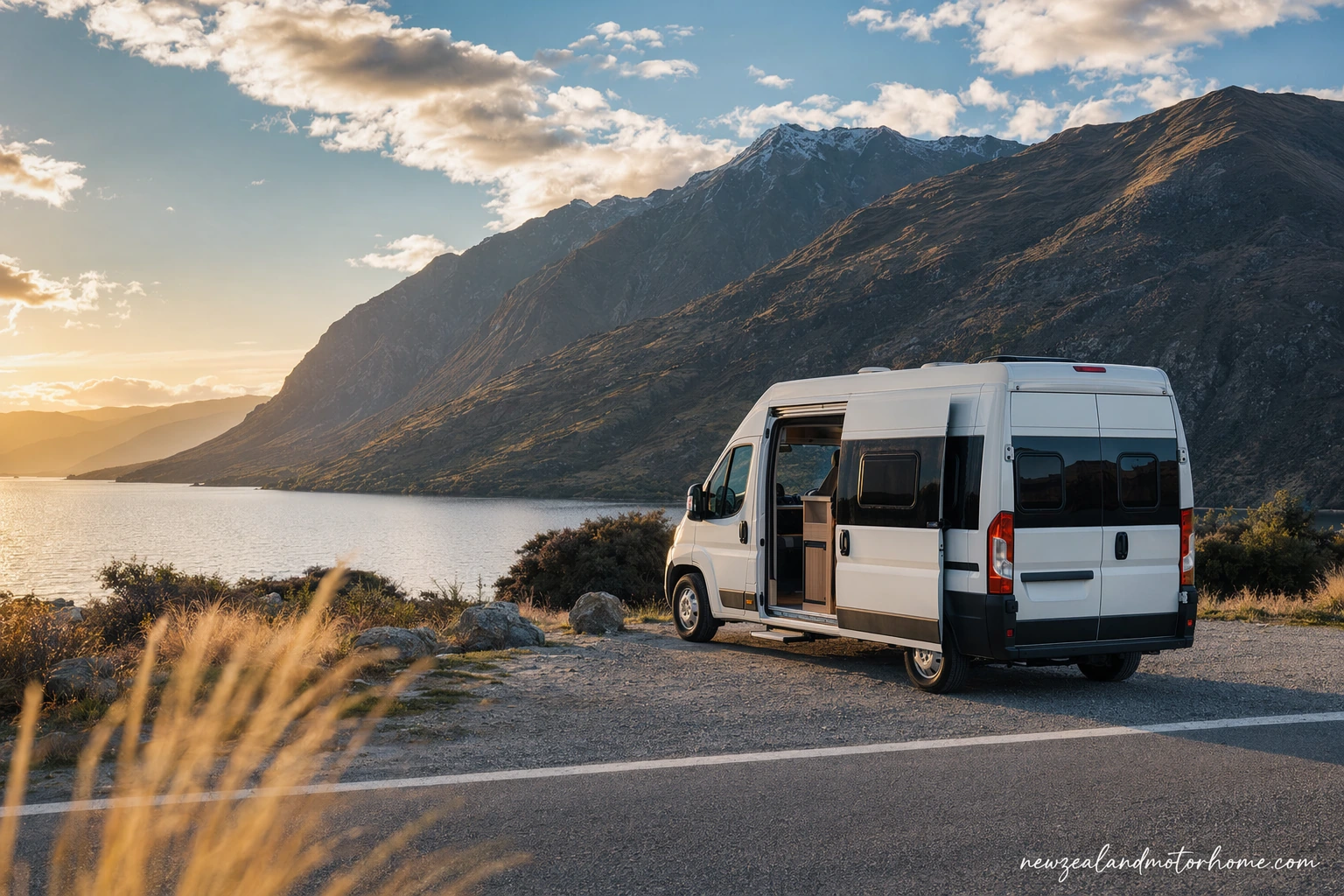
South Island 14 day campervan itinerary for a self-drive holiday
- 14 days / 13 nights
- Christchurch loop option
- Best in spring to autumn
- Powered and unpowered sites
- Certified self-contained van advised
This south island 14 day campervan itinerary is built for travellers who want a proper self-drive loop, not a race from photo stop to photo stop. It gives you the shape of a two-week holiday in a hired campervan or motorhome, with sensible driving days, memorable overnight stops and time to use the van well: cook by the lake, plug in when you need to, and keep water, LPG and waste sorted.
The route is usually planned as a Christchurch-to-Christchurch loop, taking in Mackenzie Country, the lower east coast, Fiordland, Queenstown or Wānaka, the West Coast and back across to Canterbury. We can tailor the order, van size and campground mix around your travel dates, ferry plans, walking goals and comfort level on New Zealand roads.
The two-week loop at a campervan pace
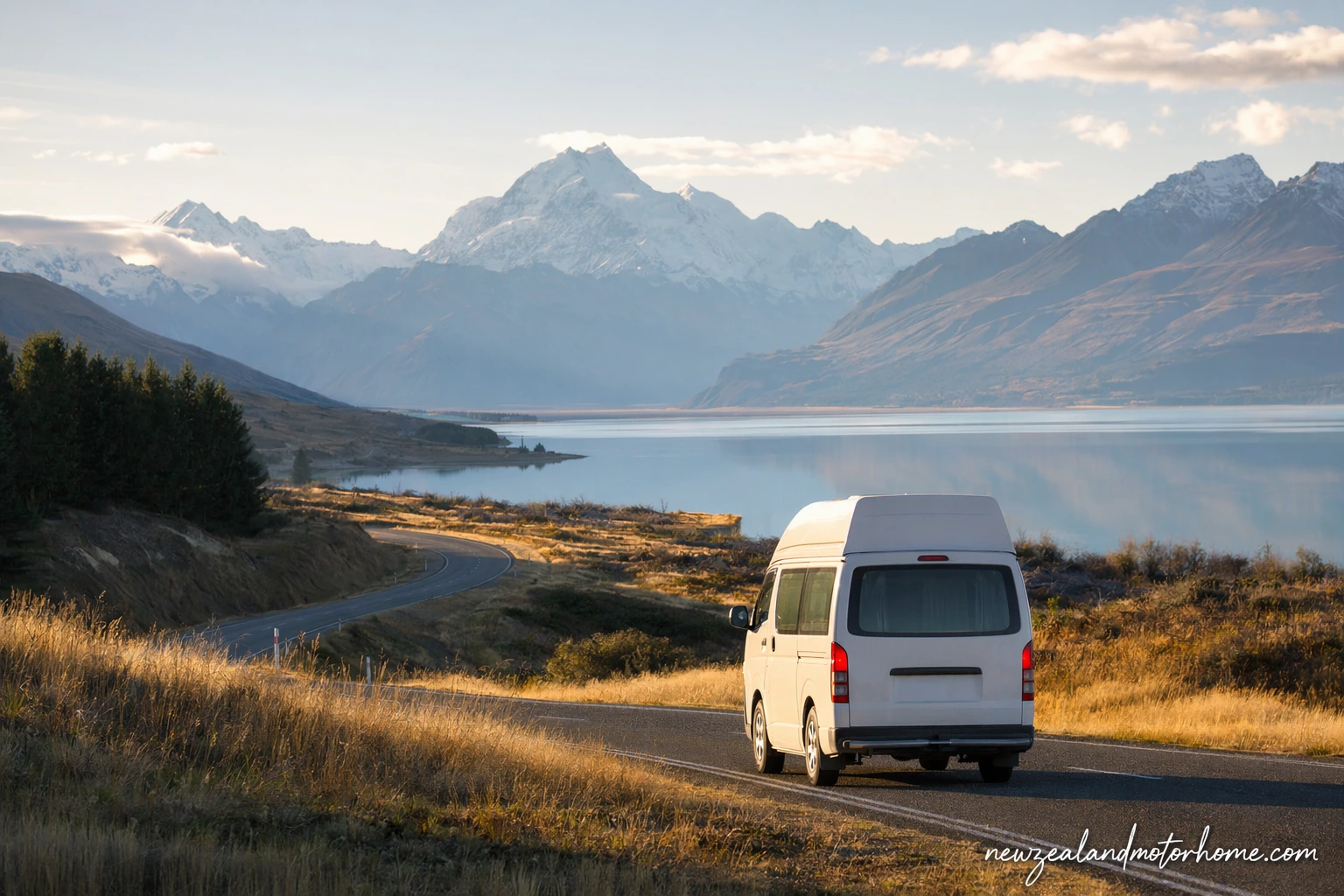
A good 14-day South Island route should leave room for the practical bits of van life: checking into a site before dark, topping up fresh water, finding a dump station before the cassette is urgent, and not arriving at a narrow campsite road after a long mountain pass. This package keeps the big scenery, but avoids making every day feel like a relocation.
A typical loop works like this, with overnights adjusted to suit weather, campsite availability and how much walking you want to do:
- Days 1–2: Christchurch to Lake Tekapo or Twizel for your first lake-side nights and an easy van set-up.
- Days 3–4: Aoraki/Mount Cook and the Waitaki or Oamaru area, with short walks and powered-site options.
- Days 5–6: Dunedin or the Catlins, depending on whether you prefer heritage streets, wildlife coast or quieter DOC-style camping.
- Days 7–8: Te Anau and Milford Sound, keeping Fiordland driving unhurried and weather-aware.
- Days 9–10: Queenstown or Wānaka, with a campground base rather than trying to park a motorhome in the busiest streets.
- Days 11–12: Haast, Franz Josef or Fox Glacier, then Punakaiki, allowing time for the West Coast’s slower roads.
- Days 13–14: Arthurs Pass or Hanmer Springs back to Christchurch, with the final night close enough for an easy van return.
What the package planning includes
This is not just a line on a map. The useful part is the thinking around where your campervan will actually sleep each night, when you need a powered site, and where the longer driving days are worth breaking. We plan with the realities of a motorhome in mind: vehicle height at fuel stops, supermarket car parks that are easier to enter, and routes that suit a larger van rather than the shortest-looking road.
Your plan can include a mix of holiday parks, scenic campgrounds and freedom camping where it is lawful for certified self-contained vehicles. In popular places such as Tekapo, Te Anau, Queenstown, Wānaka and the glacier townships, booking ahead is often the difference between a relaxed arrival and circling in the dark looking for a legal overnight spot.
- Suggested overnight stops by region, with practical arrival notes.
- Powered versus unpowered site guidance for battery, heating and laundry days.
- Dump station, fresh-water and LPG refill reminders at sensible points.
- Road notes for alpine passes, one-lane bridges, gravel access roads and weather-prone sections.
- Options for shorter walking days, rest days or a more scenic coastal emphasis.
Choosing the right van for a South Island fortnight
For two weeks, comfort matters. A compact two-berth camper is easier to park in town and cheaper to run, but a larger motorhome gives you more indoor space when West Coast rain sets in or Fiordland evenings turn cold. If you are travelling in shoulder season or winter, heating, insulation and a practical indoor table become more important than you might expect.
We plan around the vehicle you are likely to enjoy driving, not just sleeping in. A six-berth motorhome can be great for a family, but it needs more thought around supermarket stops, tight campground corners and narrow rural roads. A smaller certified self-contained van gives more flexibility for legal overnight options, though you still need to check local rules carefully.
Whichever van you choose, the itinerary allows for the unglamorous essentials: dumping grey and black water, filling fresh water, managing rubbish, keeping LPG topped up for cooking and hot water, and giving the house battery a proper charge on powered sites.
Road notes for the main South Island legs
The South Island rewards slow driving. Distances can look short on a map, but the roads often follow lakes, rivers, gorges and passes. In a campervan, you will be slower than a car on climbs, and you will want to pull over safely to let traffic pass. Build that into the day rather than feeling rushed.
Key sections to treat with respect include the drive into Aoraki/Mount Cook in strong wind, the Lindis Pass between Mackenzie Country and Central Otago, the road from Te Anau to Milford Sound, Haast Pass, and Arthurs Pass back to Canterbury. These are sealed main routes, but weather, roadworks, snow and campervan length all change how they feel on the day.
- Start longer drives early so you reach your overnight site before reception closes or daylight fades.
- Use designated pull-outs for photos and to let faster traffic go by.
- Check weather and road conditions before Milford Sound, Haast Pass and alpine crossings.
- Avoid relying on freedom camping as a late-night backup in busy towns; rules and spaces are limited.
How we tailor the itinerary to your travel style
Some travellers want the classic highlights: Tekapo, Aoraki/Mount Cook, Milford Sound, Wānaka, the glaciers and Punakaiki. Others would rather trade a busy resort night for a quieter harbour, a DOC campground, or an extra day near Fiordland. The package can lean scenic, walking-focused, family-friendly or slower and more comfortable.
If you already know your arrival date, van size, must-see places or preferred campsite style, send those through via /talk-to-us/ and we can shape the route around them. The best version of a south island 14 day campervan itinerary is the one that matches how you actually like to travel: how far you like driving, how often you want powered sites, and whether you are happy with simpler facilities some nights.
We also plan the final 24 hours carefully. Returning a campervan is easier when the last night is within a comfortable drive of the depot, with time to dump waste, refill fuel if required, clear food from the fridge and pack without rushing in a car park.
Keep planning
Top 10 holiday parks south island
Read onSouth island 7 day campervan package
Read onSouth island 10 day campervan package
Read onTop 10 holiday parks north island
Read onHoliday parks white island
Read onHoliday parks stewart island
Read onCommon questions
Is 14 days enough for a South Island campervan trip?
Yes, 14 days is enough for a strong South Island loop if the route is planned carefully. You will still need to choose your priorities; trying to include every side road and every great walk will make the holiday feel rushed in a motorhome.
Do I need to book campgrounds in advance?
For popular stops such as Tekapo, Te Anau, Queenstown, Wānaka and the glacier towns, advance bookings are wise, especially in summer and school holidays. A mix of booked powered sites and more flexible unpowered nights usually works well.
Can I freedom camp on this itinerary?
Sometimes, but only where local rules allow it and only if your vehicle meets the required self-containment standard. Freedom camping should be planned as a legal option, not a fallback when holiday parks are full.
What size campervan is best for two weeks in the South Island?
Couples often like a compact two-berth or slightly larger van with a fixed bed, while families may need a four- or six-berth motorhome. Bigger vans are comfortable at night but need more care on tight streets, narrow bridges and small campground sites.
How often will we need powered sites, water and dump stations?
Most travellers plan a powered site every second or third night, depending on the van, weather and battery use. Fresh water, grey water and toilet cassette stops should be built into the route rather than left until the last minute.
Have a planner shape this for your dates
Send a short outline — your dates, party size, and the kind of trip you want. A planner replies with a vehicle recommendation, a paced route, and the realistic budget.