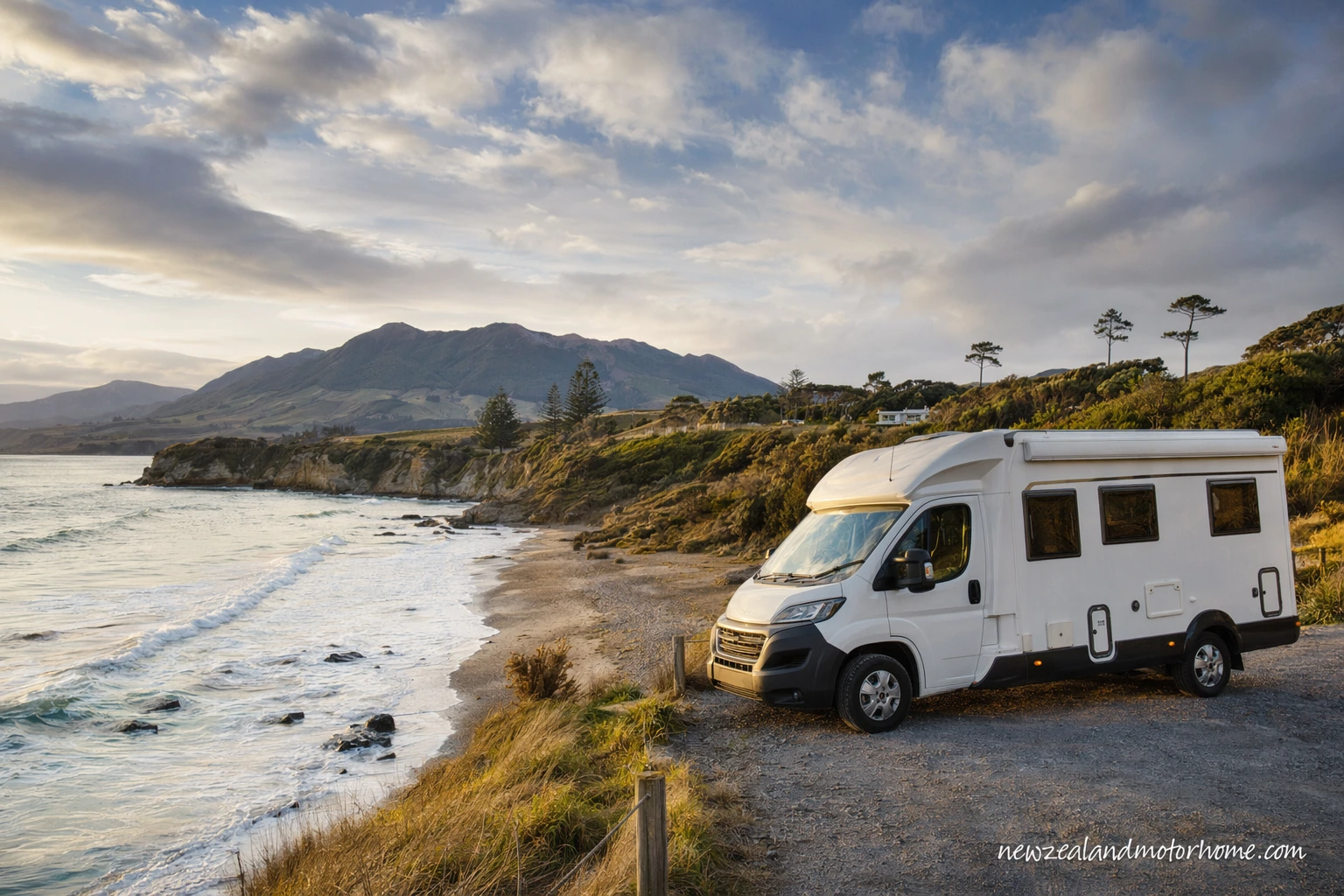
- Best base: Whakatāne
- Allow 2 nights
- No van access to island
- Powered sites nearby
- Weather-dependent plans
Whakaari/White Island sits offshore from Whakatāne, low on the horizon on clear Bay of Plenty days. For campervan travellers, the island is not a place you drive to or sleep beside; it is a weather-dependent offshore experience best planned from a comfortable mainland base with proper parking, fresh water and a legal overnight stop.
This white island campervan guide is written for people travelling in their own hired van or motorhome. It covers how to approach Whakatāne by road, where to leave the van for a day trip or viewpoint wander, camping near White Island on the mainland, and how to fold the stop into a wider Bay of Plenty or East Cape route.
Getting to the Whakatāne base by van
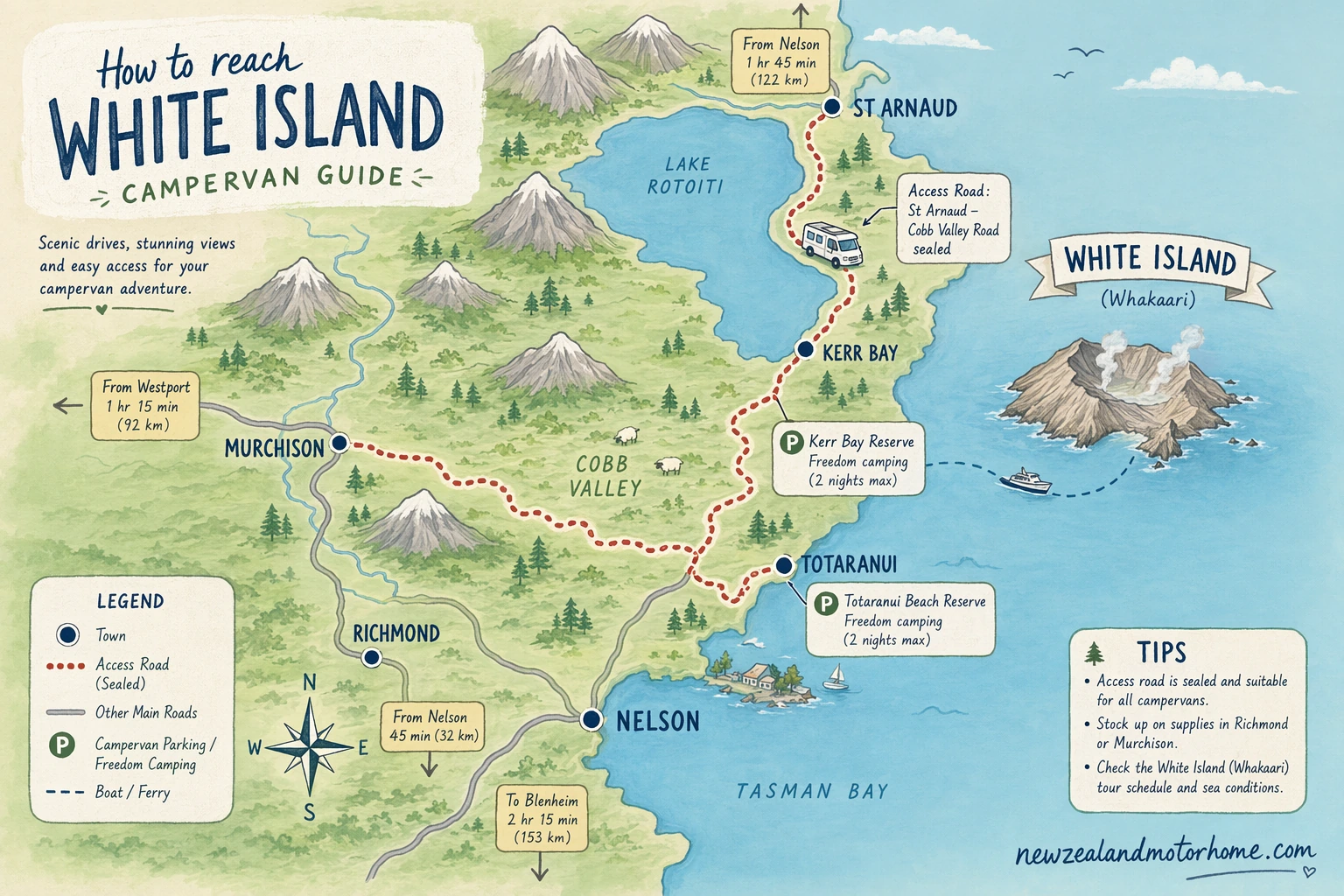
For most campervan White Island plans, Whakatāne is the practical base. You can approach from Tauranga along SH2, from Rotorua via SH30, or from the East Coast via Ōpōtiki and SH2. The roads are sealed and suitable for hired campervans, but expect a mix of rural traffic, passing lanes, town speed changes and the odd narrow shoulder.
There is no vehicle access to Whakaari/White Island itself. Your van stays on the mainland while any authorised marine or scenic air activity is arranged separately and only if current conditions, permissions and safety settings allow it. Check the latest access situation before shaping your day around the island.
- From Tauranga: allow a relaxed half-day if you are stopping for groceries, fuel or beach time.
- From Rotorua: top up before leaving town if you prefer larger service stations and easier LPG options.
- From Ōpōtiki: the drive is straightforward, but keep an eye on wind if you are in a high-roof motorhome.
- In Whakatāne: choose signposted public parking and read time limits carefully, especially near the waterfront and town centre.
Parking the van in Whakatāne and Ōhope
Whakatāne is compact, so it is worth parking once and walking rather than threading a long motorhome through every short side street. Around the riverfront, wharf area and town centre, look for marked public spaces that suit your length, and avoid blocking boat trailer parks or loading zones.
If you are heading to a viewpoint, beach or café before or after an island-related trip, Ōhope is an easy drive over the hill. The road is suitable for campervans, but it is steeper and twistier than the map makes it look, so use lower gears on the descent and give cyclists room.
- Check for height barriers before committing to any beach or reserve parking area.
- Reverse in only where it is safe and permitted; rear overhangs can catch kerbs or planting.
- Do not leave gas bottles, e-bikes or valuables visible while you are away from the van.
- Overnight parking is different from day parking: only sleep where signs and local rules allow it.
Where to stay: camping near White Island
Camping near White Island means staying on the mainland, usually in Whakatāne, Ōhope or nearby coastal settlements. If you want showers, laundry, easy rubbish disposal and a relaxed start, book a holiday park or campground with powered sites. In summer and long weekends, do this ahead of time rather than arriving late with a large vehicle.
Unpowered sites are often fine if your house battery is healthy and your fridge is efficient, but a powered site is useful after several beach days, cloudy weather or lots of device charging. If you are in a larger motorhome, mention your vehicle length when booking so you are not squeezed into a tight tent-style pitch.
- Powered sites: best for air-conditioning, charging, cooking appliances and battery recovery.
- Unpowered sites: good for one or two nights if you manage water, waste and power carefully.
- Freedom camping: only use areas where overnight stays are clearly permitted, and follow certified self-containment requirements.
- Dump stations and water: plan to empty and refill in Whakatāne or at your campground before pushing further east.
Seeing Whakaari/White Island from a campervan trip
A motorhome White Island stop is as much about the mainland setting as the volcano itself. Access to and around Whakaari is tightly controlled and can change, so do not assume landings are available. Treat any boat viewing, authorised offshore activity or scenic flight as weather- and safety-dependent, with a backup plan for the day.
If your island plans are cancelled or not operating, you can still make the stop worthwhile from the van. Walk the Whakatāne riverfront, drive to Ōhope for the beach, look for clear-day views out to sea, or use the time to reset the camper: groceries, laundry, LPG, fresh water and grey-water disposal.
- Pack a small day bag so the van can stay locked and tidy while you are away.
- Keep wet jackets and sandy shoes contained before stepping back into the living area.
- Carry a light layer even in warm weather; coastal wind can make waiting around chilly.
- Have a mainland Plan B, especially if you are travelling on a tight route schedule.
Fitting White Island into a wider motorhome route
Whakatāne works well as a two-night pause between busier North Island legs. From the west, it pairs naturally with Tauranga, Mount Maunganui or Rotorua. From the east, it can be the last easy-serviced stop before Ōpōtiki, the East Cape and Gisborne, where distances stretch out and you need to think harder about fuel, dump stations and food supplies.
If you are building a route around beaches, geothermal country and quieter coastal roads, give yourself enough time to avoid driving at dusk. The Bay of Plenty has plenty of tempting detours, but large vans are less fun when you are rushing, tired or looking for an overnight site after dark.
- Short stop: one night for a waterfront wander and van reset.
- Better stop: two nights so you have a weather buffer for White Island viewing plans.
- Longer route: link Rotorua, Whakatāne, Ōhope, Ōpōtiki and Gisborne with careful servicing stops.
- Need help sequencing it: use the talk-to-us step if you want your driving days, powered sites and dump-station timing checked before you book.
Keep planning
Holiday parks white island
Read onTop 10 holiday parks south island
Read onTop 10 holiday parks north island
Read onSouth island 7 day campervan package
Read onSouth island 14 day campervan itinerary
Read onSouth island 10 day campervan package
Read onCommon questions
Can I drive a campervan to White Island?
No. Whakaari/White Island is offshore, and campervans stay on the mainland. Base yourself in Whakatāne or Ōhope, then only consider authorised marine or scenic air options if they are operating and conditions allow.
Where should I park the van for a White Island day?
Use marked public parking in Whakatāne and check the signs for time limits, height restrictions and any trailer-only areas. If you have a longer motorhome, park a little further out and walk rather than trying to squeeze into short central spaces.
Is freedom camping allowed near White Island?
Freedom camping rules are set locally and can change, so only stay overnight where signs and council information clearly permit it. You will generally need a certified self-contained vehicle, and you should still use proper dump stations rather than stretching your tanks too far.
How many nights should I allow in a campervan?
Two nights is the comfortable choice. It gives you time to arrive, sort parking or any weather-dependent activity, enjoy Ōhope or Whakatāne, and service the van before moving on.
Are there dump stations, fresh water and LPG nearby?
Whakatāne has the best chance of easy campervan servicing in this part of the route, including fuel, groceries, water options and dump-station access. Check locations before you arrive, and refill before heading east towards more spread-out coastal stops.
Have a planner shape this for your dates
Send a short outline — your dates, party size, and the kind of trip you want. A planner replies with a vehicle recommendation, a paced route, and the realistic budget.