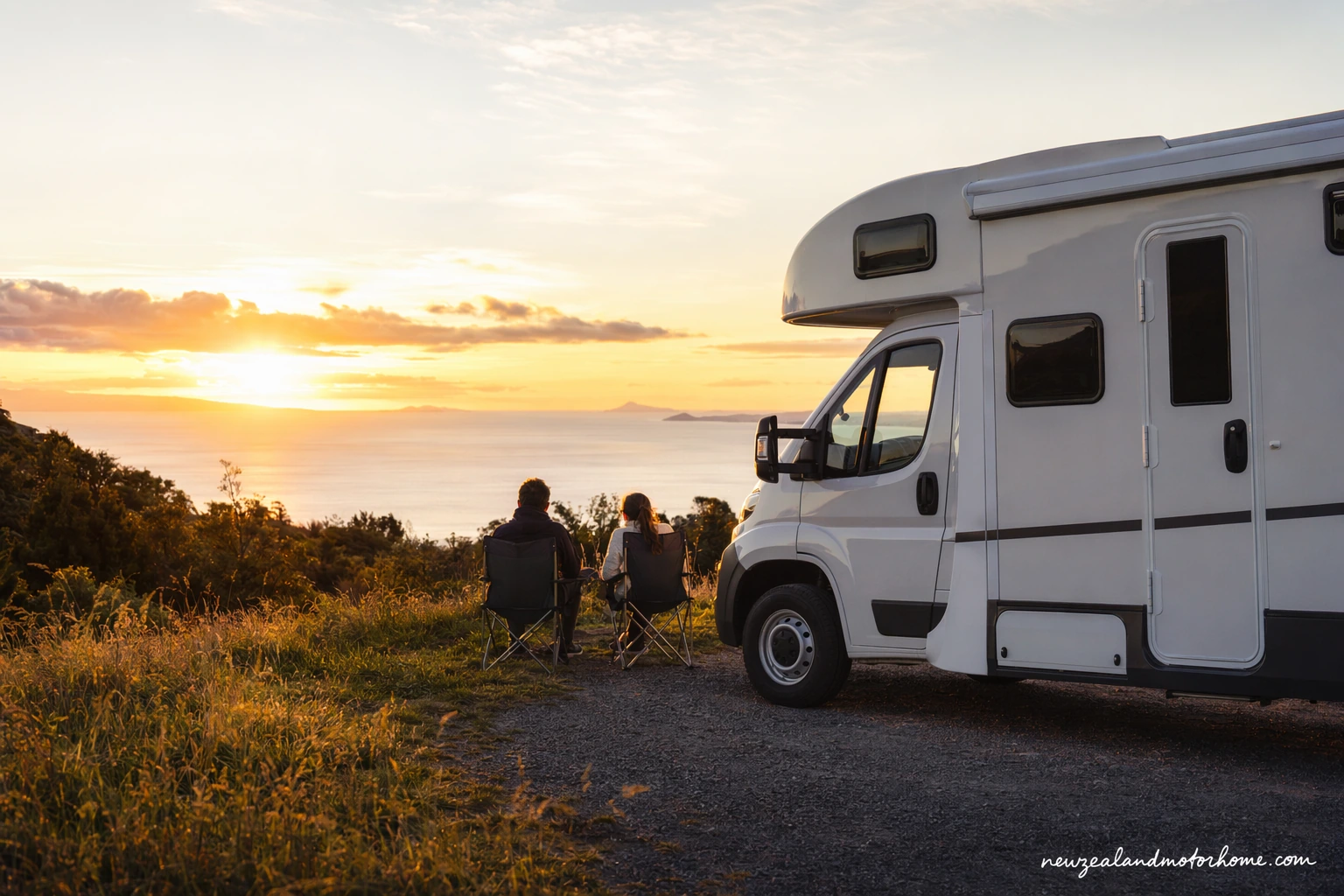
A north island 10 day campervan package for self-drive travellers
- 10 days Auckland loop
- Best with mixed powered and unpowered sites
- Compact to mid-size vans easiest
- Self-contained freedom camping only
- Coromandel and plateau road care
This north island 10 day campervan package is shaped for travellers who want the freedom of a hired motorhome without spending every evening working out where to park, fill water, empty the cassette or find a sensible overnight stop. It is a self-drive loop with enough structure to keep the days calm, but enough flex for a beach walk, a hot pool soak or a slow coffee beside the van.
The outline below suits an Auckland pick-up and drop-off, linking the Coromandel, Rotorua, Taupō, Tongariro country, Waitomo and the west coast back to Auckland. It is written for people sleeping in their own hired van, so the detail is about powered and unpowered sites, road comfort, self-containment rules, dump stations, fresh-water fills and the kind of pace that still feels like a holiday.
The shape of the 10-day North Island loop
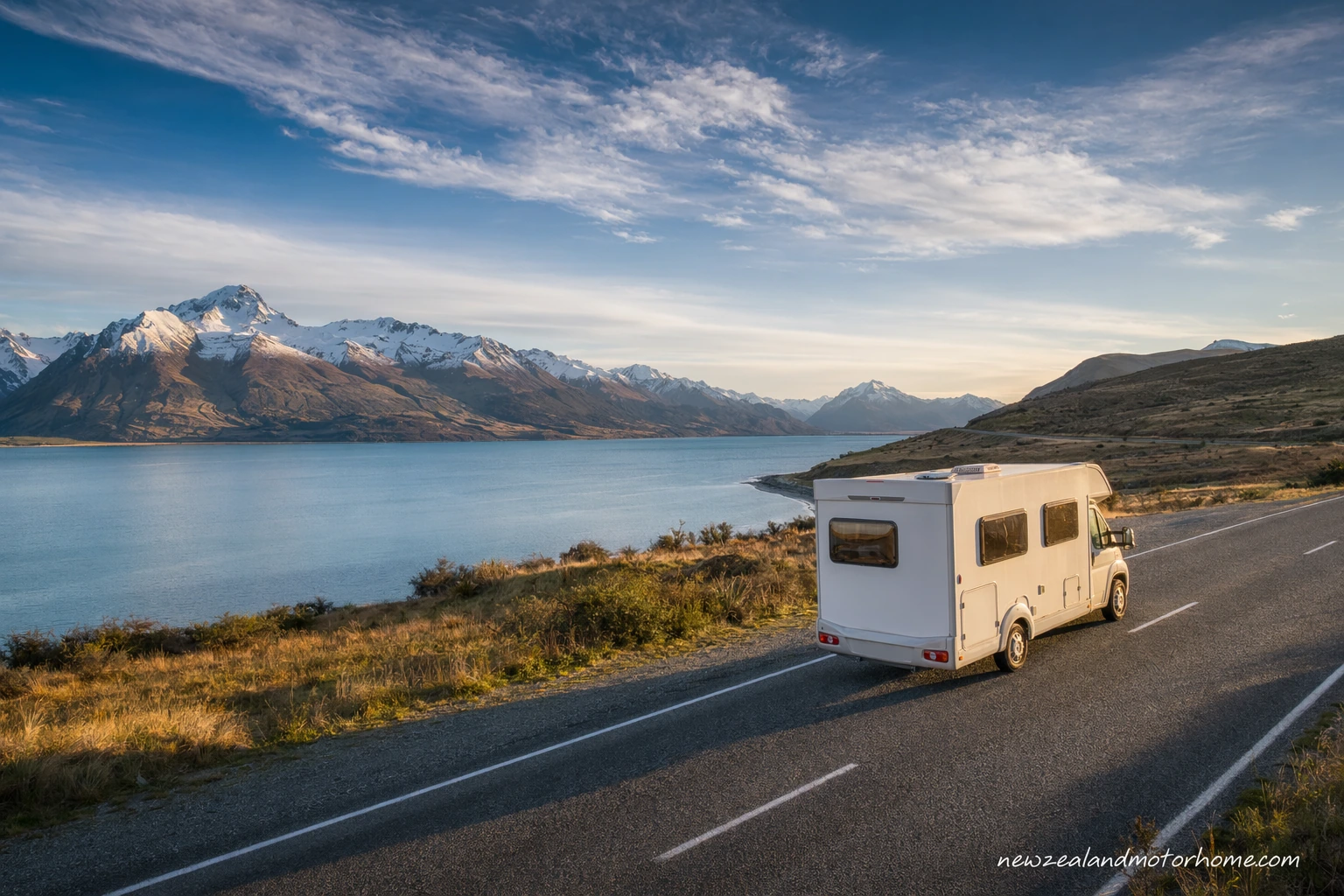
A good 10-day North Island campervan holiday needs to be selective. The temptation is to chase every headline stop, but in a motorhome the better trip is one where you arrive before dark, park level, plug in when needed and still have time to cook dinner with the side door open.
This package-style route keeps the driving days mostly comfortable and avoids awkward backtracking. The first night is usually kept close enough to Auckland to let you settle into the van, learn where the LPG bottle, dump hose and fresh-water inlet are, and do a proper grocery shop before the scenic roads begin.
- Days 1-2: Auckland pick-up, Thames or Coromandel base, then beaches and coastal viewpoints.
- Days 3-4: Rotorua for geothermal areas, lakeside walks and a powered reset night.
- Days 5-6: Taupō and Tongariro National Park, with weather-flexible walking options.
- Days 7-8: Waitomo or King Country, allowing time for caves and quieter rural camps.
- Days 9-10: Raglan or west coast stop, then an easy run back to Auckland for drop-off.
What the package planning actually covers
For a campervan traveller, a package is not just a list of towns. The useful work is in matching the van, the route and the overnight rhythm: when to book a powered site, where an unpowered stop is enough, and which driving days need more daylight because of winding roads or late check-in times.
We plan around the practical parts of van travel as much as the sightseeing. That means thinking about where you will dump grey and black water, where fresh-water fills fit naturally, whether your vehicle height is comfortable for car parks, and how often you may want a holiday park laundry or proper shower block.
- Campervan size: compact two-berth vans suit town parking more easily; larger motorhomes need more care on narrow coastal roads and in supermarket car parks.
- Site mix: powered sites every few nights help with battery management, heating, device charging and a proper reset.
- Freedom camping: only where permitted, only if your vehicle is certified self-contained, and always according to current local signage.
- Daily timing: arrivals are planned before dusk where possible, especially on first-night and mountain-road sections.
Overnight stops: where you park the van
The North Island has a useful mix of holiday parks, DOC-style camping areas, council-managed reserves and designated self-contained parking spots. For a 10-day package, we usually balance comfort and atmosphere: a powered holiday park night after a long drive, then a simpler unpowered stop where the setting is the reason to stay.
In Coromandel and around Taupō, summer and school-holiday demand can make advance booking important for powered sites. Around Rotorua, a powered night is handy because geothermal sightseeing days often mean towels, wet gear and devices all needing a reset. In smaller towns, checking arrival instructions matters because some campgrounds have limited reception hours.
- Book powered sites ahead in busy coastal areas and near major attractions.
- Use unpowered sites when your house battery, water level and toilet cassette are in good shape.
- Check whether a site has a dump station on site or nearby before you commit to multiple nights.
- Arrive with fresh water before remote or basic camps, especially in windy or volcanic plateau weather.
Road notes for a relaxed motorhome pace
North Island roads can look short on a map but feel slow in a van. The Coromandel has narrow, twisting coastal sections where a larger motorhome needs patience and sensible pull-over stops. The run across the Central Plateau is more open, but weather can change quickly around Tongariro and Ruapehu, especially outside summer.
This route avoids making you drive the hardest roads at the end of a long day. It also gives space for supermarket stops, LPG checks and dump-station stops, because those little van jobs always take longer than they do on paper.
- Use lower gears on long descents and give following traffic room to pass when safe.
- Watch vehicle height at town car parks, motel-style entrances and older service-station canopies.
- Expect winding sections on the Coromandel and rural roads around Waitomo.
- Keep fuel topped up before late-afternoon rural driving, particularly on public holidays.
How to tailor the package to your travel style
The same 10 days can feel very different depending on your van size, season and appetite for activities. A couple in a compact camper may enjoy more freedom-camping style nights, while a family in a larger motorhome may prefer booked powered sites, playgrounds, laundry access and shorter driving days.
If you want help turning this outline into a booked, practical self-drive plan, use our talk-to-us step and tell us your dates, van preference, must-see places and comfort level with basic camps. We can shape the route so your overnight stops match the way you actually like to travel.
- Beach focus: add more time on the Coromandel or Raglan and trim one inland night.
- Geothermal focus: allow extra time around Rotorua and Taupō, with a powered base for two nights.
- Walking focus: keep the Tongariro section flexible so weather, shuttle logistics and parking rules can be handled sensibly.
- First-time van travellers: include more holiday parks early in the trip while you get used to the vehicle systems.
Keep planning
Top 10 holiday parks north island
Read onNorth island 7 day campervan package
Read onWellington to palmerston north campervan
Read onTop 10 holiday parks south island
Read onRotorua to palmerston north campervan
Read onQueenstown to palmerston north campervan
Read onCommon questions
Is 10 days enough for a North Island campervan trip?
Yes, if the route is kept selective. Ten days works well for an Auckland loop through the Coromandel, Rotorua, Taupō, Tongariro country, Waitomo and the west coast, but it is too short to comfortably include every far-north and east-coast detour.
Do I need a powered campsite every night?
No. Most hired campervans can manage some unpowered nights, but a powered site every few days is useful for batteries, heating, charging devices, showers and laundry. The right mix depends on your vehicle, season and how much you use onboard power.
Can I freedom camp on this route?
Sometimes, but only in places where it is allowed and only if your van meets the required self-containment certification. Local rules change, so always follow current signage, council information and your hire company conditions.
What size campervan suits this North Island package?
A two-berth or compact motorhome is easiest for town parking and winding coastal roads. Larger motorhomes are fine on this route, but you will want more care with turning space, site length, supermarket parking and narrow Coromandel sections.
Where do dump stations and water fills fit into the trip?
They are best planned around overnight stops rather than left until the tank warning light appears. Holiday parks often have facilities, and many towns have public dump stations, but you should check availability before basic or remote camp nights.
Have a planner shape this for your dates
Send a short outline — your dates, party size, and the kind of trip you want. A planner replies with a vehicle recommendation, a paced route, and the realistic budget.