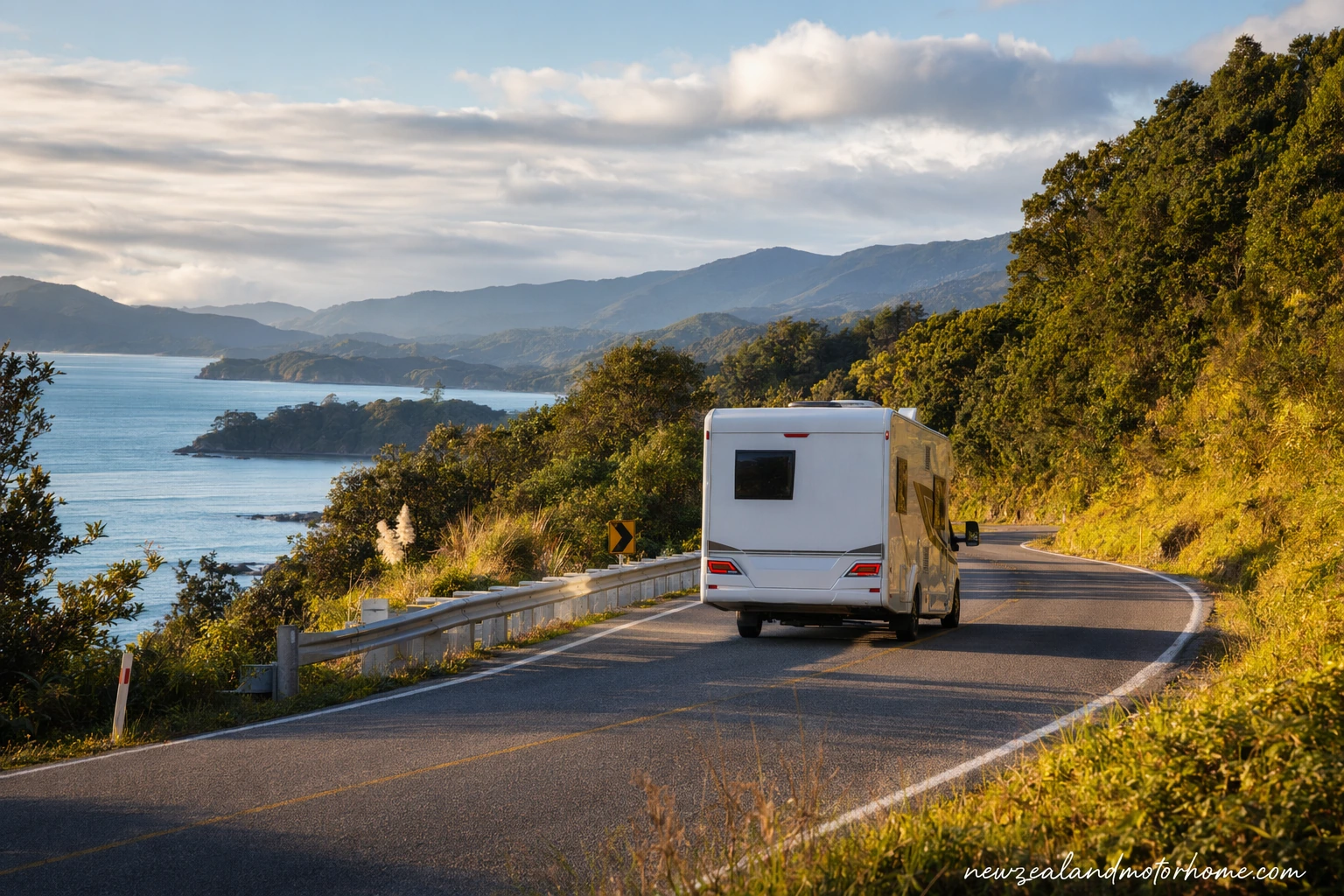
- Best over 2–3 days
- Main route via SH1 and Taupō
- Desert Road weather check
- Powered sites useful in winter
- Certified self-contained for freedom camping
The Wellington to Hamilton campervan route is a proper North Island crossing: harbour city traffic, Kāpiti coast cruising, big volcanic country around Tongariro, the open feel of Lake Taupō, then the softer Waikato roads into Hamilton. You can drive it in a long day, but in a hired motorhome it is much better as a two- or three-day trip with time to service the van and stop before fatigue sets in.
This guide is written for travellers sleeping in their own campervan or motorhome, not just passing through in a car. You will find practical road notes, sensible overnight bases, where to think about fresh water, LPG and dump stations, and how to approach freedom camping rules with a certified self-contained vehicle.
How long to allow for the Wellington to Hamilton drive
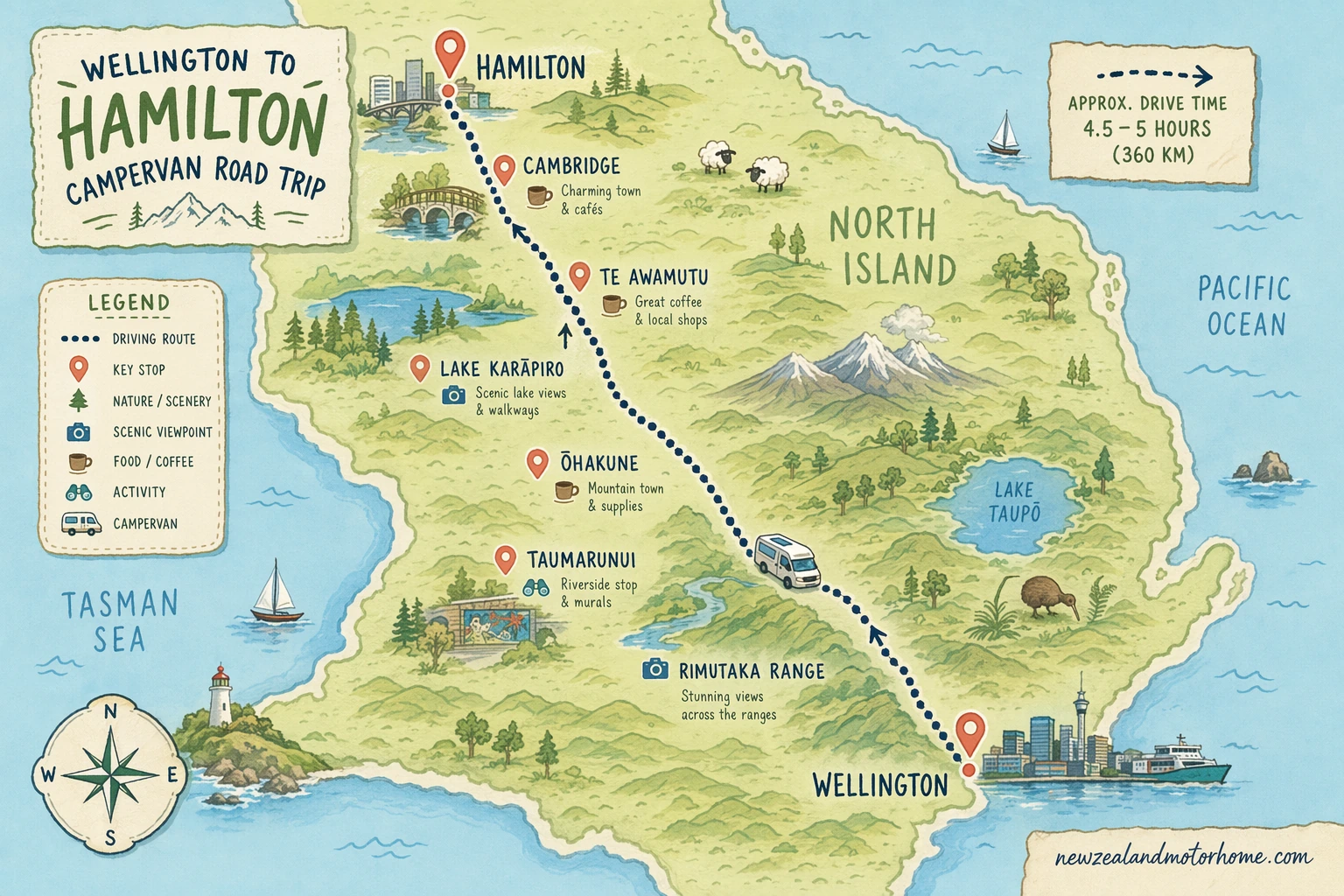
The direct Wellington to Hamilton drive via State Highway 1 is around a full day behind the wheel before you add fuel, food, dump station and photo stops. In a campervan, especially a larger berth motorhome, allow more time than the map suggests. You will climb, descend, sit behind trucks, and slow through towns where a van needs more room to pull in and out.
Two days is the practical minimum if you want to arrive in Hamilton without feeling wrung out. Three days gives you time for Taupō, Tongariro views, a lake swim in season, or a slower morning while the batteries top up on a powered site.
- Fast but tiring: one long driving day, best only for confident drivers with an early start and good weather.
- Balanced: Wellington to Tūrangi or Taupō, then Taupō to Hamilton.
- Easy-going: add a night around Kāpiti, Taihape, National Park, Tūrangi or Taupō.
- Winter note: allow a buffer for Desert Road closures, ice or strong wind warnings.
Best campervan route: SH1 through Kāpiti, Desert Road and Taupō
For most vans, the simplest route is SH1 north from Wellington, using Transmission Gully and the Kāpiti Expressway, then continuing through Levin, Bulls, Taihape, Waiōuru, the Desert Road, Tūrangi, Taupō, Cambridge and into Hamilton. It is the main freight and holiday route, so expect trucks, passing lanes and sections where you simply settle into the pace of the road.
The Desert Road section is memorable but exposed. Before leaving Taihape or Waiōuru, check the forecast and road status, especially in winter and during high wind. Motorhomes have more side area than cars, so strong gusts can make the drive feel busy; if the steering is working hard, pull into a safe town or rest area rather than pushing on.
- Wellington exit: take it steady through motorway merges and give yourself space before the first supermarket or fuel stop.
- Kāpiti to Levin: good for a first leg stretch, groceries and checking cupboards are latched.
- Taihape/Waiōuru: useful decision point before the alpine-feeling section.
- Taupō to Cambridge: watch speed changes, passing lanes and holiday traffic near lake and river turn-offs.
Where to stop overnight in a campervan
If you are starting late from Wellington, consider spending the first night north of the city rather than trying to clear half the island after pick-up. Kāpiti Coast, Porirua and Lower Hutt all put you within reach of powered holiday park sites, and a powered first night is useful while you learn your van’s heater, fridge, water pump and charging system.
Further north, Tūrangi and Taupō are the most natural overnight bases for a wellington to hamilton motorhome road trip. They have a good spread of powered and unpowered camping options, easier grocery stops, and access to lakefront walks without needing to manoeuvre the van through tight city parking all day.
- Powered site: best after a cold Desert Road day or if you need to run appliances, charge devices and refill water.
- Unpowered site: fine for certified self-contained vans with good house battery levels and sensible water use.
- DOC-style camps: often scenic and unpowered, with limited facilities and no dump station, so arrive prepared.
- Freedom camping: only use permitted areas and follow local bylaws; self-containment certification does not mean you can stop anywhere.
Dump stations, water, LPG and van servicing on the way
Do not leave Wellington with grey water already half full and fresh water low. The Wellington to Hamilton campervan run has services along the corridor, but the convenient stop is not always on the side of town you enter, and larger vans are awkward when you have to circle busy streets looking for a tap or dump point.
Plan to service the van around one of the bigger stopping towns such as Levin, Taihape, Tūrangi, Taupō, Cambridge or Hamilton, checking current council signage or a reputable camping map before you commit. Many holiday parks also provide dump station and fresh-water access for guests, which can be the cleanest option if you are already staying the night.
- Fresh water: fill from potable taps only; do not assume every public tap is drinking water.
- Grey and black water: use marked dump stations and rinse down carefully for the next traveller.
- LPG: top up before remote or cold sections if you rely on gas for heating, cooking or hot water.
- Rubbish: keep a sealed rubbish bag in the van and dispose of it at approved bins, not rest areas.
Parking and sightseeing without making the van a burden
The best stops on this route are often the easy ones: a river walk in Bulls or Taihape, big-sky views near Waiōuru, a safe lakefront stop around Taupō, or a longer break in Cambridge before the final push into Hamilton. With a motorhome, choose places where you can drive in, turn around cleanly and leave without reversing into traffic.
In Hamilton, avoid treating the central city like a campground. Park in signed long-vehicle spaces where available, keep the van within marked lines, and use a holiday park or an approved overnight area rather than staying on an ordinary street. If you want help matching your van size, travel dates and overnight style to a sensible plan, you can use the /talk-to-us/ step before locking in the route.
- Lake Taupō: arrive early for easier parking, especially in summer and school holidays.
- Hamilton Gardens: look for longer bays or outer car park areas and avoid overhanging footpaths.
- Supermarkets: park at the edges of large car parks, away from trolley lanes and tight corners.
- Rest areas: use them for breaks, not overnight stays unless signs clearly allow it.
Keep planning
Visiting zealandia wellington by campervan
Read onVisiting weta workshop wellington by campervan
Read onVisiting te papa wellington by campervan
Read onHoliday parks wellington
Read onHoliday parks hamilton
Read onFarmers markets wellington
Read onCommon questions
Can I drive from Wellington to Hamilton in one day in a campervan?
Yes, but it is a long day and not the most relaxing way to do it in a motorhome. If you are new to driving a larger van in New Zealand, break the trip around Tūrangi or Taupō so you can arrive rested and service the vehicle properly.
Is the Desert Road suitable for motorhomes?
Yes, SH1 over the Desert Road is used by campervans and larger vehicles every day. The important checks are weather, wind, snow and ice; in winter or during storms, confirm the road is open and be ready to wait it out in Waiōuru, National Park, Tūrangi or Taupō.
Where is the best overnight stop between Wellington and Hamilton?
Tūrangi or Taupō are the most convenient mid-route bases because they sit after the main central plateau crossing and have good camping services. If you leave Wellington late, add an earlier night around Kāpiti, Levin, Taihape or National Park instead of driving tired.
Can I freedom camp on this route with a certified self-contained van?
Sometimes, but only where local bylaws and signs allow it. Certification is essential for many freedom camping areas, but it is not a blanket permission to sleep in any car park, reserve or roadside pull-off.
Do I need to book powered sites in advance?
In summer, school holidays, long weekends and around major events, book powered sites ahead, especially in Taupō and Hamilton. Outside peak times you may have more flexibility, but a first or last night on power is still handy for batteries, heating and reorganising the van.
Have a planner shape this for your dates
Send a short outline — your dates, party size, and the kind of trip you want. A planner replies with a vehicle recommendation, a paced route, and the realistic budget.