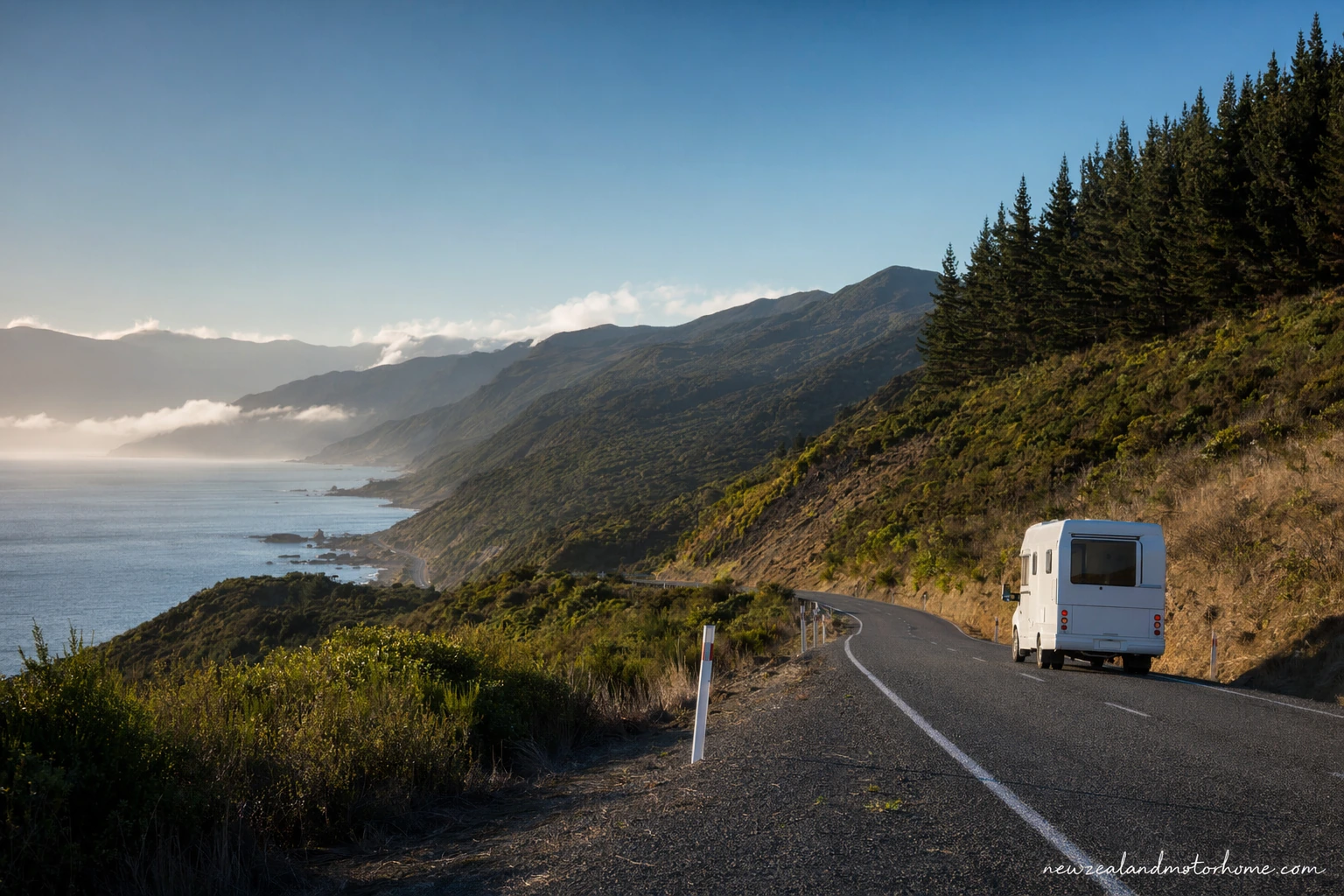
- Best in daylight year-round
- Allow 2–4 days
- Ferry plus 2.5–4 hrs driving
- Long vans: use highway route
- Powered nights recommended
The Wellington to Nelson campervan route is part harbour crossing, part easy South Island road trip: load the van onto the Cook Strait ferry, roll off in Picton, then choose the steadier highway run or the tighter, prettier Queen Charlotte Drive before reaching Nelson.
This guide is written for self-drive campervan and motorhome travellers, so it focuses on what matters when your bed is in the back: where to overnight, how to time the ferry, which roads suit longer vehicles, where to think about fresh water, LPG and dump stations, and how to keep the Wellington to Nelson drive unhurried rather than cramped.
How many days to allow, and where the drive really starts
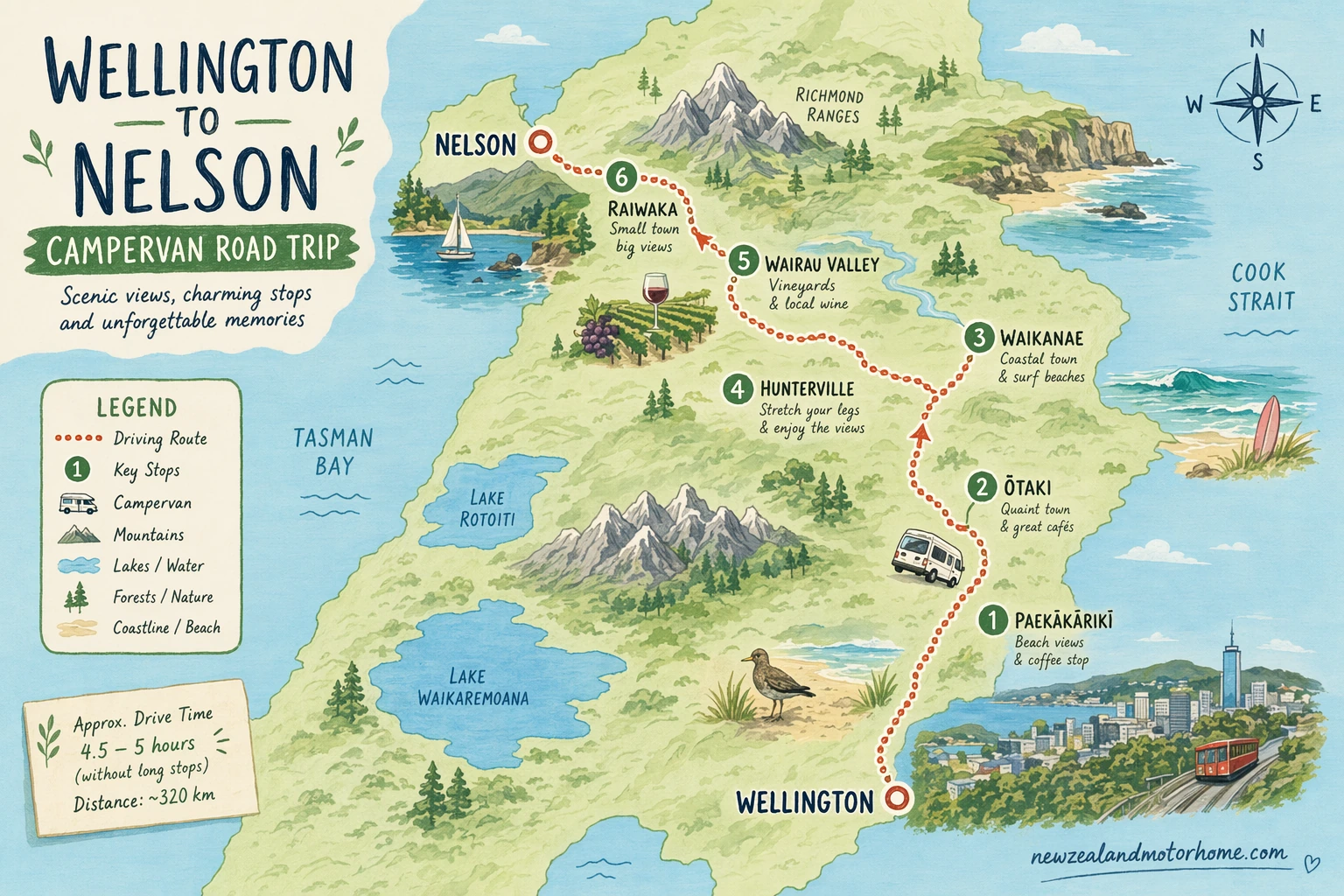
You can travel from Wellington to Nelson in one long day if ferry times line up, but it is not the most relaxed way to do it in a campervan. The ferry crossing takes a good chunk of the day, you need check-in time beforehand, and once you land in Picton there are still winding rural roads between you and Nelson.
For a comfortable Wellington to Nelson motorhome road trip, allow two days at minimum: one night near Wellington before an early sailing or one night in Picton, Blenheim or Havelock after you arrive. Three to four days lets you slow down for Marlborough Sounds views, a winery lunch where you can park the van properly, or a beach stop around Nelson without arriving at a campground in the dark.
- Fast but full: Wellington ferry, Picton to Nelson the same day, best only with a morning sailing.
- Better pace: Overnight near Wellington, ferry next morning, overnight Picton or Havelock, then Nelson.
- Most flexible: Add a Marlborough or Sounds night so weather, ferry delays and winding roads do not squeeze the day.
If you want help fitting the ferry, campsites and driving times around your actual van length and travel dates, you can use the soft planning step at /talk-to-us/.
Wellington ferry planning for campervans and motorhomes
The route begins at the Wellington ferry terminal, and this is the part to plan carefully. When booking, enter the full length and height of your campervan or motorhome, including bike racks, roof vents, aerials and any rear storage. Turning up with a vehicle longer than booked can cause delays or rebooking problems.
Arrive with enough time to queue in the vehicle lanes, use the toilet, secure loose items inside the van and turn off LPG at the bottle if required by the ferry operator. You usually cannot access the vehicle deck during the sailing, so take warm layers, medication, snacks, chargers and anything needed for children before leaving the van.
- Before check-in: Top up fresh water only if you need it; carrying less weight can make the van feel nicer on the hills after Picton.
- Food and fridge: Make sure the fridge is set up for the crossing and do not rely on returning to the van mid-sailing.
- Overnighting: Do not plan to sleep in ferry staging lanes; use a legal campground or designated site the night before.
Wellington itself is windy and compact for high-roof vehicles. If you want an easy pre-ferry night, look at commercial holiday parks or motorhome-friendly stays around the Hutt Valley, Petone or other outer suburbs, then drive into the terminal early rather than wrestling the van around the waterfront at peak time.
Picton to Nelson: easier highway or scenic Sounds road
From Picton you have two main ways to reach Nelson. The easier motorhome option is to follow the state highways via Blenheim, Renwick, Havelock, Rai Valley and the Whangamoa Saddle. It is not flat, but the road is wider and more predictable than the Sounds route, with more places to pause for fuel, food and a leg-stretch.
Queen Charlotte Drive from Picton to Havelock is the scenic choice, with bush, bays and lookout pull-offs, but it is narrow, twisting and slow. It can be lovely in a smaller campervan on a dry day, but long motorhomes, nervous drivers, heavy rain, dusk and oncoming traffic make it hard work. If your van is wide or you are new to left-side rural driving, take the highway route and save the views for short stops.
- Van-friendly default: Picton to Blenheim, Renwick, Havelock, Rai Valley, then Nelson.
- Scenic option: Queen Charlotte Drive to Havelock, only if you are confident with narrow bends and limited shoulders.
- Hill note: The Whangamoa and Bryant sections are winding; use lower gears downhill and pull over only where the whole van is safely off the lane.
- Night driving: Avoid the Picton to Nelson hills after dark if you can, especially after a ferry day.
Overnight stops that make sense on this route
The best overnight stop depends on your ferry time. If you arrive in Picton late afternoon or evening, stay nearby rather than pushing on. Picton and Blenheim have holiday parks with powered sites, dump facilities and fresh-water taps, while Havelock can work well if you want to shorten the next day into Nelson.
For a quieter night, look for council-approved or Department of Conservation style campsites where vehicle access is suitable for your van and your self-containment certificate meets the rules. In Marlborough and Nelson Tasman, freedom camping is tightly managed, so assume you need an officially designated site rather than simply pulling up beside the sea.
- Wellington side: Powered holiday park sites are useful before an early ferry, especially if you want showers, laundry and a reliable morning departure.
- Picton or Blenheim: Good for late ferry arrivals, with easier access to dump stations, supermarkets and fuel.
- Havelock or Rai Valley area: Handy for breaking the highway section, but check site access and rules before committing in a larger motorhome.
- Nelson arrival: Tahunanui, Nelson city fringe and Richmond all have van-friendly campground options; book ahead in summer.
When choosing between powered and unpowered sites, think about the ferry day. A powered night before or after the crossing is useful for charging house batteries, resetting the fridge, drying towels and avoiding the stress of hunting for a legal freedom camping space when you are tired.
Dump stations, water, LPG and stocking the van
This route is straightforward for motorhome services if you do not leave them until the last minute. Wellington, Picton, Blenheim, Havelock and Nelson all have service options through holiday parks, public dump points or fuel stops, but access, opening times and potable-water availability can change, so check current council or official camping maps before you roll in.
A simple rhythm works well: empty grey and black water before boarding the ferry if tanks are getting full, refill fresh water after landing if you are heading to an unpowered campsite, and sort LPG before you leave larger towns. Some smaller settlements may not have the right bottle swap or fill option for your setup.
- Before Wellington ferry: Use a legal dump station if tanks are close to full; do not rely on ferry terminal facilities for van servicing.
- Picton and Blenheim: Sensible places to restock groceries and water before taking the slower road west.
- Havelock: Good pause point, but park considerately; long vans can block small-town bays quickly.
- Nelson and Richmond: Best for a proper reset with dump stations, fuel, LPG, supermarkets and laundry before heading into Tasman or Abel Tasman.
Parking and road manners from Wellington to Nelson
Parking a campervan is usually easier once you are out of central Wellington. In the city, avoid height-restricted car parks and tight waterfront spaces unless you have checked clearance. Around Picton, Havelock and Nelson, look for longer surface bays, signed campervan parking or edge-of-town spaces where you can open doors without hanging into traffic.
On the South Island section, keep an eye on mirrors and let faster traffic pass at proper slow-vehicle bays. The Wellington to Nelson drive includes plenty of bends where locals know the road well, but that does not mean you should rush. A motorhome handles differently on descents, especially with full tanks, bikes on the back or gusty crosswinds.
- Lookouts: Use only formed pull-offs; soft shoulders can trap a heavy van.
- Town stops: Do not take multiple short car parks if there is a longer bay nearby.
- Bridges and saddles: Slow early, stay left, and give cyclists and logging trucks room.
- Freedom camping: Display current self-containment certification where required and follow local signs over app rumours.
Arriving in Nelson, consider parking at your campground first and exploring by foot, bike or local transport. It is much easier than threading a high-roof van through busy beach streets or the central city at dinner time.
Keep planning
Visiting zealandia wellington by campervan
Read onVisiting weta workshop wellington by campervan
Read onVisiting te papa wellington by campervan
Read onHoliday parks wellington
Read onHoliday parks nelson tasman
Read onHoliday parks nelson
Read onCommon questions
Can I drive from Wellington to Nelson in one day in a campervan?
Yes, if you have a morning ferry and no delays, but it makes for a long travel day. Most campervan travellers are happier stopping in Picton, Blenheim or Havelock so the winding road into Nelson is driven fresh and in daylight.
Is Queen Charlotte Drive suitable for a motorhome?
It depends on your vehicle size and confidence. Smaller campervans can manage it in good weather, but the road is narrow and winding with limited shoulders, so longer motorhomes are usually better taking the highway route via Blenheim and Havelock.
Where should I stay the night before the ferry in Wellington?
A powered site at a holiday park or legal campervan stay in the wider Wellington or Hutt Valley area is the easiest option. It gives you a proper sleep, bathroom access and a simple morning run to the ferry terminal without trying to freedom camp near the city centre.
Are there dump stations between Picton and Nelson?
Yes, there are service options in the main towns such as Picton, Blenheim, Havelock and Nelson, often through public facilities or holiday parks. Check current council or official camping maps before you travel, because access and potable-water availability can change.
Can I freedom camp on the Wellington to Nelson route?
Only in places where local bylaws allow it, and usually only with a certified self-contained vehicle. Marlborough and Nelson Tasman both manage freedom camping closely, so use signed designated sites and do not assume a waterfront lay-by is legal overnight.
Do I need to book the ferry differently for a campervan?
Book using the full length and height of your vehicle, including bike racks or rear boxes. Follow the ferry operator rules for LPG, check-in time and vehicle-deck access, and keep essentials with you during the sailing.
Have a planner shape this for your dates
Send a short outline — your dates, party size, and the kind of trip you want. A planner replies with a vehicle recommendation, a paced route, and the realistic budget.