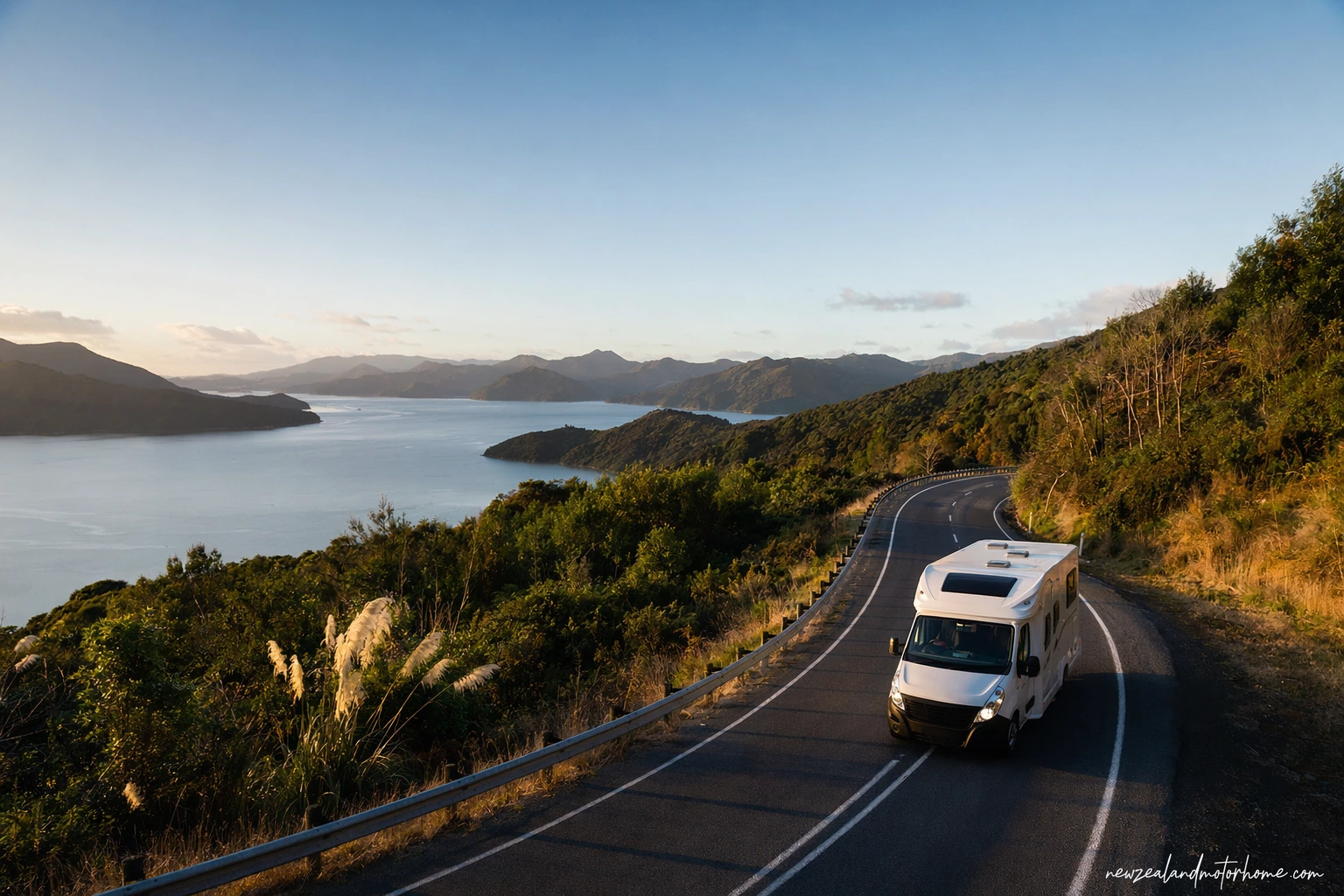
Auckland to Picton campervan route: drive, ferry and overnight stops
- Allow 4–6 days for an easy pace
- Main route via SH1 and Cook Strait ferry
- Powered sites useful before ferry day
- Check Desert Road conditions in winter
- Book ferry by van length and height
The Auckland to Picton campervan route is a proper top-to-bottom North Island drive, followed by the Cook Strait ferry into the Marlborough Sounds. It suits travellers who want to relocate south at a steady pace, sleep in the van each night, and arrive in Picton ready for the South Island rather than worn out from one long push.
This guide is written for self-drive campervan and motorhome travellers: where the kilometres feel long, where to overnight, how to think about powered sites versus freedom camping, and what to sort before you roll into the ferry queue in Wellington. The classic auckland to picton drive follows SH1 through Waikato, Taupō, the central plateau and Kāpiti, with enough flexibility to add hot pools, short walks and a proper rest day if the weather turns.
How many days to allow in a campervan
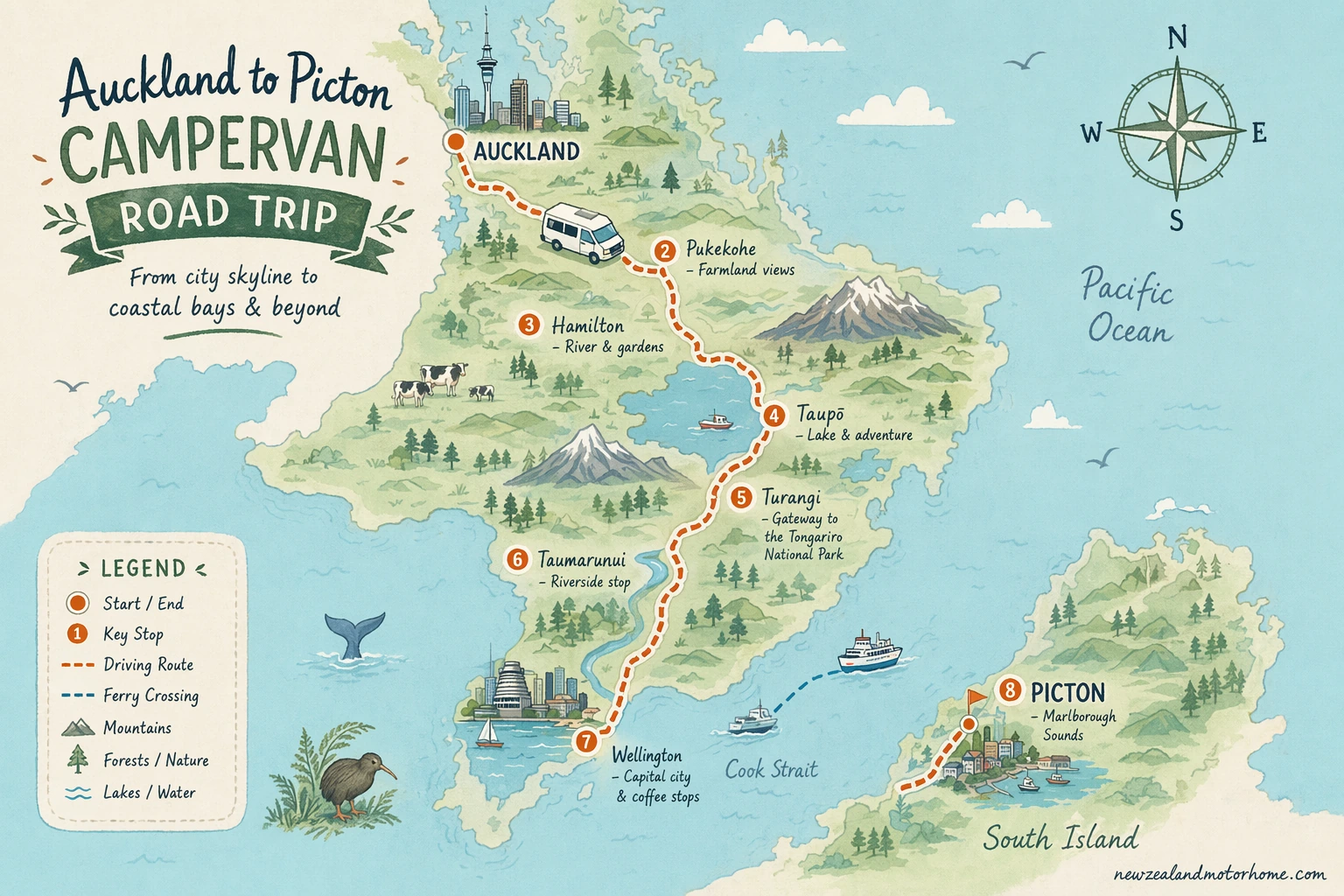
You can technically drive Auckland to Wellington in two big days and catch a ferry to Picton, but that is not the most comfortable way to do it in a motorhome. A better rhythm is four to six days, giving you shorter driving blocks, time to empty waste tanks, fill fresh water and avoid arriving at the ferry terminal tired.
For most hired vans, the sweet spot is Auckland to Taupō or Tūrangi on day one, central plateau to Kāpiti or Wellington on day two or three, then the ferry to Picton when the forecast and sailing time line up. If this auckland to picton motorhome road trip is part of a longer South Island loop, protect at least one buffer night before the ferry in case of weather, traffic, or a late check-out from a campsite.
- Quick but tiring: 3 days, with long driving days and little sightseeing.
- Comfortable: 4 to 5 days, with one central North Island overnight and one near Wellington.
- Relaxed: 6 days or more, adding Rotorua, Taupō, National Park or Kāpiti Coast.
- Ferry tip: book by vehicle length and height, including bike racks or rear storage boxes.
Route overview: Auckland to Wellington, then ferry to Picton
From Auckland, most campervans take the Southern Motorway onto the Waikato Expressway, then continue via Hamilton, Cambridge, Taupō, Tūrangi, the Desert Road, Taihape, Bulls, Levin and Kāpiti into Wellington. It is a straightforward SH1 route, but it is not all motorway: expect slower sections, exposed plateau weather, town approaches and tight urban driving into Wellington.
The Cook Strait ferry is part of the journey, not just transport. You drive the van into the ferry staging area, follow staff directions onto the vehicle deck, switch off LPG as instructed, and take everything you need upstairs because you normally cannot return to the vehicle during the sailing. In Picton, the exit rolls you close to the town centre, campgrounds, fuel, groceries and the Queen Charlotte Drive turn-off.
- Auckland to Taupō: allow a generous half day in a van, more if leaving in commuter traffic.
- Taupō to Wellington: a long day, best broken around Tūrangi, National Park, Taihape, Levin or Kāpiti.
- Wellington to Picton: allow time for check-in, loading, sailing and unloading, not just the ferry crossing itself.
- Road note: the Desert Road can close in snow, ice or high wind; check conditions before committing.
Good overnight stops between Auckland and Picton
Your overnight choices change the feel of the trip. Powered holiday park sites are useful after a long driving day, especially if you need to charge house batteries, do laundry, plug in a heater or take a proper shower. Unpowered sites suit self-contained vans with healthy batteries and full water tanks, while freedom camping needs careful checking against the current council rules for that exact location.
A practical first night is around Cambridge, Matamata, Rotorua, Taupō or Tūrangi, depending on how late you leave Auckland. A second night works well around National Park, Ohakune, Taihape, Levin, Kāpiti or Porirua. If your ferry is early, staying north of Wellington can reduce stress, but leave extra time for motorway traffic and the final approach to the terminal.
- Cambridge or Matamata: easy Waikato stop if you leave Auckland late or want a gentle first day.
- Taupō or Tūrangi: strong campervan bases with supplies, lake walks, hot pools and nearby dump station options.
- National Park or Ohakune: cooler alpine overnights, good for walks, but check winter road conditions.
- Kāpiti or Porirua: useful before a Wellington ferry, with less tight city driving at night.
- Picton: worth an overnight after the ferry if you do not want to tackle Marlborough roads while tired.
Dump stations, water, LPG and campsite routines
Do not leave all your servicing until Wellington. On this route, it is easier to build in small resets at bigger towns such as Hamilton, Cambridge, Rotorua, Taupō, Tūrangi, Taihape, Levin, Kāpiti, Wellington and Picton. Availability changes, so use your camping app, council information or your hire company guidance to confirm dump stations and potable water before you arrive.
Fresh-water fills are not always beside a dump point, and not every dump station has drinking water. Keep a separate food-grade hose, avoid blocking the bay while reorganising the van, and empty grey and black water only where permitted. LPG bottle swaps or refills are generally easier in larger service towns than in small villages, so top up before remote or weather-prone sections.
- Before leaving Auckland: start with full fresh water, empty waste tanks, full LPG and groceries stowed securely.
- Mid-route reset: Taupō or Tūrangi is a sensible place to empty, refill and check tyre pressures.
- Before the ferry: secure loose gear, close roof vents, follow LPG instructions and keep your ferry documents handy.
- After arriving in Picton: use the town as a reset point before heading towards Blenheim, Nelson or the West Coast.
Road notes for motorhomes and longer vans
The main auckland to picton drive is van-suitable, but it still asks for patience. The Waikato Expressway is easy running, then SH1 becomes more varied: lakeside traffic around Taupō, alpine exposure on the Desert Road, slower truck sections through the Rangitīkei, and busy multi-lane approaches into Wellington. In a longer motorhome, plan overtaking carefully and use slow-vehicle bays when traffic builds behind you.
Height and length matter most at service stations, supermarket car parks, motel-style forecourts and urban Wellington streets near the harbour. Look for end parks, avoid tight underground car parks, and do not assume a roadside pull-off is level enough for cooking or sleeping. If you want a hand turning the route into a day-by-day plan around your van size and ferry time, you can use the soft planning step at /talk-to-us/.
- Auckland departure: avoid peak motorway traffic if you are new to a wide campervan.
- Desert Road: check wind, snow and ice warnings, especially in winter and shoulder seasons.
- Wellington: allow more time than the map suggests; lanes, ramps and ferry traffic can feel busy.
- Picton arrival: take it slowly off the ferry, as everyone unloads at once and pedestrians are close by.
What to see without making the drive too full
The temptation on this route is to squeeze in every North Island highlight, but a campervan trip works better when the day still leaves time to cook, dump, fill, and settle before dark. Choose one or two anchor stops rather than chasing a long list: Hobbiton country near Matamata, geysers and forest walks around Rotorua, the lakefront at Taupō, short volcanic viewpoints near Tūrangi, or an easy beach walk on the Kāpiti Coast.
On the ferry, keep warm layers and a camera with you in the passenger lounge. The Marlborough Sounds approach is often the most memorable part of the whole Auckland to Picton campervan route, with sheltered bays, bushy headlands and the first clear sense that the South Island leg has begun.
- Best easy pause: Taupō lakefront, where you can stretch legs without committing to a long detour.
- Best weather-dependent section: the central plateau, which is beautiful in clear conditions and tiring in poor visibility.
- Best pre-ferry wind-down: Kāpiti Coast or a Wellington waterfront walk after the van is parked for the night.
- Best arrival choice: stay in Picton and start Queen Charlotte Drive or the Blenheim route fresh the next morning.
Keep planning
Visiting sky tower auckland by campervan
Read onVisiting rainbows end auckland by campervan
Read onHoliday parks picton
Read onHoliday parks auckland
Read onCampervan supplies picton
Read onCampervan supplies auckland
Read onCommon questions
Can I freedom camp the whole way from Auckland to Picton?
Only if each overnight spot allows your specific vehicle and you meet the current self-containment rules. Many councils restrict where certified self-contained campervans can stay, and some attractive waterfront or town spots are day-use only. Mix freedom camping with paid sites so you can shower, plug in and service the van properly.
Is the Auckland to Picton campervan route suitable for a large motorhome?
Yes, the main SH1 route and ferry are suitable for larger motorhomes, provided you book the ferry with the correct length and height. Take extra care in Wellington, supermarket car parks, fuel stations and smaller campsite access roads. If your van is very long, choose campsites with clear turning space and book ahead in peak season.
Should I book the Cook Strait ferry in advance?
Yes, especially from late spring through autumn, during school holidays, and whenever you are travelling with a fixed hire-van return date. Campervan spaces are allocated by vehicle dimensions, so do not guess your length if you have bike racks, a tow bar box or rear storage fitted.
Where should I stay the night before the ferry?
For an early sailing, stay in Wellington, Porirua or on the Kāpiti Coast and allow extra time for traffic. A powered site the night before is handy because you can start the ferry day with charged batteries, cold food in the fridge and waste tanks already sorted.
Is the Desert Road safe in a campervan?
In settled weather, yes, it is a normal state highway used by cars, trucks and motorhomes. In winter or during storms, it can be affected by snow, ice, fog and strong wind, so check road conditions before leaving Taupō or Tūrangi. If it closes, wait it out rather than trying unsuitable back-road shortcuts in a hired van.
Do I need a self-contained campervan for this route?
You do not need one if you are staying only in campgrounds or holiday parks, but certified self-containment gives you more flexibility for approved freedom camping areas. Check that the certification is current and displayed correctly, and still use proper dump stations for grey and toilet waste.
Have a planner shape this for your dates
Send a short outline — your dates, party size, and the kind of trip you want. A planner replies with a vehicle recommendation, a paced route, and the realistic budget.