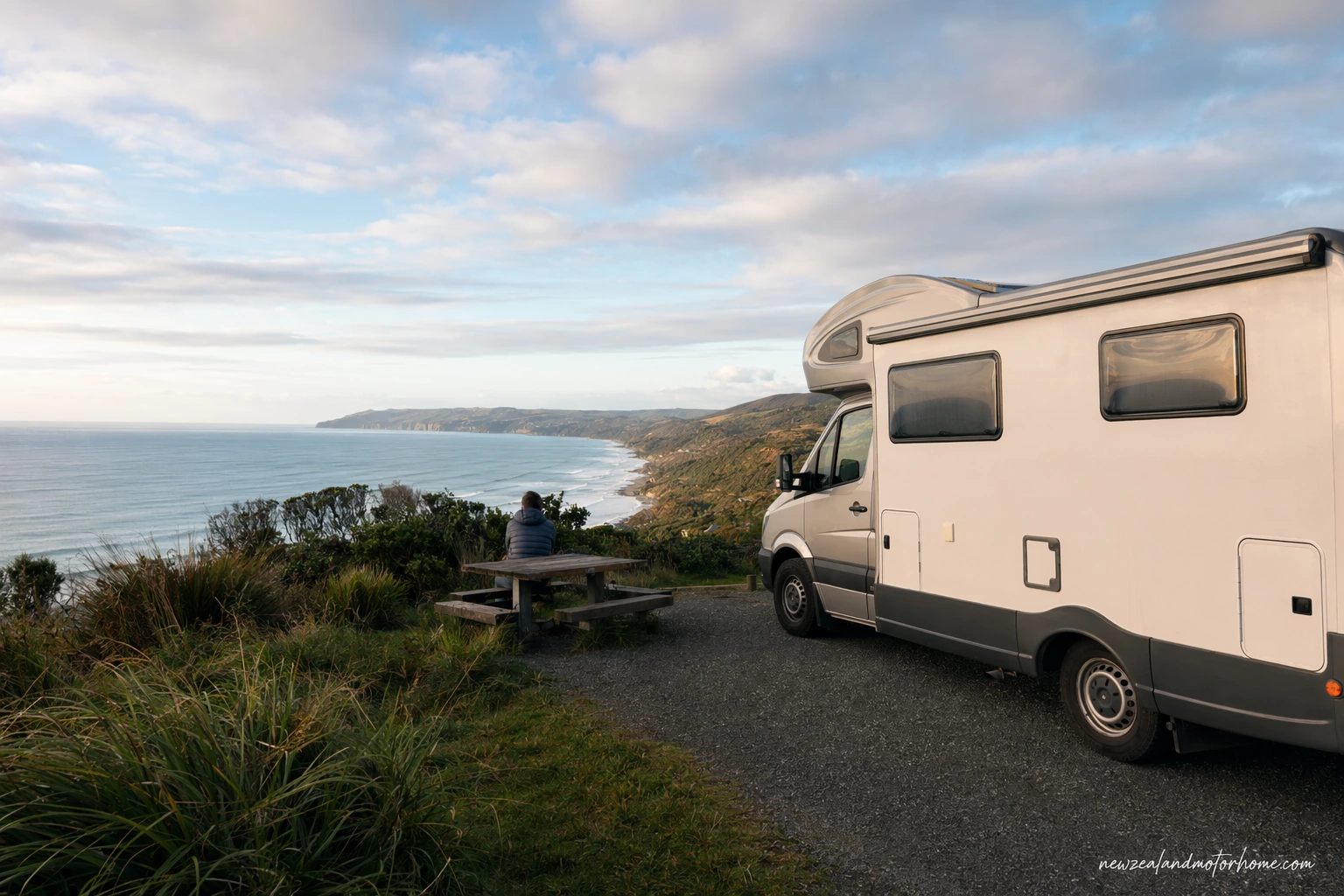
- Allow 2–3 nights
- Self-contained rules apply
- Limited dump stations
- Side roads can be narrow
- Powered sites useful in wet weather
The Catlins rewards slow campervan travel: short walks from tucked-away car parks, surf beaches that appear between flax and rimu, and a coast road where you will want to pull over more often than the map suggests. This page is for travellers driving and sleeping in their hired campervan or motorhome, not rushing through in a day.
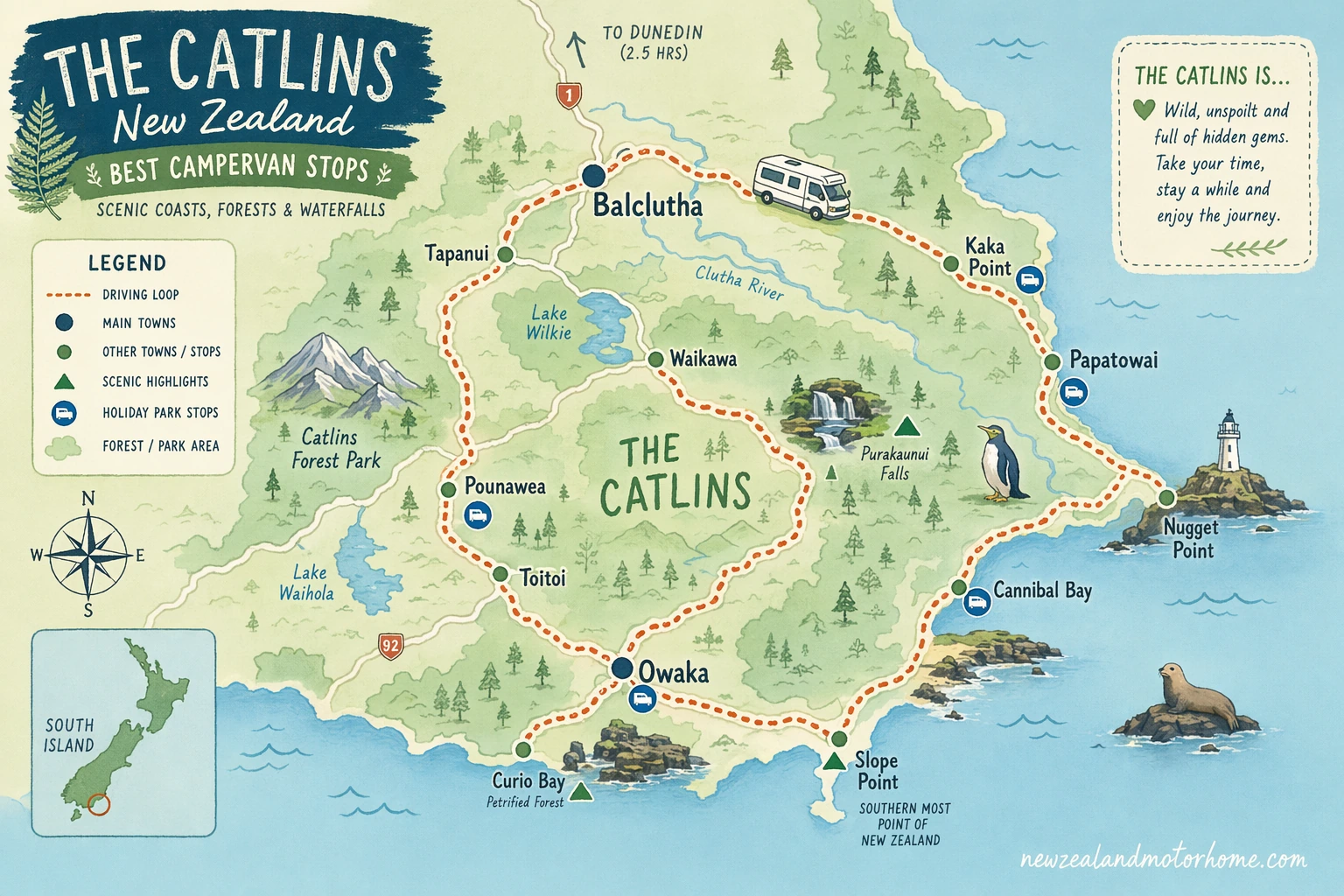
Below you will find the best campervan stops Catlins travellers can string together between Balclutha, Owaka, Papatowai, Curio Bay and Fortrose, with practical notes on where the van fits, where not to overnight, and how to handle freedom camping Catlins rules without getting caught out by local signs.
Start stocked and serviced before the forest road begins
The Catlins feels remote because services thin out quickly once you leave Balclutha or Invercargill. If you are wondering where to stay campervan Catlins style, the first answer is: start with full fresh water, empty grey and black tanks, a charged house battery, and enough LPG for cooking and heating on a damp night.
Balclutha, Gore and Invercargill are the easiest places to sort supermarket supplies, fuel, LPG swaps or refills, and public dump stations before or after the coast. Owaka has useful basics, but do not plan your waste, water and gas around every small bay; opening hours and facilities can change, and some campground dump points are for guests only.
- Best pre-entry base: Balclutha if you are driving south, Invercargill or Gore if you are driving north.
- Van prep: fill fresh water, empty the toilet cassette, check LPG, and download offline maps before mobile reception drops.
- Road rhythm: allow extra time for sealed but winding sections, one-lane bridges, livestock, and slow side roads to beaches.
- Large motorhomes: take extra care on gravel access roads after rain, especially where the turn-around area is small.
Nugget Point, Roaring Bay and Kaka Point pull-ins
Nugget Point / Tokatā is one of the classic Catlins stops for a campervan day visit. The lighthouse road is sealed but narrow in places, and the final car park can fill quickly in summer, so it is kinder on the van and your nerves to arrive early or later in the afternoon rather than at the middle of the day.
Do not treat the lighthouse car park as an overnight stop. Park neatly, keep clear of the turning area for larger vehicles, and walk the track out to the lighthouse with warm layers; the wind can be sharp even when Kaka Point is calm. Roaring Bay has a separate viewing hide for hoiho, the yellow-eyed penguin, and dusk visits need quiet, respectful parking with no doors slamming beside the wildlife area.
- Good for: lighthouse views, coastal photos, short walks from the van, wildlife watching at Roaring Bay.
- Parking: suitable for campervans, but limited at peak times; avoid blocking the turning loop.
- Overnight: use a legal campground, holiday park, DOC site or signed freedom camping area instead of attraction car parks.
- Nearby stay idea: Kaka Point and the Owaka area have formal overnight options, including powered sites if you need to recharge.
Waterfall country: Purakaunui, Matai and McLean Falls
The Catlins waterfalls are made for a campervan day of short walks, muddy boots and hot drinks back at the sliding door. Purakaunui Falls is the best-known, with a small parking area off a side road. In a long motorhome, arrive outside busy hours and be prepared to skip it if the parking looks tight rather than forcing a turn.
Matai Falls and Horseshoe Falls are easier to combine from the main route, while McLean Falls needs a longer drive down a side road and a proper forest walk. After heavy rain, expect potholes, wet gravel edges and soft shoulders; keep your vehicle on formed parking areas and avoid taking a wide van onto verges that may not hold its weight.
- Purakaunui Falls: iconic three-tier waterfall, limited parking, no overnighting at the walk car park.
- Matai Falls: handy stop from the main road, good when you want a shorter break from driving.
- McLean Falls: allow more time, wear shoes that can get wet, and check the access road if driving a larger motorhome.
- Campervan tip: keep a towel near the door and avoid bringing wet leaf litter into the living area.
Tautuku Bay, Lake Wilkie and Cathedral Caves
The stretch around Tautuku is where the Catlins feels properly wild: dense forest on one side, a sweep of pale sand on the other, and viewpoints that work well as short van breaks. Florence Hill Lookout has space to pull in for the famous view over Tautuku Bay, but keep an eye on passing traffic and do not step out into the road for photos.
Lake Wilkie is a gentle boardwalk stop with a car park that usually suits campervans better than some of the tighter waterfall pull-ins. Cathedral Caves is different: access is tide-dependent, seasonal, and across private land, so check current opening information before committing the drive. The car park can be busy and the walk is steeper than many expect, especially when returning to the van.
- Best daytime pairing: Florence Hill Lookout, Lake Wilkie, then Cathedral Caves only if tides and access line up.
- Parking: use marked areas only; do not overnight in beach or track car parks unless a sign clearly permits it.
- Power and water: plan to use a formal campground or holiday park nearby if your battery is low after several cloudy days.
- Weather note: sand, salt spray and wet gear build up quickly here, so ventilate the van when you stop for the night.
Curio Bay, Porpoise Bay and the southern coast
Curio Bay is often the stop that makes travellers slow down for an extra night. The petrified forest is best visited at low tide, while Porpoise Bay is the place to watch the water from a respectful distance; marine wildlife should never be chased, crowded or used as a photo prop. Parking is more structured here than at the smaller bays, so follow the signs rather than creating your own beach-edge space.
If you need a proper reset, this is one of the more logical places to choose a powered site, refill fresh water where allowed, use campground facilities, and give the van a clean-out. From here, Waipapa Point lighthouse and Slope Point are strong day stops, but the roads are exposed and can be windy. Keep both hands on the wheel in gusts, especially in a high-roof campervan.
- Good for: a slower overnight, coastal walks, low-tide fossil forest viewing, and catching up on van chores.
- Powered vs unpowered: choose powered if you have been free camping or using the diesel heater heavily.
- Southern side trips: Waipapa Point and Slope Point are worthwhile, but check road conditions and do not rush the gravel sections.
- Dump and water planning: confirm facilities before arrival, and still plan a larger service stop in Invercargill, Gore or Balclutha.
How to string the Catlins stops into campervan nights
A comfortable Catlins campervan route is usually two or three nights, not one long dash. The best flow is to drive Balclutha to Kaka Point or Owaka, continue through the waterfall and Tautuku section, then spend a night near Curio Bay before exiting towards Invercargill or looping inland. If you have a larger motorhome, that slower pace also reduces the number of tight car parks you meet at peak hour.
Freedom camping Catlins rules are set by local councils and can change between districts, so rely on current signs, council maps and your rental agreement rather than old comments online. In many places you will need a certified self-contained vehicle, and even then some beaches, reserves and attraction car parks are off-limits overnight. When in doubt, use a DOC campsite, holiday park or designated site and keep the roadside stops for daytime exploring.
If you want help matching your van size, travel dates and must-see stops into a realistic route, you can use the talk-to-us step and we will shape it around how you actually like to travel.
- One night: pick either the northern waterfalls and Nugget Point, or the Curio Bay end, not both in detail.
- Two nights: Kaka Point/Owaka area, then Curio Bay or nearby southern coast.
- Three nights: add a forest-and-waterfall day with less backtracking and more daylight at each stop.
- Golden rule: attraction car parks are for visiting; overnight only where signs, council rules and your self-containment status allow it.
Common questions
Can I freedom camp in the Catlins with a campervan?
Sometimes, but only in places where local signs and council rules allow it, and usually only if your campervan is certified self-contained. The Catlins crosses council boundaries, so check the current rules for the exact bay or reserve before you settle in for the night.
Where should I stay in a campervan in the Catlins?
Good overnight bases include the Kaka Point/Owaka end, a forest or DOC-style stop if it suits your vehicle, and the Curio Bay area for a more serviced night. Choose powered sites when your battery, heater use or weather makes freedom camping less comfortable.
Are the Catlins roads suitable for a large motorhome?
The main route is generally suitable for campervans and motorhomes, but it is winding and slower than it looks on a map. Some side roads to beaches, waterfalls and lookouts are narrow, gravel or have small turning areas, so larger vans should arrive early and avoid soft verges.
Where can I empty the toilet cassette and refill fresh water?
Plan major servicing in Balclutha, Invercargill or Gore before and after the Catlins rather than relying on every small settlement. Some campgrounds may have dump stations and water for guests, but access can change, so confirm before you count on it.
How many days do I need for the best campervan stops Catlins route?
Two nights gives most campervan travellers a good balance of Nugget Point, waterfalls, Tautuku and Curio Bay without too much rushing. Three nights is better if you like short walks, wildlife watching and slower mornings in the van.
Have a planner shape this for your dates
Send a short outline — your dates, party size, and the kind of trip you want. A planner replies with a vehicle recommendation, a paced route, and the realistic budget.