- Best pace: 2-5 nights
- Powered and unpowered sites
- Self-containment rules apply
- Limited dump stations
- Allow extra time on winding roads
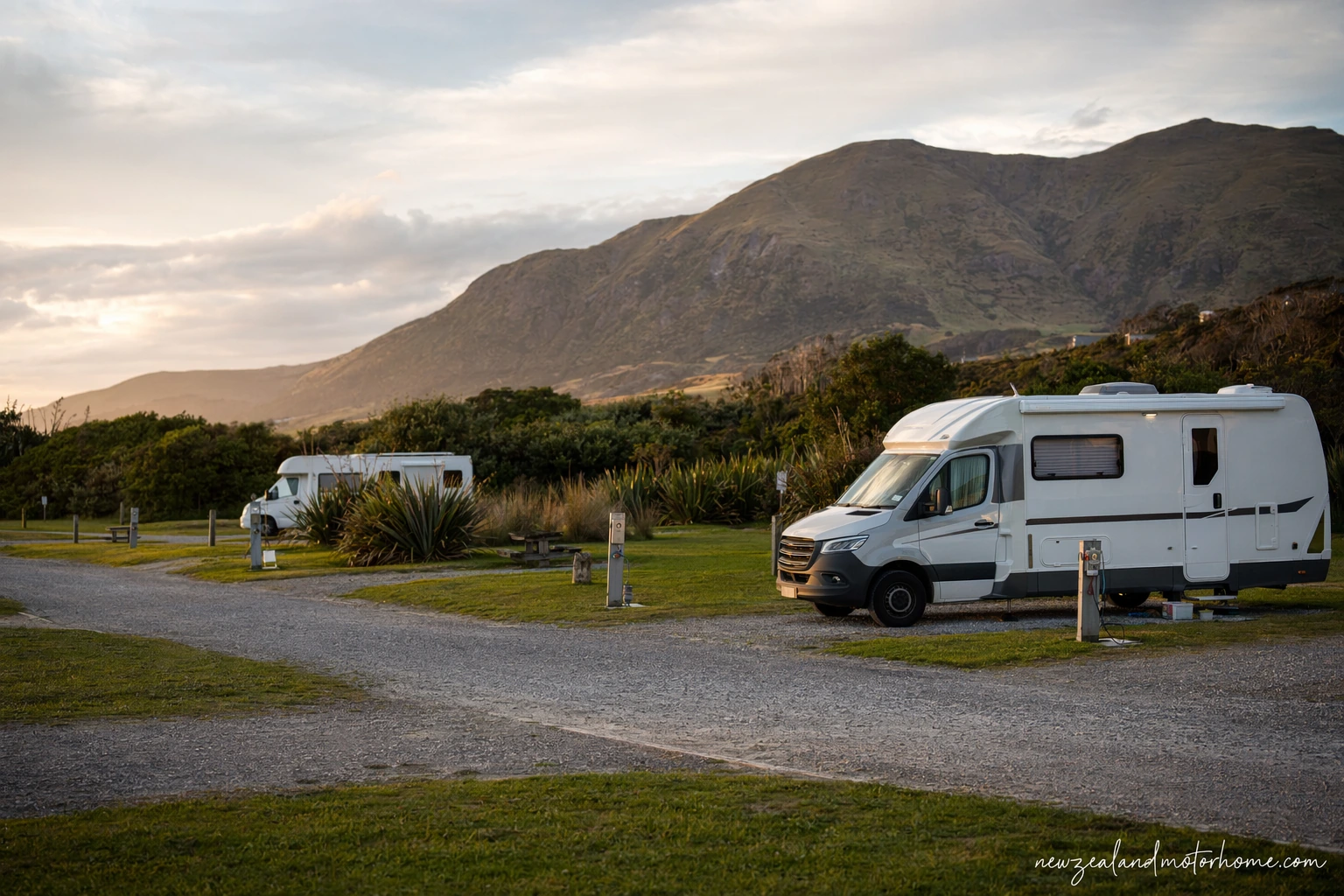
The Catlins rewards a slower campervan rhythm: short driving days, big coastal weather, and evenings tucked into a sheltered site rather than rushing from waterfall to lighthouse. Holiday parks Catlins-wide are spread between the northern coast near Kaka Point, the Owaka and Pounawea area, the forested middle around Papatowai, and the southern coast near Curio Bay, Waikawa and Fortrose.
This guide is for self-drive motorhome travellers choosing where to park the van overnight, whether you need power, and how to keep on top of water, waste and LPG in a region with long, quiet stretches between services. Use it to compare campsites Catlins travellers actually use as bases, not just dots on a map.
How the Catlins holiday parks are spread out
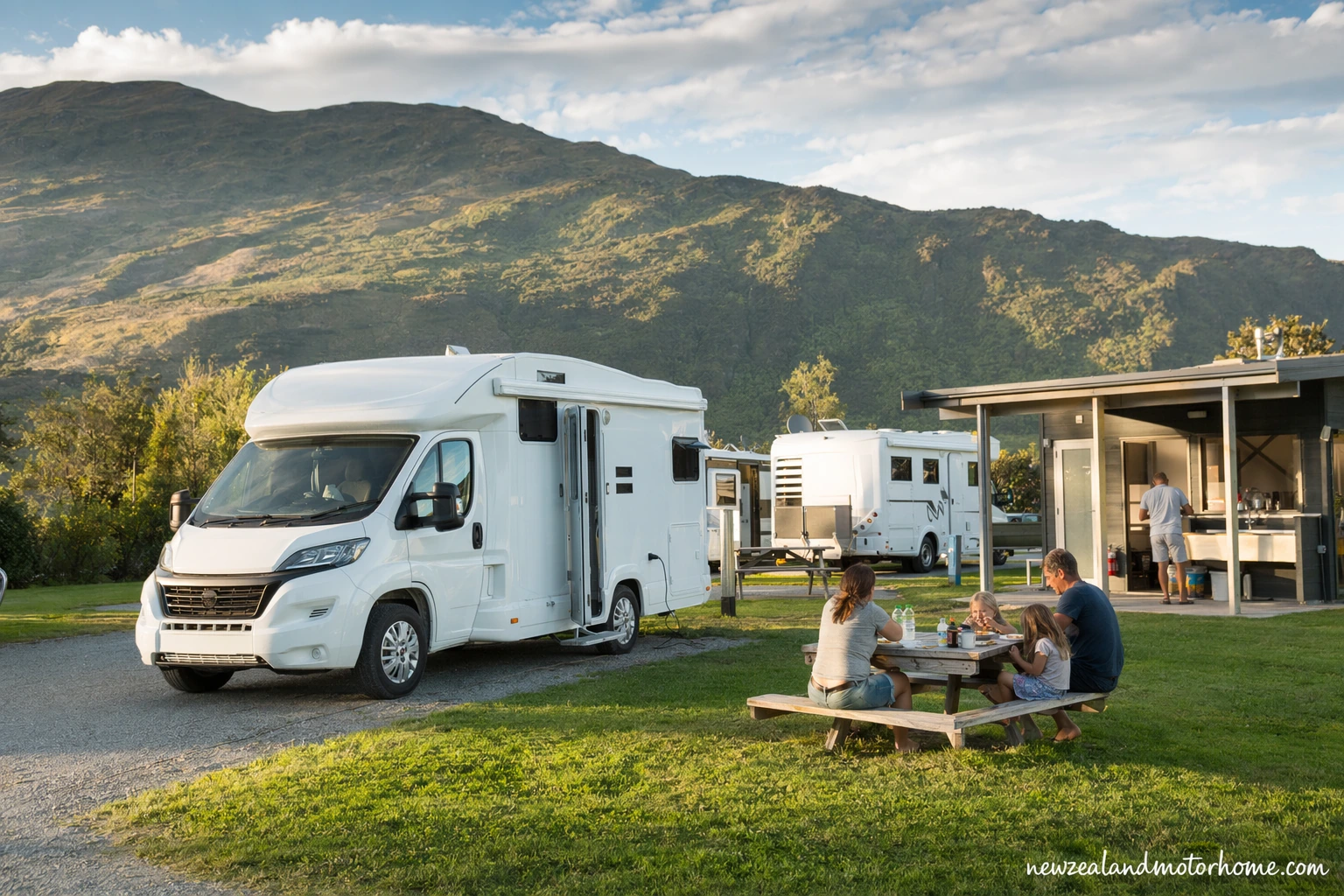
The Catlins is not a single town with one camping strip. It is a broken coastline of small settlements, surf beaches, estuaries and forest roads between Balclutha and the Invercargill side. That means the right holiday park depends on which part of the coast you want to unlock the next morning.
A search for “top 10 holiday park Catlins” can be less useful than thinking in bases. Kaka Point suits Nugget Point and the northern beaches, Owaka or Pounawea works well for cafés, supplies and estuary walks, Papatowai puts you close to forest and waterfall spurs, while Curio Bay or the Waikawa side makes sense for the southern coast and petrified forest area.
- Northern base: Kaka Point and nearby coastal settlements for Nugget Point, Roaring Bay and Balclutha services.
- Central base: Owaka, Pounawea and Papatowai for Purakaunui Falls, Matai Falls, estuaries and shorter forest drives.
- Southern base: Curio Bay, Waikawa and Fortrose approaches for Porpoise Bay, Slope Point side trips and the road towards Invercargill.
Powered and unpowered sites: what to expect
Powered sites Catlins travellers book are valuable in colder months, after wet beach days, or when you are running a fridge, heater, camera batteries and e-bike chargers. The coast can be windy and damp even in summer, so a powered pitch can make the difference between a cosy night and a van full of wet jackets.
Unpowered sites are usually the more relaxed option if your campervan battery and solar are coping, but do not assume every rural campground has flat, hard-standing sites. Some are grassy, and after rain you will want to choose your pitch carefully, keep drive wheels on firmer ground, and avoid parking under low branches if your motorhome has a high roof or roof vents.
- Book ahead for summer, school holidays and long weekends, especially around Curio Bay and Kaka Point.
- Carry levelling ramps or chocks; coastal and estuary sites are not always perfectly flat.
- Ask about site access if your vehicle is long, has a rear overhang, or needs room for a slide-out or awning.
- Use unpowered nights after you have topped up water, emptied waste and charged devices elsewhere.
Freedom camping and self-containment in the Catlins
Freedom camping is possible in parts of the wider Catlins, but it is not a substitute for checking the current council rules before you stop for the night. The route crosses council areas, and local bylaws can change by place, season and vehicle type. Many scenic car parks are fine for a daytime walk but not for sleeping in the van.
If you are relying on freedom camping between campgrounds Catlins-wide, make sure your campervan has current self-containment certification and that you follow the posted limits for vehicle numbers, stay length and exact parking area. In small coastal communities, keeping clear of boat ramps, beach access, toilets and residents' driveways matters.
- Look for official signs on site, not just old app comments.
- Use only designated overnight areas if freedom camping is allowed.
- Arrive with empty grey water and toilet cassettes; do not expect a dump point at every free stop.
- Move on if the area is full rather than squeezing onto grass, dunes or roadside verges.
Driving between Catlins campsites in a motorhome
Distances on the Catlins Coastal Route look short, but campervan days stretch out because the road is winding, photo stops are frequent, and many highlights sit at the end of narrow side roads. Allow more time than your navigation app suggests, especially after rain, in strong wind, or if you are driving a longer motorhome.
Expect a mix of sealed coastal road, tight bends, one-lane bridges, gravel access roads and small car parks. Nugget Point Road, the forest roads to waterfall walks, and lookouts such as Florence Hill all need slower driving in a high-sided vehicle. If a car park is already busy, avoid nosing a large van into a space you cannot easily reverse from.
- Keep fuel topped up before entering the quiet middle section of the Catlins.
- Check height before driving under trees into smaller picnic or track-end car parks.
- Use pull-outs to let local traffic pass on narrow roads.
- Do not leave the van partly on the road shoulder while you walk to a viewpoint.
Dump stations, fresh water, LPG and supplies
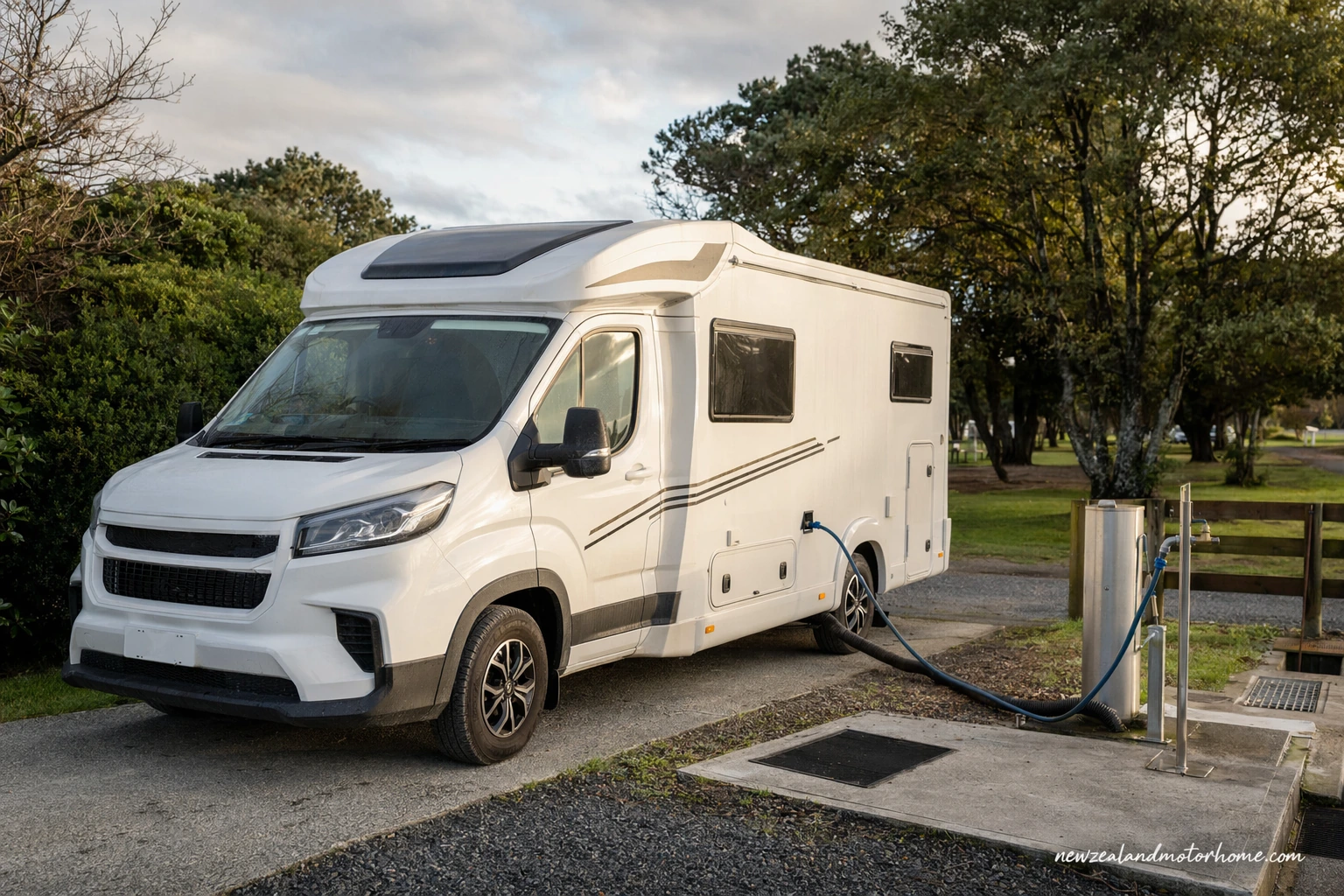
Services are more limited here than on the main South Island touring routes. Some holiday parks provide guest facilities for fresh water and waste, while public dump stations are spaced out and should be checked against current council or app information before you commit to a remote overnight stop.
Plan your servicing around bigger approaches such as Balclutha, Owaka area stops, Gore or Invercargill, depending on your direction of travel. LPG bottle swaps and full supermarket shops are not something to leave until the most remote coastal leg; the Catlins is better enjoyed when the cassette is empty, the fresh tank is full and dinner is already in the fridge.
- Dump toilet and grey water before spending multiple nights on unpowered or freedom camping stops.
- Fill fresh water where it is clearly signed as potable.
- Carry a short hose, tap adaptor and gloves for tidy servicing.
- Top up groceries and LPG before relying on small settlement stores or seasonal opening hours.
A simple Catlins holiday park route
For most campervan travellers, two or three overnight bases work better than shifting every day. A practical pattern is to enter from Balclutha, spend a night near Kaka Point or Owaka, move into the central Catlins for waterfalls and forest, then finish with a southern coastal night near Curio Bay, Waikawa or Fortrose before heading for Invercargill.
With four or five nights, slow it down: one powered night after arrival, one unpowered coastal night if conditions are good, then another powered site to reset batteries, showers and laundry. If you would like a route that matches your van size, travel dates and comfort level with gravel roads, you can use our plan-your-trip step and we will help shape the overnight stops.
- 2 nights: choose one northern or central base, then one southern base.
- 3 nights: Kaka Point/Owaka, Papatowai or nearby central stop, then Curio Bay/Waikawa side.
- 4-5 nights: add a rest night for weather, laundry, wildlife watching and a no-drive afternoon.
- In bad weather: favour powered sites, sheltered pitches and shorter side trips from the van.
Common questions
Do I need to book Catlins holiday parks ahead in a campervan?
Are there powered sites in the Catlins for motorhomes?
Can I freedom camp anywhere if my van is self-contained?
Where should I empty my toilet cassette and grey water?
Is the Catlins suitable for a large motorhome?
Have a planner shape this for your dates
Send a short outline — your dates, party size, and the kind of trip you want. A planner replies with a vehicle recommendation, a paced route, and the realistic budget.