- Best pace: 2–4 days
- Route: Balclutha to Invercargill
- Services thin between towns
- Best with certified self-contained van
- Expect wet, windy coastal weather
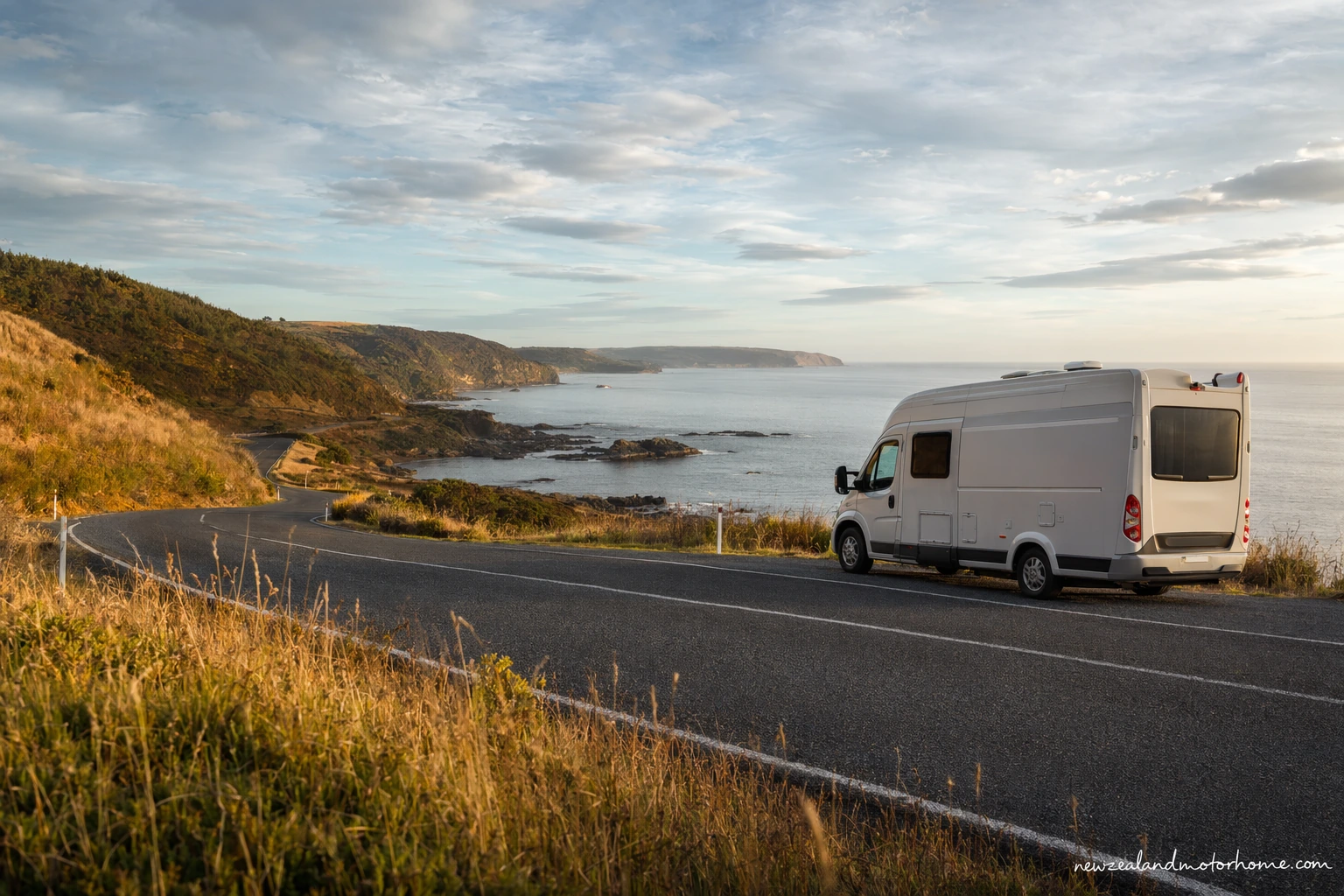
The Catlins is made for a self-drive campervan trip: short driving days, thick coastal forest, surf beaches, waterfalls, and enough bends in the road to remind you not to rush. It sits between Balclutha and Invercargill on the lower South Island, with the Southern Scenic Route doing most of the linking.
This campervan guide Catlins NZ is written for people travelling and sleeping in their hired van. You’ll find where to park for the main stops, how to think about powered and unpowered nights, where services become thin, and which roads need a bit more patience in a longer motorhome.
How many days to allow in the Catlins by campervan
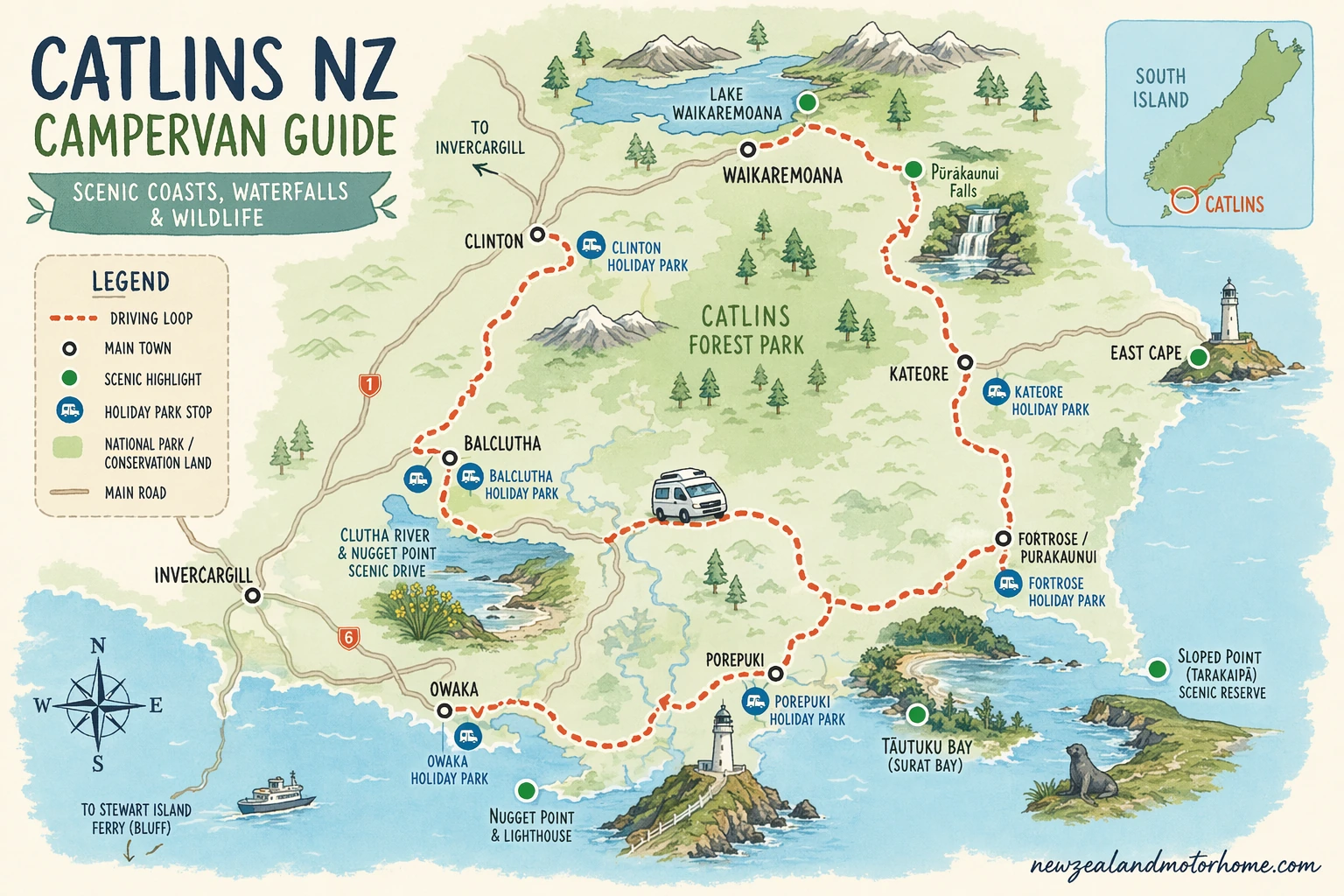
You can technically drive through the Catlins in one long day, but it would be the least satisfying way to do it in a van. Two nights gives you enough time for Nugget Point, a forest waterfall, Curio Bay and a couple of beach stops without packing up in the dark. Three to four nights is better if you want to work around tide times, rain, and slower gravel access roads.
Most catlins campervan trips run either Balclutha to Invercargill, or the reverse if you’re coming up from Fiordland and Southland. Balclutha and Invercargill are your sensible bookends for fuel, larger supermarkets, LPG bottle swaps, dump stations and fresh-water fills before you head into smaller settlements.
- Quick pass: 1 night, only if you accept missing some tide-dependent stops.
- Comfortable loop: 2 nights, usually around Kaka Point/Owaka and Curio Bay/Waikawa.
- Slow motorhome Catlins pace: 3–4 nights, with time for Purakaunui Bay, McLean Falls, Cathedral Caves and weather pauses.
Driving notes: roads, van size and fuel planning
The main Catlins touring road is sealed, but it is not fast. Expect tight corners, short hills, narrow shoulders, logging trucks in places, and sudden views that tempt people to brake or pull over badly. In a longer campervan or motorhome, use proper pull-offs rather than stopping half on the lane for photos.
Side roads to beaches and bays can be narrower, with gravel sections and limited turning room. Purakaunui Bay, Cannibal Bay and some coastal access roads are worth checking in current conditions if you are in a long or low-clearance vehicle, especially after heavy rain. Take the “no exit” signs seriously: reversing a motorhome down a wet rural road is not a fun Catlins memory.
- Fill your diesel or petrol tank before leaving Balclutha, Invercargill or Gore.
- Drive with headlights on in rain and mist; the bush sections can be gloomy even at midday.
- Watch for livestock, cyclists, and people walking back to vans near popular falls car parks.
- Allow more time than the map suggests, especially between Owaka, Papatowai and Curio Bay.
Things to do in the Catlins with a campervan
The best things to do Catlins campervan travellers can enjoy are spread along the coast rather than grouped in one town. Nugget Point is the classic first stop from the north: park in the designated car park, lock the van, and walk out to the lighthouse viewpoint. It is exposed, so think about loose roof vents, awning handles and anything drying outside before you leave the vehicle.
Waterfall stops are generally straightforward in a campervan if you arrive early or outside the lunchtime rush. Purakaunui Falls, Matai Falls and McLean Falls all have marked parking areas, but larger motorhomes should avoid boxing themselves in behind small cars. If the car park is full, keep moving and come back later rather than squeezing onto soft verges.
- Florence Hill Lookout: a good van-friendly viewpoint over Tautuku Bay, with easier stopping than many roadside pull-offs.
- Cathedral Caves: access is tide and season dependent; the parking is not an overnight option, so plan it as a day stop.
- Curio Bay: use formal parking and boardwalks to protect the petrified forest and wildlife areas.
- Slope Point: exposed and windy; check road conditions and avoid taking big vans down narrow roads in poor weather.
Where to stay: powered, unpowered and freedom camping
For your first night, Kaka Point and the Owaka area work well if you are coming from Dunedin or Balclutha. Look for established holiday park or campground options when you want powered sites, hot showers, laundry and a reliable place to reset the van. Powered sites are useful here because damp gear builds up quickly in Catlins weather.
Unpowered camping suits the wilder parts of the coast, especially if your battery setup is strong and your hired campervan is certified self-contained. DOC-style coastal campsites such as Purakaunui Bay are memorable in settled weather, but they can feel very exposed in strong southerlies. Check access, booking rules and site conditions before committing in a larger motorhome.
Freedom camping rules vary between Clutha and Southland districts, and they are not the same as “sleep anywhere by the beach”. Use official council information and current camping apps, obey no-camping signs, and only use freedom spots if your vehicle meets the self-containment requirements shown on its certification. If you want help spacing powered nights with wilder unpowered stops, you can ask us through /talk-to-us/ before you lock in the route.
Dump stations, water, LPG and food supplies
The Catlins rewards a well-prepared van. Top up fresh water, empty the grey and black water tanks, and sort LPG before you enter the smaller coastal settlements. Balclutha and Invercargill are the most reliable service bookends, with Gore also useful if you are approaching from inland Southland.
Owaka is a handy mid-route stop for basic groceries and a break from the coast road, but don’t assume every campervan service will be available exactly when you need it. Some campgrounds and holiday parks may have dump or water facilities for guests, while public dump station availability should be checked against current council listings before you rely on it.
- Empty tanks before remote unpowered nights, especially at beach camps.
- Carry drinking water separately if you plan to stay more than one night away from a serviced campground.
- Do LPG swaps in larger towns where possible rather than waiting for the last cold evening.
- Use only signed dump stations; never empty grey water into roadside drains, dunes or bush edges.
Weather, wildlife and low-impact van travel
The Catlins can turn from calm and golden to wet and sideways in an hour. That is part of its appeal, but it affects van life: drying towels, cooking inside, opening the sliding door into wind, and choosing whether an exposed beach camp is sensible. In winter and shoulder seasons, powered sites can make the trip much more comfortable.
Wildlife is another reason to travel carefully. Sea lions may be on beaches or near access tracks, and penguin areas around Curio Bay require distance, quiet and patience. Park only in formed areas, keep food and rubbish sealed inside the van, and do not use headlights or torches to chase wildlife photos.
A good motorhome Catlins trip leaves room for the place to be itself. If rain closes in, shorten the day, choose a sheltered campground, make a proper cup of tea in the van, and wait for the next clear window rather than forcing every lookout in bad conditions.
Common questions
Is the Catlins suitable for a large motorhome?
Can I freedom camp in the Catlins in a hired campervan?
Where should I fill water and empty waste before the Catlins?
What is the best direction for a Catlins campervan route?
Do I need to book campsites in the Catlins?
Have a planner shape this for your dates
Send a short outline — your dates, party size, and the kind of trip you want. A planner replies with a vehicle recommendation, a paced route, and the realistic budget.