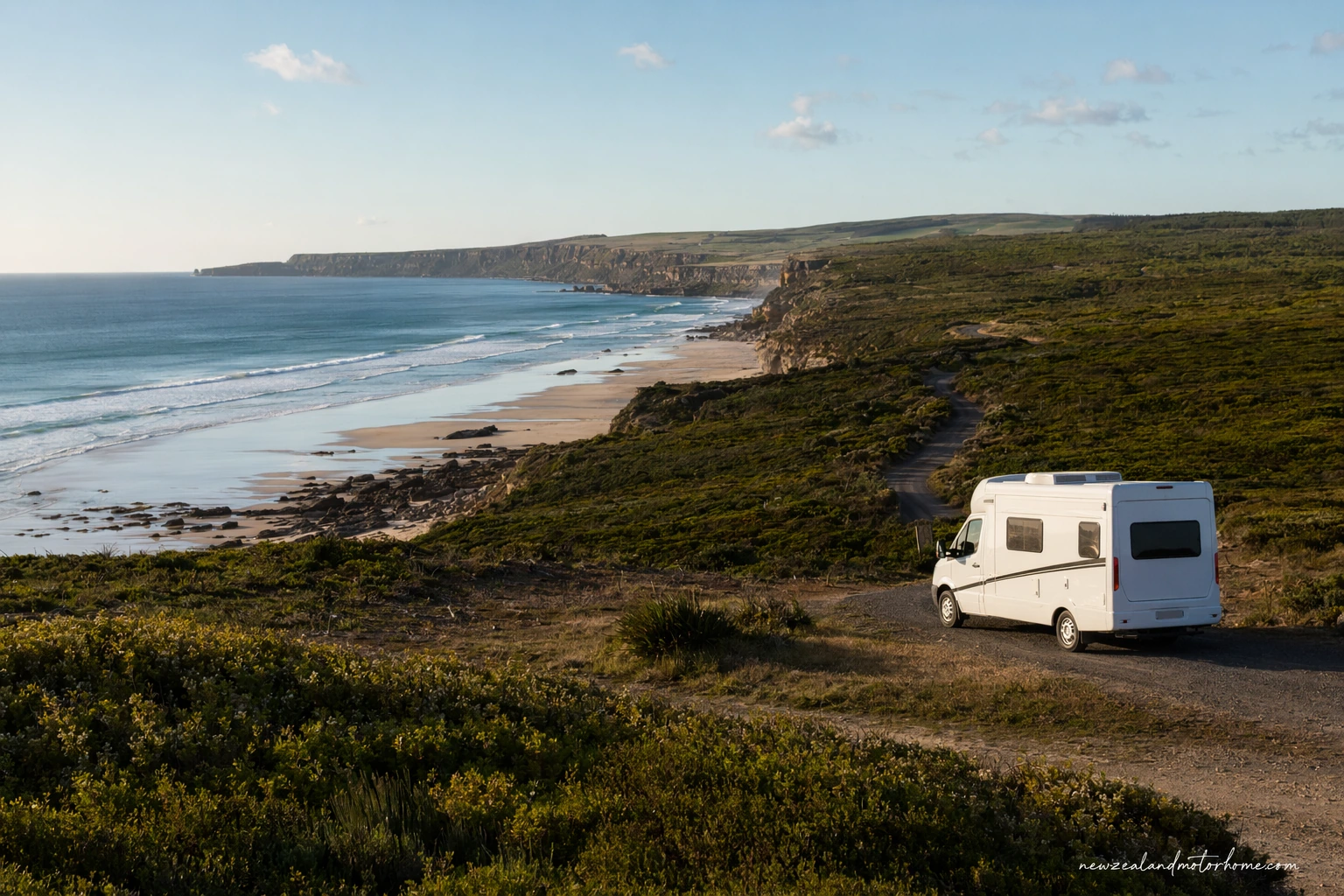
- Best season: November to April
- Sweet spot: March and April
- Allow: 2 to 4 campervan days
- Book powered sites in summer
- Certified self-contained for freedom camping
The Catlins suits travellers who like slow mornings, short walks from the van, and coastal roads that still feel a little tucked away. Between Balclutha, Owaka, Papatowai, Curio Bay and Fortrose, the weather changes quickly, the distances look small on the map, and the best overnight stops can depend on wind direction as much as scenery.
For most self-drive campervan travellers, the best time to visit Catlins NZ is late spring through early autumn, with March and April especially comfortable if you want fewer people and more settled driving days. This guide covers when to visit Catlins for weather, campsite availability, freedom camping rules, road conditions, dump stations, LPG and fresh-water planning.
Best months for a Catlins campervan trip
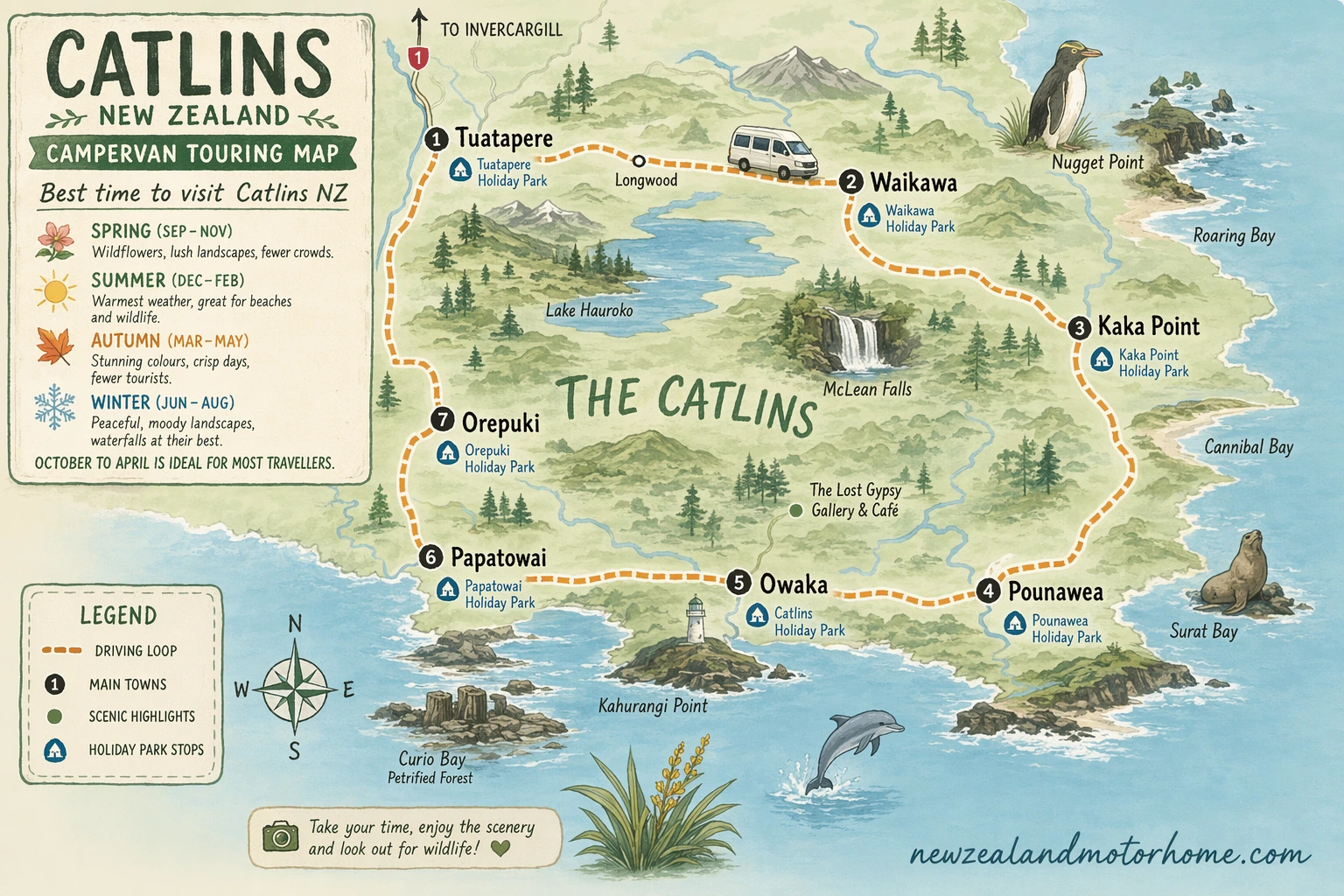
The easiest campervan season in the Catlins is November to April. You get longer daylight, more realistic chances of dry walks to waterfalls, and better odds of holiday parks and small coastal campgrounds being open or fully operational. December to February is warmest, but it is also when powered sites near Curio Bay, Papatowai and Kaka Point can book out first.
March and April are often the sweet spot for a motorhome: the roads are calmer, the evenings are still usable, and you are less likely to be squeezing a larger van into a busy beach car park. If you are travelling in a 7-metre-plus motorhome, shoulder season also makes turning, parking and choosing a level site less stressful.
- November: fresh, green and quieter, but still changeable.
- December to February: warmest weather and longest days; book powered sites ahead.
- March to April: fewer crowds, good walking conditions, cooler nights.
- May to August: moody coast, short days, some seasonal closures and more wind exposure.
- September to October: spring colour, unsettled weather, improving daylight.
Catlins weather by month, in practical van terms
Catlins weather by month is less predictable than a simple temperature chart suggests. This is a southern coastal region, so a calm blue morning can turn into sideways rain by afternoon, and a dry forecast inland does not always mean the headlands will be sheltered. Pack for wet tracks and plan your driving so you are not arriving at a remote coastal camp after dark in strong wind.
In summer, expect the most comfortable outdoor conditions, though sea breezes can still make evenings cool outside the van. Autumn usually brings calmer travel, with good light for Nugget Point, Purakaunui Falls and Curio Bay. Winter is quiet and atmospheric, but you will rely more on powered sites, warm bedding, LPG for heating and cooking, and a realistic plan for drying wet gear.
Spring is a good choice if you do not mind flexibility. Waterfalls are often lively, the bush is bright, and there is space at many overnight stops, but you should keep a spare day in the route for weather. In any month, top up fresh water and empty the toilet cassette before you head deep along the coast, rather than assuming every small settlement has services.
Campsites, holiday parks and freedom camping by season
Summer is when the Catlins feels busiest for campervans, especially around Curio Bay, Papatowai, Kaka Point and the main waterfall car parks. If you need power for heating, charging e-bikes or running a medical device, book powered sites early in the high season and arrive with enough daylight to choose a sensible pitch. Unpowered sites are usually easier, but exposed coastal spots can be windy.
Freedom camping is not a simple park-anywhere option here. Local council rules vary between districts, and many coastal reserves, beach access roads and scenic car parks have restrictions or no-camping signs. Travel in a certified self-contained vehicle, read the signs on arrival, and use designated overnight areas rather than treating day-use parking at Nugget Point, McLean Falls or Cathedral Caves access as a campsite.
- High season: book holiday parks and popular coastal campgrounds before you arrive.
- Shoulder season: more space, but check whether smaller campgrounds still offer full facilities.
- Winter: fewer people, but some seasonal services may be reduced; powered sites matter more.
- Services: plan dump station, fresh-water and LPG stops in gateway towns such as Balclutha, Owaka, Invercargill or Gore before committing to the coast.
What is open, and what changes through the year
The main Catlins landscape is open year-round: waterfalls, bush tracks, viewpoints and beaches do not shut just because the season changes. What does vary is access, tide timing and how enjoyable the stop is from a campervan. Cathedral Caves, for example, is tide-dependent and seasonally managed, so check current access before building a whole day around it.
Wildlife viewing also needs a slow, respectful approach. At Curio Bay, Roaring Bay and other coastal spots, use marked parking, keep well back from sea lions and penguins, and do not idle the van near viewing areas. In summer there may be more people around, while in winter the wildlife can feel easier to watch quietly, provided the weather and daylight cooperate.
Small cafes, fuel stops and visitor services can have shorter hours outside summer. A good Catlins motorhome plan keeps lunch, drinking water, toilet capacity and an overnight option sorted before late afternoon. If you want help matching your travel month to campsite openings and realistic drive times, use the /talk-to-us/ step and we can shape the route around your van and pace.
Driving conditions for motorhomes in the Catlins
The Southern Scenic Route through the Catlins is beautiful but not fast. Expect rolling sealed roads, narrow bridges, tight bends, farm traffic, logging trucks and short side roads to beaches or trailheads. In a larger motorhome, allow more time than the map suggests and avoid rushing between Nugget Point, Purakaunui Falls, Papatowai and Curio Bay in one short winter day.
Some access roads and campsite approaches can be gravel, corrugated or narrow, especially after rain. Check your hire agreement before taking the van onto unsealed roads, and do not commit to a steep or soft-looking track unless you can see a safe place to turn around. Long rear overhangs can scrape on uneven campground entrances and beach access roads.
- Wind: take extra care on exposed headlands and open farm sections.
- Rain: slow down for surface water, mud on roads and slippery parking areas.
- Daylight: winter driving windows are short; arrive at your overnight stop early.
- Parking: use signed car parks and avoid blocking narrow road ends or farm gates.
- Height and length: watch overhanging branches at bush car parks and tight campground loops.
Common questions
What is the best month to visit the Catlins in a campervan?
March is a strong choice: daylight is still good, the worst of the summer rush has eased, and campsites are generally more relaxed. April is also excellent if you are comfortable with cooler evenings and want quieter roads.
Can I campervan the Catlins in winter?
Yes, but plan it like a cool, exposed coastal trip. Use powered sites where possible, keep LPG topped up, arrive before dark, and check whether smaller campgrounds or attractions have reduced winter access.
Do I need to book Catlins campsites in summer?
For December, January and early February, booking is wise, especially if you need a powered site near the coast. Unpowered spaces may be easier to find, but popular places around Curio Bay, Papatowai and Kaka Point can still fill quickly.
Is freedom camping easy in the Catlins?
It is possible only where local rules allow it, and you should be in a certified self-contained campervan. Many scenic car parks and coastal reserves are day-use only, so always check signs and carry a backup paid campsite.
Where should I handle water, waste and LPG before the Catlins coast?
Do not leave services until the last minute on the remote coastal stretch. Plan fresh-water fills, dump station use and LPG top-ups in larger gateway towns such as Balclutha, Owaka, Invercargill or Gore, depending on your direction of travel.
Have a planner shape this for your dates
Send a short outline — your dates, party size, and the kind of trip you want. A planner replies with a vehicle recommendation, a paced route, and the realistic budget.