- Allow 3-5 days
- Best in summer and autumn
- Tight CBD parking for large vans
- Certified self-contained for freedom camping
- Mix powered sites with DOC-style stops
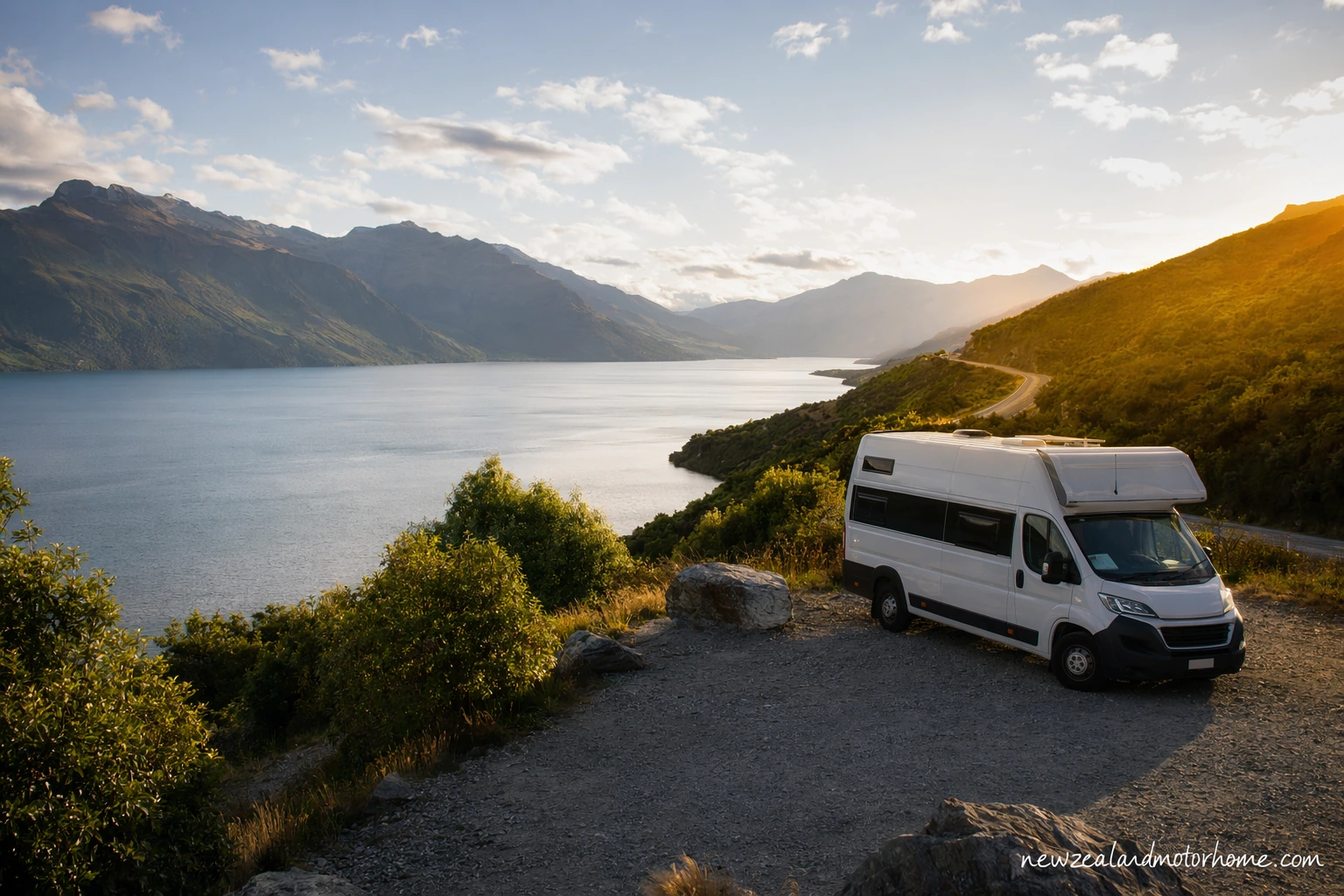
Queenstown Lakes is made for a campervan trip, but it is not a place to wing every overnight. The best stops are spread between tight lakeside towns, winding scenic roads, DOC campsites, holiday parks and council-restricted freedom camping areas, so a little planning saves a lot of circling in a tall van.
This guide is for travellers driving and sleeping in their own hired campervan or motorhome. You will find scenic pull-ins that are worth the brake, practical notes on where a van fits, and realistic ideas for where to stay in a campervan around Queenstown Lakes without falling foul of local signs or self-containment rules.
Start with the rules before you pick the view
Queenstown Lakes has some of the most sought-after roadside views in the country, and also some of the clearest restrictions. Freedom camping Queenstown Lakes is generally only for certified self-contained vehicles, and even then only where local signs or the current council map allow it. If a lakeside reserve says no camping, treat it as no sleeping in the van, even if other vans are parked there at sunset.
For a smoother run, separate daytime stopping from overnight sleeping. Many beautiful places around Lake Wakatipu, Lake Hayes, Wānaka and Hāwea are excellent for lunch, photos or a swim, but not for staying the night. Keep your self-containment warrant visible, carry enough fresh water, and never rely on public toilets as your grey-water plan.
- Day stops: lakefront reserves, lookouts, walking track car parks and town-edge picnic areas.
- Overnights: signed freedom camping areas, DOC campsites, holiday parks, or private campgrounds.
- Services: use signed dump stations in the Queenstown/Frankton and Wānaka areas, and top up LPG, food and fresh water before heading into Glenorchy, Moke Lake or Cardrona.
- Van size: a 6-7 metre van is workable, but CBD Queenstown streets, supermarket car parks and some lakeside pull-ins can feel tight in peak season.
Queenstown and Frankton: lake views without trapping the van
Central Queenstown is beautiful but awkward in a motorhome. Streets are busy, kerbs are high, and covered car parks may have height limits that rule out most campervans. If you are in a longer or taller vehicle, it is usually easier to park on the edge of town, then walk, cycle or use local transport rather than threading the van through the CBD repeatedly.
Frankton Arm is one of the most useful daytime bases. The lakeside trail gives you big Wakatipu views without needing to park right in the centre, and the Frankton shopping area is handy for groceries, fuel, LPG bottle swaps and basic hardware. For a slower stop, Kelvin Heights has quieter lake angles and good picnic options, but check signs carefully as many reserves are day-use only.
- Best for: first-night supplies, lake walks, an easier park-up before exploring Queenstown on foot.
- Van fit: choose marked open-air parking; avoid any height-restricted structures unless you have checked clearance.
- Overnight approach: use a booked holiday park or a clearly permitted campsite rather than trying to sleep on central streets.
If you are unsure how to balance a Queenstown night with quieter stops outside town, our plan-your-trip step can help you place services and overnights in the right order.
Glenorchy Road: the classic Wakatipu pull-ins
The drive from Queenstown to Glenorchy is one of the region's great campervan mornings. It is sealed and straightforward in good weather, but it is narrow and winding in places, with drop-offs, impatient traffic and pull-ins that can fill quickly. Take it slowly, use slow-vehicle bays where available, and do not stop half on the road for a photo.
Bennett's Bluff is the headline lookout, with the lake wrapped below and mountains stacked towards Glenorchy. Bob's Cove is better if you want to park the van and stretch your legs; the short walking track gives you blue-water views without needing a full tramping day. Wilson Bay and other small lakeside pull-offs are good for lunch, but check the ground before committing a heavy van after rain.
For overnighting, look beyond the roadside viewpoints. Twelve Mile Delta and Moke Lake are the practical names to know, with basic campsite-style stays rather than powered holiday park comfort. Moke Lake in particular feels wonderfully tucked away, but the access road is slower and can be rougher, so it suits drivers comfortable taking a hire van off the main highway within the terms of their rental agreement.
- Best for: sunrise drives, lake photos, short walks, quieter nights outside Queenstown.
- Services note: arrive with water, food and charged batteries; do not expect dump station or LPG facilities at basic campsites.
- Road note: allow extra time for one-lane-feeling bends and photo traffic, especially in winter shade.
Arrowtown, Lake Hayes and Gibbston: small-town stops with tight parking
Arrowtown is worth the detour, but its historic lanes were not designed for large motorhomes. Aim for the larger public parking areas near the edge of the village and walk in, rather than hunting for a space beside the cafés. The Chinese Settlement and river track make an easy leg-stretch after a night in the van.
Lake Hayes is a calm, reflective counterpoint to Queenstown's busier lakefront. The road around it has several places to stop for photos or a walk, but many are small, sloping or busy with day visitors. In a longer van, take the first suitable legal park you see rather than expecting a perfect lakeside spot.
Through Gibbston and the Kawarau Gorge, the appeal is the river, bridge views and cycle trail access. Pull into proper lay-bys or attraction car parks only; the highway carries fast traffic and the shoulders are not a safe place to linger. This corridor works well as a daytime string between Queenstown and Wānaka or Cromwell, rather than as your main overnight plan.
- Best for: heritage walks, river views, food stops, a slower day away from central Queenstown.
- Van fit: shorter campervans handle Arrowtown more easily; larger motorhomes should park once and explore on foot.
- Overnight approach: use signed sites or booked parks nearby, as village and lake-edge freedom camping is tightly managed.
Wānaka and Hāwea: where lakefront days meet practical van nights
Wānaka is one of the best campervan stops in Queenstown Lakes because it gives you the full mix: lake swims, mountain walks, cafés, supplies, dump station access and a choice of camping styles nearby. The lakefront can be busy and exposed, so for daytime parking, look for marked bays a little away from the busiest foreshore blocks and walk back along the water.
For many travellers asking where to stay campervan Queenstown Lakes, Wānaka is the easier answer than central Queenstown. You can choose a powered site at a holiday park when batteries, laundry and showers matter, or use designated low-frills options in the wider area when you are self-contained and simply need a legal sleep. Glendhu Bay is handy for lake access and Roys Peak, while the Hāwea side gives a quieter feel and big open views.
Lake Hāwea is superb in clear weather, but wind can make an exposed van rock through the night. Check the forecast before choosing an unpowered or freedom-style stop, and have a backup if the lakefront is full or signs have changed. The Wānaka service run is the time to empty grey water, refill fresh water, sort rubbish properly and restock before Cardrona, the West Coast road, or the Lindis Pass.
- Best for: two-night resets, lake walks, batteries and laundry, access to mountain tracks.
- Van fit: lakefront day parks fill early; avoid overhanging into cycle lanes or blocking boat access.
- Services: plan dump station, drinking water and LPG top-ups in town rather than at remote lake stops.
A simple way to string the stops together
A good Queenstown Lakes campervan route does not need to chase every viewpoint in one day. The roads are scenic but slow, and the best stops reward arriving before the mid-morning rush or staying late enough for soft light. Build the trip around services first, then add the photo stops and walks around them.
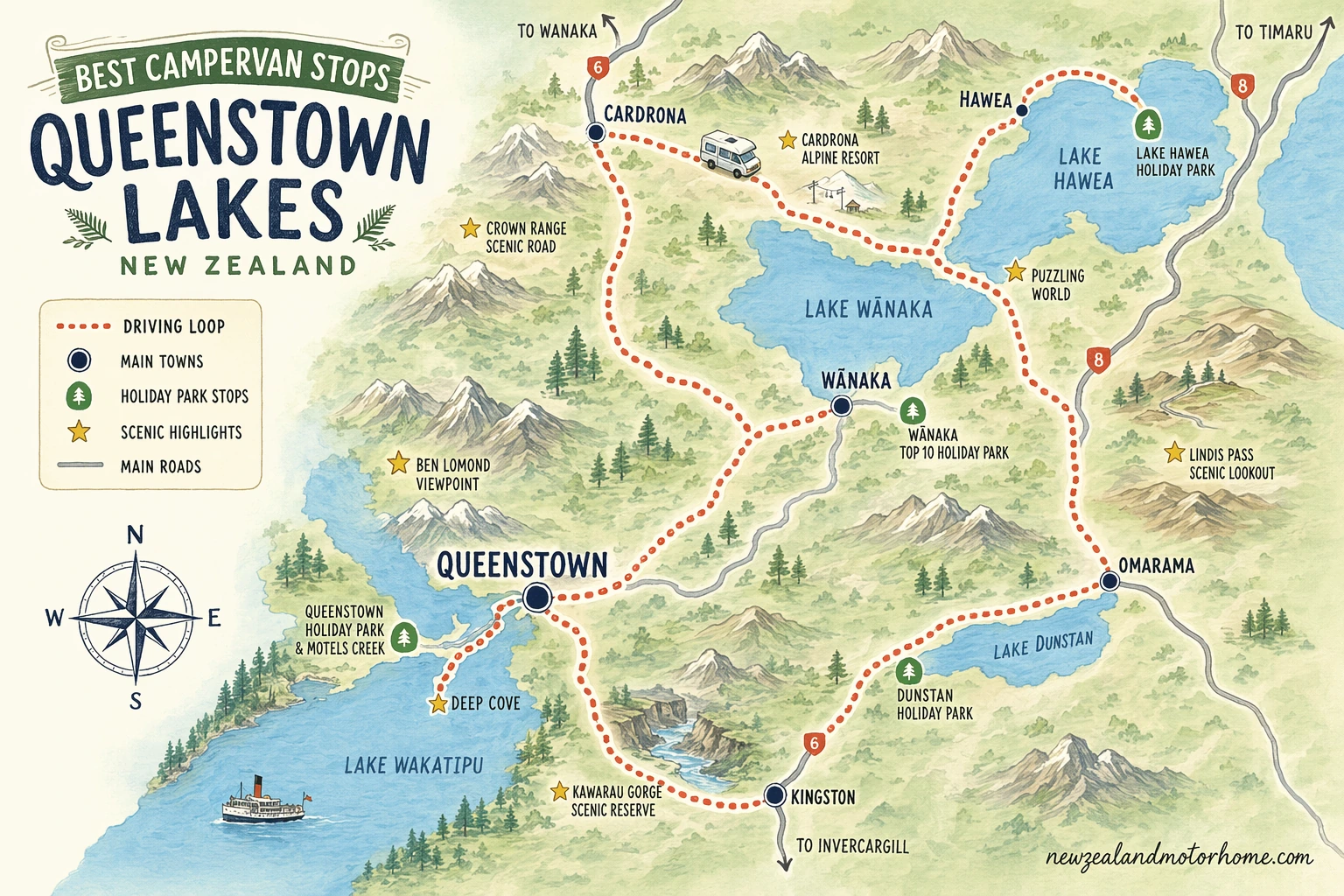
One easy pattern is Queenstown or Frankton for supplies, Glenorchy Road for views and a basic campsite night, Arrowtown and Lake Hayes as a slower heritage-and-lake day, then Wānaka or Hāwea for a powered reset. If you have more time, add Moke Lake when the weather is settled or a Cardrona crossing when road conditions are clear.
- Two days: Queenstown/Frankton, Glenorchy Road, Arrowtown or Lake Hayes, then Wānaka.
- Three to four days: add a DOC-style night near Wakatipu and a powered site in Wānaka.
- Five days plus: slow down for Moke Lake, Hāwea, Cardrona or a second Wānaka night.
- Winter note: carry chains if your hire agreement and route require them, and check alpine road updates before Cardrona or ski-field side trips.
Keep planning
Holiday parks queenstown lakes
Read onFarmers markets queenstown lakes
Read onCampervan guide queenstown lakes nz
Read onBest time to visit queenstown lakes nz
Read onVisiting skyline queenstown gondola by campervan
Read onQueenstown to wellington campervan
Read onCommon questions
Can I freedom camp around Queenstown Lakes in a campervan?
Yes, but only in permitted places and usually only if your campervan is certified self-contained. Freedom camping Queenstown Lakes rules change by location, so check current council signage and maps before settling in for the night.
Is Queenstown town centre suitable for a large motorhome?
It is manageable for a quick pass-through, but not relaxing for repeated parking. Larger vans are better parked in open-air areas around the edge of town or in Frankton, with central Queenstown explored on foot, bike or local transport.
Where should I base the van: Queenstown or Wānaka?
Queenstown is best for nightlife, lake cruises and the Glenorchy Road, but parking and overnights need more planning. Wānaka is often easier for a campervan reset, with practical services, lake access and a calmer pace.
Are there powered sites near the best scenic stops?
Yes, holiday parks around Queenstown, Frankton and Wānaka offer powered sites, while many scenic DOC-style campsites are unpowered and more basic. Mix the two: use unpowered scenic nights when your batteries and water are healthy, then book powered nights for showers, laundry and charging.
Do I need to book campervan sites in Queenstown Lakes?
In summer, school holidays and ski season, booking is strongly recommended for holiday parks and popular campgrounds. Even outside peak periods, have a backup overnight option because freedom camping spaces can be limited or restricted by local signs.
Where can I empty grey water and refill fresh water?
Use signed dump stations and fresh-water points in the Queenstown/Frankton and Wānaka areas before heading to more remote stops. Do not empty grey water at lakeside reserves, public toilets or roadside drains.
Have a planner shape this for your dates
Send a short outline — your dates, party size, and the kind of trip you want. A planner replies with a vehicle recommendation, a paced route, and the realistic budget.