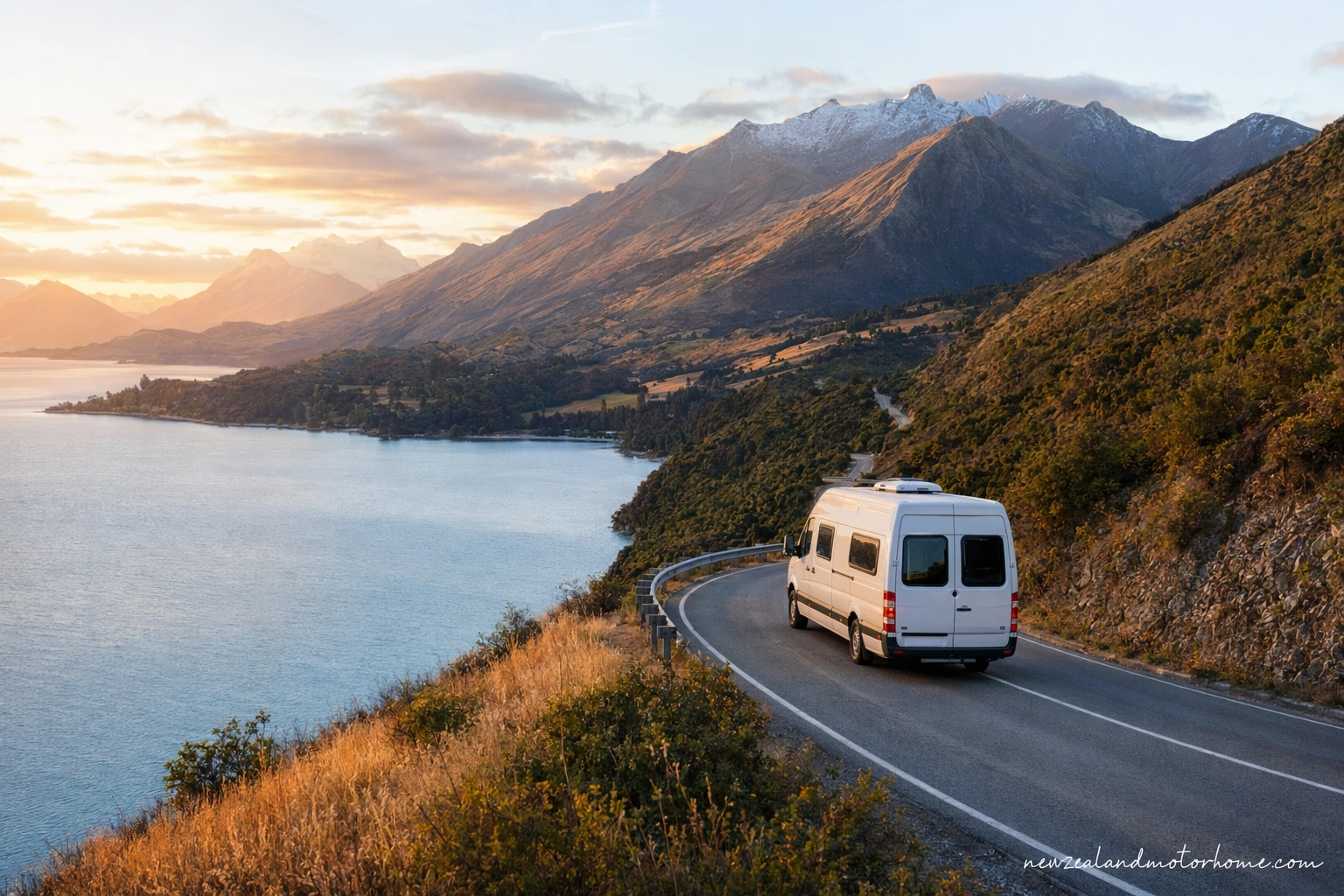
- Best with 5–7 days
- Book sites in summer and ski season
- Crown Range needs care in winter
- Freedom camping is tightly restricted
- Service the van in Frankton or Wānaka
Queenstown Lakes is brilliant in a campervan, but it is not a region to wing. The lakeside roads are narrow in places, town parking fills early, and freedom camping rules are closely managed around Queenstown, Wānaka, Arrowtown, Glenorchy and Lake Hāwea.
This campervan guide Queenstown Lakes NZ travellers can use is written for people driving and sleeping in their own hired van. You’ll find practical notes on where to base yourself, how to handle the Crown Range and Glenorchy roads, what to expect from powered and unpowered sites, and how to keep on top of dump stations, fresh water and LPG.
Choosing your Queenstown Lakes campervan base
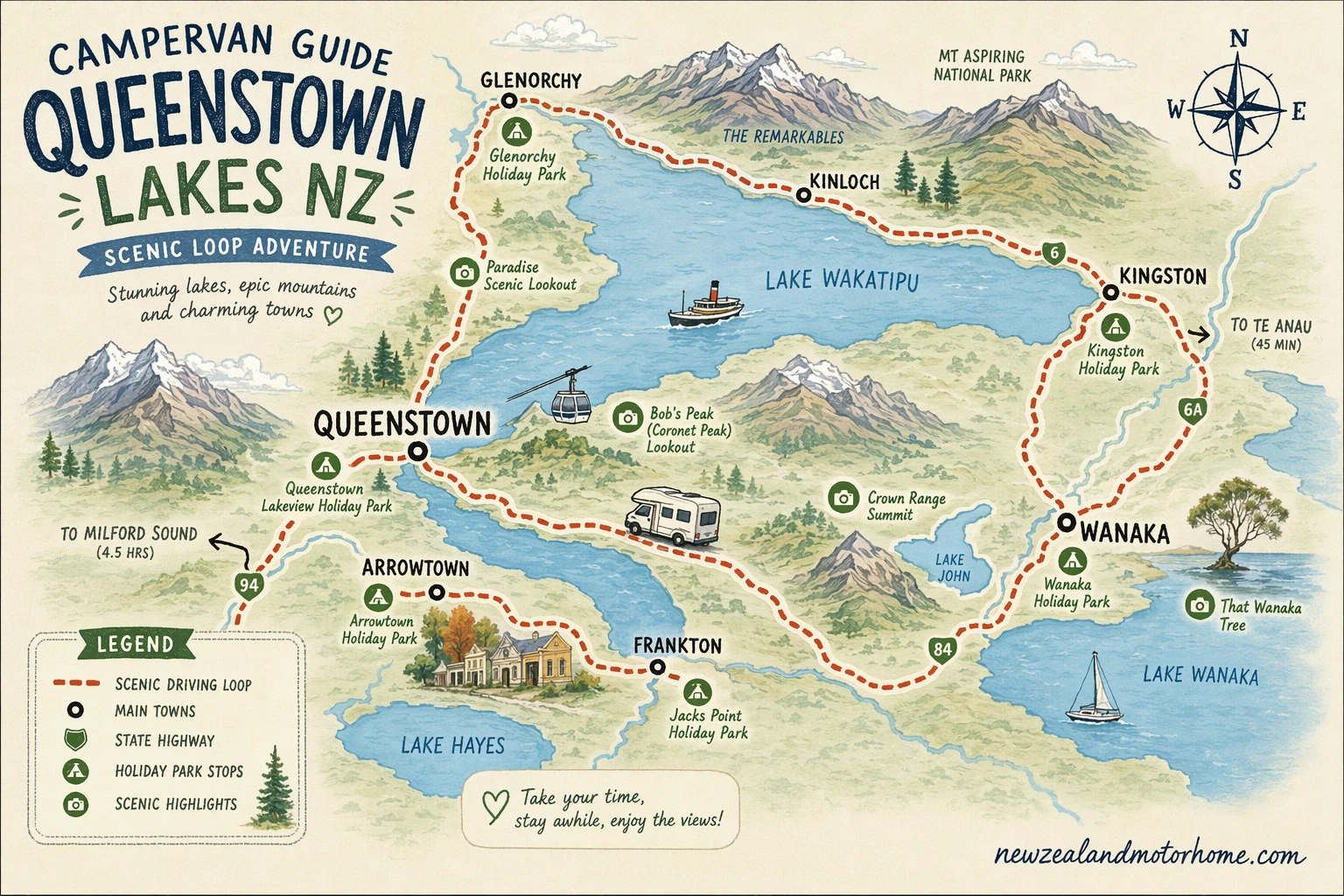
For a Queenstown Lakes campervan trip, your base matters more than it does in flatter parts of New Zealand. Queenstown itself is scenic but tight for larger vans, especially near the lakefront and town centre. If you are in a long motorhome, consider staying at a holiday park or designated campsite and using buses, bikes, shuttles or walking tracks to get into town rather than trying to thread the van through busy streets.
Frankton is often the easiest practical hub because it has supermarkets, fuel, LPG swaps or fills, and better access to main roads. Wānaka is more relaxed for a few nights, but lakefront parking restrictions are common and overnight stays need to be in approved places. Arrowtown is lovely for a half-day stop, though the historic streets are not made for cruising around in a big van.
- Queenstown / Frankton: best for activities, supplies, airport pick-ups and powered sites close to town.
- Wānaka: good for lake walks, mountain biking, day trips to Hāwea and quieter evenings in the van.
- Glenorchy: outstanding scenery, but fewer services; arrive with water, food and fuel sorted.
- Kingston or Lake Hāwea: useful quieter edges of the region if you prefer less congestion.
Road notes for motorhome Queenstown Lakes driving
Driving a motorhome Queenstown Lakes route is all about patience. Distances look short on the map, but lake-edge corners, tourist traffic, cyclists, weather and slow climbing lanes all add time. Use pull-outs to let faster traffic pass, and only stop in formed lay-bys where the whole van is clear of the road.
The Crown Range between Queenstown and Wānaka is spectacular, steep and winding. Many confident drivers manage it in a campervan, but in winter you may need to carry chains and obey chain-control signs. If your hire agreement restricts alpine roads, or if the weather is icy, the longer route via Cromwell is the more conservative choice.
- Glenorchy Road: sealed and beautiful, but narrow in sections with lake drop-offs and busy photo stops.
- Skippers Road: avoid it in hired campervans; it is commonly excluded by rental agreements and is not suitable for large vehicles.
- Moke Lake Road: includes gravel and tighter sections; check conditions before taking a larger motorhome in.
- Cardrona Valley: allow extra time, especially in winter or strong wind.
Where to stay: powered, unpowered and freedom camping
Queenstown Lakes rewards booking ahead, particularly in summer, school holidays and ski season. Powered sites are worth considering if you are running heaters, charging devices, drying gear after a wet walk, or travelling in winter when batteries drain faster. Unpowered sites suit shorter stays if your van has good house battery capacity and you are moving most days.
Freedom camping is tightly controlled across the district. A certified self-contained vehicle is usually the starting point, not a guarantee of being allowed to stay. Check current council signage and maps before settling in, and avoid assuming that a pretty lakefront pull-off is an overnight spot.
- Holiday parks: best for powered sites, showers, laundry, dump points and fresh-water fills.
- Basic campgrounds: good for a quieter night if you are happy with simple toilets and limited facilities.
- DOC-style stays such as Moke Lake or Twelve Mile Delta: scenic and popular, but check vehicle suitability, booking rules and seasonal access.
- Freedom camping: use only signed, legal areas and keep your self-containment certification visible if required.
Dump stations, water, LPG and food top-ups
Plan your servicing stops rather than leaving them until the cassette is full. The easiest places to reset the van are Queenstown/Frankton and Wānaka, where you are most likely to find public or holiday-park dump stations, fresh-water fills, fuel, groceries and LPG. Smaller lake settlements may have beautiful views but limited practical campervan infrastructure.
Use a recognised dump station for black and grey water, and never empty tanks into toilets, drains or roadside areas. If you are staying at a holiday park, ask on arrival where the dump point and potable water tap are, as layouts vary and tight internal roads can be awkward in a longer vehicle.
- Top up fresh water before heading to Glenorchy, Makarora or a basic campsite.
- Empty grey water before multi-night stays where no dump point is available.
- Refill or swap LPG in the main towns, especially before cold nights in autumn, winter and spring.
- Keep rubbish in the van until you reach proper bins; wildlife and wind make lakeside litter a real issue.
Things to do in Queenstown Lakes by campervan
The best things to do Queenstown Lakes campervan travellers can manage are the ones that fit the van as well as the itinerary. Park once and walk where you can: Queenstown Gardens, the Frankton Track, Arrowtown’s river trails and Wānaka’s lakefront paths are all easier when you are not hunting for multiple car parks in a high-sided vehicle.
For bigger day outings, base the van overnight nearby and start early. Glenorchy is ideal as a slow scenic drive rather than a rushed add-on. Around Wānaka, allow time for Lake Hāwea, the Clutha River tracks and mountain-view picnic stops where parking is formed and turning space is clear.
- 3 days: Queenstown/Frankton base, Arrowtown, lakefront walks and one Glenorchy or Wānaka day trip.
- 5 days: split nights between Queenstown and Wānaka, using powered sites to reset the van.
- 7 days: add Lake Hāwea, a quieter basic campsite, and a slower Crown Range or Cromwell loop depending on weather.
If you want a route that matches your van size, season and preferred site style, you can talk to us before locking in the overnights.
Keep planning
Holiday parks queenstown lakes
Read onFarmers markets queenstown lakes
Read onBest time to visit queenstown lakes nz
Read onBest campervan stops queenstown lakes
Read onVisiting skyline queenstown gondola by campervan
Read onQueenstown to wellington campervan
Read onCommon questions
Can I freedom camp in Queenstown Lakes in a certified self-contained campervan?
Sometimes, but only where current council rules and signs allow it. Queenstown Lakes has strict restrictions around lakefronts, reserves and town areas, so certified self-containment does not mean you can park anywhere overnight.
Is the Crown Range suitable for a motorhome?
It can be suitable for experienced, cautious drivers in good conditions, but it is steep, winding and exposed to winter weather. Check your hire agreement, carry chains if required, and use the Cromwell route if conditions look marginal.
Where is easiest to park a campervan in Queenstown?
Frankton and holiday-park bases are usually easier than the central lakefront, especially for longer or high-roof vans. In town, look for signed oversized-vehicle parking and avoid squeezing into small car parks or residential streets.
How many days should I allow for a Queenstown Lakes campervan trip?
Three days gives you a taste, but five to seven days is much more comfortable in a campervan. That lets you split nights between Queenstown and Wānaka, service the van properly, and avoid rushing the slower lake and alpine roads.
Do I need powered sites in Queenstown Lakes?
Not every night, but powered sites are useful in winter, during wet weather, or when you need to recharge batteries and dry gear. Mixing powered holiday parks with simpler unpowered stays works well for most self-drive travellers.
Have a planner shape this for your dates
Send a short outline — your dates, party size, and the kind of trip you want. A planner replies with a vehicle recommendation, a paced route, and the realistic budget.