- Best balance: Mar-May and Nov
- Allow 4-10 days by campervan
- Book powered sites in summer/winter
- Certified self-contained only for freedom camping
- Take care on Crown Range Road
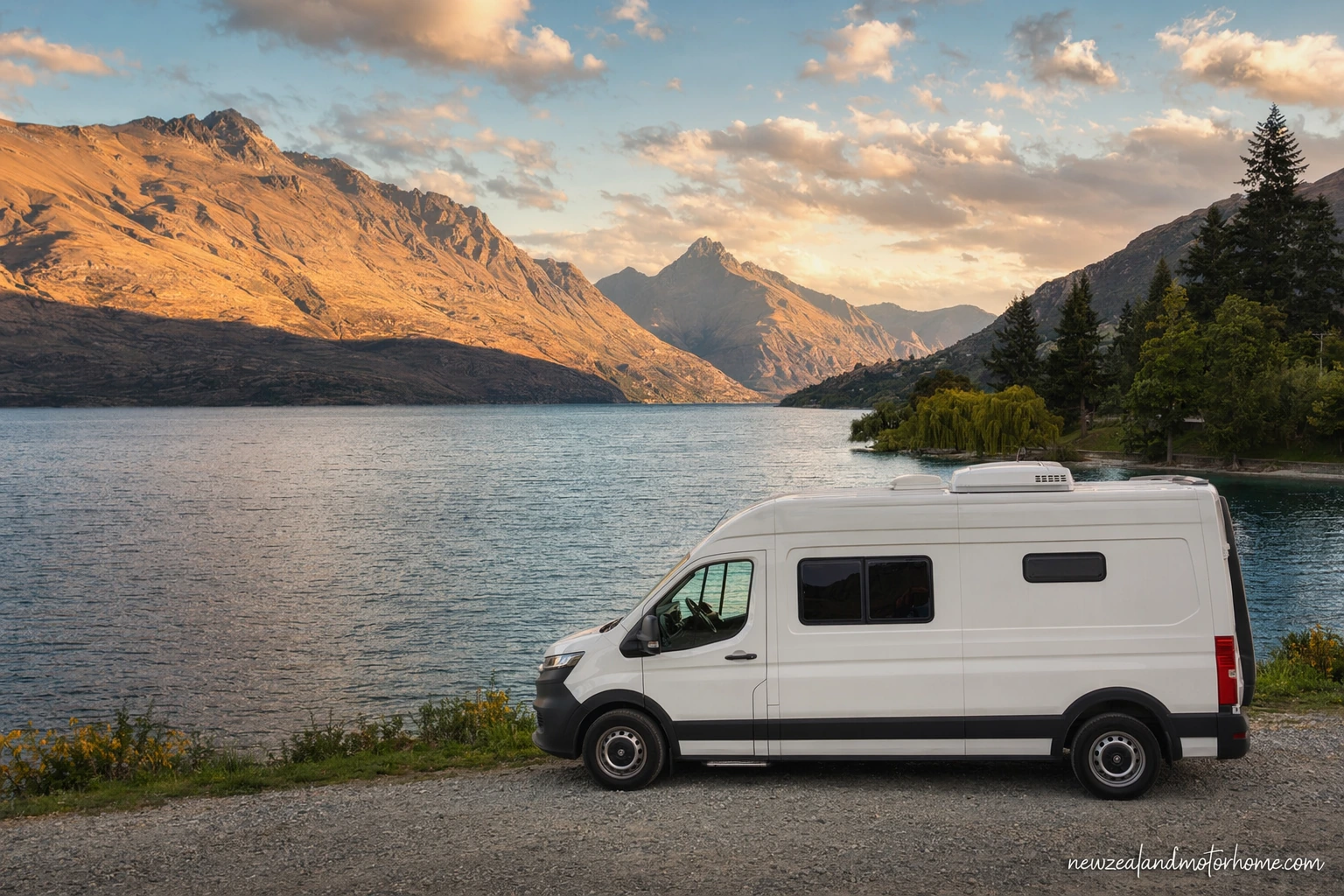
The best time to visit Queenstown Lakes NZ depends on what you want your van days to feel like: long lake evenings at Wānaka, crisp autumn mornings in Arrowtown, winter runs over the Crown Range, or quieter spring nights with more room in holiday parks. This is alpine country, so even a good-looking forecast can change quickly once you are parked beside a lake or climbing towards Cardrona.
This guide is written for self-drive campervan and motorhome travellers, not day visitors. You will find practical seasonal notes on Queenstown Lakes weather by month, campsite availability, freedom camping rules, dump stations, LPG and water, road conditions, and the best months for a relaxed van itinerary around Queenstown, Wānaka, Arrowtown, Glenorchy, Hāwea and Kingston.
Quick answer: the best months for a campervan trip
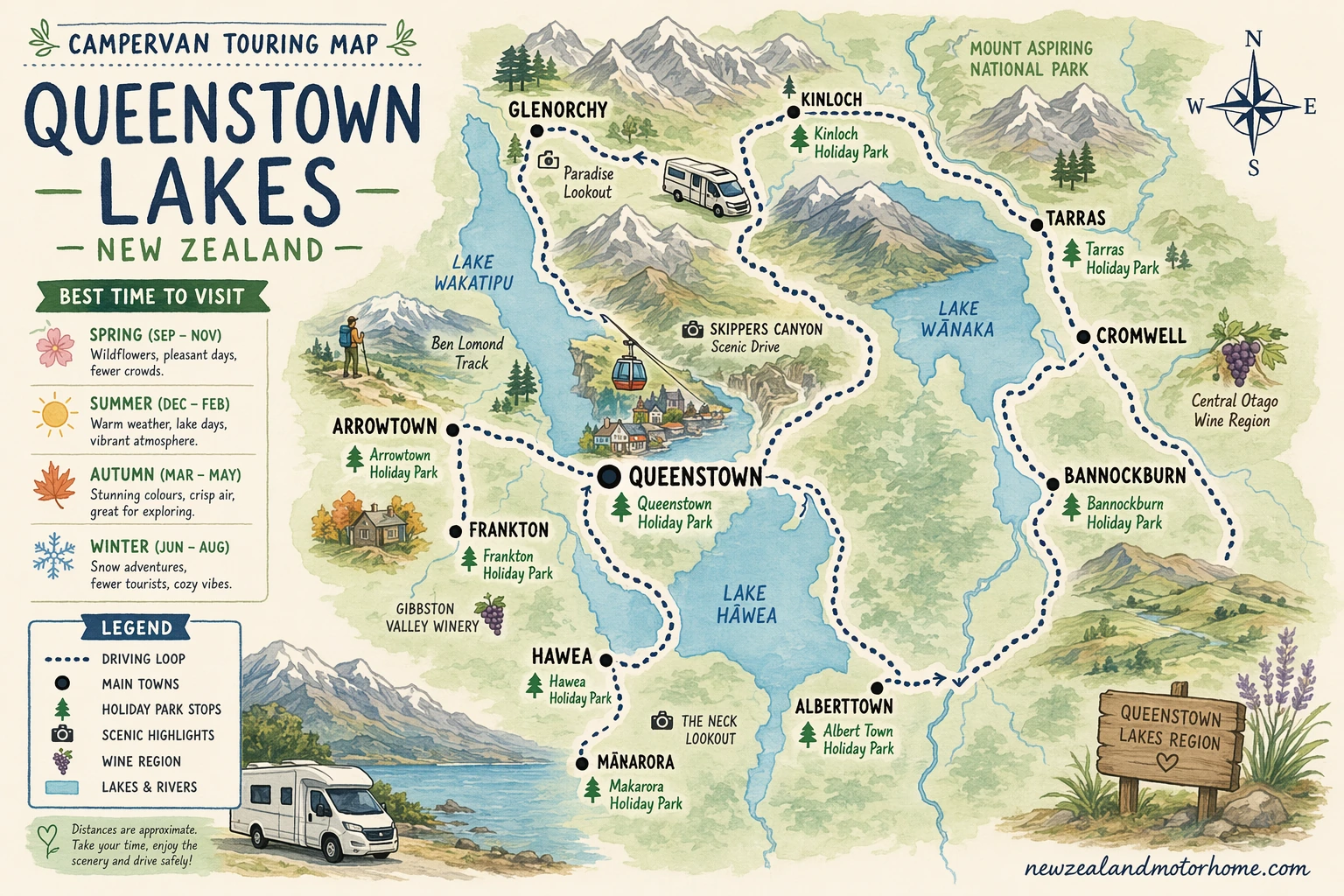
For most motorhome travellers, March to May and late October to early December are the easiest months to travel Queenstown Lakes. You get decent daylight, fewer peak-season queues, better odds of finding powered and unpowered sites, and driving conditions that are usually simpler than mid-winter. The lakes are still scenic, the mountain roads are less pressured, and you can move the van without planning every stop weeks ahead.
Summer, from late December through February, is brilliant if you want swims, long evenings and full activity menus, but it is also the busiest time for Queenstown, Wānaka and Glenorchy. Winter, from June to August, suits confident alpine drivers who are happy to carry chains, book powered sites, and keep an eye on frost, snow and road closures.
- Best overall balance: March, April, November and early December.
- Warmest lake days: January and February, with high demand for sites.
- Quietest feel: May, September and parts of October, though some operators reduce hours.
- Snow and ski access: June to August, with winter driving prep essential.
Queenstown Lakes weather by month: what it means in a van
Queenstown Lakes weather by month is less about one neat average and more about the practical details: cold nights by the lake, wind funnelling down valleys, hot sun on exposed parking areas, and sudden rain or snow higher up. A campervan gives you shelter, but you still need to think about condensation, heating, battery use and where you will legally overnight.
December to February usually brings the warmest days and the longest evenings, which is ideal for lakeside walks after you have parked up. March and April are often settled, with cooler nights that make a powered site appealing if your van heater or house battery is limited. May is colder and quieter. June to August can bring snow, black ice and hard frosts, especially on the Crown Range, Cardrona Valley and shaded rural roads. September and October are changeable, with spring wind, late snow higher up, and increasing daylight.
- Summer: pack sun protection, ventilation screens and a plan for busy overnight stops.
- Autumn: bring warm bedding, use holiday-park laundries when rain sets in, and expect chilly starts.
- Winter: check chain requirements, use powered sites where possible, and refill LPG before heading up valleys.
- Spring: allow buffer time for wind, showers and soft ground at rural camp areas.
Campsites, freedom camping and services through the seasons
Queenstown Lakes is not a region where you can assume you will just pull up beside the water and sleep. Freedom camping is tightly managed around Queenstown, Wānaka, Arrowtown, Glenorchy and Lake Hāwea, and you should only stay where overnight parking is permitted for certified self-contained vehicles. Always check current local signs and council maps before you settle in, because enforcement is active and rules can change by site.
In summer and during school holidays, book holiday parks well ahead, especially if you need a powered site for a larger motorhome or winterised van systems. Shoulder seasons are more forgiving, and unpowered sites are easier to find, but popular lakefront parks can still fill on weekends. In winter, powered sites become more valuable because heating, drying wet gear and charging devices all use more energy than you expect.
Dump stations, fresh-water fills and LPG are easiest to manage in the main service centres around Queenstown/Frankton and Wānaka, with more limited options in smaller settlements such as Glenorchy, Kingston and Lake Hāwea. Do your servicing before a scenic out-and-back drive, not after you arrive with full grey water and an empty gas bottle.
- Before you leave town: empty grey and black water, fill fresh water, check LPG and top up groceries.
- If you need power: book a powered site rather than relying on alternator charging after short scenic drives.
- If you freedom camp: confirm your van is certified self-contained and that the specific parking area allows overnight stays.
Driving conditions: roads to respect in each season
The driving is spectacular, but Queenstown Lakes roads ask for attention in a campervan. The Crown Range Road between Queenstown and Wānaka is steep, winding and exposed, and in winter it may require chains or be affected by snow and ice. If your hire agreement or confidence level does not suit that road, the route via Cromwell is longer but generally gentler for a larger motorhome.
The road to Glenorchy is one of the classic lake drives, but it has narrow sections, limited pull-outs and plenty of distracted traffic in peak season. Use designated viewpoints rather than squeezing a long vehicle onto a soft shoulder. Around Queenstown and Wānaka, parking a high-roof van can be awkward in town centres, so look for signed long-vehicle or lakeside day parking and walk in rather than circling tight streets.
- Winter: carry chains if required, know how to fit them, and avoid early starts on shaded roads after frost.
- Summer: expect congestion near Queenstown, Frankton, Wānaka lakefront and popular trailheads.
- Large vans: watch rear swing on tight turns, use lower gears on descents, and do not rely on small car parks.
- Wind: take extra care on exposed lake edges and open sections near Hāwea and the Kawarau area.
When to visit Queenstown Lakes by travel style
If you are deciding when to visit Queenstown Lakes, match the month to how you like to use the van. Travellers who enjoy slow mornings, short drives and easy bookings usually prefer autumn or late spring. Families wanting beach time and long evenings often choose summer, but need firmer planning. Ski-focused travellers can have a memorable winter trip, provided the van is properly equipped and the driver is comfortable with alpine conditions.
Allow at least four to six days if you want to include Queenstown, Arrowtown, Wānaka and a side trip to Glenorchy or Lake Hāwea without feeling like you are constantly packing up. Seven to ten days gives you room to wait out a poor weather day, do laundry, recharge on a powered site and still have time for the quieter corners. If you want help matching dates, van size and overnight stops, our plan-your-trip step is a simple way to sanity-check the route before you book sites.
- Relaxed first-time van trip: November, early December, March or April.
- Lake swimming and late sunsets: January or February, with campsite bookings locked in.
- Autumn colour and photography: April, especially around Arrowtown and Wānaka.
- Snow and mountain atmosphere: July or August, using powered sites and conservative drive times.
What is open, busy or booked out by season
Queenstown and Wānaka operate year-round, so you will find fuel, supermarkets, cafés and core visitor services in every season. The difference is availability and pace. Summer brings the widest spread of lake, bike and walking options, but also the tightest campsite bookings and busiest day-parking areas. Winter shifts demand towards ski access, drying rooms, powered sites and town-based facilities.
In shoulder months, some smaller activity operators, food stops or rural services may run reduced hours, particularly mid-week. That is not usually a problem in a campervan if you keep the pantry stocked, carry drinking water and avoid arriving late in a small settlement expecting full services. Treat Wānaka and Queenstown/Frankton as your main resupply points, then enjoy the quieter places with the van already sorted.
- Peak booking pressure: late December to February, Easter, school holidays and major event weekends.
- Best holiday-park flexibility: May, September, October and parts of November.
- Most useful winter booking: a powered site for heat, battery charging and wet-gear management.
- Most common mistake: leaving dump station, fresh water or LPG jobs until after driving into a smaller lakeside village.
Keep planning
Holiday parks queenstown lakes
Read onFarmers markets queenstown lakes
Read onCampervan guide queenstown lakes nz
Read onBest campervan stops queenstown lakes
Read onVisiting skyline queenstown gondola by campervan
Read onQueenstown to wellington campervan
Read onCommon questions
What is the best time to visit Queenstown Lakes NZ in a campervan?
March to May and late October to early December are usually the best balance for campervan travel. You get milder driving conditions than winter, less pressure than peak summer, and better availability for powered and unpowered sites.
Can I freedom camp around Queenstown or Wānaka?
Only in places where overnight stays are permitted, and only if your van meets the required certified self-contained standard. Queenstown Lakes has strict freedom camping rules, so check current signs and council information before parking up for the night.
Do I need snow chains for a winter motorhome trip?
In winter, you should be prepared for chain requirements on alpine routes such as the Crown Range and ski access roads. Check your hire vehicle conditions, practise fitting chains before you need them, and choose the lower Cromwell route if conditions or confidence are not right.
Are campsites hard to get in summer?
Yes, especially around Queenstown, Wānaka, Arrowtown and Lake Hāwea during late December, January, February and school holidays. Book early if you need a powered site or have a larger motorhome, because turning up late in the day can leave you with limited legal options.
How many days should I allow for Queenstown Lakes by campervan?
Four to six days is a workable minimum for Queenstown, Wānaka, Arrowtown and one side trip, but seven to ten days feels much more relaxed. Extra time helps with weather changes, laundry, dump station stops and slower driving on winding lake roads.
Is the Crown Range suitable for large campervans?
It can be, but it is steep, winding and exposed, so driver confidence and weather matter. In snow, ice, high wind or if your hire agreement advises against it, take the longer route between Queenstown and Wānaka via Cromwell.
Have a planner shape this for your dates
Send a short outline — your dates, party size, and the kind of trip you want. A planner replies with a vehicle recommendation, a paced route, and the realistic budget.