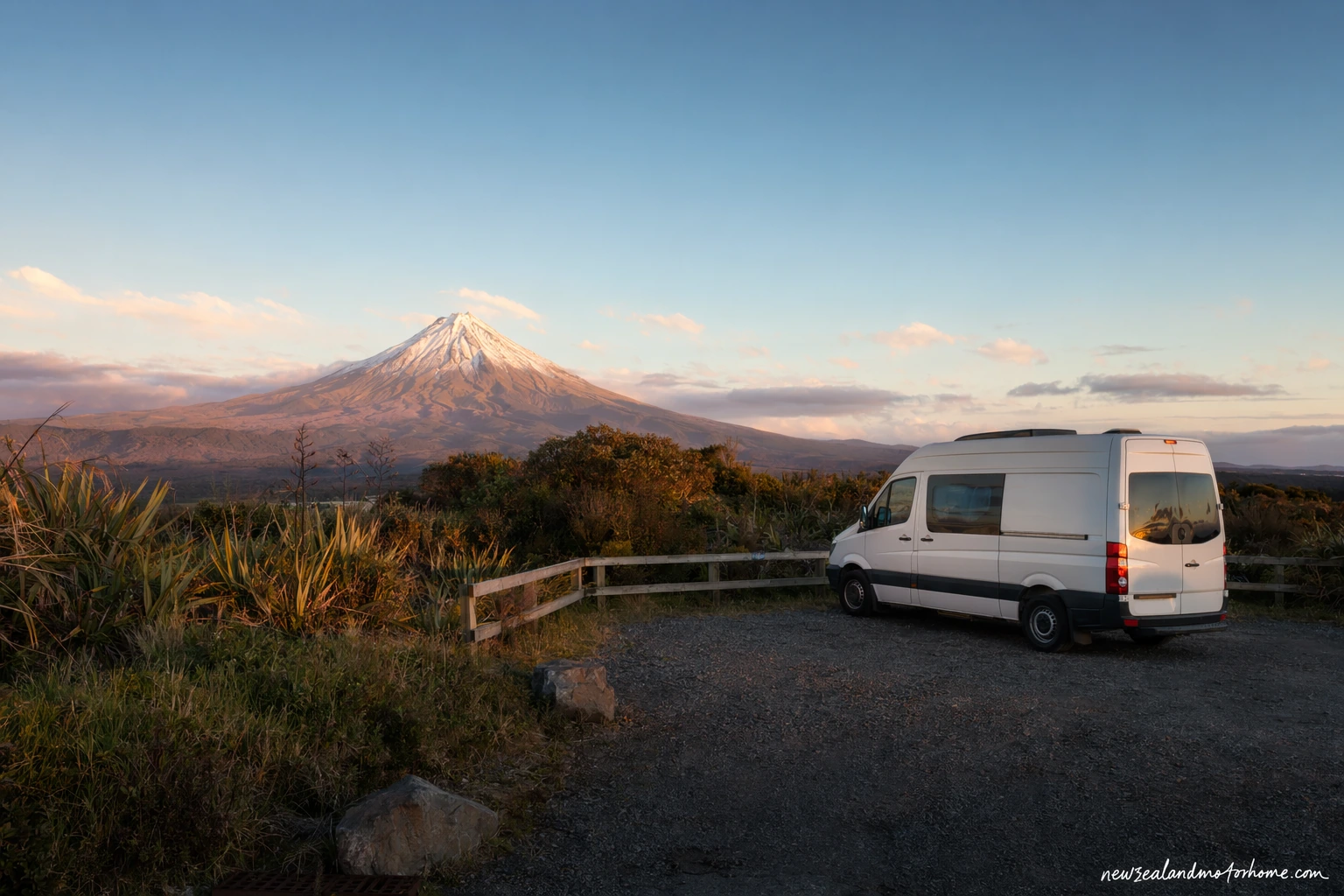
- Best with 3-5 days
- Mix powered sites and approved freedom camping
- Mountain roads can be narrow and weather-affected
- Main service towns: New Plymouth, Stratford, Hāwera
- Self-containment rules apply
Taranaki is a brilliant campervan region because the driving is compact, the scenery changes fast, and the maunga keeps reappearing in your mirrors. You can park by black-sand surf in the morning, roll inland for forest walks by lunch, then sleep at a powered site or a council-approved freedom camping spot before the wind picks up.
This guide is written for people travelling and sleeping in their own hired campervan or motorhome. It covers the best campervan stops Taranaki can offer, with notes on where a van fits, how to approach narrow roads, where to stay campervan Taranaki style, and how to link the coast, New Plymouth and the mountain without doubling back all day.
A simple Taranaki campervan loop that works
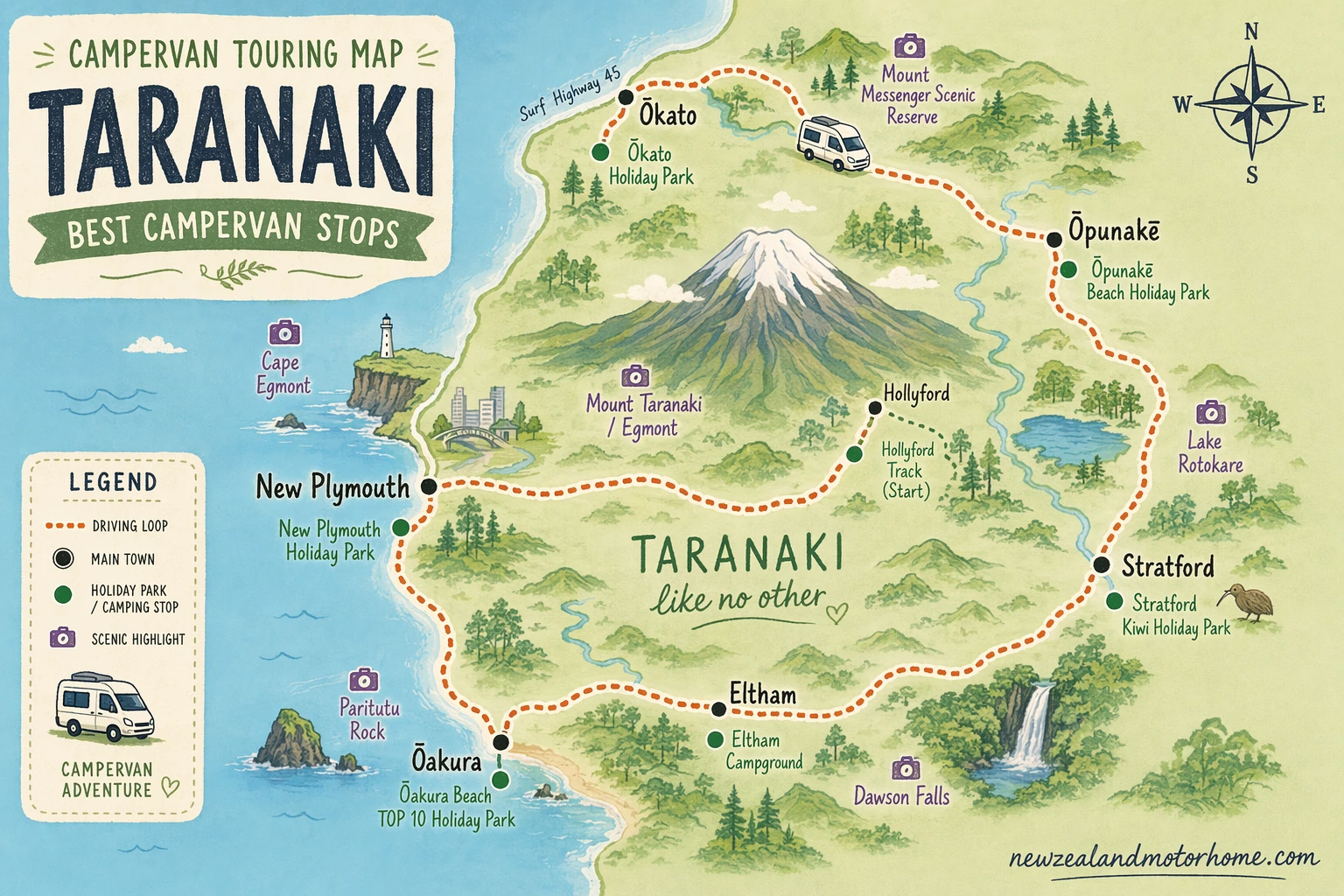
The easiest way to drive Taranaki in a campervan is as a loose loop rather than a point-to-point dash. New Plymouth makes a practical first base, then Surf Highway 45 takes you around the western coast to Ōpunakē and Hāwera, while Stratford gives you inland access to the maunga and SH43 if you are continuing east.
Allow time for short stops rather than just chasing one big viewpoint. The best parking bays are often beside beaches, river mouths and walking tracks, and they are far more comfortable if you arrive before late afternoon when local traffic and surf crowds build.
- 2 days: New Plymouth waterfront, Back Beach or Paritutu, then Ōākura or Ōpunakē overnight.
- 3 days: Add Cape Egmont, Dawson Falls or Stratford Plateau, and a night near Stratford or Hāwera.
- 4-5 days: Include Tongapōrutu and the Three Sisters at low tide, Tawhiti Museum near Hāwera, and a slower Surf Highway 45 drive.
New Plymouth stops: coastal walkway, bridges and easy van bases
New Plymouth is the most useful town base in Taranaki for a campervan. You have supermarkets, fuel, LPG bottle options, public dump station access, laundries and several holiday park-style overnight choices close to the sea. If you are fresh off a flight or starting a hire, this is where you sort the van before heading into smaller coastal settlements.
For day parking, the Coastal Walkway is your friend, but choose open car parks rather than tight angle parks in the centre if you are in a longer motorhome. Te Rewa Rewa Bridge is a classic photo stop with Taranaki aligned behind it on a clear day; arrive early for easier parking and less turning pressure. Pukekura Park is worth a walk, though larger vans should avoid trying to nose into compact inner-city parks at peak times.
- Good day stops: Te Rewa Rewa Bridge, East End area, Ngāmotu Beach, Pukekura Park and the Wind Wand waterfront.
- Van note: watch for height restrictions and tight kerbs near central beachfront parking; use larger public car parks where signed.
- Overnight style: powered holiday park sites are the simplest choice if you need showers, laundry, fresh water and a dump station after a few nights off-grid.
Maunga Taranaki viewpoints and mountain-road cautions
The mountain looks close from almost everywhere, but the access roads are proper New Zealand mountain roads: narrow in places, shaded, and sometimes slick with leaf litter, ice or rain. In a campervan, treat North Egmont, Dawson Falls and Stratford Plateau as daytime stops unless you have confirmed an approved overnight option nearby.
Dawson Falls is one of the most atmospheric stops, with goblin forest, short walks and views when the cloud lifts. The road is winding and not a place to hurry a tall vehicle. Stratford Plateau sits higher and can feel alpine very quickly; check weather, avoid icy conditions, and do not force a large motorhome into a car park if it is busy or snow-affected.
- Best for views: Lake Mangamahoe on a still morning, North Egmont on a clear day, and Stratford Plateau when cloud is above the summit line.
- Best for short walks: Dawson Falls area and lower forest tracks, chosen to suit weather and footwear.
- Campervan caution: do not rely on national park car parks for freedom camping; check signs and stay only where overnighting is permitted.
Surf Highway 45: Ōākura, Cape Egmont and Ōpunakē
Surf Highway 45 is where the Taranaki campervan trip really slows down. The road rolls between dairy country, surf breaks, black-sand beaches and glimpses of the mountain over fence lines. It is sealed, but it is not a motorway: expect farm entrances, cyclists, school traffic, exposed corners and occasional roadside stops that are too small for a long vehicle.
Ōākura works well as a first coastal overnight if you want to stay close to New Plymouth without sleeping in town. Further south, Cape Egmont Lighthouse is a memorable pull-in on a fine day, but the final approach is exposed and can be awkward in strong wind. Ōpunakē is one of the most practical coastal bases, with beach access, holiday park-style facilities and a more relaxed pace for a night or two.
- Pull-ins to plan around: Ōākura Beach, Ahu Ahu area viewpoints, Cape Egmont Lighthouse and Ōpunakē Beach.
- Overnight note: choose a powered site if your batteries have taken a hit from fridge use, laptops or heater fans on a wet coastal day.
- Services: top up fuel before you get too low; dump station and water options are easier in main settlements than at beach car parks.
North and South Taranaki stops worth the detour
North of New Plymouth, the Tongapōrutu coast and Three Sisters area is one of the most distinctive scenic stops in the region. It is tide-dependent, so check tide times before you commit the van to the detour. Park only where signed and leave room for locals, boat trailers and turning vehicles; soft verges are not your friend in a heavy camper.
South Taranaki has a different feel: wider horizons, strong coastal weather and useful service towns. Hāwera is a sensible resupply stop, and Tawhiti Museum is a good bad-weather option with easier van parking than many town-centre attractions. If you are continuing towards Whanganui, this is a good place to empty tanks, refill fresh water where available, and reset the van before the next leg.
- North coast: Tongapōrutu and Three Sisters for low-tide walking and coastal cliffs.
- South coast: Hāwera and nearby attractions for resupply, indoor time and a break from beach weather.
- Driving note: side roads can be narrow and rural; if a road looks marginal for your vehicle length, do not assume there will be an easy turning bay at the end.
Freedom camping Taranaki: where to stay without guesswork
Freedom camping Taranaki is possible, but it is not a free-for-all. Councils set their own bylaws, and beachfront car parks that look perfect at sunset may be day-use only, restricted to certified self-contained vehicles, or limited by maximum nights. Always read the sign in the car park you are actually using, not just an old app comment.
If you are deciding where to stay campervan Taranaki-wide, mix your nights. Use holiday parks or campgrounds when you need a proper shower, powered site, laundry, fresh-water fill or dump station. Use approved freedom camping areas only when your toilet, grey-water and rubbish capacity genuinely suit the stay, and leave early if the site is filling beyond marked spaces.
- Carry: current self-containment certification, a working toilet, rubbish bags, levelling blocks and enough fresh water for the night.
- Check: New Plymouth, Stratford and South Taranaki council rules before parking up overnight.
- Reset points: New Plymouth, Stratford, Ōpunakē and Hāwera are the practical places to look for dump stations, water, fuel and LPG services.
If you want this turned into a day-by-day route with realistic overnight stops for your van size and travel month, use our talk to us trip-planning step and tell us whether you prefer powered sites, freedom camping, or a mix of both.
Common questions
How many days do I need for the best campervan stops in Taranaki?
Two days lets you see New Plymouth and one coastal section, but three to five days feels much better in a campervan. That gives you time for Surf Highway 45, a maunga viewpoint, a proper service stop and at least one relaxed beach overnight.
Is freedom camping allowed in Taranaki?
Yes, in some places, but only where local council rules and on-site signs allow it. Many areas require a certified self-contained vehicle, and some popular beachfront car parks are restricted or day-use only.
Where should I stay in a campervan in Taranaki if I need facilities?
Base yourself near New Plymouth, Ōākura, Ōpunakē, Stratford or Hāwera when you need powered sites, showers, laundry, fresh water or a dump station. These settlements make the easiest reset points between scenic pull-ins and freedom camping nights.
Can a larger motorhome drive to Dawson Falls or Stratford Plateau?
Many vans can reach the mountain access areas in good conditions, but the roads are winding, narrow and weather-exposed. Check conditions first, take it slowly, and avoid high or icy roads if your vehicle is long, tall or unfamiliar.
What is the best coastal drive for a campervan in Taranaki?
Surf Highway 45 is the classic coastal campervan drive, linking Ōākura, Cape Egmont and Ōpunakē. It is sealed and scenic, but allow extra time for farm traffic, wind, photo stops and careful turning in smaller beach car parks.
Have a planner shape this for your dates
Send a short outline — your dates, party size, and the kind of trip you want. A planner replies with a vehicle recommendation, a paced route, and the realistic budget.