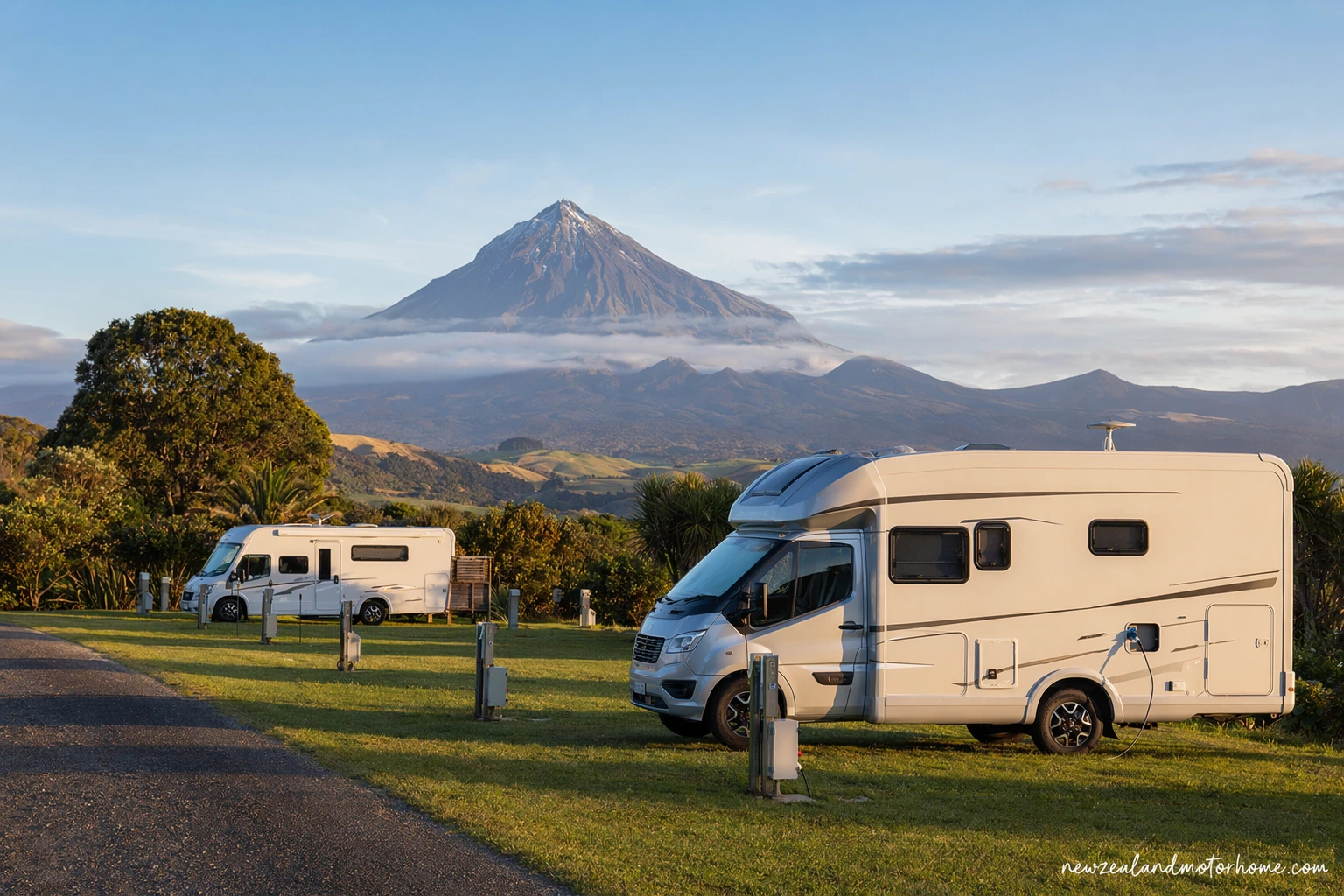
Holiday parks Taranaki: campervan bases around the mountain and coast
- Best for 2–4 nights
- Powered and unpowered sites
- Book summer coastal stays
- Certified self-containment matters
- Check mountain road access
Taranaki is one of those regions where a campervan really earns its keep: surf beaches on one side, Taranaki Maunga rising behind the paddocks, and short driving days between most overnight stops. The holiday parks Taranaki travellers use are spread around New Plymouth, the Surf Highway, South Taranaki and the inland towns, so you can choose between a powered coastal site, a quieter unpowered grass pitch, or a practical town base with laundry, dump point access and fresh water.
This guide is written for self-drive van travellers, not day visitors. You’ll find notes on where to park the van, how to think about powered sites Taranaki-wide, what freedom camping restrictions can mean for certified self-contained vehicles, and which bases make sense for walking tracks, galleries, gardens, beaches and road trips around the maunga.
How Taranaki’s holiday parks are spread out
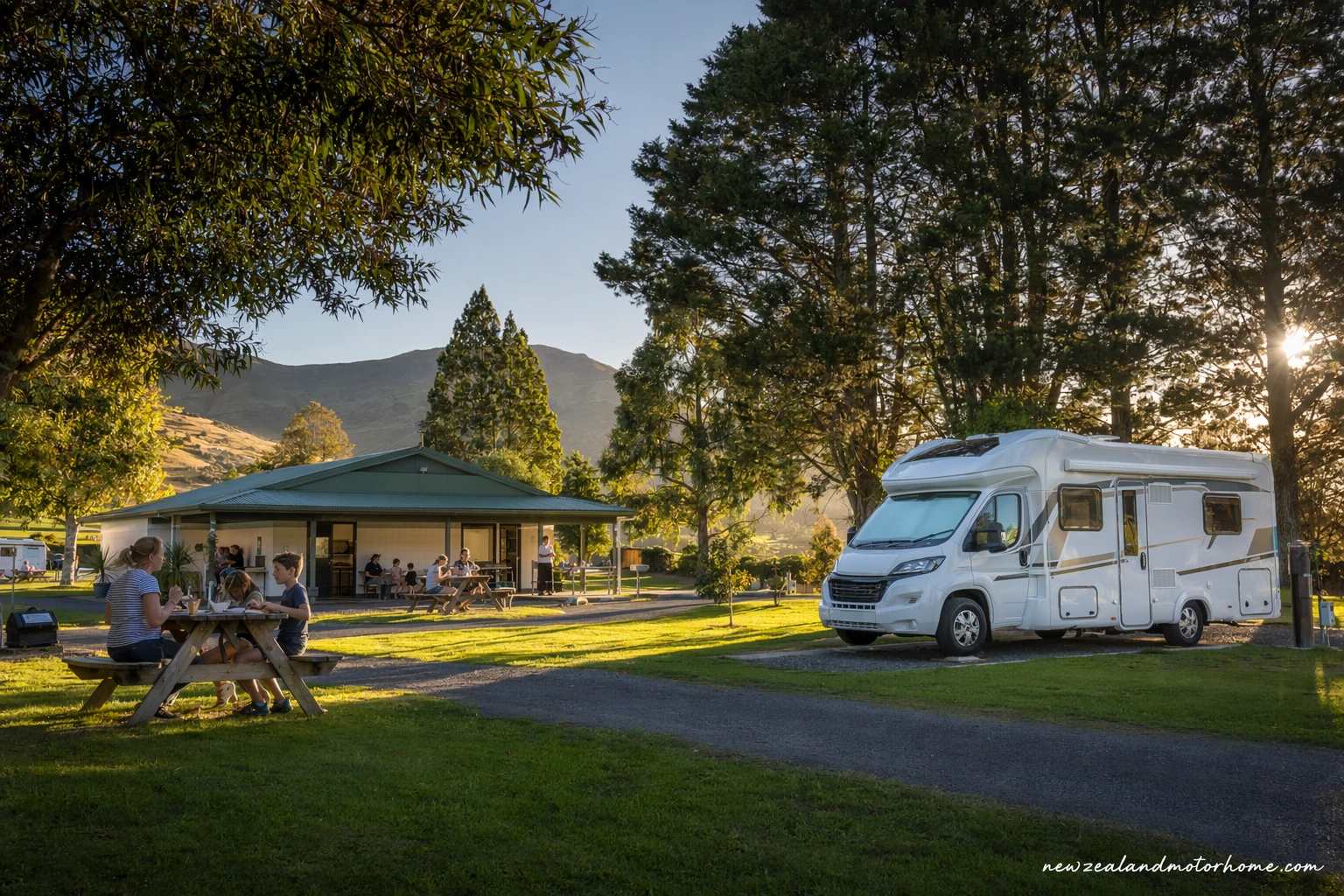
Most campervan-friendly campgrounds Taranaki offers sit either close to the coast or in service towns. New Plymouth is the most convenient first base if you want supermarkets, LPG swaps, fuel, a waterfront cycleway and easy access to the city’s beaches. From there, you can move clockwise or anticlockwise around the mountain without needing long driving days.
On the western side, Ōakura and the Surf Highway feel more relaxed and beach-led, with good bases for surf checks, sunset walks and short hops between coves. South Taranaki bases near Hāwera, Ōpunakē and nearby coastal settlements suit travellers who want the wilder west-coast feel but still need practical van services.
- New Plymouth: easiest for supplies, fresh-water top-ups, LPG, dump stations and rainy-day activities.
- Ōakura and Surf Highway 45: good for beach time, shorter coastal drives and quieter nights outside the city.
- Hāwera and South Taranaki: useful for breaking the drive between Whanganui, Taranaki and the Forgotten World Highway area.
- Stratford and inland bases: practical for access roads towards Taranaki Maunga, but check overnight rules carefully before assuming you can stay near a trailhead.
Powered and unpowered sites: choosing the right base
Powered sites Taranaki-wide are worth booking ahead in summer, school holidays and major event weekends, especially if you are travelling in a larger motorhome or want a hardstand. Coastal parks can feel breezy, so a level, well-drained site and a safe awning set-up matter more than squeezing into the prettiest corner of the park.
Unpowered sites work well if your van has strong house batteries, solar and sensible water habits, but don’t treat them as a substitute for proper servicing. Plan a rhythm: powered night for laundry and charging, unpowered coastal night for the view, then a dump station and fresh-water fill before you move on.
- Tell the park your vehicle length when booking; some older campgrounds have tighter internal turns and low branches.
- Ask whether sites are grass, gravel or sealed if heavy rain is forecast.
- Use levelling ramps where allowed rather than parking across a pitch to chase the view.
- If you have an electric step, bike rack or rear overhang, allow extra space before reversing close to fences or flax plantings.
Freedom camping rules and self-containment in Taranaki
Freedom camping in Taranaki is not one single rule for the whole region. New Plymouth District, South Taranaki District and Stratford District each manage their own areas, and signs on the ground are the final word. A certified self-contained van gives you more options, but it does not mean you can sleep anywhere that has a sea view.
Expect some coastal car parks to be day-use only, some reserves to have limited vehicle numbers, and some areas to exclude overnight camping entirely. If you are not certified self-contained, plan on using holiday parks or approved campsites Taranaki councils list for overnight stays.
- Check the current council freedom camping maps before you leave mobile coverage.
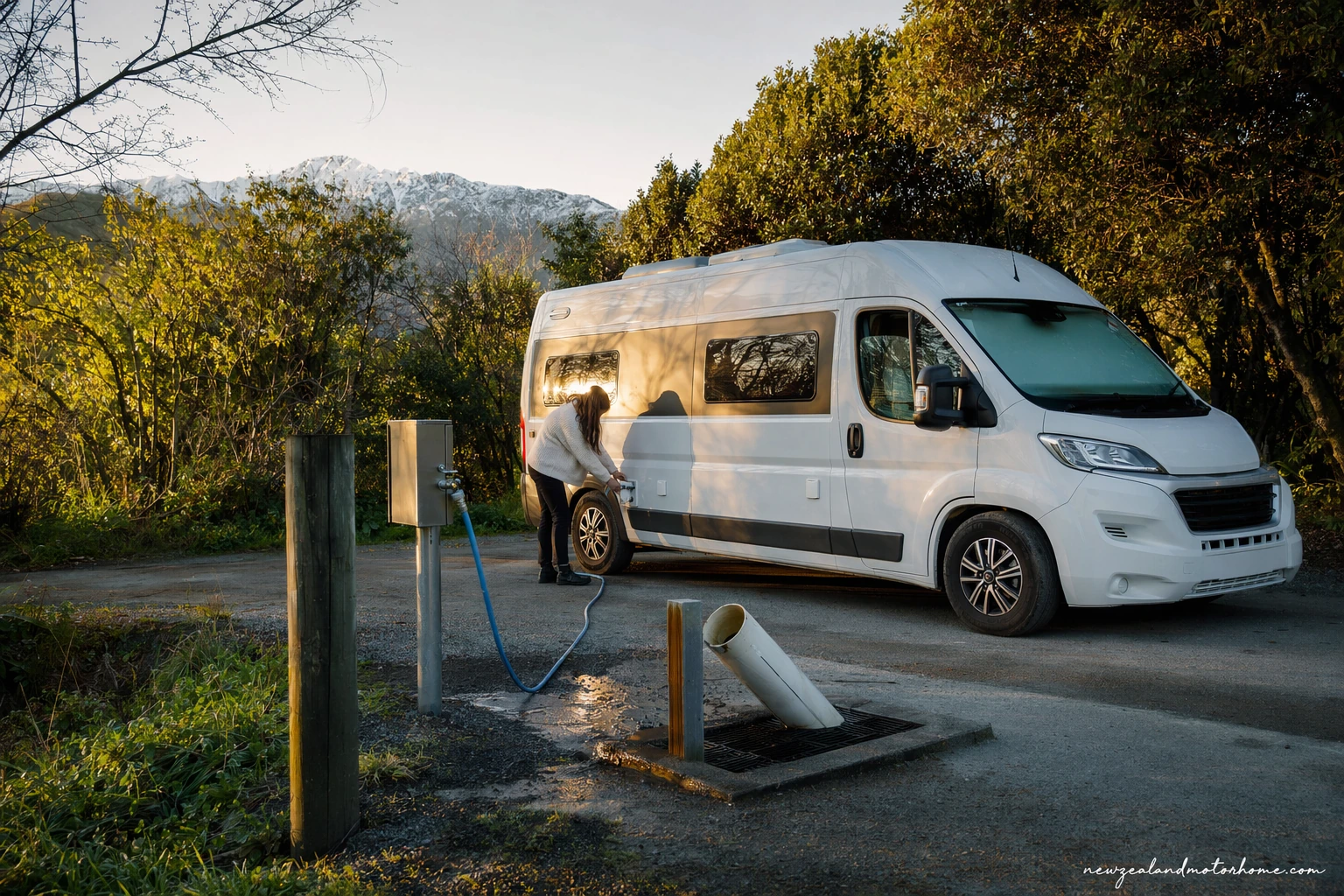
- Do not empty grey water into drains, grass or dunes; use a proper dump station.
- Arrive before dark so you can read signs, park within marked bays and avoid blocking boat ramps or local access.
- Keep noise, slide-outs and outdoor furniture low-key in any permitted freedom camping spot.
If you want help matching your van size, self-containment status and overnight style to the right stops, you can send us your outline route at /talk-to-us/ and we’ll help sense-check the flow.
Driving between parks: coastal roads, mountain access and service stops
The driving looks simple on a map because the mountain sits in the middle, but Taranaki roads have their own rhythm. Surf Highway 45 is sealed and rewarding, yet it can be narrow, rolling and exposed in places, with farm traffic, cyclists and beach-access turn-offs. Build in time for slower sections rather than planning a tight loop with late check-in at a holiday park.
Access roads towards Taranaki Maunga, including routes to popular walking areas, can be steeper, narrower and more shaded than the coast. In a long or high motorhome, check weather, road notices and your hire agreement before committing to mountain roads, and use formed day car parks rather than squeezing onto verges.
- Fuel and LPG: easiest in larger centres such as New Plymouth and Hāwera; top up before smaller coastal or inland loops.
- Fresh water: use holiday park taps where permitted, and carry your own hose and fittings.
- Dump stations: plan around public dump points and holiday park facilities; confirm access if you are not staying overnight.
- Forgotten World Highway side trip: allow extra time, expect limited services and check whether your campervan hire conditions allow the route.
What each base unlocks for a campervan trip
If your search started with "top 10 holiday park taranaki", use rankings only as a starting point. The best base depends on how you travel in the van: whether you want a powered site after several off-grid nights, a dump station before a long coastal day, or a quiet campground close enough to walk to dinner without moving the motorhome.
New Plymouth unlocks the coastal walkway, galleries, gardens, cafés and easy restocking. Ōakura and nearby coastal campsites suit surfboards, beach walks and slower evenings outside the van. South Taranaki gives you a more local-feeling route, with room to break the journey before heading towards Whanganui, the central North Island or back north through Stratford.
- Choose New Plymouth if you need services, wet-weather options and the easiest first night after collecting the van.
- Choose Ōakura or another west-coast base if you want sunset, surf and shorter beach-hopping days.
- Choose Stratford if your focus is inland driving and Taranaki Maunga access, while remembering overnight stays near tracks are restricted.
- Choose Hāwera or South Taranaki if you are linking Taranaki with Whanganui, Whanganui National Park roads or the lower North Island.
Common questions
Do I need to book holiday parks in Taranaki ahead?
In summer, school holidays and event periods, yes, especially for powered sites and larger motorhomes. Outside peak times you may have more flexibility, but it is still worth calling ahead if you need a long site, late arrival or dump station access.
Can I freedom camp on the Taranaki coast in a campervan?
Only in places where the local council permits it, and usually only if your vehicle is certified self-contained. Coastal reserves and beach car parks often have specific restrictions, so check current council maps and obey signs at the site.
Are there dump stations near Taranaki campgrounds?
Many holiday parks provide dump facilities for guests, and public dump stations are available in key towns around the region. Confirm access before relying on a location, particularly if you are passing through without staying overnight.
Is Taranaki suitable for a large motorhome?
Yes, but choose bases carefully and avoid last-minute arrivals into tight coastal parks. Some mountain and rural roads are narrower or steeper, so check your vehicle height, length and hire conditions before taking scenic detours.
Where is the best first night in Taranaki for a campervan?
New Plymouth is the easiest first-night base for most travellers because it has fuel, food, LPG, laundry options and a good spread of campervan sites. If you prefer a quieter coastal feel and arrive in daylight, Ōakura or another Surf Highway base can also work well.
Have a planner shape this for your dates
Send a short outline — your dates, party size, and the kind of trip you want. A planner replies with a vehicle recommendation, a paced route, and the realistic budget.