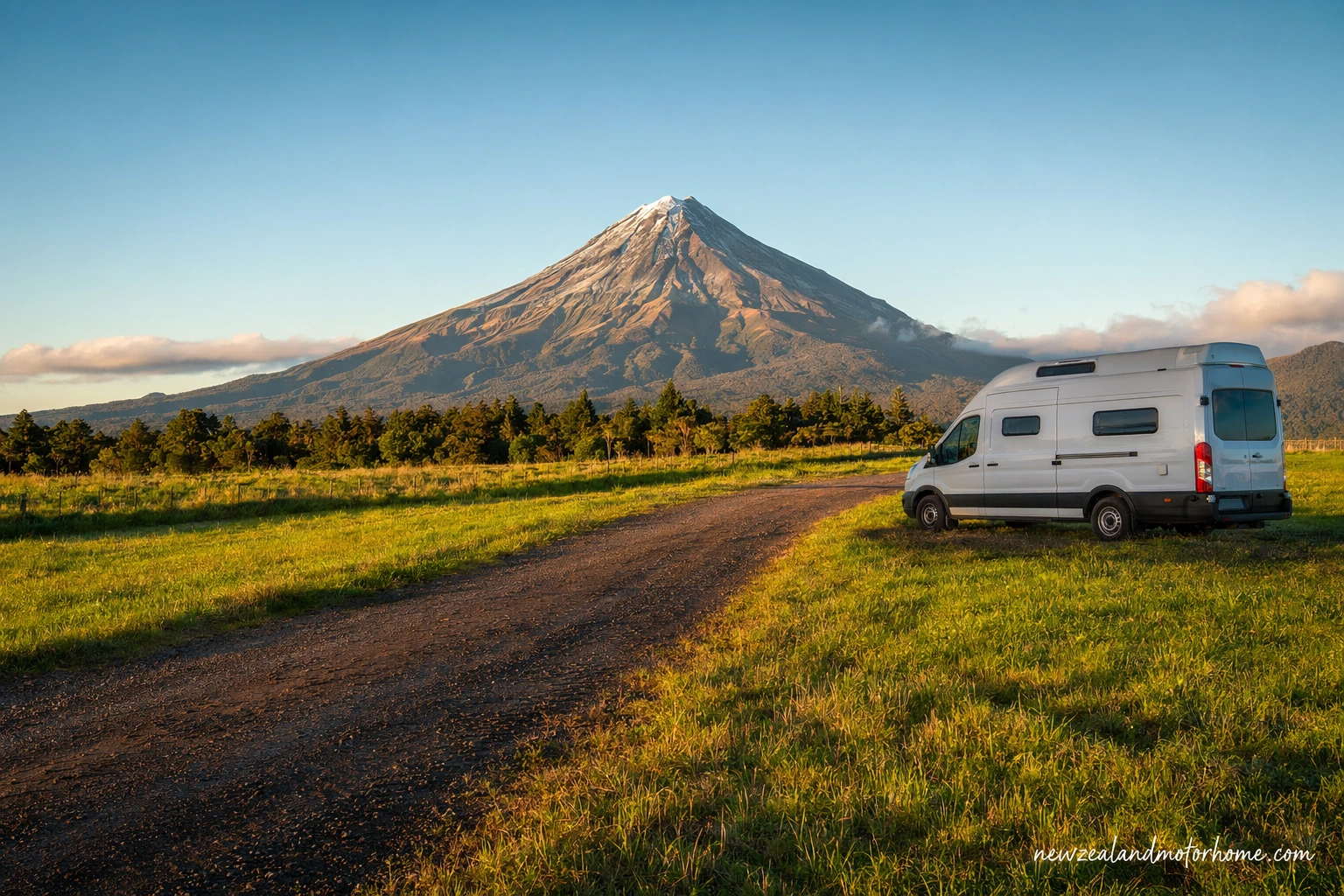
- Best overall: February to April
- Allow 3–5 days by campervan
- Book powered sites in summer
- Self-containment needed for many freedom sites
- Take care on wet mountain roads
Taranaki is a brilliant campervan region because you can wake beside the Tasman Sea, drive a surf coast road, and still be looking up at a snow-dusted maunga by lunch. The catch is the weather: it changes quickly, especially around Egmont National Park, so the best time to visit Taranaki NZ depends on whether you want beach time, walking tracks, quieter campsites, or a moody winter road trip.
This guide is written for self-drive campervan and motorhome travellers. You’ll find the practical seasonal differences: what the roads feel like in a longer van, when powered sites are worth booking, how freedom camping rules affect your overnights, and where to think ahead for dump stations, LPG and fresh-water fills.
Quick answer: the most useful months for a Taranaki campervan trip
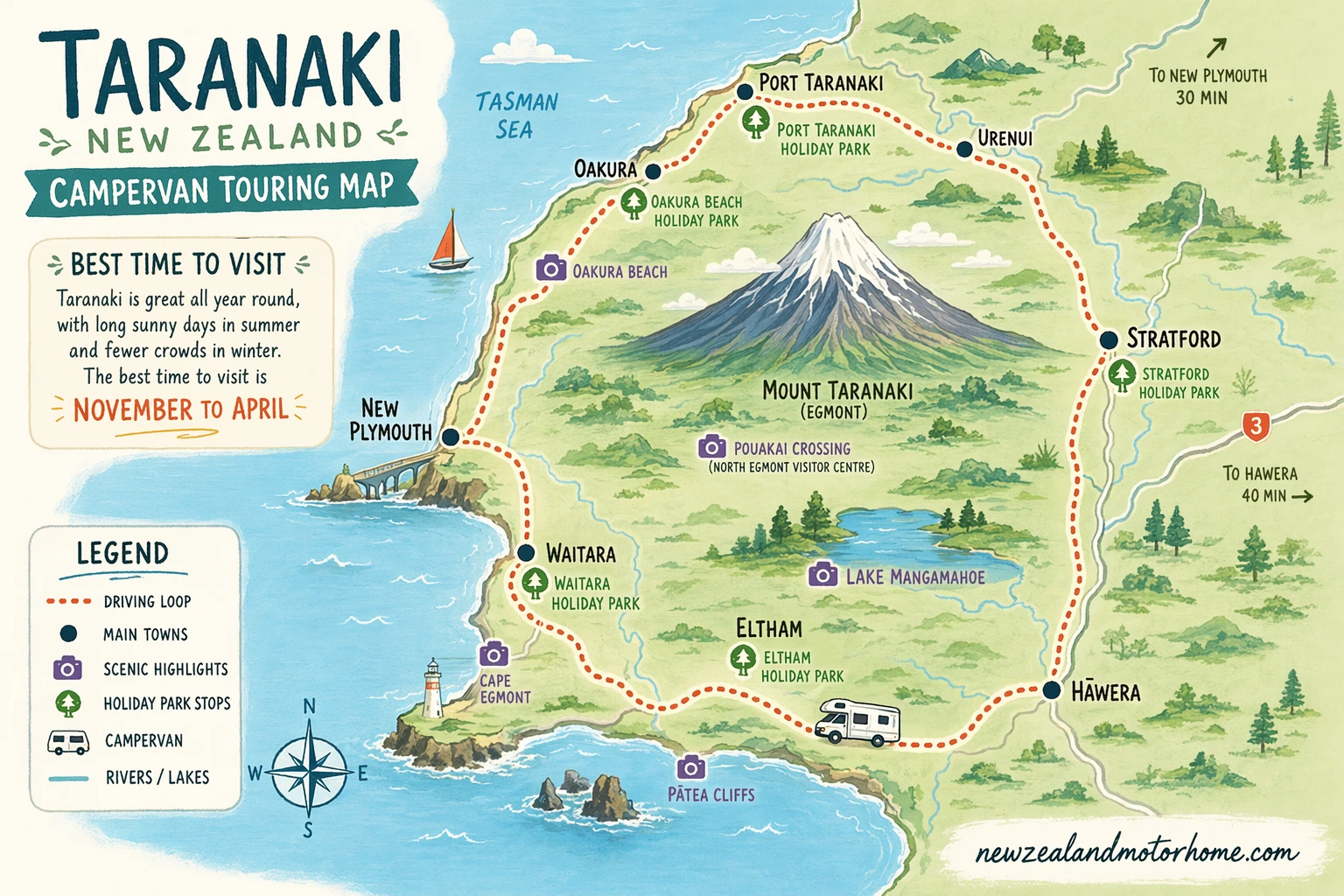
For most van travellers, February to April is the easiest window. The weather is often settled enough for coastal overnights, the sea is still warm from summer, and the main school-holiday squeeze has eased. March is especially good if you want to mix New Plymouth, the Surf Highway, and a night or two near Stratford or Hāwera without feeling rushed.
December and January suit beach-focused trips, but book holiday-park sites early if you need power, laundry, showers or a reliable fresh-water fill. May to September is quieter and can be rewarding, but you need to plan around rain, shorter daylight, and colder nights in unpowered sites.
- Best overall: February, March and April for easier weather and campsite availability.
- Best for beaches: January to March, especially around Ōakura, Opunake and the Surf Highway.
- Best for quieter roads: May, June and September, with more flexible overnight options.
- Most changeable: Winter and early spring, when mountain cloud, wind and rain can arrive fast.
Taranaki weather by month, in campervan terms
Looking at Taranaki weather by month is useful, but it is only half the story. The coast can be bright while the maunga is in cloud, and a dry forecast in New Plymouth may still mean wet, misty roads on the higher approaches to Egmont National Park. Pack for four seasons if you plan to park the van near North Egmont, Dawson Falls or Stratford Plateau.
Summer days are generally the warmest and most comfortable for unpowered camping, with long evenings for cooking outside the van. Autumn tends to bring calmer travel days and fewer campsite crowds. Winter is cooler and wetter, with snow or ice possible on higher access roads, while spring can be beautiful but blustery.
- Dec–Feb: Warmest period, busy coastal sites, best odds for swimming and outdoor meals beside the van.
- Mar–Apr: Mild, settled, excellent for a loop from New Plymouth to Opunake, Hāwera and Stratford.
- May–Aug: Quieter, wetter, colder nights; powered sites make drying gear and running heaters easier.
- Sep–Nov: Greener landscapes and fewer crowds, but expect wind and quick weather changes.
Summer: beaches, festivals and the busiest powered sites
Summer is when Taranaki feels most like a coastal campervan trip. You can park near the New Plymouth waterfront for a daytime wander, follow Surf Highway 45 between beach settlements, and choose overnight stops close to swimming, sunsets and surf breaks. It is also the season when the region’s most convenient powered sites fill first.
If you are travelling in a larger motorhome, do not leave your overnight decision until dusk in late December or January. Coastal settlements can have limited manoeuvring space, and the easiest sites for a long vehicle are often in organised campgrounds or clearly marked council areas rather than small beach car parks. Freedom camping is controlled by local bylaws and signage, and you will usually need a certified self-contained vehicle where it is allowed.
- Book ahead for powered sites if you need mains power, showers, laundry or a dump-station stop in peak weeks.
- Use daytime beach parking for walks and surf checks, then move to a legal overnight site before evening.
- Keep fresh water topped up in larger towns such as New Plymouth, Stratford or Hāwera before looping along quieter coast roads.
Autumn and spring: the best balance for flexible van travel
If you are wondering when to visit Taranaki for a relaxed self-drive itinerary, aim for the shoulder seasons. March and April are particularly kind to campervan travellers: the main roads are calmer, the coast still has a late-summer feel, and you can often find a mix of powered and unpowered sites without locking every night in months ahead.
Spring is more variable, but it has its own charm: fresh green farmland, dramatic cloud over the mountain, and quieter campgrounds outside weekends and school holidays. In a campervan, the key is to keep your route loose. If the mountain is hidden, spend the day around the coast or New Plymouth’s parks and galleries; if the weather clears, head inland early and park while visitor car parks still have room.
If your travel dates are fixed and you want help matching campsite types to your van size, you can talk to us before you lock in the route.
Winter driving, mountain roads and wet-weather planning
Winter in Taranaki is quiet, atmospheric and very workable in a campervan if you prepare for damp days. The main state highways are generally straightforward, but side roads into Egmont National Park are narrower, steeper and more exposed to mist, leaf litter, ice or snow. A heavy motorhome will feel the gradients more than a small van, so take your time and avoid forcing a mountain stop if visibility is poor.
Powered sites are worth considering in winter, even if you normally prefer unpowered camping. They make it easier to run safe heating, charge devices, dry wet jackets, and keep the van comfortable during long evenings. Check LPG levels before heading away from the main towns, and plan dump-station and water stops rather than assuming every smaller settlement has full motorhome services.
- Check road and weather updates before driving to North Egmont, Dawson Falls or higher viewpoints.
- Use low gears on descents and allow extra stopping distance on wet rural roads.
- Choose overnight stops with firm ground; avoid soft grass if rain has been sitting around.
- Keep a buffer day if your route includes the Forgotten World Highway, which is winding and slower in poor weather.
Campsites, freedom camping and van services by season
Taranaki has a useful spread of holiday parks, council-controlled areas and rural or coastal stops, but the rules change by district and by site. Always read the sign where you park, not just an old app listing. Freedom camping is not a blanket right, and enforcement is usually stricter in popular beach areas and around New Plymouth during busy periods.
For a smooth loop, think of New Plymouth, Stratford and Hāwera as your main service anchors for groceries, fuel, LPG, dump stations and fresh-water top-ups. Opunake and smaller coastal settlements are lovely overnight bases, but they are not where you want to discover that your grey-water tank is full or your gas bottle is nearly empty.
- Peak summer: pre-book powered sites and arrive earlier in the day for easier parking.
- Shoulder months: mix holiday parks with legal freedom-camping stops if your van is self-contained.
- Winter: prioritise hardstand or powered pitches when rain is forecast.
- All year: travel with current self-containment certification displayed if using freedom-camping areas that require it.
Common questions
What is the best month to visit Taranaki NZ in a campervan?
March is often the easiest single month: warm enough for the coast, quieter than January, and still good for mountain views when the weather lines up. February and April are also strong choices for self-drive campervan travel.
Can I freedom camp around Taranaki?
Only in places where local rules and signs allow it, and many areas require a certified self-contained vehicle. Check the current council bylaw for the district you are in, because New Plymouth, Stratford and South Taranaki can have different restrictions.
Do I need to book campsites in summer?
Yes, if you want a powered site, are travelling during school holidays, or have a larger motorhome that needs more space. Unpowered sites may be easier outside peak dates, but the most convenient coastal spots still fill quickly in settled weather.
Is winter too wet for a Taranaki motorhome trip?
No, but it needs a more flexible plan. Choose powered or hardstand sites, keep rain gear handy, and avoid higher mountain access roads if visibility, snow or ice makes the drive uncomfortable.
Where should I plan van services in Taranaki?
Use the larger towns as your practical service points, especially New Plymouth, Stratford and Hāwera. They are the best places to plan fuel, LPG, groceries, dump-station visits and fresh-water fills before heading along quieter coastal or rural roads.
Have a planner shape this for your dates
Send a short outline — your dates, party size, and the kind of trip you want. A planner replies with a vehicle recommendation, a paced route, and the realistic budget.