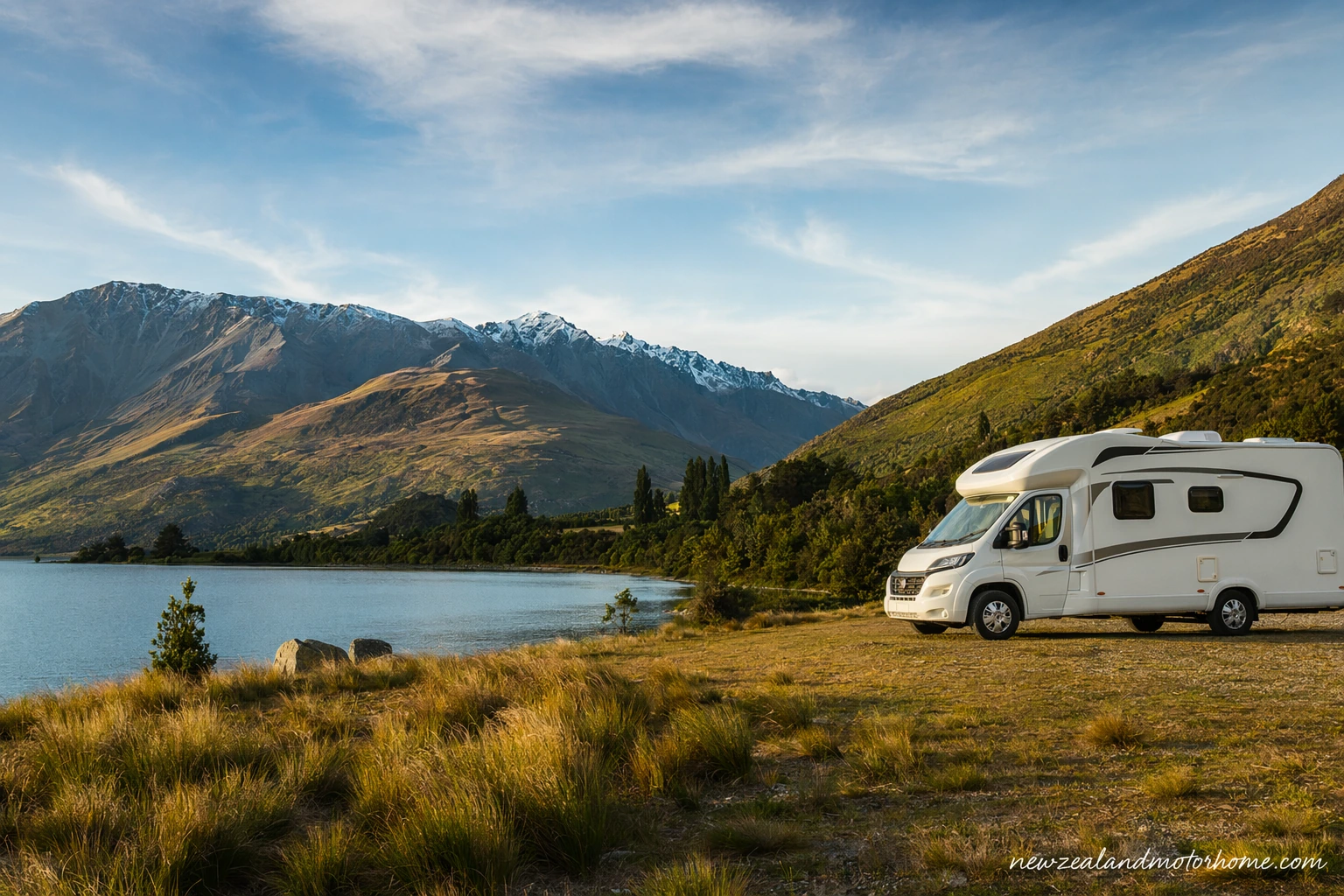
- Best all-round: Oct-Nov and Mar-Apr
- Allow 5-10 days by campervan
- Book powered sites in summer peaks
- Winter needs road checks and heating
- Self-containment required for freedom camping
Canterbury is one of those regions where the calendar really matters from behind the wheel of a campervan. A warm still day on the plains can turn into a frosty night beside Lake Tekapo, and a blue morning in Christchurch can mean fresh snow on the passes by afternoon.
This guide looks at when to visit Canterbury for a self-drive motorhome trip: weather by month, road conditions, campsite availability, freedom camping realities, dump stations, water and LPG planning, and how the seasons change the feel of places like Banks Peninsula, Arthur’s Pass, Geraldine, Timaru and the Mackenzie Basin.
The short answer: late spring and early autumn suit most vans
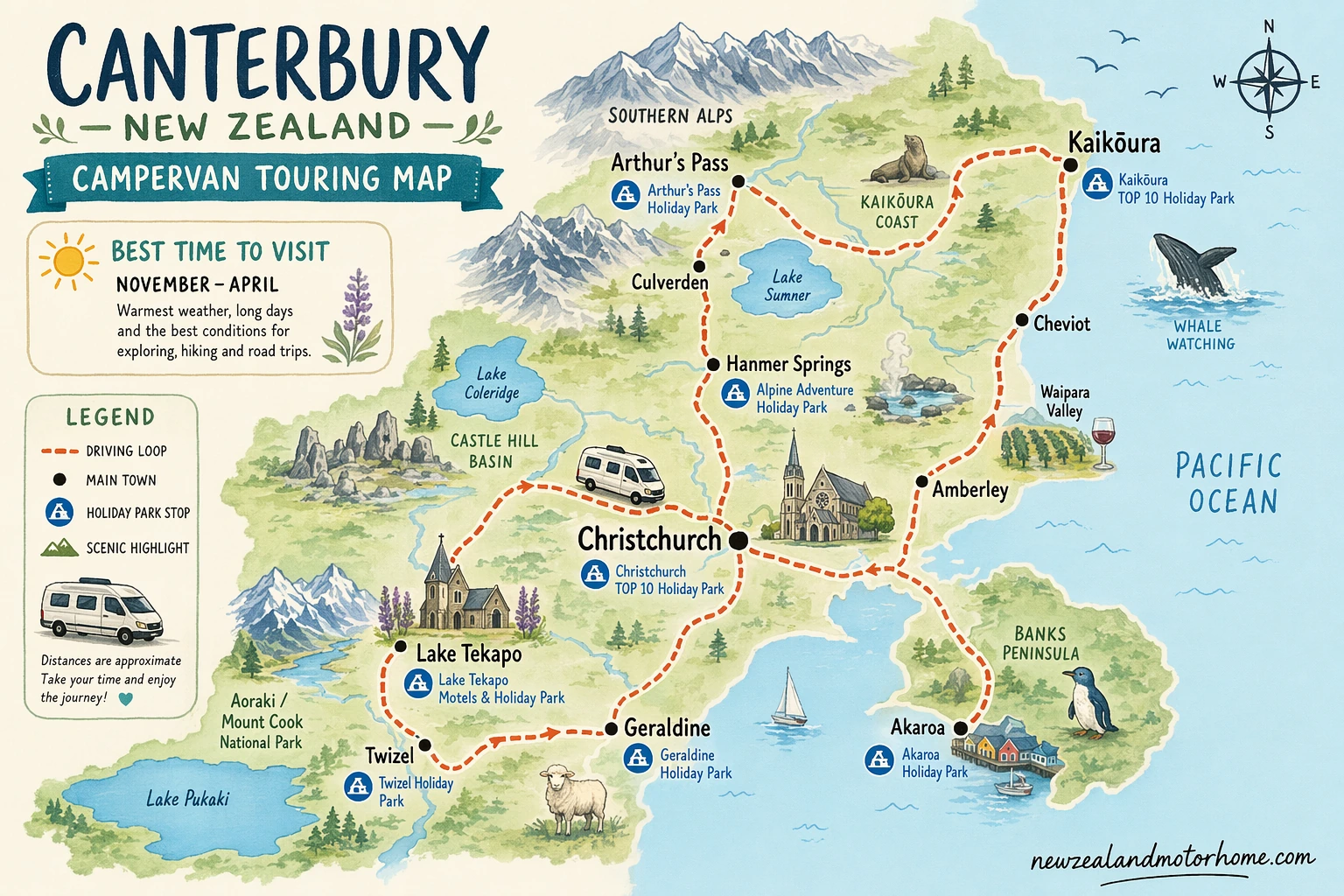
For most campervan travellers, the best time to visit Canterbury NZ is from October to November or March to April. You usually get decent daylight, milder temperatures, fewer peak-season queues at holiday parks, and more flexibility for choosing powered or unpowered sites without locking every night in too far ahead.
Summer is still excellent if you want warm swimming weather, long evenings and high-country walks, but it brings stronger demand around Lake Tekapo, Akaroa, Christchurch and the coastal holiday towns. Winter can be beautiful in a motorhome, especially if you like snowy views, hot drinks and quieter campgrounds, but it needs more care with heating, batteries, condensation and alpine roads.
- Best all-round months: October, November, March and April.
- Warmest touring: December to February, with busier sites and hotter inland driving.
- Quietest scenic season: May to August, as long as your van is winter-ready.
- Most changeable shoulder period: September, when lambing, blossoms, snow melt and cold southerlies can all arrive in the same week.
Canterbury weather by month, from the driver’s seat
Canterbury weather by month is less about one tidy forecast and more about altitude. Christchurch and the coastal plains are generally milder, Banks Peninsula can be windy and damp, while the Mackenzie Basin and Arthur’s Pass can be cold at night even when the daytime driving feels easy.
In a campervan, that means planning overnight stops as carefully as daytime activities. A sheltered powered site near Christchurch, Geraldine or Timaru can feel very different from an exposed lakeside freedom camping spot when a nor’wester is shaking the van at 2 am.
- December to February: warm days, bright evenings and busy lakeside areas; book popular holiday parks early and watch for hot interior temperatures when parked in full sun.
- March to May: settled touring weather, cooler nights and autumn colour around foothill towns; a good time for unpowered sites if your batteries and solar are reliable.
- June to August: frosts, short daylight and snow risk on alpine routes; choose powered sites more often for heating and battery recovery.
- September to November: fresh, changeable and pretty, with spring winds; keep wet-weather gear accessible and do not leave awnings out unattended.
Crowds, holiday parks and freedom camping by season
Canterbury has plenty of places to sleep in a van, but availability changes sharply by season. Summer school holidays, long weekends and event periods can fill powered sites around Christchurch, Akaroa, Lake Tekapo and the main coastal stops, especially for larger motorhomes needing a flatter bay and easy turning room.
Freedom camping is possible in parts of Canterbury, but it is controlled by local bylaws and differs between districts. Travel with current self-containment certification, check the latest council maps before you park for the night, and assume that popular lakefront or beach spots may have limits, no-camping zones, or maximum-night rules.
- Summer: book key holiday park nights ahead, especially if you need power, laundry, showers or a dump station on site.
- Shoulder seasons: easier to mix paid campgrounds, DOC-style camps and legal freedom camping without rushing.
- Winter: many parks stay open, but some smaller or remote camping areas may reduce facilities; check access before relying on them.
- All year: arrive before dark when using unfamiliar freedom camping areas so you can read signs, assess slope and avoid soft ground.
Road conditions and route choices for motorhomes
Canterbury is generally straightforward for self-drive touring, but it has a few roads where van size, wind and weather matter. State Highway 1 is the easy north-south spine, while inland routes towards Tekapo, Aoraki/Mount Cook, Arthur’s Pass and the ski-field turn-offs become more exposed and more weather-dependent.
If you are driving a longer motorhome, allow extra time on Banks Peninsula roads around the bays, where bends, steep sections and narrow shoulders can make sightseeing slower than the map suggests. In winter or after a southerly, check road updates before committing to Porters Pass, Arthur’s Pass or high-country side trips.
- Wind: nor’westers can be tiring on open plains; slow down, keep both hands on the wheel and avoid stopping on exposed shoulders.
- Snow and ice: alpine routes may require chains or may close temporarily; know your hire agreement and do not guess.
- Gravel access: some scenic camping areas and trailheads use unsealed roads; confirm they are allowed for your hire vehicle.
- Height and length: check bridge, tree and campground access notes before turning into older bays, beach tracks or tight town parking.
Services: dump stations, water, LPG and practical overnight planning
Canterbury is easy to manage if you plan services around your route rather than waiting until the tanks are urgent. Christchurch has the widest choice for groceries, LPG bottle swaps or refills, repairs and fresh-water top-ups, while larger towns such as Ashburton, Geraldine, Timaru and Rangiora are useful reset points between quieter overnight stops.
In the Mackenzie Basin and around smaller coastal settlements, treat dump stations, potable water and powered sites as part of your daily route plan. In peak season, do the practical jobs early in the day, before everyone else is queueing to empty grey water or fill fresh water before check-in.
- Every two to three days: plan a proper dump station and fresh-water stop, more often if you are showering in the van.
- Before remote nights: top up water, check LPG, charge devices and make sure your house battery is healthy.
- Cold months: choose powered sites when you need reliable heating, dehumidifying and battery recovery.
- Trip planning help: if you want the seasons matched to your van size, pace and overnight style, you can talk to us before you lock in the route.
Which season feels right for your Canterbury campervan trip?
If you want a relaxed first motorhome trip, aim for late spring or early autumn and build a loop that mixes coast, city and high country. You can park the van in Christchurch for an easy start, spend a night around Banks Peninsula, cut inland through Geraldine or Fairlie, then give yourself time around Tekapo or Aoraki/Mount Cook without driving every day.
If you are travelling in summer, keep the route loose enough to avoid the hottest part of the day on long inland drives. In winter, do the opposite: shorten the driving days, book more powered nights, and avoid arriving late at exposed camps where frost, darkness and a full waste tank make everything harder.
- Families: summer is easiest for daylight and school holidays, but book powered sites early.
- Walkers and photographers: March, April, October and November are hard to beat for light and comfort.
- Budget-conscious van travellers: shoulder seasons usually give more freedom to choose unpowered sites and less crowded facilities.
- Snow lovers: winter works well with a warm van, careful road checks and a willingness to change plans.
Common questions
What is the best month to visit Canterbury in a campervan?
March is one of the easiest months for a campervan trip: warm days, cooler nights, good daylight and fewer peak-summer crowds. October and November are also excellent if you like spring scenery and do not mind changeable weather.
Can I freedom camp in Canterbury all year?
You can freedom camp in some Canterbury areas if your vehicle is properly self-contained and the local bylaw allows it. Rules vary by district, so check current council maps and signs before staying overnight, especially near lakes, beaches and town centres.
Do I need powered sites in Canterbury in winter?
Powered sites are strongly recommended in winter, especially inland or near alpine routes. They help with heating, battery recovery, drying gear and reducing condensation inside the motorhome.
Are Canterbury roads suitable for large motorhomes?
Most main Canterbury roads are suitable for larger motorhomes, including the main highways and town access roads. Take extra care on Banks Peninsula, alpine passes and any unsealed access roads, and always check your hire vehicle conditions before driving gravel sections.
When are Canterbury holiday parks busiest?
The busiest period is usually late December through January, plus long weekends and major local events. If you need a powered site in places like Christchurch, Akaroa, Tekapo or Timaru during that period, book ahead rather than relying on arrival-day availability.
How many days should I allow for a Canterbury campervan route?
Allow at least five to seven days if you want Christchurch, Banks Peninsula and the Mackenzie high country without rushing. Ten days gives you more room for weather changes, restocking, dump station stops and slower scenic roads.
Have a planner shape this for your dates
Send a short outline — your dates, party size, and the kind of trip you want. A planner replies with a vehicle recommendation, a paced route, and the realistic budget.