- Best with 7–10 days
- Start and restock in Christchurch
- Powered sites useful inland
- Check freedom camping by district
- Watch wind on alpine roads
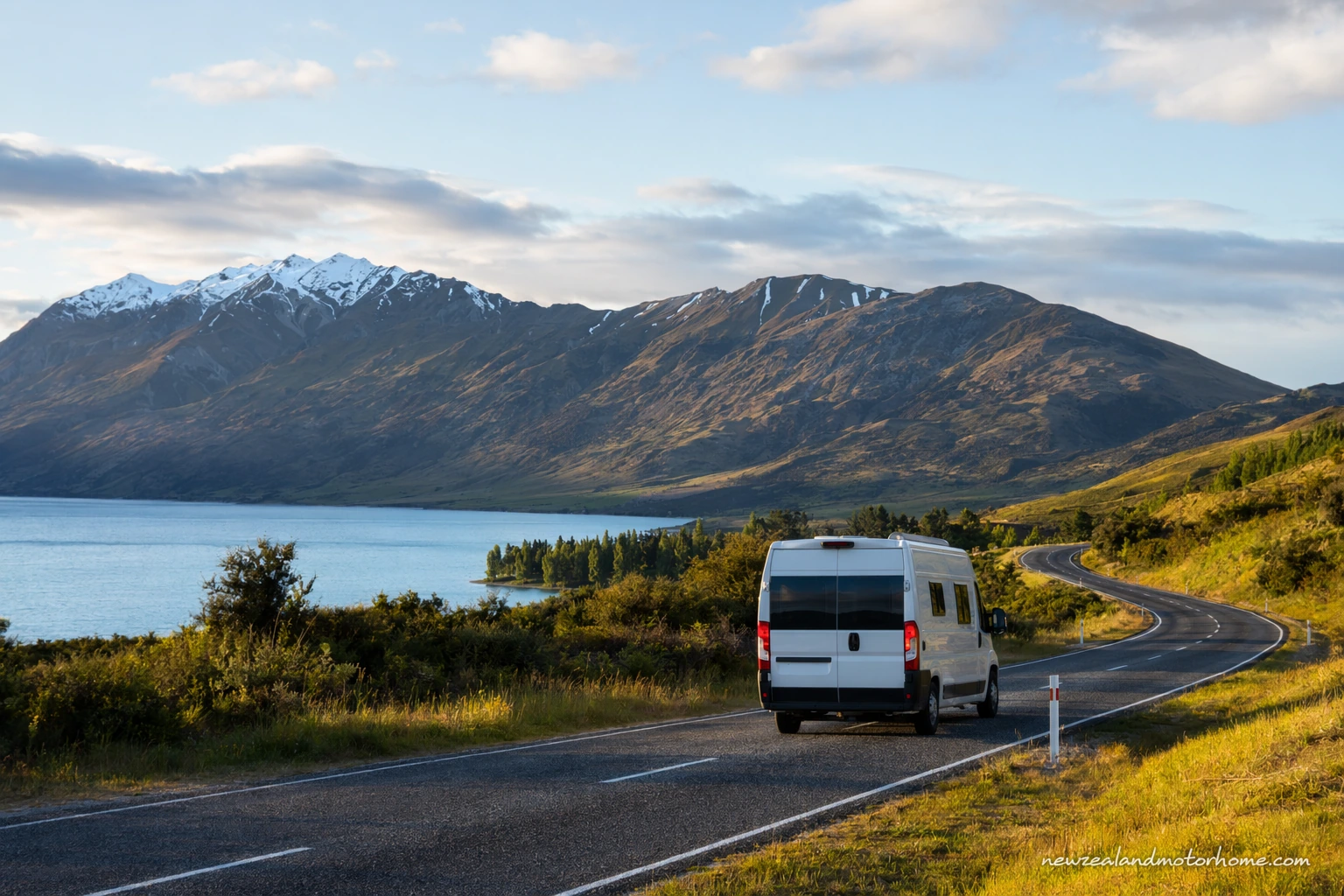
Canterbury is a brilliant region for a hired campervan because the landscape changes fast without needing huge daily kilometres. You can pick up the van in Christchurch, stock the cupboards, and be on braided river flats by lunch, in the foothills by afternoon, or parked near the harbour at Akaroa by evening.
This campervan guide Canterbury NZ page is written for people driving and sleeping in their own van: where to overnight, how the roads feel in a larger motorhome, when to choose a powered site, and where to think ahead for water, LPG and dump stations. It covers the city edge, Banks Peninsula, the alpine passes, the Mackenzie Basin and South Canterbury coast so you can build a route that fits your pace rather than chasing every photo stop.
How many days to allow in a Canterbury campervan
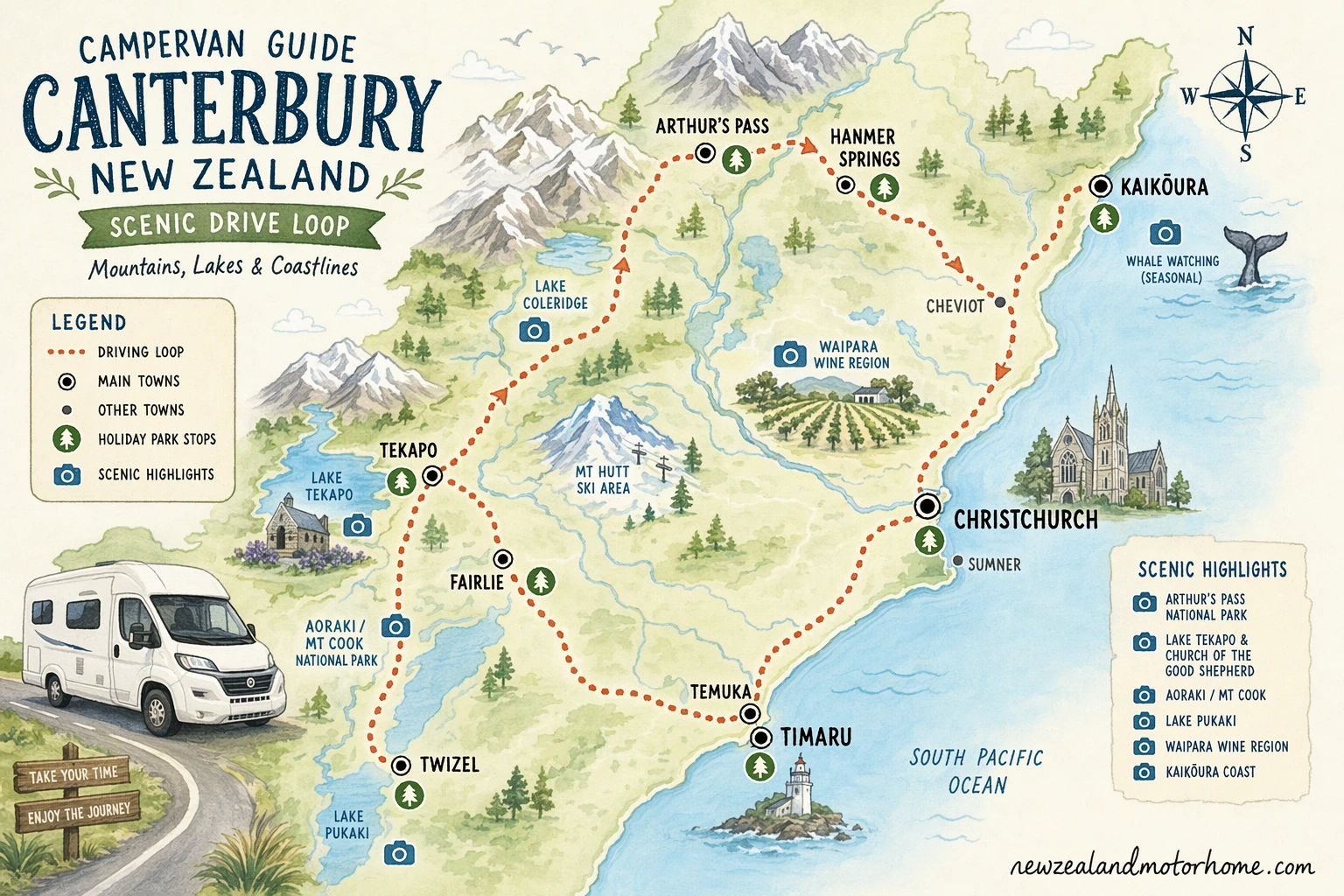
A quick Canterbury campervan loop can work in four days if you keep close to Christchurch, Banks Peninsula and the foothills. For a more settled trip, allow seven to ten days so you can include Hanmer Springs, Arthur’s Pass, Lake Tekapo, Aoraki/Mount Cook and the coast without driving every afternoon.
The biggest trap is underestimating how long short-looking mountain roads take in a motorhome. Canterbury roads are generally well formed, but wind, shingle shoulders, single-lane bridges and photo-stop temptation all slow the day down.
- 4 days: Christchurch, Akaroa, Geraldine or Hanmer Springs, then back to the city.
- 7 days: Add Arthur’s Pass or Lake Tekapo, with two-night stops where the weather matters.
- 10 days: Make a full region loop through Mackenzie Country, Aoraki/Mount Cook, South Canterbury and the coast.
If you want a route matched to your van size, season and preferred campsite style, add your notes at the plan-your-trip step and we can help shape the driving days.
Starting from Christchurch: supplies, first night and city driving
Christchurch is the natural starting point for most motorhome Canterbury trips. Before you head out, use the city fringe for the practical jobs: supermarket shop, fresh-water fill if your depot has not sent you away full, LPG check, tyre-pressure check and a quick walk-through of the grey-water and toilet cassette systems.
If you land late or feel rusty in the van, do not race straight to the mountains. A powered site in or near Christchurch for the first night gives you space to unpack, test the heater, charge devices and learn how your hire van behaves in a tight holiday park bay.
- Easy first-night areas: Christchurch, Kaiapoi, Rolleston and Rangiora all keep you close to services.
- Dump stations: Plan on using established public or holiday-park dump stations around Christchurch before heading inland.
- Parking note: Central Christchurch has height restrictions in some car parks, so use open-air parking and check signs before committing.
Once you are comfortable, Canterbury opens up quickly: State Highway 1 north and south is straightforward, while the inland roads towards Darfield, Oxford, Methven and Geraldine are good introductions to rural driving in a wider vehicle.
Banks Peninsula and Akaroa in a campervan
Banks Peninsula is one of the most rewarding things to do Canterbury campervan travellers can add early in the trip, but it is not a place to drive on autopilot. The road to Akaroa climbs, twists and narrows in places, with steep drop-offs, slow corners and a few pull-outs that are better suited to cars than long motorhomes.
Take your time, use low gears on descents, and let faster traffic pass when it is safe. If your van is long or you are new to left-side driving, avoid arriving after dark; the views are better in daylight and the bends feel calmer when you can see what is coming.
- Overnight style: Use holiday parks or designated camping areas; freedom camping is tightly controlled around popular harbour settlements.
- Van parking: Park once in Akaroa and explore on foot rather than trying to move the van between small bays.
- Services: Top up fresh water and empty tanks before leaving Christchurch or use confirmed facilities on the peninsula, as options are fewer than on the plains.
A powered site is useful here if the weather turns damp, especially outside summer. Harbour evenings can be cool, and running the heater without worrying about battery levels makes the stop more comfortable.
Alpine routes: Arthur’s Pass, Hanmer Springs and the high-country edge
The alpine side of Canterbury is where a motorhome feels most like a tiny cabin on wheels. Arthur’s Pass gives you big river valleys, beech forest and dramatic weather; Hanmer Springs is easier driving and works well as a restful stop with established campground facilities.
For Arthur’s Pass, check the forecast before you commit. The road is a major highway but it is still a mountain route, with steep sections, viaducts, possible ice in winter and strong winds at times. Larger vans should descend slowly and avoid pulling onto soft verges for photos.
- Arthur’s Pass: Best with a confident driver, daylight arrival and a plan for cold nights.
- Hanmer Springs: A good choice for powered sites, laundry, water top-ups and a slower two-night stop.
- Foothill towns: Oxford, Darfield and Methven are useful pauses for fuel, groceries and checking the next road leg.
In shoulder seasons and winter, choose powered campsites more often than you might on the coast. Short daylight hours, heater use and wet gear can drain house batteries quickly if you rely only on unpowered sites.
Mackenzie Country, Lake Tekapo and Aoraki/Mount Cook
The Mackenzie Basin is a classic motorhome Canterbury landscape: wide roads, pale tussock, turquoise lakes and big skies. It also comes with exposed wind, frosty nights outside summer and long distances between full-service stops, so treat it as high country rather than a casual lake drive.
Lake Tekapo and Aoraki/Mount Cook are popular for good reason, but parking can fill quickly in peak periods. Arrive earlier in the day, use marked spaces, and do not block coach bays, boat ramps or turning areas with the van. If the weather closes in, a two-night stop gives you a better chance of seeing the peaks without rushing the drive.
- Good service towns: Fairlie, Geraldine and Tekapo are useful for fuel, food, public toilets and checking dump-station options.
- Overnight choices: Mix holiday parks, DOC-style camping and designated areas where allowed; always check local freedom camping rules before you settle in.
- Road note: The Mount Cook Road is sealed and scenic, but it is exposed. Watch for gusts, cyclists, rental traffic and sudden photo stops.
If your hire van has limited water capacity, fill before heading deeper into the basin and empty grey water whenever a legal dump station fits your route. It is much easier than trying to solve full tanks at a busy lakefront.
Freedom camping, dump stations and van etiquette in Canterbury
Freedom camping in Canterbury varies by district, and the rules can change between neighbouring councils. A certified self-contained vehicle is usually the starting point, but certification does not mean you can sleep anywhere. Check local signs, council maps and any seasonal restrictions before you level the van and put the blinds up.
As a rule, use freedom spots for simple overnight parking, not for spreading out. Keep chairs, awnings and cooking gear inside the marked area unless the site clearly allows camping behaviour. In busy places, arriving tidy and leaving early helps keep these areas available for future campervan travellers.
- Dump stations: Look for them in larger towns such as Christchurch, Rolleston, Ashburton, Geraldine, Fairlie, Tekapo, Hanmer Springs and Akaroa, but confirm access before relying on one.
- Fresh water: Fill only from marked potable taps; never use dump-station rinse hoses for drinking water.
- Rubbish: Carry it to proper bins or transfer stations, especially around lakes, riverbeds and coastal pull-offs.
- Site choice: Use powered holiday parks every few nights for showers, laundry, battery charging and an easy reset.
A good Canterbury campervan trip has a rhythm: two scenic nights, one practical night, then back out again. That rhythm keeps the van legal, comfortable and ready for the next stretch of road.
Common questions
Is Canterbury suitable for a first campervan trip in New Zealand?
Yes, Canterbury is a good first region because Christchurch has services and the main roads are generally straightforward. Build confidence on the plains before driving Banks Peninsula, Arthur’s Pass or the Mount Cook Road in a larger motorhome.
Can I freedom camp around Lake Tekapo or Akaroa?
Only where local rules specifically allow it, and usually only in a certified self-contained van. Both areas are closely managed, so check current council signage and use designated campsites if you are unsure.
Do I need powered sites in Canterbury?
You can use unpowered sites in warm weather if your battery and water capacity suit, but powered nights are very useful in the high country and shoulder seasons. Plan one every few nights for heating, charging, laundry and a proper reset.
Are Canterbury roads difficult in a motorhome?
Most sealed routes are manageable, but some are exposed, winding or steep. Take extra care on Banks Peninsula, Arthur’s Pass, alpine approaches and any gravel access roads, and avoid soft road edges in a heavy van.
Where should I empty grey water and the toilet cassette?
Use legal dump stations at holiday parks or public facilities in larger towns. Never empty grey water, black water or cassette waste on the ground, near rivers, or into ordinary stormwater drains.
Have a planner shape this for your dates
Send a short outline — your dates, party size, and the kind of trip you want. A planner replies with a vehicle recommendation, a paced route, and the realistic budget.