- Best for weekend mornings
- Allow 2-4 days for a loop
- Arrive early in larger vans
- Powered sites help after big shops
- Check local freedom camping bylaws
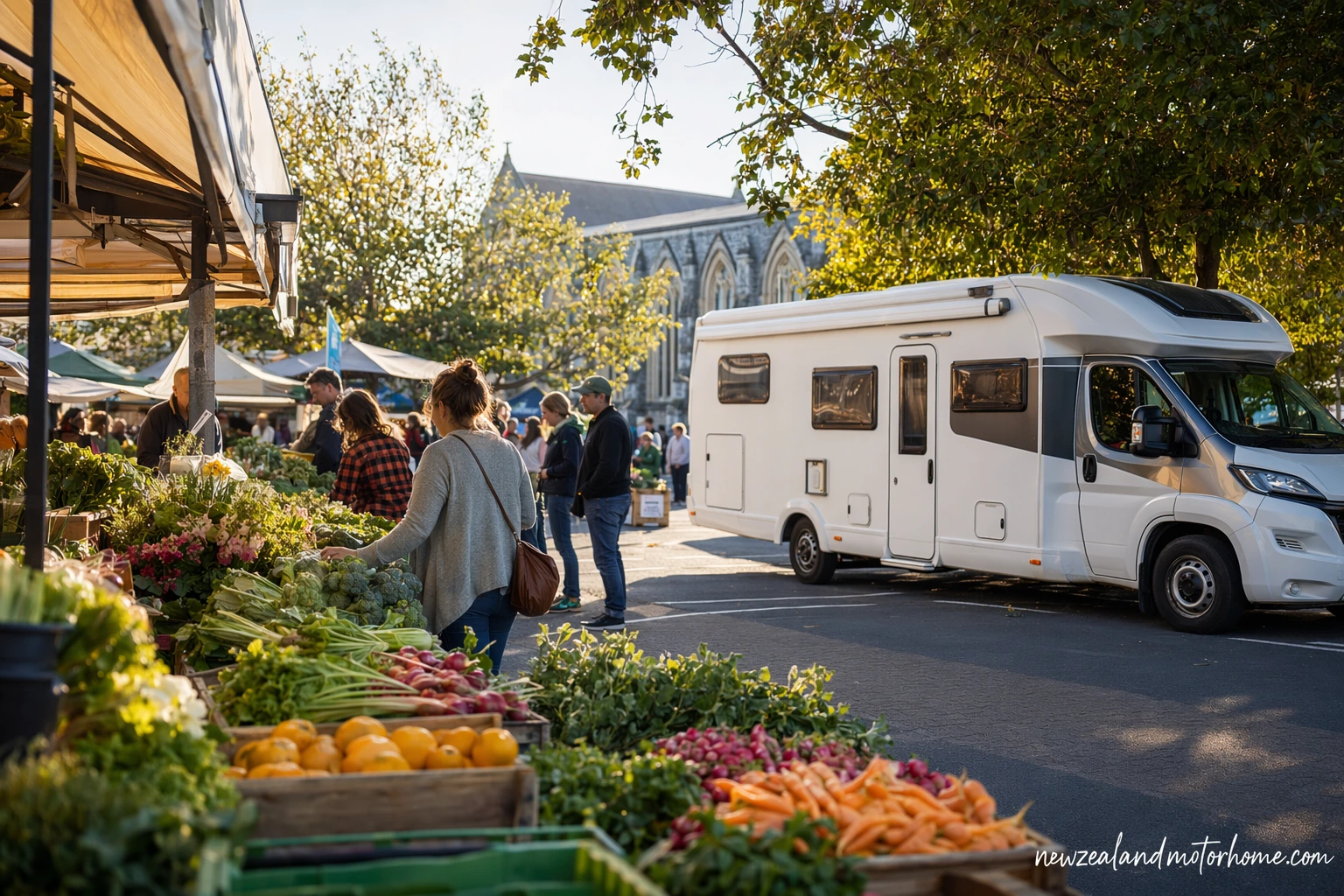
Canterbury is a good region to shop slowly: apples from the plains, bread still warm from the stall, eggs and berries for the chilly bin, and enough cheese, chutney and greens to turn a plain van dinner into something you will remember. For self-drive travellers, the trick is not just knowing which farmers markets Canterbury does well, but where a campervan actually fits when the Saturday crowd arrives.
This guide links the best market-style stops with practical van notes: likely parking approaches, how to time market days, where to refill fresh water or empty the cassette nearby, and how to pair fresh produce Canterbury is known for with sensible overnight stops. Build it into a weekend loop from Christchurch, or use it to stock the van before heading inland to the Mackenzie Country, Arthur's Pass or the coast.
How to plan Canterbury market days in a campervan
Most weekend markets Canterbury travellers aim for are busiest in the first hour after opening, especially on clear Saturdays. If you are driving a 6-berth motorhome, it is usually easier to arrive early, park once, then walk in with a backpack or collapsible crate rather than circling narrow streets looking for a closer space.
Market days can change for public holidays, winter weather and local events, so check the current listing the day before you drive. If you would like the market stops stitched into a wider South Island route with realistic driving days and overnight options, you can send us your timing through /talk-to-us/.
- Best rhythm: shop in the morning, put chilled goods straight into the van fridge, then drive after the car parks thin out.
- Bring: reusable bags, a small chilly bin or fridge basket, cash as a backup, and a soft-sided bag for bread and fruit.
- Van note: do not rely on reversing into tight town-centre angle parks if your rear overhang is long.
- Overnight thinking: book a powered site when you have stocked the fridge heavily or need to recharge after several unpowered nights.
Christchurch markets: easy first shop after pick-up
Christchurch is the natural starting point for many campervan hires, and it is the easiest place to gather pantry basics before you disappear into quieter parts of Canterbury. The well-known Saturday farmers market around Riccarton is a good fresh food stop, while the central city has indoor and street-food style options that work well on wet days or when you need dinner without cooking in the van.
For larger motorhomes, the inner car parks around popular market sites can be tight and busy. Look for legal kerbside or public parking a short walk away, avoid residential driveways, and take height restrictions seriously in any covered parking building. If you have just collected the van, use this first shop to test how much your fridge truly holds before buying a full crate of stone fruit.
- Parking approach: aim for early arrival and a walk-in park rather than squeezing close to the stalls.
- Services nearby: Christchurch has multiple fuel, LPG, supermarket and dump station options, but check access and opening details before committing.
- Overnight options: city holiday parks and campgrounds are the most straightforward choice; freedom camping is controlled by local bylaws and usually requires certified self-containment where permitted.
- Good van meal: local eggs, tomatoes, greens and sourdough make an easy breakfast before heading to Banks Peninsula or north to Waipara.
Lyttelton and Banks Peninsula: harbour food with tighter streets
Lyttelton's market feel is one of Canterbury's most distinctive: port-town lanes, coffee, baked goods, seasonal vegetables and harbour air. It is a rewarding stop in a campervan, but it is not a place to arrive casually in a long vehicle and hope for a perfect park beside the stalls.
The road through the tunnel is straightforward for normal rental campervans, but once in Lyttelton the streets can be steep, narrow and busy. Park legally where your full vehicle length is inside the marked space, keep clear of bus and loading areas, and be prepared to walk uphill or downhill. If wind is strong on the peninsula roads, slow down; high-sided motorhomes feel gusts more than a car.
- Best timing: arrive early, shop light, then move the van before the midday squeeze.
- Road note: Banks Peninsula roads are scenic but winding; allow more time than the map suggests.
- Overnight options: use established campgrounds around Christchurch, Lyttelton Harbour or Akaroa, or check council freedom camping rules for designated self-contained sites.
- Useful supplies: top up water, groceries and LPG in Christchurch before crossing to quieter bays where services are more limited.
North Canterbury: Rangiora, Oxford, Amberley and Waipara flavours
North Canterbury suits a slower food markets Canterbury campervan loop because the drives are short and the produce changes as you move from town edges to wine country and hill country. Around Rangiora and nearby townships you will often find local stalls, bakeries, preserves, honey, vegetables and seasonal fruit, while the Amberley and Waipara area adds winery food, olives and roadside produce when in season.
Parking is generally easier here than in central Christchurch, but market mornings still fill main streets quickly. Longer vans are better off using wider public parking areas or side streets where permitted, then walking in. Keep an eye on rural verges after rain; a grass edge that looks firm can be soft enough to bog a heavy motorhome.
- Route idea: Christchurch to Rangiora or Kaiapoi, then Amberley, Waipara and back via the coast or inland roads.
- Van size note: choose pull-through or open parking where possible if you are new to driving a long wheelbase camper.
- Overnight options: look for holiday parks, council campgrounds and certified self-contained sites listed by the relevant district council.
- Practical stop: empty the toilet cassette and refill fresh water in a main town before taking rural side roads for the afternoon.
Mid and South Canterbury: Ashburton, Geraldine and Timaru
Heading south, the market scene becomes a useful way to break up the long, flat run down State Highway 1. Ashburton is practical for supplies and services, Geraldine has a strong small-town food and craft feel, and Timaru pairs market shopping with a coastal stop around Caroline Bay when conditions are good.
This part of Canterbury is especially good for pantry-friendly food: jams, chutneys, honey, baked goods, cheese, vegetables and fruit in season. If you are continuing toward Tekapo, Aoraki/Mount Cook or the Waitaki, shop before you climb inland; services become more spaced out and campground shops may not have the range you want for several nights.
- Parking approach: town-edge and public car parks are often easier than main-street angle parks for motorhomes.
- Road note: State Highway 1 can be windy and busy with trucks; give yourself room, especially after a market stop when you are pulling back into traffic.
- Overnight options: Ashburton, Geraldine and Timaru all have established camping choices, including powered sites for fridge charging and laundry.
- Before heading inland: check LPG, fresh water, grey-water capacity and your next dump station rather than assuming the next lake stop has full services.
Keeping fresh produce safe in the van
Buying from Canterbury growers is one of the pleasures of travelling by campervan, but van storage is smaller and warmer than a home kitchen. Shop with your next two or three meals in mind, not the whole week, unless you have a large fridge and a powered site that night.
Put meat, cheese, berries and leafy greens away before you sit down for coffee. Bread, tomatoes and stone fruit often travel better in a shaded crate than in a cold, crowded fridge. If you are freedom camping at a legal self-contained site, keep grey water contained and never rinse produce or dishes where runoff can enter a stream, lake edge or stormwater drain.
- Fridge tip: pre-chill drinks only when there is room; food should get priority on hot Canterbury afternoons.
- Waste tip: carry a sealed food-scrap container until you reach a proper rubbish or compost facility.
- Water tip: refill fresh water in town before washing vegetables or cooking a bigger meal in the van.
- Power tip: choose a powered site after a big shop if your house battery has been working hard off-grid.
Common questions
What day are most farmers markets in Canterbury?
Can I park a large motorhome at Canterbury markets?
Where should I stay overnight after a market shop?
Are there dump stations and water fills near Canterbury market towns?
What fresh produce is Canterbury known for?
Have a planner shape this for your dates
Send a short outline — your dates, party size, and the kind of trip you want. A planner replies with a vehicle recommendation, a paced route, and the realistic budget.