- Best season: spring to autumn
- Book powered sites in peak summer
- Allow 5–10 days for a loop
- Check local freedom camping bylaws
- Mind wind on open highways
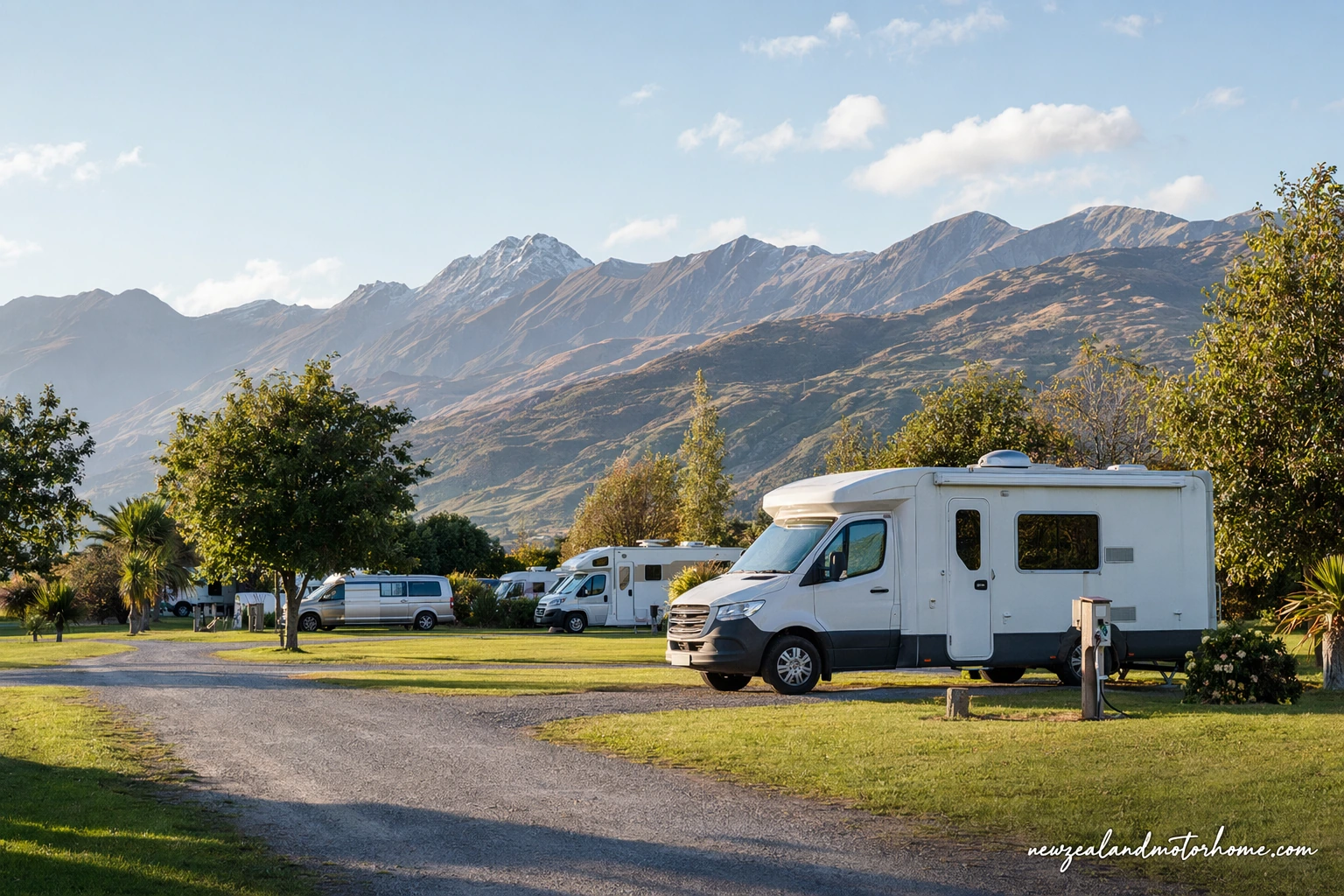
Canterbury is a big, varied region to drive in a campervan: surf beaches and braided rivers on the plains, harbour roads on Banks Peninsula, alpine passes towards Arthur’s Pass and the Mackenzie Country, and small towns with practical overnight stops in between. The best holiday parks Canterbury offers are not all trying to do the same job — some are easy powered-site bases near Christchurch, some are quieter campgrounds by the sea, and some are useful reset stops for water, laundry and dump station access before you head inland.
This guide is written for self-drive travellers sleeping in their hired motorhome or campervan. You’ll find how to think about powered and unpowered sites, where freedom camping rules can trip people up, what driving between bases feels like, and which parts of Canterbury suit different styles of trip.
How Canterbury holiday parks are spread out
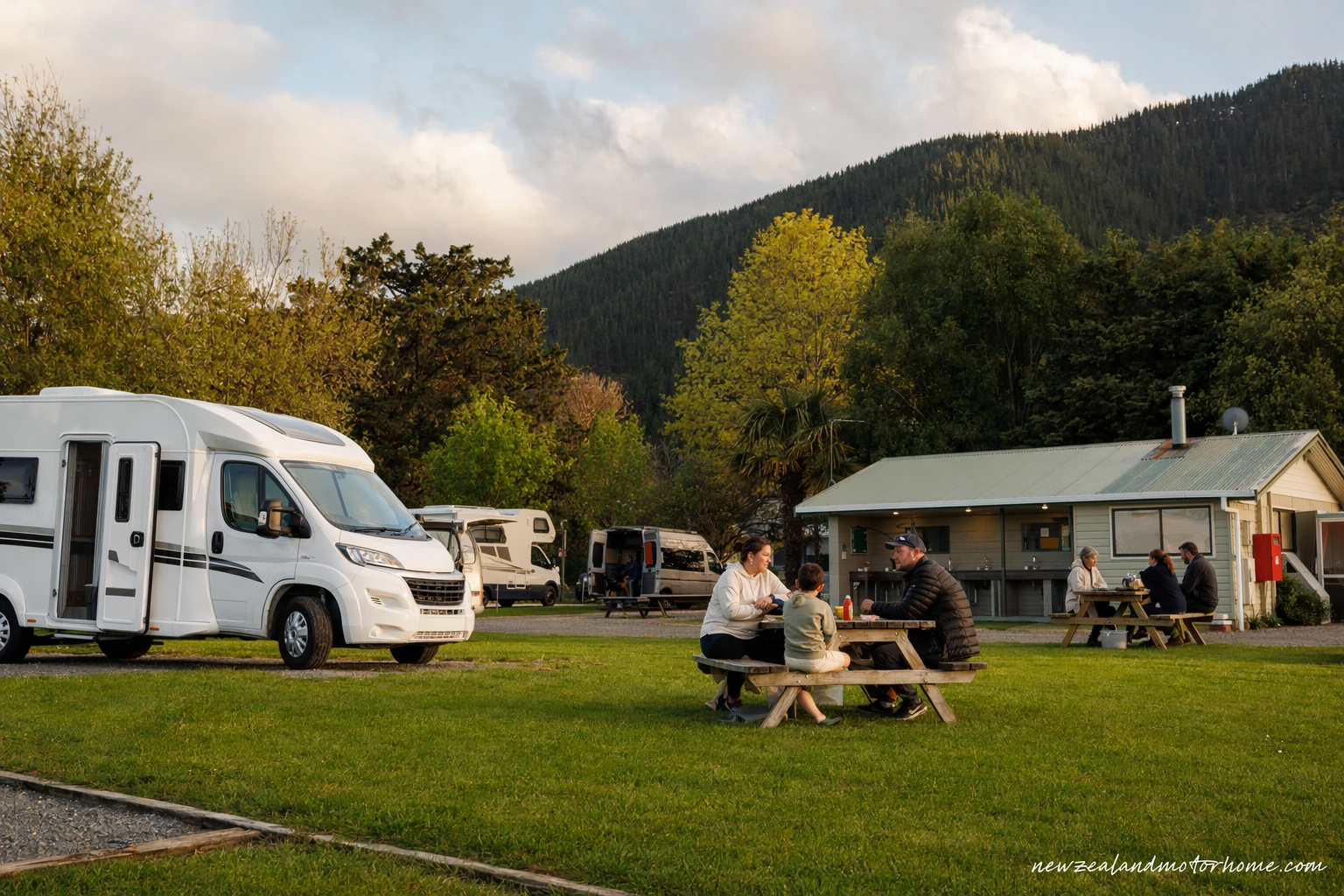
Canterbury is not a single-base region unless you only plan to explore Christchurch and the nearby coast. In a van, it works better as a chain of bases: Christchurch for arrival logistics, Banks Peninsula for harbour scenery, North Canterbury for hot pools and small-town stops, the Mackenzie area for big-sky lakes, and South Canterbury for a slower coastal run.
Many campsites Canterbury-wide are clustered around places that already make sense for a motorhome: town edges, beach settlements, lake villages and thermal resort areas. That usually means easier access to groceries, LPG bottle swaps or fills, fresh water, and a dump station either on-site or nearby.
- Christchurch and surrounds: handy for airport pick-ups, first-night powered sites, supermarket stocking and checking your van setup.
- Banks Peninsula: scenic but tighter driving; better suited to confident drivers and shorter vans in some bays.
- Kaikōura and North Canterbury: coastal stops, hot pools, and good break points on longer drives.
- Mackenzie and inland Canterbury: lakes, mountains and darker skies, but more exposure to wind, frost and busy peak-season sites.
- Timaru and South Canterbury: practical coastal bases for laundry, resupply and a gentler drive south or inland.
Powered sites, unpowered sites and what to book
If you are hiring a motorhome, a powered site is often worth booking every few nights, even if your van is certified self-contained. Powered sites Canterbury travellers use most are often in the busier towns and lake areas, where you can recharge house batteries, run heating more comfortably in colder months, and use the camp kitchen or laundry without thinking about power draw.
Unpowered sites suit shorter overnight stops when your batteries, fresh water and grey-water capacity are in good shape. They are also useful if you prefer a quieter corner of a campground, but always check whether the site surface is suitable for your van length and weight, especially after rain or in winter.
Rather than chasing a generic top 10 holiday park Canterbury list, choose by what your van needs next: a dump station, hot showers, level parking, a safe walk into town, or an easy morning exit. The best stop on one night might simply be the one that lets you plug in, empty tanks and sleep level before the next long drive.
Freedom camping and council rules in Canterbury
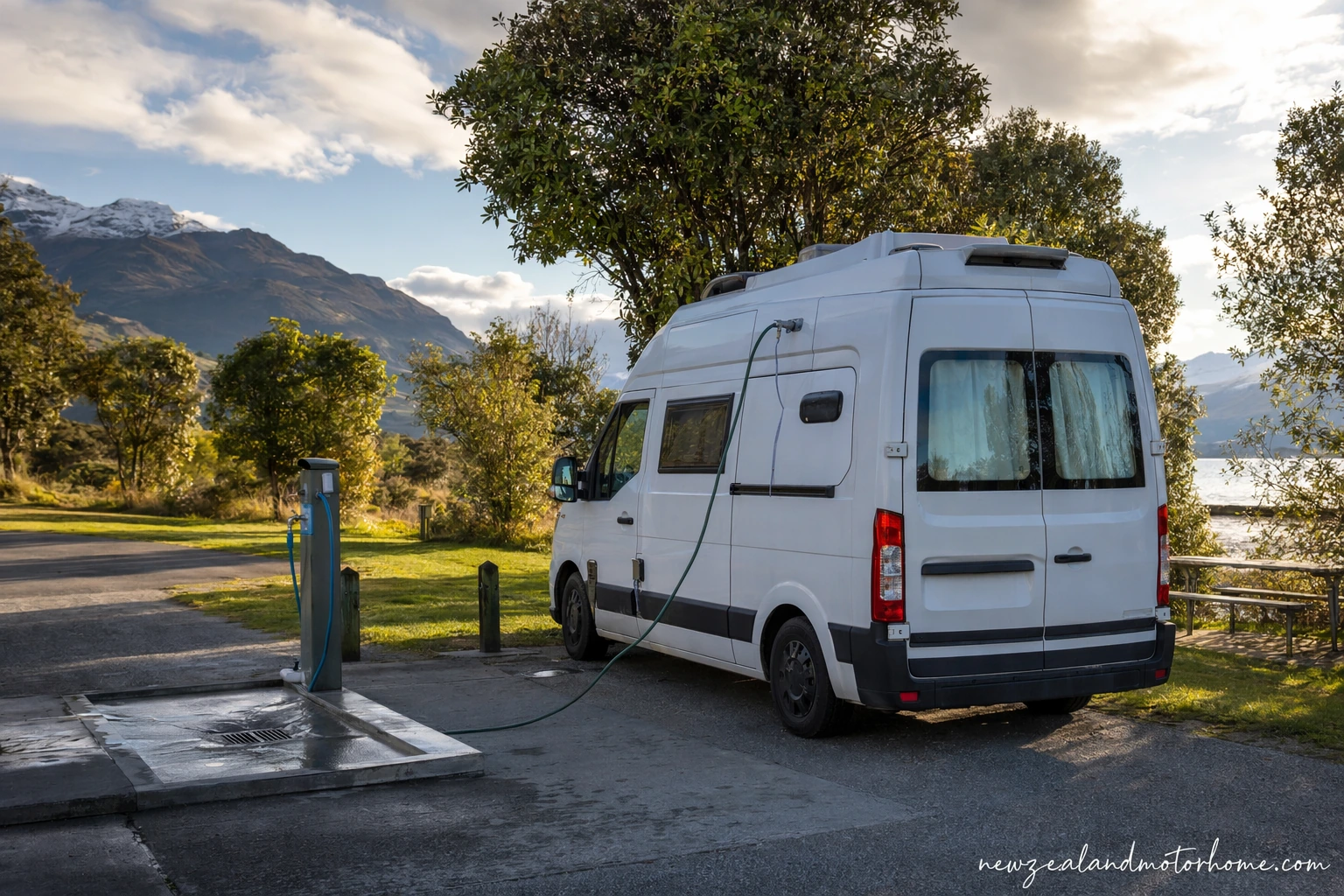
Freedom camping in Canterbury is not one simple rule across the whole region. Different councils manage different districts, and rules can change between a beach reserve, a town car park, a lakefront area and a rural roadside pull-off. A certified self-contained van gives you more options, but it does not mean you can stay anywhere you like.
In popular areas, especially lakefronts, coastal reserves and places close to Christchurch, restrictions may include no overnighting, marked bays only, maximum-night limits, or self-contained vehicles only. If a sign says no camping, treat that as final — it is not worth risking a fine or damaging access for other van travellers.
- Check the local council freedom camping map or signage before settling in for the night.
- Arrive in daylight so you can read signs, assess slope and avoid blocking access.
- Use your onboard toilet; do not rely on public toilets as your camping facility.
- Empty grey and black water only at approved dump stations.
- Leave early and quietly if you are in a shared public space near homes or reserves.
Driving between Canterbury campgrounds
On the map, Canterbury can look quick because the plains are open and roads are fairly direct. In a campervan, build in more time. Nor’west winds can make the open highways feel exposed, alpine roads can change quickly in winter, and Banks Peninsula roads are narrow, winding and steep in places.
Keep your van’s height and length in mind when choosing scenic detours. Some harbour roads and rural campground entrances are easier in a compact campervan than in a longer motorhome. If you are driving a larger vehicle, look for holiday parks with clear access, turning room, and sites that are not tucked under low trees.
A good rhythm is to avoid arriving at camp right on dusk. You want time to find your bay, plug in safely, check whether the site is level, and sort dinner before the temperature drops. If you are unsure how many kilometres to link together, a local route chat through /talk-to-us/ can help shape the overnight stops around your van size and travel pace.
What each Canterbury base unlocks
Choosing between campgrounds Canterbury-wide is less about finding one perfect park and more about matching the base to the day you want. A Christchurch-area holiday park is ideal for the first or last night because you can stock the pantry, learn the van systems and avoid rushing after a flight. A Banks Peninsula base gives you harbour walks, wildlife cruises and village evenings, but the drive in deserves daylight and patience.
North Canterbury works well when you want a softer travel day: hot pools, food stops, vineyard country and coast access without pushing deep into the mountains. Inland Canterbury and the Mackenzie area are where you get lake views, starry nights and alpine day trips, but you should book ahead in peak summer and around school holidays.
South Canterbury is underrated for motorhome travellers who need a practical reset. It can be a calmer place to do washing, refill fresh water, use a dump station and break the journey between the lakes, Christchurch and the lower South Island.
Campervan services to look for before you book
Not every holiday park has the same campervan facilities, and some smaller beach camps may be more basic than a town-based park. Before you book, check whether the site is powered or unpowered, whether your vehicle length is accepted, and whether the access road suits your comfort level.
For longer Canterbury loops, plan your service stops as carefully as your scenic stops. Fresh-water fills, dump stations and LPG access are not hard to find in the main towns, but they are easier to manage before you head to smaller settlements or inland areas where opening hours and options may be limited.
- Dump station: on-site or close enough to use before departure.
- Fresh water: suitable fill point for campervans, not just kitchen taps.
- Power: powered sites for battery charging and colder nights.
- Site size: enough room for your van length, awning side and safe manoeuvring.
- Surface: firm, level ground, especially after rain or during frosty months.
Common questions
Do I need to book holiday parks in Canterbury ahead?
Are there many powered sites in Canterbury for motorhomes?
Can I freedom camp instead of using Canterbury holiday parks?
Where should I spend my first night after picking up a campervan in Christchurch?
Are Canterbury roads suitable for larger motorhomes?
Do Canterbury campgrounds usually have dump stations?
Have a planner shape this for your dates
Send a short outline — your dates, party size, and the kind of trip you want. A planner replies with a vehicle recommendation, a paced route, and the realistic budget.