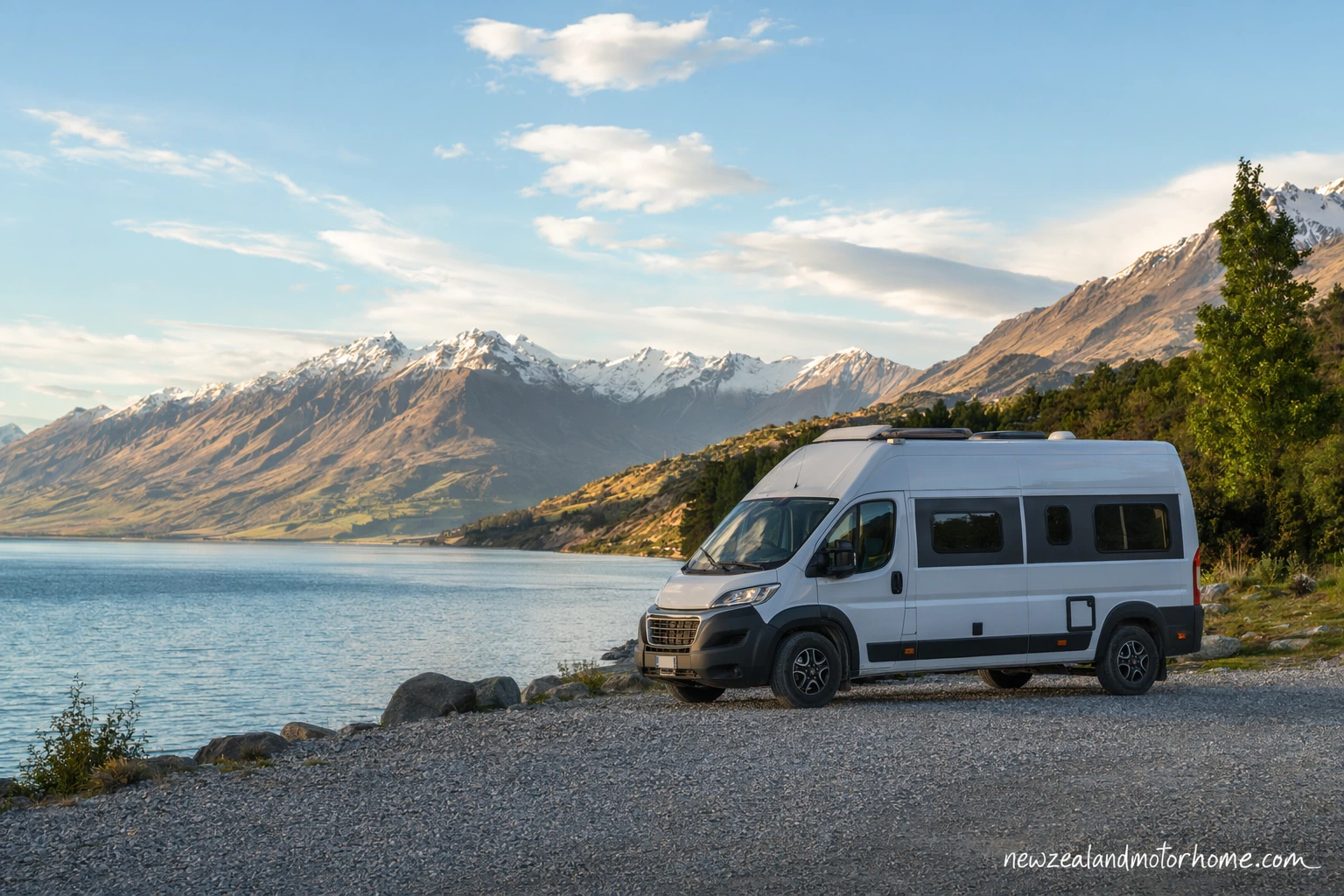
New Zealand campervan holidays with flights, planned for the road
- Best start cities: Auckland, Christchurch, Queenstown
- First night: book close to the depot
- Site mix: powered, unpowered and self-contained stops
- Allow: slower driving days than the map suggests
- Final day: dump, fuel and return near the airport
New Zealand campervan holidays with flights are simple in idea: fly into Aotearoa, collect a self-contained campervan or motorhome, then use your van as both transport and accommodation. The trick is making the flight times, depot pick-up, first supermarket stop and first overnight site work together, especially after a long-haul arrival.
This page is for travellers hiring a van and sleeping in it, not for rental-car touring. We’ll cover where flights fit into the van side of the trip, how to choose a start city, what to check before you leave the depot, and how to plan a route with campsites, dump stations, fresh water and realistic driving days.
How a fly-drive campervan trip works in New Zealand
A fly-drive campervan holiday usually starts with an international or domestic flight into Auckland, Christchurch or Queenstown, followed by a depot pick-up nearby. Depots are not always inside the airport terminal, so allow time for transfers, paperwork, a vehicle briefing and loading your bags into the van.
Once you have the keys, treat the first day as a settling-in day rather than the start of a big drive. You’ll need to learn the van’s dimensions, check the fridge and gas, fill the pantry, and find your first powered or unpowered site before you are tired.
- Book your first night close to the pick-up city, especially after an overnight flight.
- Check whether your van is certified self-contained before relying on freedom camping areas.
- Ask where the LPG bottle, fresh-water fill, waste-water tank and toilet cassette are located.
- Save your first supermarket and fuel stop before leaving the urban area.
Choosing your arrival city and route direction
Auckland works well for North Island loops, the Coromandel, Rotorua, the Bay of Islands and longer trips south. Christchurch is the classic South Island motorhome gateway, with easy access to the Mackenzie Country, the West Coast, Kaikōura and Central Otago. Queenstown can suit shorter lower South Island itineraries, but larger vans need extra care on alpine roads and in busy town parking.
Think about your flight path and your van route together. A one-way hire can save backtracking, but it also means planning your final dump station, fuel top-up and depot return more carefully. A loop is often gentler if you prefer a slower pace and fewer fixed commitments.
- For a first trip, allow more nights than you think you need rather than trying to cross both islands quickly.
- Check ferry timing early if your campervan route crosses Cook Strait.
- Match your van size to the roads you want to drive: compact campervans are easier in towns, while larger motorhomes need more room at viewpoints and campsites.
- Build in a weather-flex night for alpine passes, ferries or coastal driving.
Planning the first 24 hours with your van
The first day sets the tone. After a long flight, even familiar tasks take longer: adjusting mirrors, understanding the reversing camera, finding the water fill, learning how the house battery behaves, and getting used to driving on the left if that is new to you.
A good arrival plan is: collect the van, inspect it slowly, buy groceries, fill fresh water if needed, then drive a short distance to a booked campsite. A powered site on night one is useful because you can charge devices, test the heater, run the fridge confidently and unpack without worrying about the leisure battery.
- Photograph any existing vehicle marks before leaving the depot.
- Check the height sticker and keep it visible for fuel stations, car parks and low branches.
- Confirm where to empty grey water and the toilet cassette; never use roadside drains.
- Choose a campsite with easy late-afternoon access rather than a remote gravel road on night one.
Campsites, freedom camping and self-containment
New Zealand has a mix of holiday parks, DOC campsites, council areas and private overnight stops. Holiday parks are the easiest option when you want showers, laundry, powered sites, dump stations and a reliable place to arrive after a travel day. DOC and basic campsites can be beautiful, but facilities vary, and some are better suited to smaller vans.
Freedom camping is not a blanket right to park anywhere. Rules change between districts, and many legal freedom camping spots require a certified self-contained vehicle. Always read local signage on arrival, use designated spaces if marked, and leave room for other vans to turn safely.
- Powered sites suit colder nights, laptop charging, electric cooking appliances and longer stays.
- Unpowered sites work well if your house battery, solar and LPG systems are understood and topped up.
- Dump stations are common in towns and holiday parks, but remote stretches need advance planning.
- Carry drinking water, but refill only from potable taps marked as safe for drinking.
Flights, seasons and realistic driving days
Flight arrival times matter as much as the month you travel. A morning arrival gives you breathing room for van collection and your first campsite; an afternoon arrival may be better paired with an airport hotel and depot pick-up the next day. In winter, short daylight hours make this even more important, particularly in the South Island.
New Zealand distances can be deceptive in a motorhome. A 250-kilometre day may include winding roads, roadworks, one-lane bridges, photo stops and slow climbs. Plan around time in the seat, not just map distance, and avoid arriving at unfamiliar campsites in the dark.
- Summer brings long evenings but busier campsites, so book key nights earlier.
- Autumn is settled for many routes, with cooler nights that may favour powered sites.
- Winter travel needs alpine-road checks, warm bedding and careful LPG planning.
- Spring can mix sunshine, rain and wind; allow spare time for route changes.
How to shape a fly-drive itinerary that suits your van
The best itinerary is not the one with the most pins on the map; it is the one that gives you time to park properly, cook dinner, walk to the lake or beach, and keep the van systems in good order. Every few days, plan a practical stop for laundry, fresh water, rubbish, groceries, fuel and a proper dump station.
If you want help matching flights, depot cities, overnight stops and driving pace, you can use our plan-your-trip step and tell us how you like to travel. We look at the campervan side first: van size, route shape, campsite style, self-containment needs and where the driving days might feel too long.
- Keep one or two two-night stops in the plan so the van is not packed up every morning.
- Check parking access before adding town-centre cafés, short walks or ferry terminals.
- Use holiday parks before or after remote sections to reset water, waste and batteries.
- Leave your final night close enough to the depot for fuel, cleaning and a calm return.
Common questions
Should I collect my campervan on the same day my flight lands?
You can, but only if the flight lands early enough and you are comfortable driving after travel. For long-haul arrivals, many travellers have a better first day by sleeping near the airport, then collecting the van fresh the next morning.
Which airport is best for new zealand campervan holidays with flights?
Auckland suits North Island trips and longer north-to-south routes. Christchurch is often the easiest South Island starting point, while Queenstown can work for shorter southern itineraries if you are comfortable with busier roads and tighter parking.
Do I need a powered campsite every night?
No, but powered sites are handy on arrival night, in cold weather, or after several nights off-grid. Unpowered camping works well when you understand your house battery, LPG, fridge and water use.
Can I freedom camp straight away after picking up the van?
Only if the location allows it and your vehicle meets the local requirements, usually including certified self-containment. Check signs every time, because rules differ between councils and some areas prohibit overnight parking completely.
How far should we drive each day in a motorhome?
For a relaxed trip, many campervan travellers are happier with shorter days and regular two-night stops. Winding roads, one-lane bridges, weather and scenic pull-offs mean a distance that looks short on a map can still take most of the day.
What should we do before returning the van for our flight home?
Plan your final night close to the return city. Allow time to empty grey water and the toilet cassette, refill fuel as required, remove rubbish, pack bags properly and reach the depot without rushing before your flight.
Have a planner shape this for your dates
Send a short outline — your dates, party size, and the kind of trip you want. A planner replies with a vehicle recommendation, a paced route, and the realistic budget.