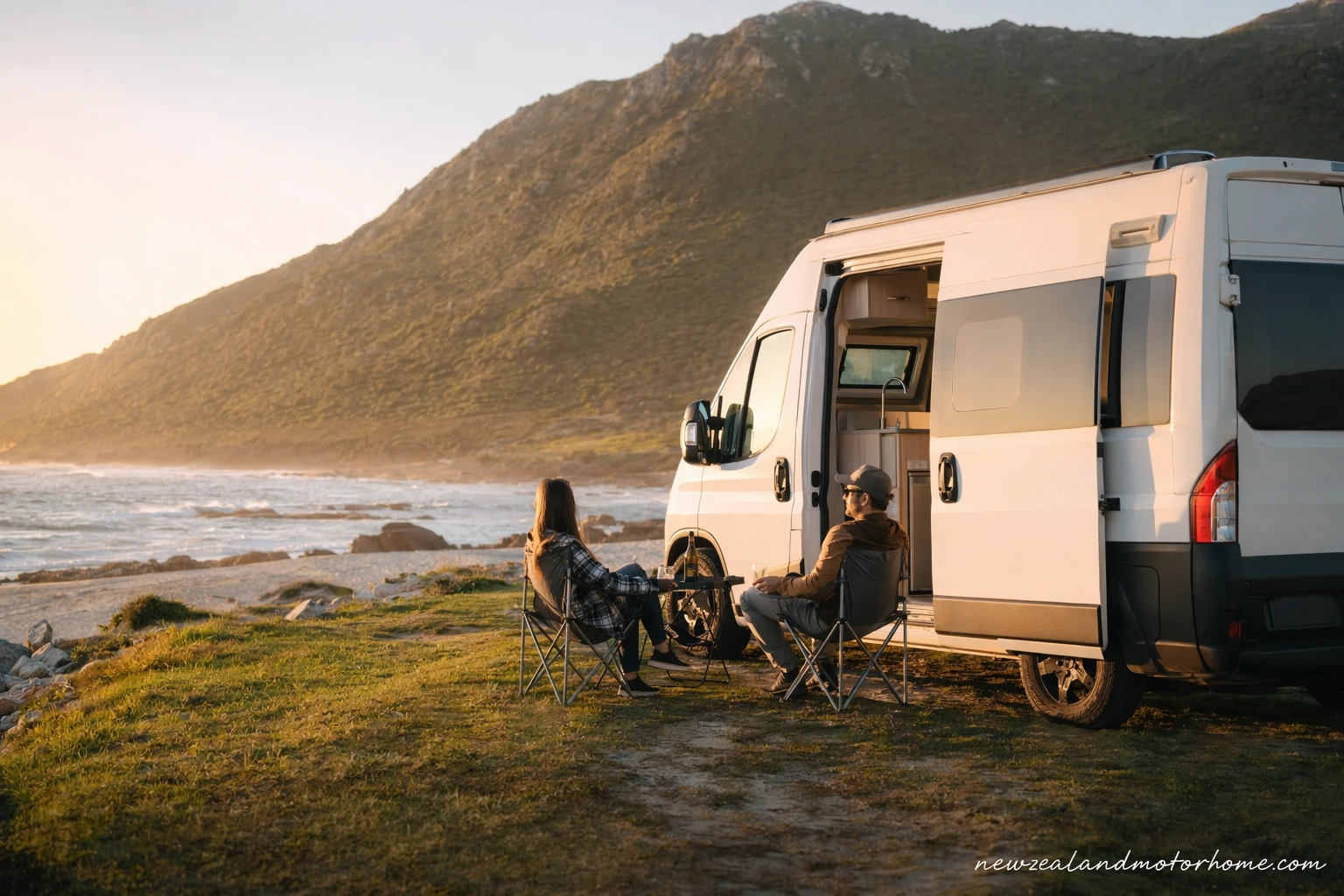
Campervan holidays for couples nz: quiet roads, good stops and room to breathe
- Best with 7–14+ days
- Mix powered and unpowered sites
- Certified self-contained recommended
- Two-berth to compact motorhome
- Book peak-season stops early
A couples’ campervan holiday in New Zealand is less about ticking off every viewpoint and more about choosing the right rhythm: a late start beside a lake, a short walk before dinner, and a powered site when you want the heater, hot showers and an easy night.
This guide is written for two people travelling in a self-drive campervan or motorhome, sleeping in the van and planning each day around parking, overnight stops, water, LPG, dump stations and road comfort. You’ll find practical ways to shape a trip that feels relaxed rather than cramped, whether it is your first van hire or your first New Zealand road trip together.
What makes a couples’ campervan trip work well
The best campervan holidays for couples nz usually have a gentle pace. Two people can move quickly in a compact van, but the holiday feels better when you leave time to park properly, level the van, cook a meal and enjoy where you have stopped.
Think in short driving blocks, especially on winding coastal roads and alpine passes. A three-hour drive on a New Zealand map can feel much longer in a taller motorhome when you add photo stops, one-lane bridges, slower corners and supermarket or fuel stops.
- Choose fewer regions: one island in 7–10 days is usually more enjoyable than racing both.
- Mix powered and unpowered nights: use powered sites for charging, heating, laundry and longer showers, then choose quieter basic camps when your batteries and tanks are ready.
- Keep dinner simple: park before dark, especially if you need to reverse onto a site or find the dump station before reception closes.
- Plan private time: a small van feels bigger when you include walks, picnic stops and two-night stays.
Choosing a van for two people
For couples, the big decision is not just size; it is layout. A compact two-berth camper is easier to park in town and at beach car parks, while a larger motorhome may give you a fixed bed, indoor shower and more space when the weather turns.
If you are travelling in winter, or spending time on the West Coast or in the deep south, a self-contained motorhome with good heating and an internal bathroom can be worth the extra length. In summer, a smaller certified self-contained van can be easier for vineyard lunches, ferry queues, narrow campground lanes and scenic side roads.
- Check the bed: make sure you know whether it is fixed, converted from the lounge, or made up each night.
- Check height and length: some older bridges, car parks and tree-lined campsites suit smaller vans better.
- Ask about power: understand the house battery, solar, 240V plug-in use, and how long you can comfortably stay unpowered.
- Confirm certification: freedom camping options depend on having the right self-containment certification and following local rules.
Romantic routes without overloading the days
New Zealand makes it tempting to keep driving, but couples’ trips work best when the route has natural pauses. Build around two-night stops in places where you can walk from the campground, cook at the van, or leave the motorhome parked while you explore on foot.
In the South Island, good pairings include lake country and the Mackenzie Basin, Tasman beaches and Abel Tasman, or a slower loop through Central Otago with vineyards, cycle trails and historic towns. In the North Island, consider Coromandel beaches, Rotorua and Taupō hot pools, Northland bays, or a gentler west-to-east loop with harbours, bush walks and coastal campgrounds.
Try to arrive at overnight stops in daylight. It is easier to choose a level site, connect to power, find the fresh-water tap, and sort grey water before you start thinking about dinner. If you want help matching a route to your van size, travel dates and comfort level, you can use the talk-to-us step as a simple plan-your-trip starting point.
Overnight stops: powered comfort or quiet freedom camping
Couples often enjoy mixing site types. A holiday park gives you powered sites, showers, laundry, camp kitchens and a straightforward place to top up fresh water or empty waste. A scenic council or DOC-style campground may feel more peaceful, but facilities can be basic and you may need to arrive with full water, charged batteries and an empty grey-water tank.
Freedom camping can be a lovely part of a couples’ trip, but it is not a free-for-all. Rules vary by district, some places are restricted to certified self-contained vehicles, and popular lakeside or beach spots can fill early in summer. Always read the local signs where you park the van, not just what an app or old blog post says.
- Powered sites: useful every few nights for heating, charging devices, running appliances and resetting the van.
- Unpowered sites: best when you are confident about battery charge, LPG levels and water use.
- Freedom camping: check self-containment rules, maximum stay limits and whether sleeping overnight is actually permitted.
- Two-night stays: ideal for couples because you unpack once, slow down and avoid daily site-hunting.
Van routines that keep the trip relaxed
A couple in a campervan shares a small space, so little routines matter. Keep one bag or cupboard each, decide where wet jackets and towels go, and do a quick reset before driving: roof vents closed, drawers latched, water pump off and power cable packed.
Plan service stops before they become urgent. Dump stations are common in many towns and holiday parks, but not every scenic detour has one. Fresh-water taps are not always beside the dump point, and LPG bottle swaps or refills can be less convenient in remote areas, especially on public holidays.
- Dump early: do not wait until the cassette or grey tank is full before looking for a dump station.
- Top up fresh water: especially before basic campgrounds, beaches and national park edges.
- Watch LPG: heating, hot water and cooking all draw on it, so winter couples should check levels often.
- Drive with the day in mind: park nose-out where possible, leave space for awnings and avoid soft grass after heavy rain.
Best seasons for a couples’ campervan holiday
Summer gives long evenings, warm swims and a wide choice of campgrounds, but it also brings busier roads, booked-out powered sites and more pressure on popular freedom camping areas. If you are travelling over Christmas, New Year or school holidays, book key overnight stops early and keep arrival times realistic.
Autumn is excellent for couples who like calmer roads, golden vineyards and cool sleeping weather. Spring brings blossom, waterfalls and changeable conditions, while winter can be wonderfully quiet if your van has proper heating, you are comfortable with shorter daylight hours, and you check road conditions before alpine routes.
Whatever the season, choose a route that leaves room for weather. A rainy day is easier to enjoy when you are on a powered site with a good lounge setup, dry socks, full LPG and no need to drive a long, twisty road in the dark.
Common questions
How many days do couples need for a campervan holiday in New Zealand?
Allow at least 7–10 days for one island, or 14 days or more if you want a relaxed taste of both islands. Couples usually enjoy the trip more with two-night stops and shorter driving days rather than changing campsites every night.
Is a small campervan big enough for two people?
Yes, if you pack lightly and are comfortable converting the bed or living more simply. For longer trips, winter travel, or anyone wanting an indoor bathroom, a slightly larger certified self-contained motorhome can feel much easier.
Do we need powered sites every night?
No, but most couples find a powered site every second or third night useful for charging, heating, laundry and a proper reset. How often you need power depends on the van battery, solar, fridge use, weather and how much time you spend parked.
Can couples freedom camp in New Zealand?
Only where local rules allow it, and usually only in a certified self-contained vehicle. Always check signs at the parking area, respect maximum stay limits, and use dump stations rather than sinks, drains or public toilets for van waste.
What should we book ahead for a romantic campervan trip?
Book your campervan, ferry crossings if travelling between islands, and key powered sites in busy places or peak season. You can leave some quieter nights flexible, but do not rely on turning up late to popular lakes, beaches or national park gateways.
Are New Zealand roads difficult in a motorhome?
They are very manageable with care, but many are narrower, hillier and more winding than visitors expect. Allow extra time, use slow-vehicle bays, avoid rushing at dusk, and be mindful of your van’s height, width and rear overhang in car parks and campgrounds.
Have a planner shape this for your dates
Send a short outline — your dates, party size, and the kind of trip you want. A planner replies with a vehicle recommendation, a paced route, and the realistic budget.