- Best with 10–21 days
- Powered sites suit family reset nights
- Check self-containment rules
- Keep driving days short
- Book early in school holidays
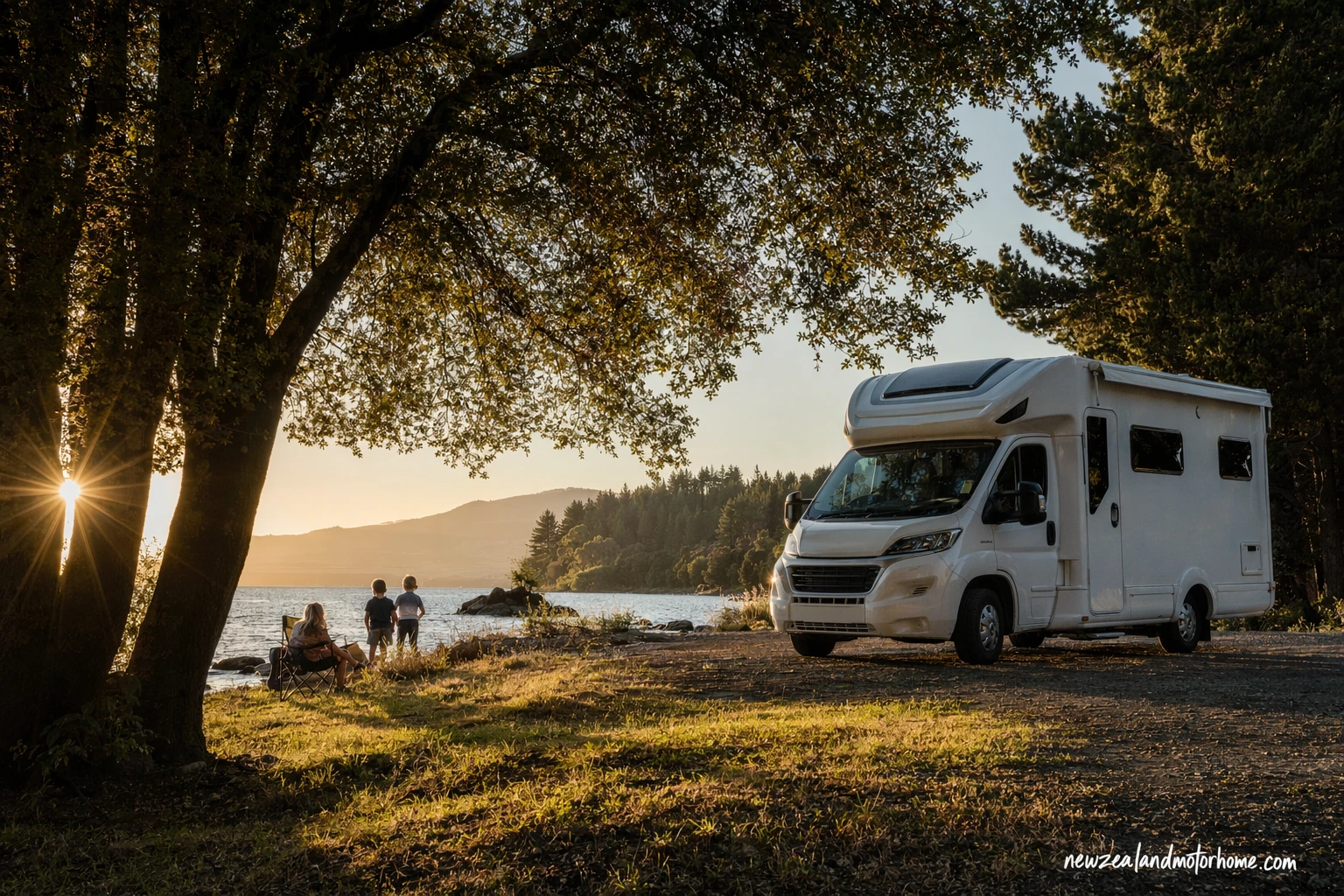
Family campervan holidays New Zealand-wide work best when the van is part of the plan, not just the transport. You are choosing where everyone sleeps, where wet towels dry, how far little legs can sit between stops, and which overnight sites give you the breathing space to cook, shower and reset.
This guide is written for self-drive families hiring a campervan or motorhome and sleeping in it each night. We cover van layout, family-friendly driving days, powered sites, freedom camping rules, dump stations, fresh-water fills and the little road details that make a New Zealand trip feel easier with children on board.
How a family campervan holiday works in New Zealand
A family campervan holiday is a moving base camp. Your beds, rain jackets, snacks, books and beach gear come with you, so you can stop for lunch beside a lake, change into dry clothes after a swim, then carry on to your overnight site without repacking bags every day.
The trade-off is that you need to think like a van traveller. Each day has practical jobs: finding a legal place to park overnight, topping up fresh water, emptying grey water and toilet waste at a dump station, charging devices, and choosing roads that suit the size of your vehicle.
- Best rhythm: two or three nights in key places, with shorter one-night hops between them.
- Daily driving: families usually do better with fewer kilometres and more playground, beach or bush stops.
- Overnight style: holiday parks are easiest with children; DOC-style camps suit simpler nights; freedom camping needs care and the right certification.
Choosing the right campervan for children
Van choice matters more on a family trip than on a couple's getaway. A layout that looks fine in photos can feel tight once car seats, school-age legs, food boxes and wet shoes are all inside. Check the sleeping arrangement, whether beds need rebuilding every night, and how much floor space remains when everyone is indoors on a rainy evening.
For younger children, ask about child restraint compatibility before you book. For older kids, a separate bed zone or over-cab bed can give everyone a little more calm at bedtime. A toilet and shower are useful, but remember the tanks are limited; most families still use holiday park facilities often to stretch water and reduce dump station stops.
- Length: a longer motorhome may be more comfortable at night but needs more care in supermarket car parks and small seaside towns.
- Height: know your van height before entering covered parking, drive-throughs or low shelter areas.
- Power: a powered site helps with heating, charging and running the fridge steadily after busy days.
- Storage: soft bags are easier than hard suitcases in most campervan cupboards.
Build routes around family driving days, not map distance
New Zealand roads are often slower than they look on a map. A 200-kilometre day can include winding hill roads, single-lane bridges, roadworks, stock trucks, scenic stops and small-town errands. In a motorhome, plan by time and patience rather than distance.
Good family routes link short drives with practical overnight bases. In the North Island, many families enjoy shaping a loop around beaches, geothermal stops and lake towns, using holiday parks as regular reset points. In the South Island, build in extra time for alpine passes, West Coast weather, ferry timing and the temptation to stop at every river, glacier viewpoint and lakeside picnic area.
- Keep most driving days under three hours if you can, especially with younger children.
- Plan a proper van park-up before dinner, not after dark when sites are harder to judge.
- Add buffer days near ferry crossings, mountain passes or long coastal sections.
- Use town stops for groceries, LPG bottle swaps or fills, laundry and playground time in one hit.
If you want a route checked against your dates, van size and children's ages, you can use the talk-to-us step and we will help shape a practical self-drive plan.
Where to sleep: holiday parks, DOC camps and freedom camping
Holiday parks are the easy option for family campervan holidays in New Zealand. You can book a powered site, plug in, use the shared kitchen if the van feels cramped, run a proper shower routine, do laundry and let children burn energy in a safer, contained setting. They are also handy for fresh-water fills and sometimes dump stations, though facilities vary by site.
Conservation-style camps and council camps can be lovely, especially beside lakes, beaches and forest edges. They are usually simpler: fewer powered sites, limited lighting, basic toilets, and sometimes no dump station or drinking water. Arrive with full fresh-water tanks and empty waste tanks, and keep a torch handy for night walks to the bathroom.
Freedom camping is not a fallback for when everything else is full. You need a certified self-contained campervan, you must follow the local council or land manager rules, and some areas ban or restrict overnight parking even for certified vehicles. With children, choose freedom camping only when you are confident about toilets, rubbish, road noise and morning pack-up.
- Powered site: best for cold nights, device charging and family reset days.
- Unpowered site: fine for short stays if your battery, gas and water are in good shape.
- Freedom camp: check signs on arrival, not just an app listing, and leave no trace.
Van chores that keep the trip running smoothly
Every family campervan trip has a small maintenance rhythm. It is not difficult, but it is much nicer when you do it before tanks are full, batteries are low or dinner needs cooking. Treat dump stations, water fills and LPG as part of the route rather than emergency stops.
Many towns have public dump stations, and holiday parks may have facilities for guests. Use designated dump points only, rinse gear carefully, and keep children clear while grey water and toilet cassette jobs are done. Fresh water should come from taps marked suitable for drinking; do not assume every tap at a roadside stop is potable.
- Empty grey water and the toilet cassette regularly, especially before remote camps.
- Fill fresh water when you can, but avoid carrying unnecessary weight on long hill drives.
- Check LPG levels before cooler regions or longer cooking stretches.
- Ventilate the van after showers, wet clothes and cooking to reduce condensation.
- Keep a separate day bag for swimsuits, towels, sunscreen and warm layers so the living area does not become a rummage zone.
Season, road and safety notes for families
Summer gives the longest days and easiest outdoor living, but it also means busy holiday parks, popular beach towns and tighter availability around school holidays. Spring and autumn can be brilliant in a campervan if you bring layers and use powered sites on colder nights. Winter is possible, especially on shorter routes, but alpine roads, frost, shorter daylight and drying wet gear need more planning.
Drive the van gently and leave space. New Zealand has plenty of narrow bridges, gravel access roads to scenic camps, steep driveways and tight village parking. If a road looks marginal for your vehicle length or height, do not push on just because a car could manage it. Park a little further away and walk; that is often easier with children than trying to squeeze a motorhome into a small viewpoint bay.
- Check weather and road conditions before mountain passes or remote coastal roads.
- Secure cupboards, car seats, scooters and loose items before driving.
- Use proper pull-offs for photo stops; do not stop on the road shoulder on blind bends.
- Book key overnight stops early during school holidays and long weekends.
Common questions
Is a campervan holiday in New Zealand suitable with young children?
Yes, if you choose the right layout and keep driving days realistic. Holiday parks with powered sites, playgrounds, laundries and family bathrooms make the trip much easier than moving every night to basic camps.
Do we need a certified self-contained campervan for a family trip?
You need current self-containment certification if you want to use many freedom camping areas. Even with certification, local rules still apply, so always check signs and bylaws before staying overnight.
Should families book powered sites in advance?
For school holidays, long weekends and popular lake or beach towns, book ahead where you can. Powered sites are especially useful for heating, charging devices, running appliances confidently and giving the van a proper overnight reset.
How far should we drive each day in a motorhome with kids?
Shorter is usually better. Aim for relaxed days with two to three hours of driving, then add time for food stops, toilets, playgrounds, walks and the slower pace of parking a larger van.
Can we freedom camp as a family in New Zealand?
You can where it is legal, your van is certified self-contained, and the site feels safe and practical. With children, freedom camping works best as an occasional simple night rather than the whole plan, because toilets, showers, laundry and rubbish disposal matter more on a family trip.
What campervan chores should we plan around?
Plan for fresh-water fills, grey-water emptying, toilet cassette dumping, LPG checks, rubbish disposal and laundry. Build these into town stops so they do not interrupt dinner, bedtime or a remote overnight stay.
Have a planner shape this for your dates
Send a short outline — your dates, party size, and the kind of trip you want. A planner replies with a vehicle recommendation, a paced route, and the realistic budget.