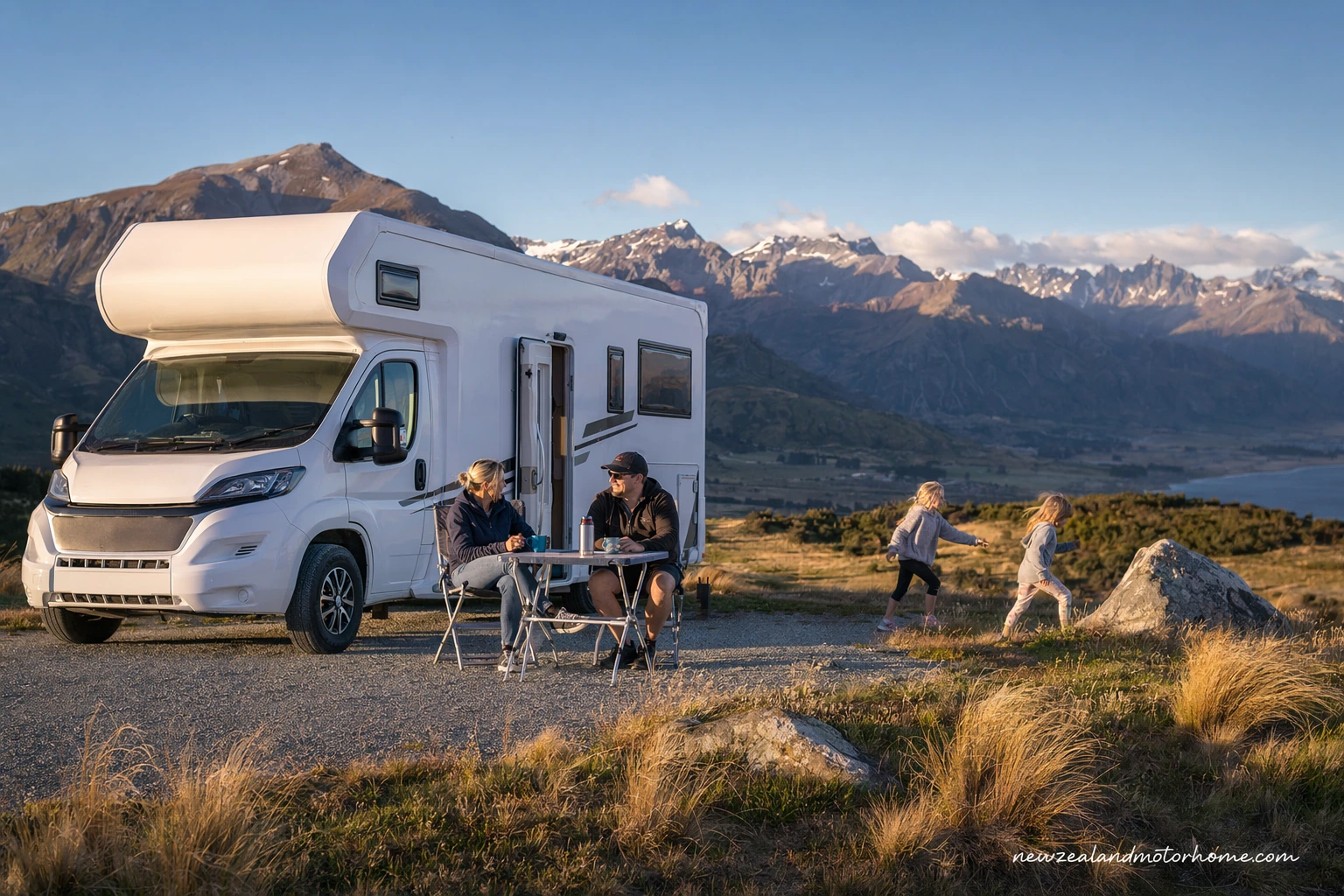
A family school holidays campervan nz package for easy self-drive breaks
- Best for NZ school holidays
- 7–16 nights works well
- Powered sites recommended
- 4–6 berth family vans
- Self-contained options
School holidays are brilliant in a campervan when the days are shaped for real family travel: slow starts, playground stops, an early park-up, and enough powered nights to keep devices, heaters and hot showers from becoming a drama. This family school holidays campervan nz package is built for self-drive travellers hiring a van and sleeping in it each night, not rushing between hotel check-ins.
We help shape the route, van style, overnight rhythm and practical stops around your children’s ages, the season, and how much driving everyone can happily handle. Expect grounded advice on where to park the van, when to choose a holiday park over a basic camp, and how to keep on top of fresh water, LPG, rubbish and dump stations during a busy NZ school break.
What the package can look like
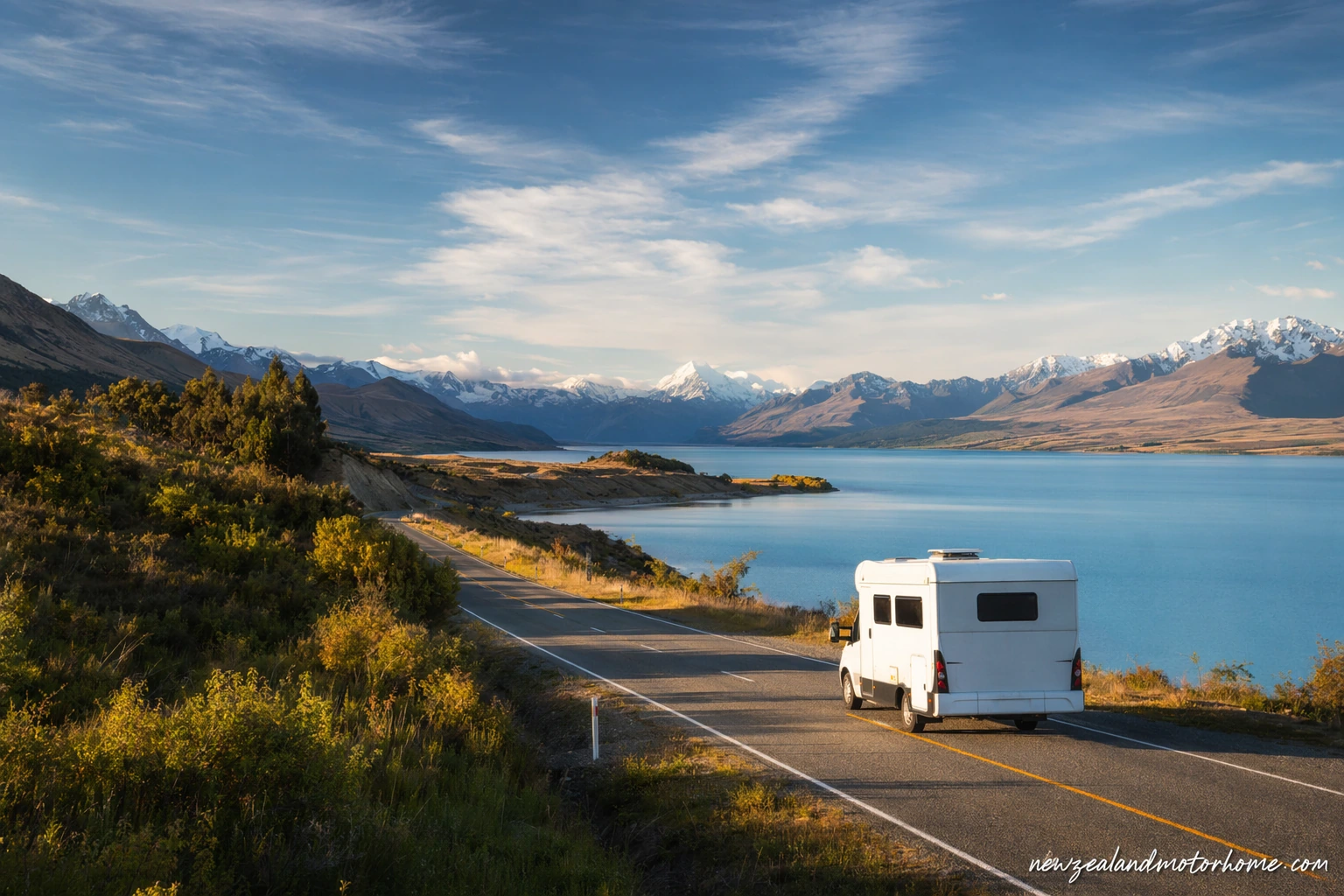
The best school-holiday campervan package starts with the number of nights you have and the airport that makes sense for your family. Some families want a beach-and-geothermal loop from Auckland, others prefer an alpine-and-wildlife loop from Christchurch, and some use a one-way route to avoid backtracking. We keep the route tight enough that you are not packing up the van in the dark every morning.
A typical plan might include:
- 7 to 9 nights for one compact island loop with two-night stops where children can reset.
- 10 to 12 nights for a slower North Island or South Island itinerary with beach, lake and short-walk days.
- 13 to 16 nights if you want to include a Cook Strait ferry crossing without making every day a driving day.
For example, an Auckland loop might use Coromandel, Rotorua, Taupō and Waitomo-style country roads, with powered holiday park nights after longer drives. A Christchurch loop might balance Kaikōura, Hanmer Springs, Lake Tekapo and Ōamaru, keeping an eye on alpine weather, van length on winding roads, and where the next dump station and supermarket sit.
A school-holiday pace that works in a van
In a campervan, the pace matters as much as the map. Children usually travel better when you cover fewer kilometres, park up before dinner, and leave time for swimming pools, scooters, short bush walks or a lakefront kick-around. We try to keep most driving days to a family-friendly length, especially on narrower New Zealand roads where 180 kilometres can feel bigger than it looks on a map.
The package can be paced around practical van-life moments:
- Morning pack-down time, including bedding, child seats and a quick water-level check.
- Lunch stops where a larger motorhome can park safely without squeezing into a town-centre bay.
- Two-night stays near beaches, hot pools or lakes so the van can stay plugged in and settled.
- Later starts on rainy days, with indoor options close enough that you are not stuck driving for hours.
We also factor in school-holiday traffic around popular beaches, ski towns and lakes. Sometimes the smarter plan is to arrive early, choose a powered site with easy access, and use the van as your base rather than shifting every night.
Overnight stops: powered sites, simple camps and freedom camping
School holidays are not the time to assume you will find a last-minute powered site in every favourite holiday town. A good package mixes booked holiday parks, simpler unpowered sites and, where it is legal and suitable, the occasional freedom camping night for certified self-contained campervans. Families often appreciate a powered site every few nights for charging, laundry, hot showers and a proper kitchen clean-up.
We look at overnight stops in campervan terms, not just dots on a route:
- Powered holiday park sites for busy school-holiday towns, winter heater use, and longer two-night stays.
- Unpowered campground nights where the van’s battery, water tank and weather make sense.
- Legal freedom camping areas only if your vehicle has current self-containment certification and the local rules allow it.
- Nearby dump stations, fresh-water fills, rubbish points and LPG options so you are not hunting for basics with tired children onboard.
In some places, the nicest family choice is not the most scenic overnight spot; it is the one with level parking, room to open the side door safely, a dump station on the way out, and a playground within sight of the van.
Choosing the right family campervan
The route should fit the van as well as the family. A high-roof four-berth can feel easy through towns and supermarket car parks, while a larger six-berth motorhome gives more sleeping separation and wet-weather space. We help you think through the trade-offs before the route is locked in.
Useful family checks include:
- Enough belted seats for every passenger, with child-restraint compatibility confirmed before hire.
- Bed layout that works for your children’s ages, especially if anyone wakes early or needs a lower bed.
- Vehicle length and height for holiday park sites, ferry bookings, car parks, overhanging trees and low canopies.
- Fridge size, internal dining space, toilet/shower expectations and storage for scooters, wet jackets or beach gear.
We also think about roads. A longer motorhome is fine on many NZ routes, but winding coastal roads, gravel access roads, steep holiday park driveways and alpine passes all change the feel of a family driving day. If your hire agreement restricts certain roads, the package needs to respect that from the start.
Season-by-season school holiday ideas
Each school holiday has a different campervan feel. Summer is about beaches, shade and booking early; autumn often brings calmer roads and good walking weather; winter suits hot pools, ski-field bases and powered camps; spring can be changeable but lovely for waterfalls, lambs and quieter lake towns.
We tailor the route so the season supports the trip rather than fights it:
- Summer: coastal loops with booked powered sites, swim stops and careful planning around full beach towns.
- Autumn: lakes, short walks and harvest-country drives, with cooler nights that still suit mixed powered and unpowered camping.
- Winter: powered sites for heating, conservative alpine driving, and close checks on road conditions before passes.
- Spring: flexible stops, wet-weather options and fresh-water fills planned before smaller campgrounds close for the day.
For winter school holidays, we are especially careful with mountain roads, snow forecasts and the rental vehicle’s policy around chains or ski-access roads. Sometimes the better family memory is staying lower, using hot pools and scenic walks, and avoiding a stressful icy drive in a large motorhome.
How we tailor the plan with you
Once we know your travel dates, family size, preferred island, van comfort level and must-do places, we shape the package around realistic self-drive days. That includes where to collect and return the campervan, whether a one-way route is worth it, and where school-holiday campground bookings should be prioritised.
The planning can cover route order, overnight style, suggested two-night stops, dump station rhythm, LPG and fresh-water planning, ferry timing if needed, and notes on roads that feel tight in a larger motorhome. We can also flag where to park on arrival days so you are not trying to learn the van, shop for groceries and drive a long distance all at once.
When you are ready to start shaping the details, use the talk to us step and tell us the ages of your children, your dates and the kind of campervan you are considering. The more honest you are about driving tolerance and sleep routines, the better the package will feel on the road.
Common questions
How early should we book powered sites for NZ school holidays?
Can we freedom camp on a family campervan holiday?
What size campervan works best for a family?
Do we need to plug into power every night?
Is one island better for a first family campervan trip?
Can we travel in the winter school holidays?
Have a planner shape this for your dates
Send a short outline — your dates, party size, and the kind of trip you want. A planner replies with a vehicle recommendation, a paced route, and the realistic budget.