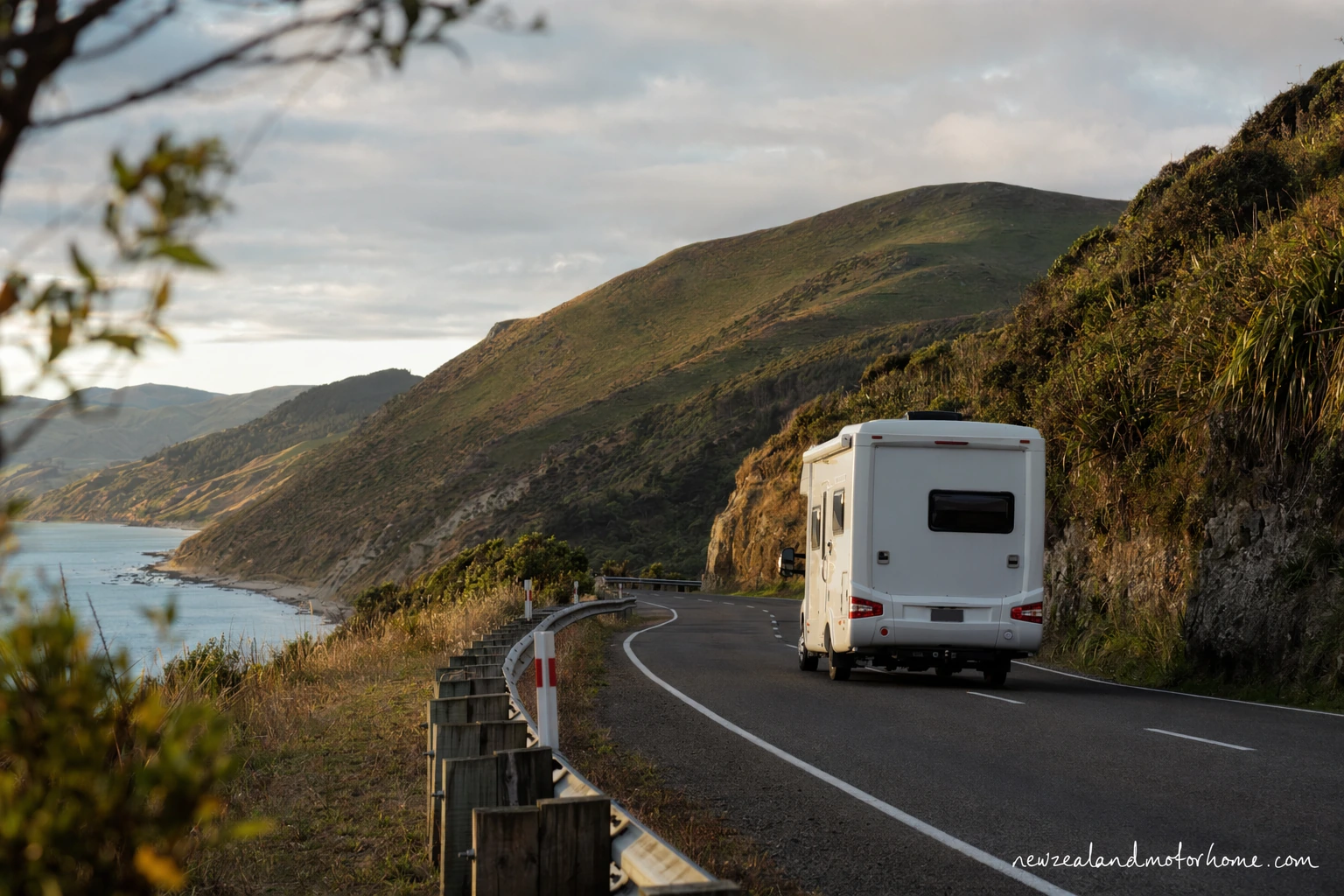
Dunedin to Gisborne campervan route: coast, ferry and East Cape light
- Allow 7–9 days comfortably
- Cook Strait ferry required
- Best in spring to autumn
- Main highways suit most vans
- Powered sites advised every few nights
A Dunedin to Gisborne campervan trip is a proper end-to-end New Zealand drive: Otago harbour mornings, Canterbury plains, the Kaikōura coast, a Cook Strait crossing, then the vineyard and surf country of Hawke’s Bay and Tairāwhiti Gisborne. It is not a route to rush in a tired van after dark; the best days are the ones where you stop early, plug in when you need to, and leave room for weather.
This guide is written for travellers driving and sleeping in their hired campervan or motorhome. You will find a sensible line north, where to break the dunedin to gisborne drive, what roads feel comfortable in a larger vehicle, and the practical bits: dump stations, fresh water, LPG, powered sites, freedom camping rules and ferry planning.
How long to allow and the best overall route
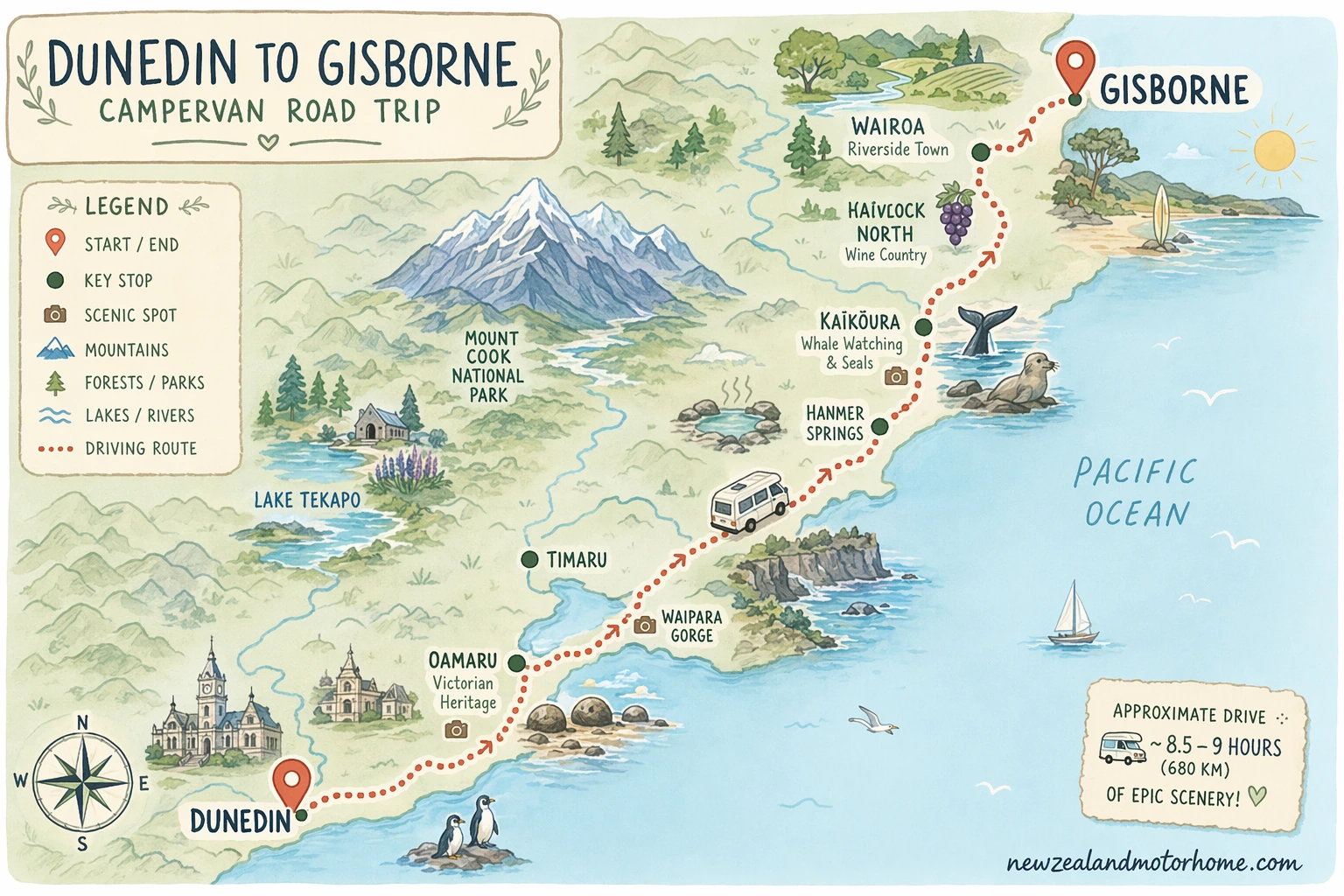
The most direct campervan-friendly line is Dunedin to Oamaru or Timaru, on to Christchurch and Kaikōura, then Picton for the ferry to Wellington. From Wellington, head through the Hutt Valley and over the Remutaka Hill into Wairarapa, continue to Hawke’s Bay, then follow SH2 through Wairoa to Gisborne.
In a motorhome, allow at least five days if you are only moving from A to B. Seven to nine days makes it a far better dunedin to gisborne motorhome road trip, with time to sit out wind on Cook Strait, take a powered night in Christchurch or Napier, and avoid arriving at freedom camping spots in the dark.
- Fast but tiring: 5 days, long driving legs, limited sightseeing.
- Comfortable: 7 days, one ferry day and sensible overnight stops.
- Unhurried: 9+ days, time for Kaikōura, Wairarapa and Hawke’s Bay.
- Vehicle note: book the ferry with your full van length, height, bikes and rear boxes included.
South Island legs: Dunedin to Picton with easy van stops
Leaving Dunedin, SH1 is straightforward for campervans, but give yourself time on the northern motorway grades and around Waikouaiti. Oamaru is a natural first break, with level parking around town edges and holiday park options for a powered night. If you are self-contained, check local signs carefully before settling in; coastal freedom camping rules vary between districts.
From Oamaru or Timaru, the road to Christchurch is wide and practical, though crosswinds can make a high-roof van feel busy across the plains. North of Christchurch, the Kaikōura coast is one of the prettiest sections of the whole trip, but it deserves daylight. Expect curves, tunnels, railway crossings nearby, and busy pull-offs where a long motorhome needs patience.
- Good overnight rhythm: Dunedin to Oamaru or Timaru, then Christchurch or Amberley, then Kaikōura or Picton.
- Dump and water planning: use public dump stations or holiday parks in Dunedin, Oamaru, Timaru, Christchurch, Kaikōura and Picton.
- Powered-site strategy: take power before or after Kaikōura if you have been freedom camping along the coast.
- Parking tip: in Kaikōura, park the van in signed larger-vehicle areas and walk the waterfront rather than squeezing into small town-centre bays.
Cook Strait ferry day: make it part of the plan, not an afterthought
The Picton to Wellington ferry is the hinge of this route. Treat it like a travel day rather than a quick hop: fuel up, empty the toilet cassette, secure cupboards, and arrive with enough time for check-in in a large vehicle lane. You generally cannot stay in the living area during the crossing, so pack a small bag with jackets, chargers, medication and snacks.
Weather can shift ferry times, especially in strong wind, so avoid booking a tight same-day drive from Kaikōura to Wellington to Masterton. If you want help lining the crossing up with the rest of your campsites, our plan-your-trip step is useful before you lock in dates.
- Before boarding: close gas bottles as instructed, latch fridge doors, and stow loose gear.
- Fresh water: travel with enough for the night, but do not carry a completely full tank if you are trying to reduce weight.
- After arrival: Wellington’s urban roads are busy; if you are tired, choose a legal overnight stop nearby rather than pushing over the Remutaka Hill late.
Wellington to Hawke’s Bay: hills, vineyards and sensible overnights
From Wellington, the SH2 route through Lower Hutt and over the Remutaka Hill is suitable for standard campervans and motorhomes, but it is steep and winding. Use lower gears, let faster traffic pass where signed, and keep both hands on the wheel if the wind is up. Longer vans should avoid unnecessary detours onto narrow rural roads unless you have checked turning room.
Wairarapa works well as a quieter reset after the ferry. Masterton, Carterton, Greytown and Martinborough all have places where you can stop for supplies, but overnighting must follow local bylaws. Continue north through the Tararua district toward Dannevirke and Waipukurau, then into Napier or Hastings for a powered site, laundry, supermarket stock-up and a proper dump station stop.
- Suggested night: Wairarapa if your ferry arrives late, or Napier/Hastings if you have a full driving day.
- LPG and groceries: easier in Wellington, Masterton, Hastings and Napier than in smaller rural settlements.
- Van parking: use town-edge parking areas where possible; heritage main streets can have tight angle parks.
- Rest day idea: leave the van plugged in at a holiday park and explore Napier’s waterfront on foot or by bike.
Napier to Gisborne: SH2, Wairoa and the final coastal approach
The Napier to Gisborne section is memorable but not fast. SH2 runs through hill country, river valleys and patches of road that can be affected by heavy rain or slips, so check current road conditions before leaving Hawke’s Bay. In a high-sided campervan, start early, keep fuel in the top half of the tank, and do not rely on mobile coverage for every stretch.
Wairoa is the practical halfway point for a break, fuel, food and checking whether you want to continue or stop. Gisborne itself is a rewarding finish: wide beaches, morning light, and enough town services to clean the van, refill water and reset before your next leg. Freedom camping around Gisborne is controlled by local rules and usually depends on certified self-contained status, so read the signs at each reserve rather than assuming.
- Driving note: allow extra time for bends, roadworks and slow trucks between Napier, Wairoa and Gisborne.
- Overnight options: powered holiday parks in Napier or Gisborne; limited legal freedom camping only where signed.
- Dump stations: plan around Napier/Hastings, Wairoa and Gisborne so you are not carrying a full cassette into beach stops.
- Arrival tip: park once in Gisborne and walk the waterfront; beach car parks can fill quickly in summer.
Campervan essentials for this route
This route crosses both islands and several council areas, so the small practical jobs matter. A certified self-contained van gives you more flexibility, but it does not mean you can stay anywhere. Local bylaws, temporary restrictions and reserve signs always have the final say.
For comfort, alternate freedom camping or unpowered nights with powered holiday park stays. The South Island coast and Cook Strait can be windy and cool even in summer, while Hawke’s Bay and Gisborne can be hot enough to make fridge management and shade important.
- Carry: drinking water, toilet chemicals, levelling blocks, a torch, insect repellent and a spare charging lead.
- Empty early: do not wait until the cassette is full; use dump stations in the larger towns listed along the route.
- Check height: watch motel-style carports, supermarket canopies, trees at older holiday parks and low branches in beach reserves.
- Drive rested: the last hour into a campsite is when van scrapes and missed signs tend to happen.
Keep planning
Common questions
How many days do I need for a Dunedin to Gisborne campervan trip?
Five days is the practical minimum, but seven to nine days is much more comfortable in a campervan. That gives you breathing room for the Cook Strait ferry, slower coastal roads, dump station stops and at least one powered night to recharge everything.
Is the Dunedin to Gisborne drive suitable for a large motorhome?
Yes, if you stick to the main highways and drive to the conditions. The Remutaka Hill, Kaikōura coast and Napier to Gisborne section all need patience in a longer or higher vehicle, especially in wind or wet weather.
Where should I book powered sites on this route?
Good places to plan powered nights are Christchurch or Kaikōura, then Wellington or Wairarapa, and again in Napier or Gisborne. These stops help with laundry, hot showers, battery charging, fresh water and cassette emptying.
Can I freedom camp between Dunedin and Gisborne?
Sometimes, but only where local rules allow it and usually only if your van is certified self-contained. Check signs at every reserve or car park, because freedom camping rules change between councils and are enforced more tightly in popular coastal areas.
Should I drive from Napier to Gisborne in one go?
You can, but do it in daylight and check road conditions first. Many campervan travellers stop in Wairoa for fuel, food, a stretch and a decision on whether to continue or overnight legally nearby.
Do I need to pre-book the Cook Strait ferry with a campervan?
Pre-booking is strongly recommended, especially in summer, school holidays and around public holidays. Enter the full length and height of the vehicle, including bike racks or rear storage, so you are allocated the right space.
Have a planner shape this for your dates
Send a short outline — your dates, party size, and the kind of trip you want. A planner replies with a vehicle recommendation, a paced route, and the realistic budget.