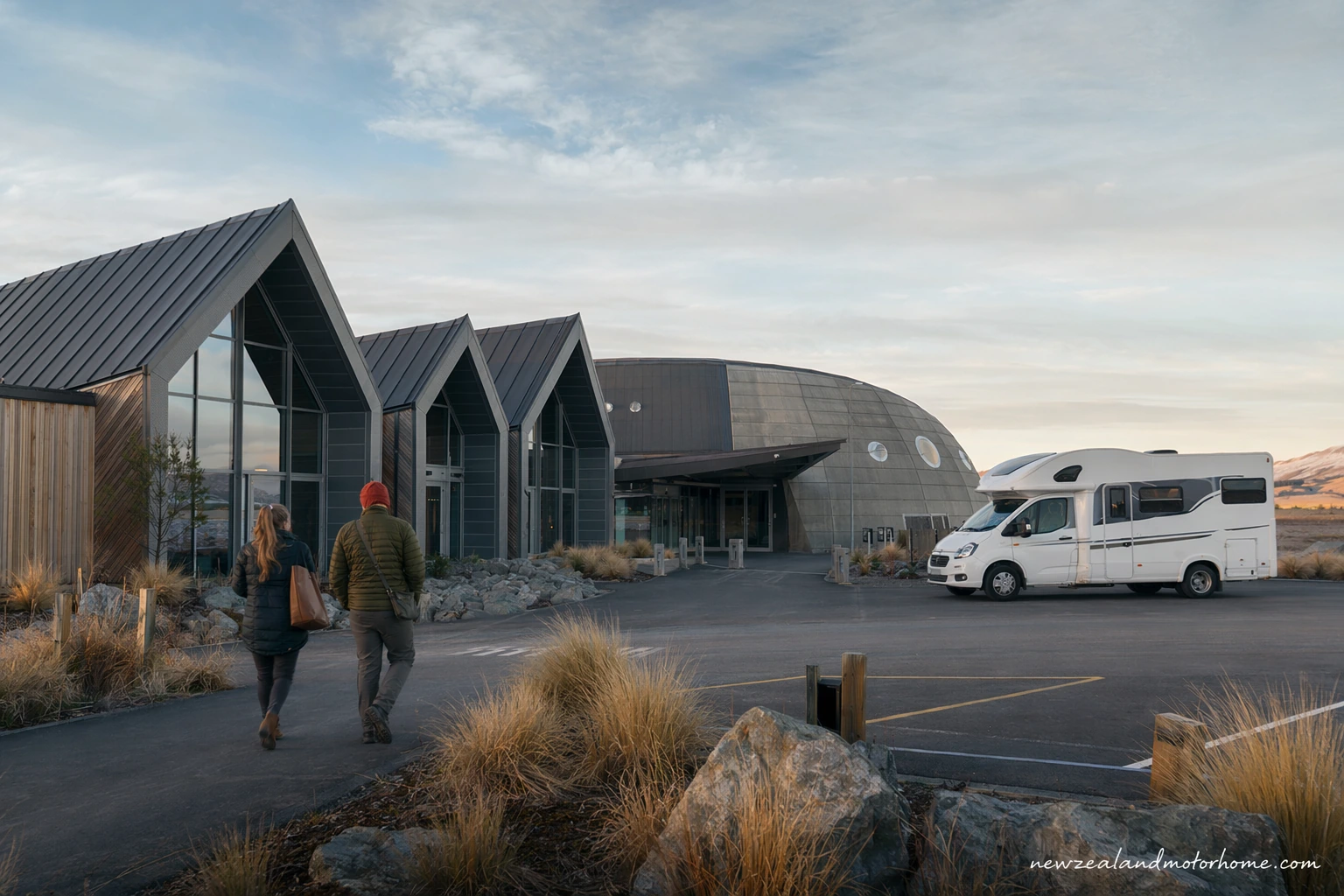
Visiting International Antarctic Centre by campervan: parking and stops
- Allow 2–3 hours
- Open-air visitor parking
- Airport-side Christchurch
- Use holiday park for dump and water
- Best with a legal overnight booked
The International Antarctic Centre sits beside Christchurch Airport, so it is one of the easiest big-ticket Christchurch attractions to work into a campervan itinerary. It is flat, well signposted, and close to fuel, supermarkets, holiday parks and the main north-south route through the city.
This guide is written for self-drive motorhome travellers: where to park the van, how to get to International Antarctic Centre without threading through the city centre, how long to allow, and where to stay before or after your visit.
Campervan parking at the International Antarctic Centre
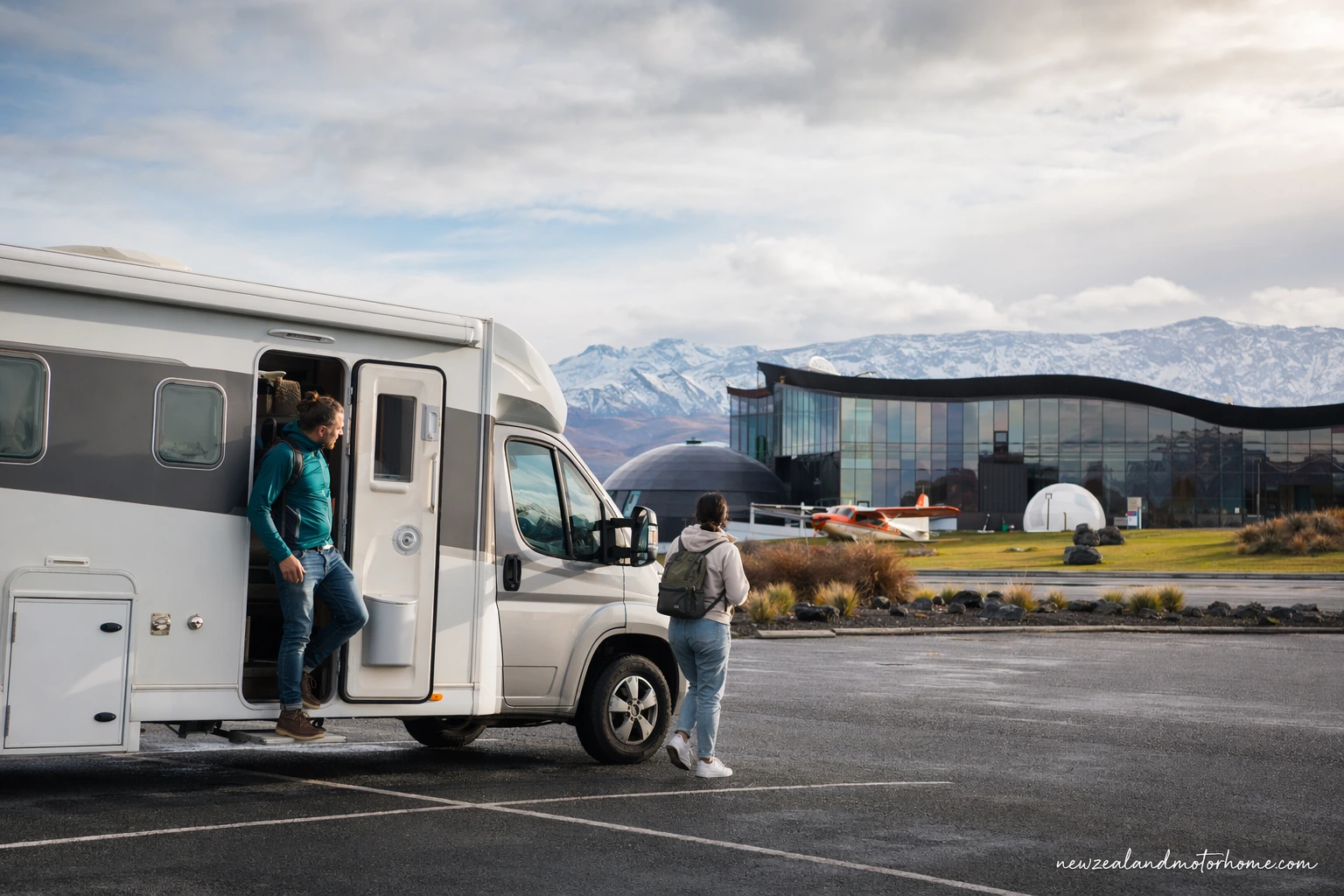
International Antarctic Centre campervan parking is usually straightforward because the visitor car park is open-air rather than a tight multi-storey. That matters if you are driving a high-roof campervan, a 6-berth motorhome, or anything with bikes on the back. Arrive earlier in the day if you want the easiest turning room and a spot on the outer edge.
Use the marked visitor parking areas and avoid blocking through-lanes, shuttle stops, accessible bays, or loading areas. If your motorhome is longer than a standard bay, look for end spaces where you can overhang safely without putting the rear of the van into traffic or over a footpath.
- Height: open-air parking is the key advantage here, but still check entrance signage on arrival.
- Length: compact campervans fit most easily; longer motorhomes may need an edge bay or quieter part of the car park.
- Security: lock the habitation door, close curtains over bags and electronics, and do not leave passports visible.
- Overnighting: treat the car park as day-visitor parking only, not an overnight stop.
How to get to International Antarctic Centre in a motorhome
The centre is in Harewood, immediately by Christchurch Airport, so you can reach it without driving deep into the CBD. From State Highway 1, follow the airport signs via Johns Road, Russley Road or Memorial Avenue depending on your approach. The final streets are wide and used to airport traffic, rental depots, delivery vehicles and larger vans.
If you are arriving from the north, staying on the western side of Christchurch keeps things simple. From the south or west, the motorway and SH1 connections are usually easier in a motorhome than crossing the inner city. Allow extra time at peak commuter periods around the airport and business parks.
- Road feel: flat city driving, multiple roundabouts and busy lane changes near the airport.
- Low-clearance note: standard signed airport approaches are suitable for high-roof campervans; avoid random shortcuts if your GPS tries to save a minute.
- Fuel and LPG: the airport and SH1 corridors have service stations nearby, but check LPG availability before committing to a fill.
- Fresh water and waste: plan to use your holiday park or an official dump station rather than expecting services at the attraction.
How long to allow, and where to put it in your day
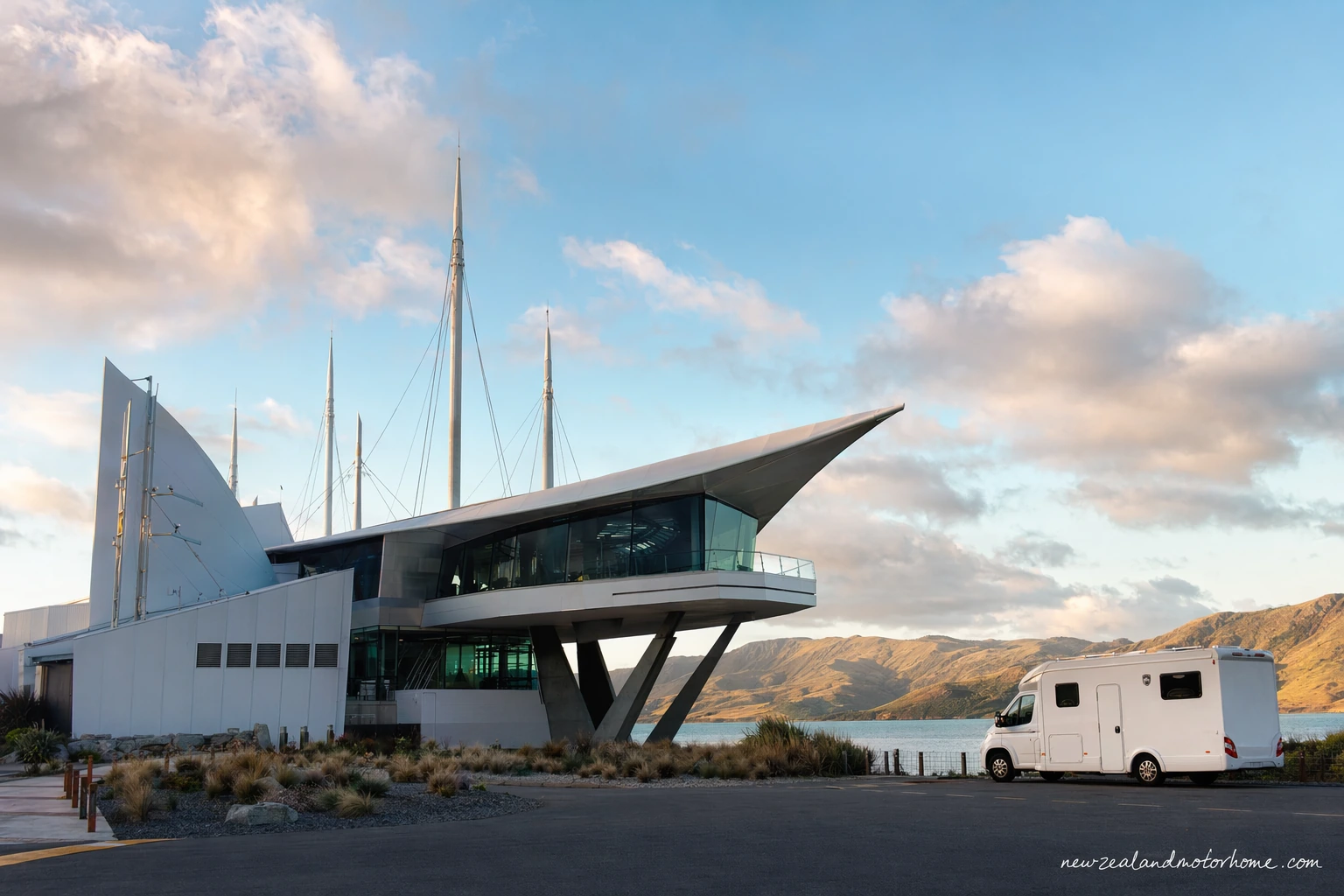
Most campervan travellers should allow around two to three hours for the International Antarctic Centre, more if you are travelling with children, want a slower café stop, or prefer not to rush the indoor exhibits. It is a good half-day stop rather than a quick photo stop.
Because you are close to the airport, this attraction works well on a Christchurch arrival day, a final day before returning a van, or a reset day between the Kaikōura coast and the Canterbury high country. If you need to empty grey water, refill fresh water, or repack the van, do that at your overnight base before you visit so you are not trying to solve chores in an attraction car park.
- Arrival-day idea: pick up groceries, check into a powered site, then visit once the van is organised.
- Departure-day idea: visit after cleaning and dumping the van, leaving a buffer for airport-side traffic.
- Bad-weather option: it is mostly an indoor stop, handy when Canterbury wind or rain makes outdoor plans less inviting.
Campsites near International Antarctic Centre
The easiest campsites near International Antarctic Centre are on the northern and north-western side of Christchurch, especially around Harewood, Belfast, Papanui and the airport corridor. These locations keep you close to SH1 and avoid unnecessary city-centre driving in a larger motorhome.
Look for a holiday park with powered sites if you need to recharge batteries, run a heater in winter, or get the fridge properly cold before heading inland. Unpowered sites can work for self-contained vans with healthy batteries, but Christchurch is a practical place to plug in, use laundry facilities, top up water and deal with waste.
- Nearest style of stop: airport-side holiday parks with powered and unpowered van sites.
- Useful facilities: dump station, potable water, laundry, rubbish disposal and shared kitchen.
- Booking note: reserve ahead during school holidays, long weekends and major Christchurch event periods.
- Freedom camping: only use places where Christchurch City Council rules and your self-containment certification allow it; airport-adjacent streets are not a sensible overnight fallback.
What is nearby for van errands and easy add-ons
The airport side of Christchurch is one of the better places in the city to sort van logistics. You are close to supermarkets, fuel, tyre services, big-road connections and places to buy forgotten basics before heading towards Arthur’s Pass, Kaikōura, Akaroa or Lake Tekapo.
If your itinerary is still a bit loose, this is a good point to decide whether your next overnight should be coastal, city-edge or inland. For help matching the International Antarctic Centre with a sensible Christchurch start or finish, you can use our talk-to-us trip-planning step and we’ll keep the route realistic for the van you are driving.
- Nearby practical stops: groceries, fuel, LPG checks, pharmacy items and last-minute warm layers.
- Easy add-ons: Christchurch Botanic Gardens, the city centre, Willowbank area attractions, or a short drive to Lyttelton if you have time and confidence on hill roads.
- Before leaving town: empty toilet cassette and grey water at an official facility, refill fresh water, and check your route for overnight rules.
Keep planning
Visiting zealandia wellington by campervan
Read onVisiting weta workshop wellington by campervan
Read onVisiting waitomo glowworm caves by campervan
Read onVisiting wai o tapu thermal by campervan
Read onVisiting tongariro alpine crossing by campervan
Read onVisiting te papa wellington by campervan
Read onCommon questions
Can I park a motorhome at the International Antarctic Centre?
Yes, the attraction has open-air visitor parking, which is generally easier for campervans than covered city parking. Longer motorhomes should aim for outer or end spaces and avoid blocking lanes or footpaths.
Is the International Antarctic Centre car park suitable for high-roof campervans?
It is open-air, so height is usually less of a worry than in a parking building. Still check entrance and bay signage when you arrive, especially if you have roof gear, solar panels or bikes fitted.
Can we stay overnight in the International Antarctic Centre car park?
No — plan it as day-visitor parking only. Book a nearby holiday park or use a legal freedom camping area that matches your self-containment certification and local council rules.
What are the closest campervan facilities?
Use nearby holiday parks and official dump stations for toilet cassette, grey water and fresh-water fills. The airport and SH1 area also has fuel and general travel supplies, but do not assume the attraction itself provides motorhome services.
How long should we allow for visiting International Antarctic Centre by campervan?
Allow two to three hours for a comfortable visit, plus extra time to park the van and get children or wet-weather gear sorted. It fits well into an arrival day, departure day, or Christchurch rest day.
Have a planner shape this for your dates
Send a short outline — your dates, party size, and the kind of trip you want. A planner replies with a vehicle recommendation, a paced route, and the realistic budget.