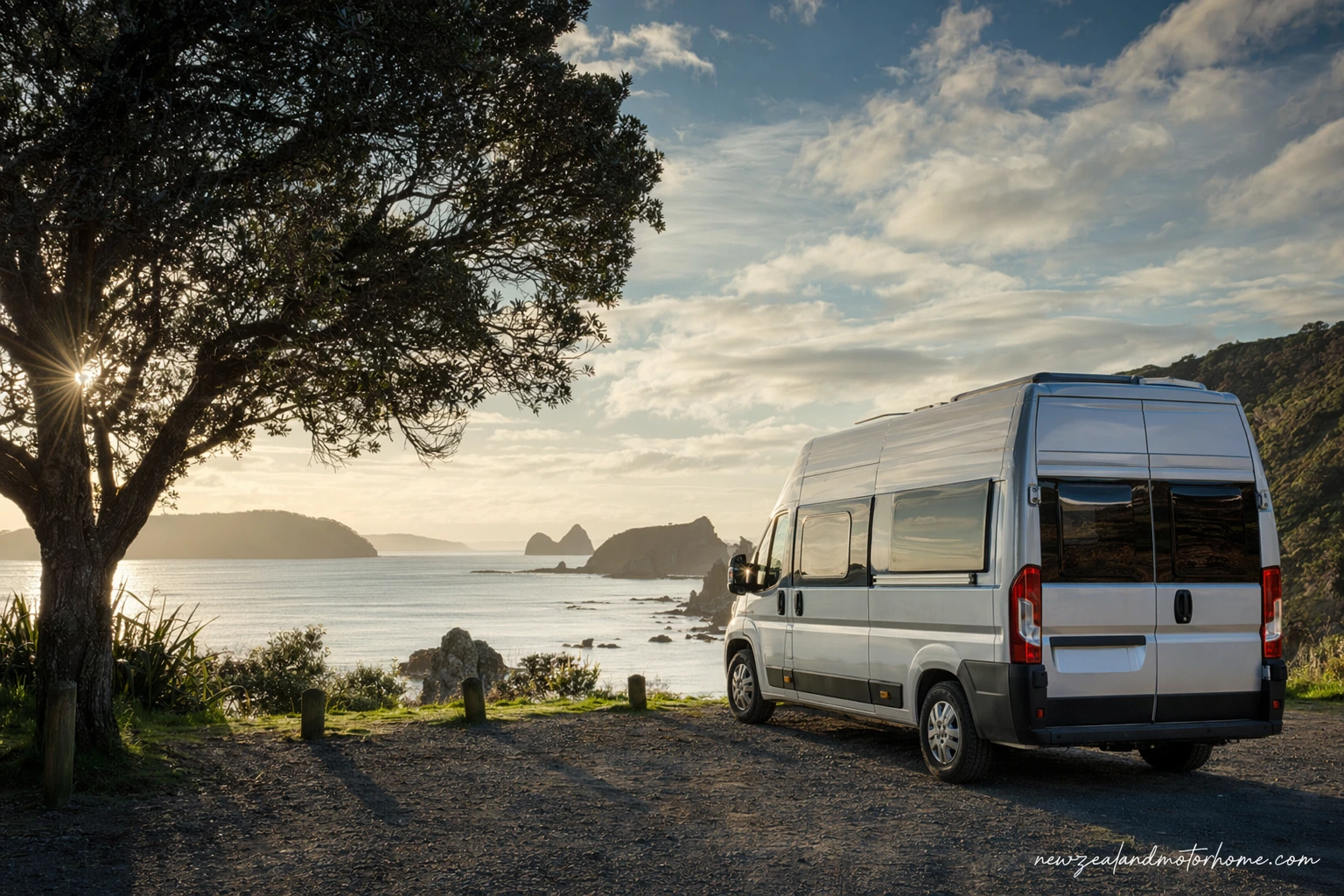
- Best pace: 3–5 days
- Peak season: summer and long weekends
- Van note: narrow coastal roads
- Site types: holiday parks, DOC camps, signed freedom sites
- Must have: current self-containment certification
The Coromandel is made for slow campervan travel: pōhutukawa-fringed bays, steep green ranges, hot sand, old gold towns and enough winding coastal road to remind you not to overpack the day. The trick is knowing which beautiful pull-ins are only good for lunch, which places will actually take your van overnight, and where to service before the next narrow stretch.
This guide gathers the best campervan stops Coromandel travellers can realistically use in a hired self-contained van, from Thames and Coromandel Town around to Whitianga, Hahei, Hot Water Beach and Whangamatā. You’ll get practical notes on parking, freedom camping Coromandel rules, holiday park bases, DOC-style camps and how to string the stops together without chasing your tail.
Start with the loop, not a list of pins
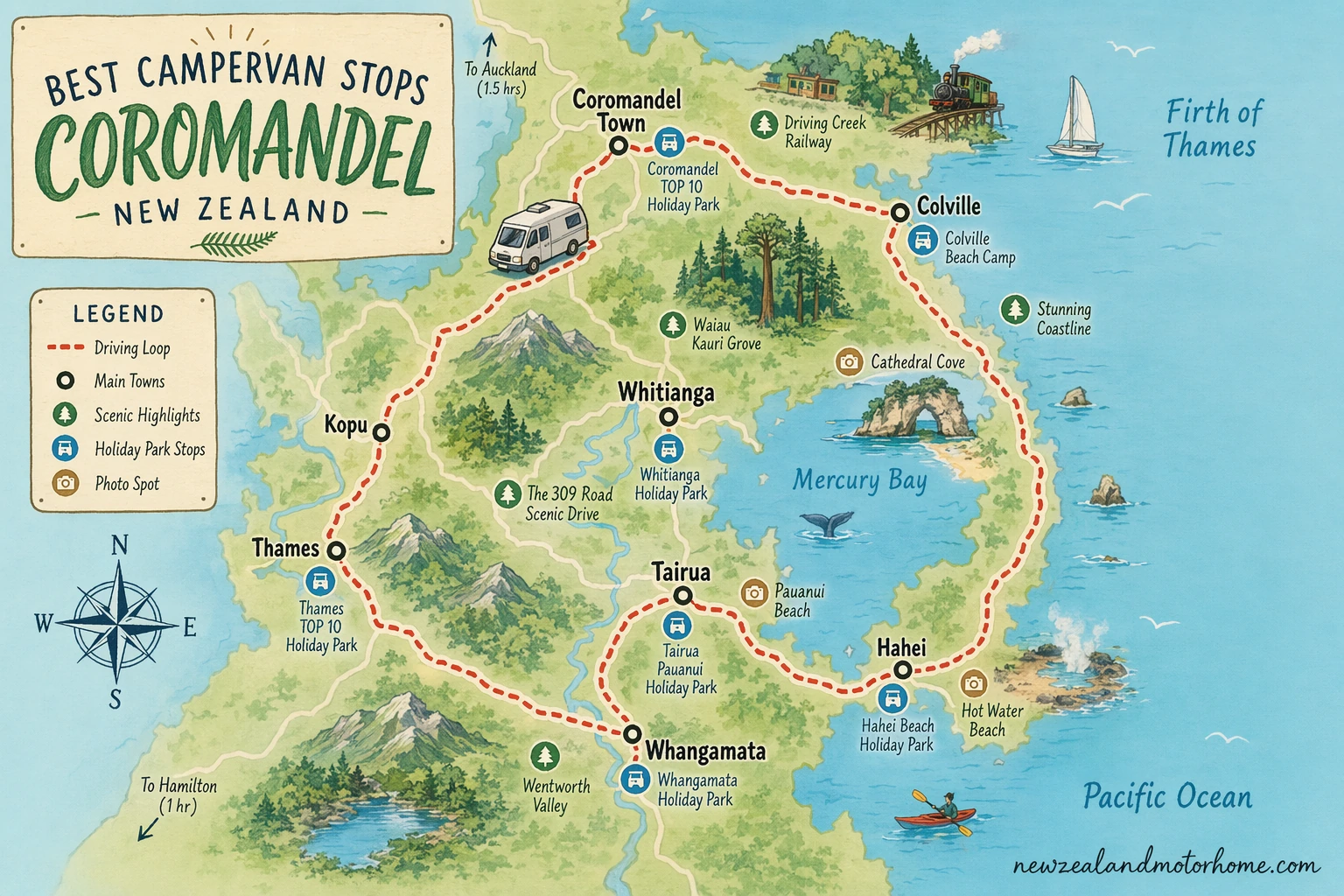
Most campervan trips work best as a loop: Thames to Coromandel Town, up towards Colville if the weather and road suit your van, then across or around to the east coast beaches before dropping south through Tairua, Whangamatā and the Karangahake side. Distances look short on the map, but SH25 is slow, curvy and often squeezed between sea and bank.
In a larger motorhome, plan fewer stops and longer lunch breaks. Pull over only where the whole vehicle is clear of the lane; many pretty gravel shoulders are too soft or too short for a rear overhang. If you are still deciding where to stay, campervan Coromandel itineraries are easiest when you lock in two or three overnight bases and day-trip from them.
- Easy pace: allow 3 to 5 days for the main loop, more if you want the far north.
- Van note: keep an eye on width, mirrors and rear swing on tight coastal bends.
- Servicing rhythm: top up fresh water and empty the cassette in larger towns rather than assuming the next beach has facilities.
- Planning help: if your hire van is long or you are travelling in peak summer, use our talk-to-us step before you commit to overnight stops.
Thames to Coromandel Town: gentle first-night territory
The western coast is a friendly entry to the peninsula, especially if you have just picked up the van and want a low-stress first night. Thames has supermarkets, fuel, fresh-water options, public dump facilities and holiday parks, so it is a sensible place to get the van sorted before the road narrows north.
Between Thames and Coromandel Town, the coast road gives you plenty of sea-view pauses, but not every pull-in is an overnight stop. Use signed parking bays for photos and lunch, then aim for a proper campground, holiday park or clearly designated certified self-contained site for the night.
- Good day stops: the Thames waterfront, coastal lay-bys north of town, and the wharf area at Coromandel Town when spaces are available.
- Overnight style: holiday parks give the easiest first powered site, showers, laundry and water fill.
- Van fit: central Coromandel Town streets can be busy; park a little out from shopfronts if your motorhome is long.
- Before leaving: check LPG, drinking water and waste levels before heading towards Colville or the east coast.
Northern Coromandel: big views, slower roads and real commitment
The northern end is where the Coromandel feels wilder: Long Bay, Colville, Port Jackson, Fletcher Bay, Stony Bay and Waikawau Bay all tempt campervan travellers with quiet water and open skies. It is also where you need to be honest about your vehicle, your confidence and the weather. Some roads are gravel, narrow, exposed or not ideal for high-sided motorhomes in wind.
For many hired vans, Long Bay or a Colville-area base is the comfortable limit. More adventurous self-contained campervans may continue to DOC-managed campgrounds further north, but you should check current access, booking requirements, road conditions and whether your rental agreement allows those gravel roads.
- Best for: unpowered camping, remote beaches and early starts before day visitors arrive.
- Not ideal for: rushing, night driving, oversized motorhomes or anyone new to left-side rural roads.
- Facilities: expect basic toilets at some camps, limited water and no guarantee of dump stations nearby.
- Rule of thumb: service the van in Coromandel Town before going north, then come back with enough daylight to spare.
Whangapoua, Kuaotunu and Whitianga: east coast beach bases
The east coast is where many travellers picture the Coromandel: pale sand, surf, estuary light and small beach settlements. Whangapoua and Kuaotunu are lovely daytime stops, but parking can be tight in summer and local streets are not a place to squeeze in for an unofficial night. Arrive early, park considerately and keep the van out of beach accessways.
Whitianga is the practical hub for this side of the peninsula. It has supermarkets, fuel, dump station options, holiday parks and a good spread of powered and unpowered sites, making it a strong answer to where to stay campervan Coromandel-wide if you want services without giving up beach access.
- Day parking: use marked public parking areas and avoid blocking boat ramps, resident driveways and turning heads.
- Overnight base: Whitianga holiday parks suit plug-in nights, laundry, showers and a reset after simple camps.
- Freedom camping: only stay where signs and council rules allow it, and only with current self-containment certification where required.
- Driving note: the coast roads around Kuaotunu are scenic but winding; keep speeds modest and let locals pass when safe.
Hahei, Cathedral Cove and Hot Water Beach without van stress
Hahei and Hot Water Beach are highlights, but they are not places to improvise in a big van on a blue-sky weekend. Car parks fill, road shoulders disappear quickly, and some beachside spaces are designed for cars rather than motorhomes. If you are visiting Cathedral Cove, check the current access arrangements before driving in, as track, shuttle and boat options can change after weather events.
Hot Water Beach is best treated as a planned stop around the tide rather than a drive-by. If you want a relaxed visit, book a legal overnight nearby or base yourself at a holiday park and walk or shuttle where available, instead of trying to park the campervan at the busiest moment.
- Best timing: early morning or later afternoon outside peak school-holiday traffic.
- Van fit: smaller campervans cope better; larger motorhomes should avoid tight residential side streets.
- Overnight options: use holiday parks or designated certified self-contained areas, not beach reserves unless clearly signed for overnight camping.
- Water and waste: do not rely on scenic car parks for servicing; empty and refill in Whitianga or another serviced base.
Tairua, Pauanui, Whangamatā and the southern exit
The southern Coromandel gives you a softer finish to the loop, with harbour viewpoints, surf beaches and easier access back towards Auckland, Hamilton or Tauranga. Tairua is a good lunch and viewpoint stop if you can find a legal space that fits the van; Pauanui is more residential and best approached with patience rather than a large-vehicle wander through small streets.
Whangamatā works well as a final beach night or service stop before leaving the peninsula. From there, the Karangahake Gorge route adds river scenery and walking options, but parking for long motorhomes can be limited at busy trailheads, so do not count on swinging in easily at midday.
- Good sequence: Hot Water Beach or Hahei to Tairua, then Whangamatā, then out via Waihi or back over to the Hauraki Plains.
- Overnight style: choose a holiday park for a powered final night and a proper dump, water and rubbish reset.
- Freedom camping Coromandel reminder: the rules vary by district and signage; a self-contained certificate does not let you stay anywhere you like.
- Road note: avoid driving the gorge or coastal roads tired after a full beach day, especially in a tall campervan.
Common questions
Can I freedom camp anywhere in the Coromandel with a self-contained campervan?
No. Freedom camping Coromandel rules are controlled by local bylaws and signs, and many beach reserves, car parks and residential streets are restricted or prohibited. A current self-containment certificate is often required, but it is not a blanket permission to stay overnight.
Where should I stay in a campervan on the Coromandel for a first visit?
For an easy first trip, use Coromandel Town or Thames on the west side, Whitianga on the east side, and Whangamatā or Tairua towards the south. Those bases give you better access to powered sites, dump stations, fresh water, groceries and fuel.
Is the Coromandel suitable for large motorhomes?
Yes, but choose your roads and stops carefully. The main loop is manageable for confident drivers, while some northern roads, gravel sections, beach settlements and small car parks are awkward for long or high vehicles. Travel in daylight and do not rely on every viewpoint having a motorhome-sized bay.
Do I need to book campervan sites in advance?
In summer, long weekends and school holidays, booking is strongly recommended for holiday parks and popular DOC-style campgrounds. Outside peak periods you may have more flexibility, but the best coastal sites still fill quickly when the weather is good.
Where can I dump waste and refill fresh water?
Plan around the larger towns such as Thames, Coromandel Town, Whitianga and Whangamatā, where public or holiday-park dump facilities and fresh-water fills are more likely. Do not leave it until you are at a remote beach camp, as facilities may be basic or unavailable.
Have a planner shape this for your dates
Send a short outline — your dates, party size, and the kind of trip you want. A planner replies with a vehicle recommendation, a paced route, and the realistic budget.