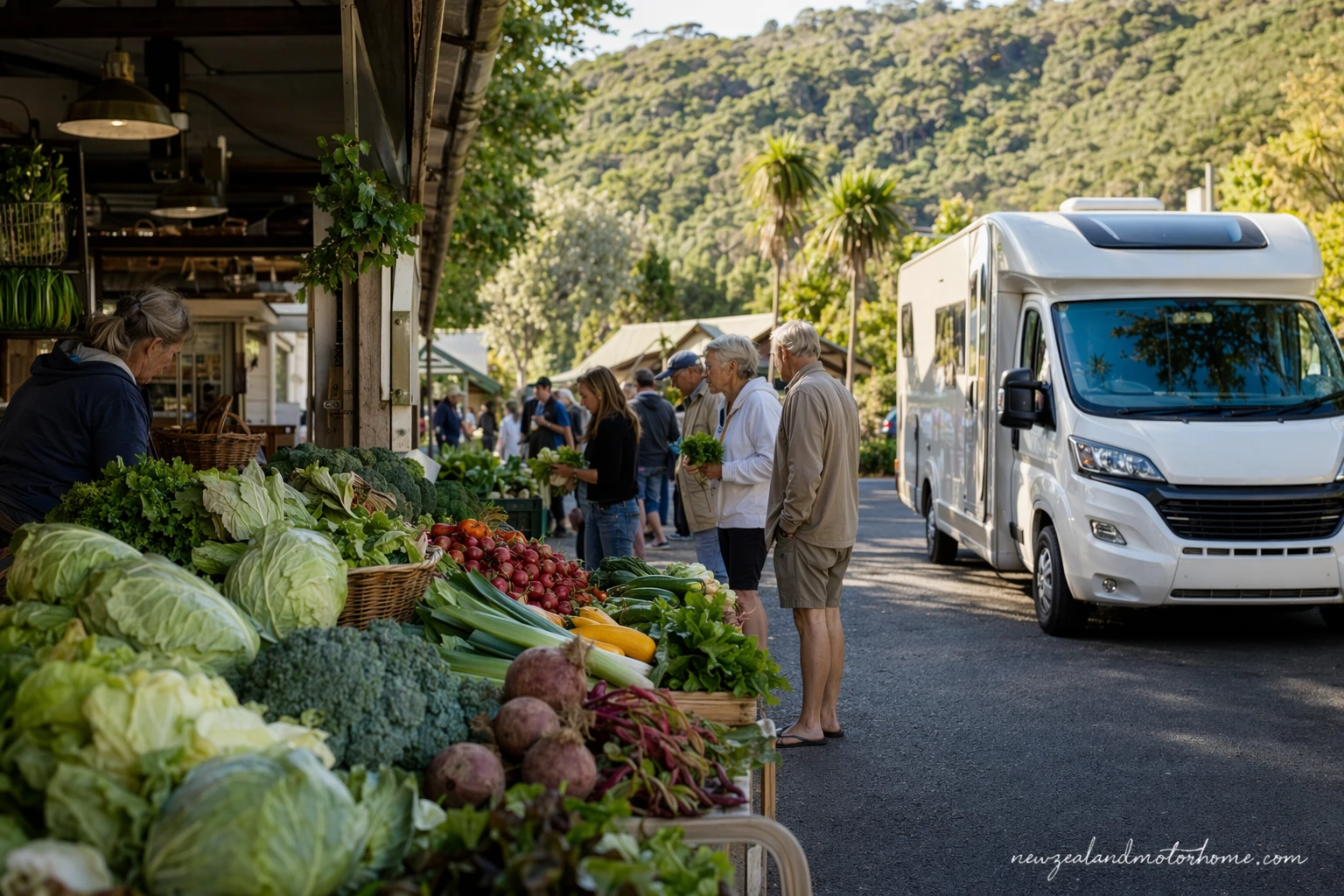
- Best market day: Saturday
- Allow 2 nights for an easy loop
- Arrive early for long-vehicle parking
- Powered site useful after stocking the fridge
- Self-contained only for permitted freedom camping
The Coromandel is a good place to let the van set the pace: coffee in a harbour town, a paper bag of stone fruit on the passenger seat, and enough local greens for a simple campsite dinner. The best farmers markets Coromandel travellers find are often small, seasonal and very local, so the trick is knowing which towns to aim for and where a campervan can sit without becoming part of the traffic.
This guide is written for self-drive campervan and motorhome travellers only. You will find market-day pointers, fresh produce Coromandel staples to look out for, road notes for larger vehicles, and practical ideas for overnight stops, water, LPG and dump stations around the peninsula.
How the market rhythm works around the peninsula
Coromandel markets tend to follow the towns rather than a single big regional calendar. Saturday is usually the strongest day for weekend markets Coromandel-wide, especially around Thames, Coromandel Town and Whitianga, while beach towns such as Tairua, Pauanui and Whangamatā often have more activity during summer weekends, public holidays and school holidays.
Because smaller food markets can shift with weather, volunteer rosters and the growing season, check a local noticeboard, visitor information board or council events listing the day before you drive. That matters in a campervan: a missed market can mean a tight turnaround on SH25 instead of an easy morning parked up with time to browse.
- Thames: a useful Saturday-morning stop if you are entering from Auckland, Hamilton or the Hauraki Plains.
- Coromandel Town: good for local produce, baking, preserves and a slower town-centre wander when markets are running.
- Whitianga: a handy east-coast base for food stalls, fish, baking and supplies before heading towards Hahei, Cooks Beach or the northern bays.
- Whangamatā and Tairua: often strongest in summer and holiday periods, so confirm before building your day around them.
Parking a campervan on market morning
Arrive early and park once. Coromandel town centres can fill quickly, and a long-wheelbase van overhanging a painted bay is not popular outside cafés, driveways or boat-ramp access. If your van is high or over six metres, look for edge-of-centre parking rather than trying to squeeze into the tightest main-street spaces.
In Thames, the flatter streets around Grahamstown and the waterfront side of town are generally easier to work with than the busiest retail strip. In Coromandel Town, it is often simpler to park on the approach or side streets and walk in. In Whitianga, aim for larger public parking areas and avoid blocking boat trailers near the harbour, especially on sunny weekends.
- Fold mirrors in if you are parked on a narrow street, and keep clear of corners and pedestrian crossings.
- Do not use supermarket or private customer parking unless signs clearly allow it for your purpose.
- If you have bikes on the rear, allow for the extra length before reversing into a kerbside space.
- Keep the fridge running, but do not idle the engine while you browse; use a powered site the night before if your house battery is low.
What to buy for easy van cooking
The best fresh produce Coromandel finds are the ones you can actually use in a compact camper kitchen: tomatoes for toast, salad greens that do not need much prep, avocados, citrus, berries in season, free-range eggs when available, sourdough, honey, chutneys and the odd smoked fish or local cheese for a no-fuss dinner.
Shop with your storage in mind. A three-way fridge or compressor fridge can only hold so much once you add milk, meat and leftovers, and summer heat will punish anything left loose in the cab. Bring a reusable tote and a small chilly bag into the market so berries, cheese and fish are not sitting in the sun while you decide where to go next.
- Buy heavy items first, then lighter bread, herbs and berries last.
- Ask stallholders what needs refrigeration straight away and what will handle a warm drive.
- Choose meals that use one pan or the barbecue plate at your campsite: corn, courgettes, greens, eggs and bread are easy wins.
- Leave room for rubbish and compost until you reach a proper bin; market sites are not a dump point for van waste.
Overnight stops, water, LPG and dump stations
Market mornings work best when you sleep nearby the night before. Around the Coromandel you will find a mix of holiday parks, council camping areas, DOC-style coastal camps in some areas, and limited freedom camping where local rules allow it. If you want power for the fridge, device charging and a proper shower, book a powered site; if you are set up well and just need a quiet base, an unpowered site can be enough.
Only freedom camp where your vehicle is certified self-contained and signs or council rules allow overnight stays. The Coromandel has sensitive beach reserves, small communities and busy holiday periods, so assume restrictions are active until you have checked. Use designated dump stations for grey water and toilet cassette waste, and fill fresh water only from taps signed as potable.
- Good service towns: Thames, Whitianga and Whangamatā are sensible places to think about groceries, LPG, fuel, fresh water and dump-station planning.
- Before remote bays: empty the cassette, top up drinking water and check gas rather than hoping for services at the next beach.
- Powered vs unpowered: choose powered if you have stocked up on chilled market food or if several cloudy days have weakened your solar input.
- Rubbish: pack it out to public collection points or your campground bins; do not leave market packaging at freedom camping spots.
Road notes for linking the markets
SH25 is the main sealed loop around the Coromandel, and it is beautiful but not fast in a motorhome. Expect winding coastal edges, one-lane bridges, narrow shoulders, local traffic and cyclists in warmer months. Let faster traffic pass at safe pull-outs, and build spare time into your market run so you are not hurrying a tall van through tight bends.
The Kopu-Hikuai Road is a common cross-peninsula route to the eastern beaches, but it still needs respect in wet weather and with a heavier vehicle. The 309 Road between Coromandel Town and Whitianga can be narrow, winding and partly unsealed; many hired campervans are better kept to the main sealed routes unless your rental agreement and confidence suit it.
- Check your hire agreement before driving on gravel or minor roads.
- Know your vehicle height before entering covered parking, service stations or tree-lined side streets.
- Secure market produce before driving; loose jars and fruit roll around quickly on Coromandel corners.
- Refuel earlier than you would in a city, especially if you are heading north of Coromandel Town or into smaller beach settlements.
A simple two-night food markets Coromandel campervan plan
For a relaxed first visit, start with one side of the peninsula rather than trying to catch every stall in one weekend. A practical loop is to overnight near Thames on Friday, visit the Saturday market early, then continue towards Coromandel Town or Whitianga for your second night. On Sunday, you can either explore the east coast slowly or return south via Tairua and Whangamatā if a holiday market is on.
If you would like market days matched with your van size, self-containment status and preferred powered or unpowered sites, you can send us your rough dates through talk to us and we will help shape the route around real driving time rather than wishful thinking.
- Friday: arrive, plug in if needed, do laundry and empty waste before the weekend traffic builds.
- Saturday: shop early, pack cold items properly, then drive only one main leg rather than crossing the whole peninsula twice.
- Sunday: choose a beach-town market if one is running, or use the morning for a slow breakfast from yesterday’s produce.
- Monday option: reset the van in a service town with water, LPG and a dump station before heading to the next region.
Common questions
What is the best day for farmers markets Coromandel travellers should plan around?
Saturday is usually the safest day to plan around, with Thames and east-coast towns often strongest then. Summer, public holidays and school holidays can add extra markets, especially in beach settlements, so confirm locally the day before.
Can I park a large motorhome near Coromandel markets?
Usually yes, but avoid the tightest main-street bays and arrive early. Park on the edge of town, keep clear of driveways and corners, and allow for rear bike racks or tow bars when judging your vehicle length.
Are there dump stations close to the main market towns?
Main service towns such as Thames, Whitianga and Whangamatā are the best places to plan for dump stations, water and LPG. Check current council or camping-app listings before relying on a specific facility, as access and maintenance can change.
Can I freedom camp after visiting a market?
Only if your campervan is certified self-contained and the specific spot allows overnight stays under local rules. The Coromandel has many restricted beach and reserve areas, so read signs carefully and use a campground if you are unsure.
What market food is easiest to manage in a campervan fridge?
Choose compact, quick-use items: eggs, greens, tomatoes, berries, cheese, bread, honey and small jars of preserves. Put chilled food away promptly and consider a powered site if you have bought seafood, dairy or several days of fresh produce.
Have a planner shape this for your dates
Send a short outline — your dates, party size, and the kind of trip you want. A planner replies with a vehicle recommendation, a paced route, and the realistic budget.