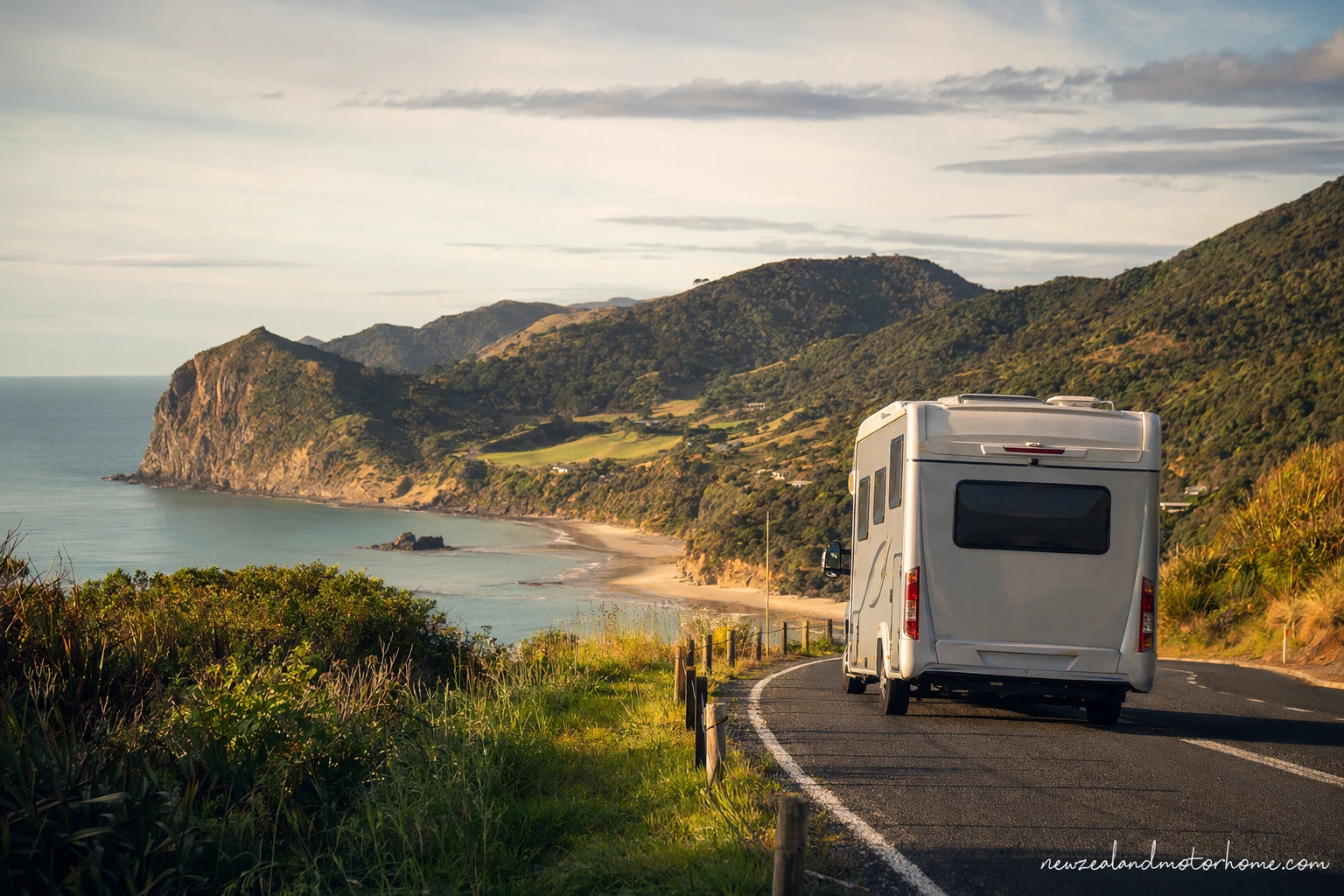
- Best with 3–5 days
- SH25 is sealed but winding
- Book powered sites in summer
- Certified self-contained for freedom camping
- Remote north suits smaller confident vans
The Coromandel is made for slow campervan travel: pohutukawa-fringed bays, winding coastal roads, hot-water sand at low tide, and forest roads that feel far from Auckland even when you have only just crossed the Hauraki Plains. It is also a place where your van matters. Roads can be narrow, parking fills early, and not every pretty beach allows overnight stays.
This campervan guide Coromandel NZ page is written for self-drive travellers sleeping in their hired van. You will find road notes, realistic timing, van-suitable stops, powered and unpowered campsite options, dump station planning, fresh-water and LPG reminders, and the local freedom camping cautions that keep a Coromandel campervan trip easy rather than stressful.
How many days to allow in a campervan
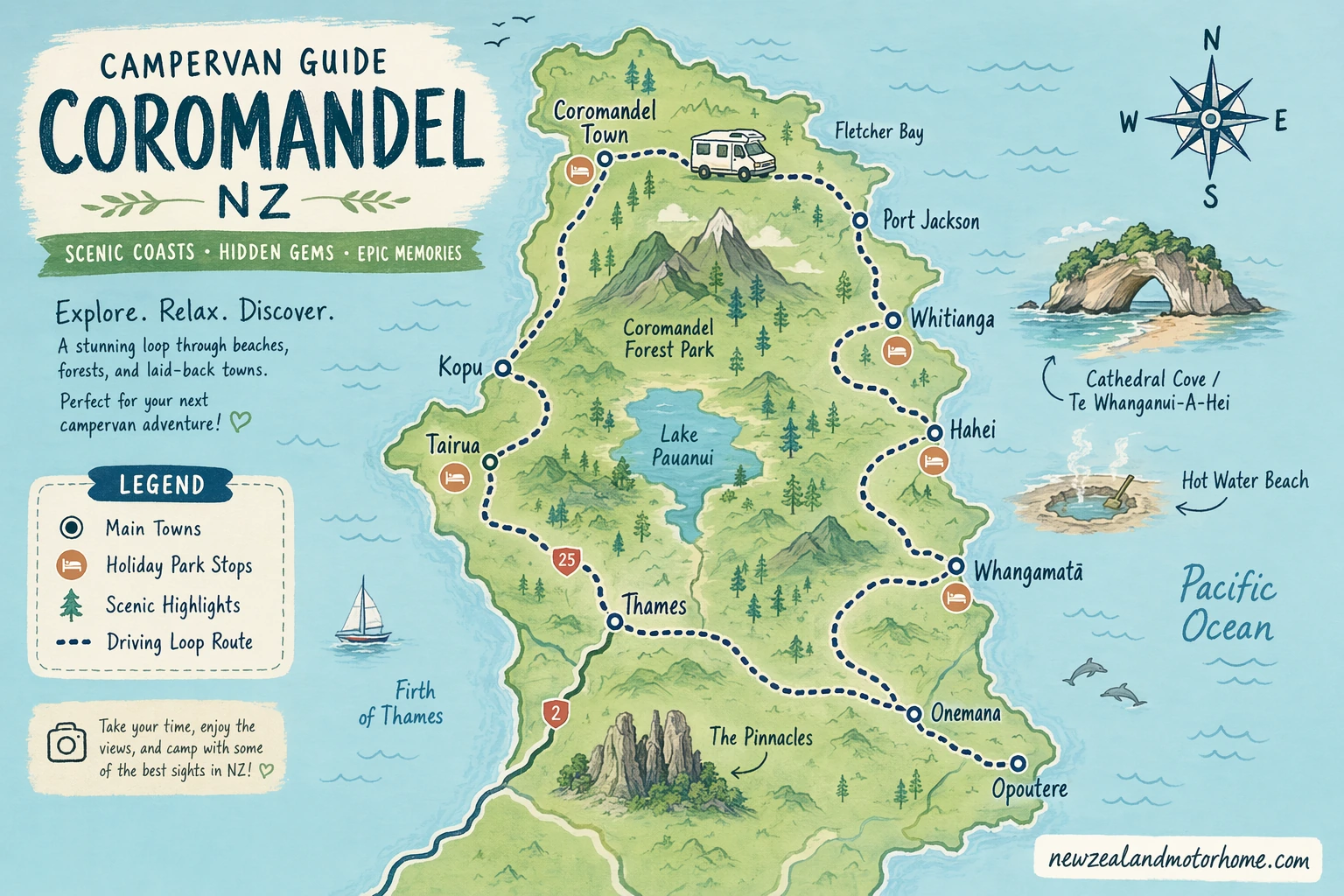
You can nip into the western side of the peninsula for a two-night taster, but the Coromandel is much better when you stop treating the map like a racetrack. The SH25 loop looks compact, yet the corners, viewpoints, single-lane bridges and beach parking all slow the day down.
For most motorhome Coromandel trips, plan on three to five days if you want Thames, Coromandel Town, Whitianga and the eastern beaches. Allow five to seven days if you want the remote northern DOC camps or time to wait for the right Hot Water Beach tide without rushing the van around in the dark.
- 2 nights: Thames or Coromandel Town, then one east-coast beach base such as Whitianga, Hahei, Tairua or Whangamatā.
- 3–4 nights: A comfortable SH25 loop with time for Cathedral Cove access planning, Hot Water Beach, and one quieter bay.
- 5–7 nights: Add northern Coromandel, unpowered DOC-style camping, and a slower return through the Hauraki Plains.
Driving the peninsula: road notes for vans
The main loop, SH25, is sealed and used by campervans every day, but it is not a fast road. Expect tight bends, steep pinches, narrow shoulders and busy beach-town approaches in summer. Keep left, use pull-outs when a queue forms behind you, and remember that a six-berth motorhome will need more space than a car when swinging into small coastal parking areas.
SH25A over the ranges is the quicker cross-peninsula link between the Kopu area and the east coast, but it is still a hill road. In heavy rain or after storms, check current road conditions before committing, as slips and temporary controls are a normal part of Coromandel travel.
Be choosy with side roads. The 309 Road, Tapu-Coroglen Road and remote roads north of Colville can be narrow, winding, gravel or steep in places. Some hire agreements restrict unsealed roads, and large motorhomes are often better staying on the sealed loop unless the operator has confirmed the route is permitted.
- Fuel up before heading north of Coromandel Town or into quieter eastern bays.
- Watch your van height under trees in older beach car parks and campsite lanes.
- Avoid arriving at small beach parking areas at midday in peak summer; go early or late.
- Do not rely on mobile coverage in the far north or in forested valleys.
Best campervan bases and overnight styles
For powered sites, showers, laundry, fresh-water fills and easier dump station access, base yourself in the main settlements: Thames, Coromandel Town, Whitianga, Hahei, Hot Water Beach, Tairua or Whangamatā. These are the easiest places to reset the van after a few beach days, especially if you are travelling with children or using a larger motorhome.
Unpowered camping is part of the Coromandel’s charm, particularly in DOC-style coastal areas and the more remote north, but it asks more of your setup. Arrive with full fresh water, empty grey and black tanks, charged house batteries, and enough food to avoid a long backtrack. Many remote sites are basic and seasonal booking rules can change, so check the official listing before you drive in.
Freedom camping is tightly managed. A certified self-contained vehicle is usually the minimum requirement, and even then you must use designated areas only. Beach reserves, boat ramps and scenic car parks may look tempting at dusk, but local bylaws and signs matter more than what another van did last night.
- Powered holiday park site: best for first night, laundry, device charging and fresh-water top-ups.
- Unpowered campsite: good for quieter bays if your battery, fridge and water use are under control.
- Freedom camping: only where permitted, with current self-containment certification displayed.
- Remote DOC-style stop: check road suitability, booking requirements and whether your van length is practical.
Things to do in a Coromandel campervan
The best things to do Coromandel campervan travellers can plan are usually simple: park once, walk, swim, cook dinner beside the van, then sleep nearby without adding more driving. Thames is a practical first stop for groceries and heritage wandering. Coromandel Town works well for a relaxed night before exploring the west coast or heading north.
On the east coast, Whitianga is a useful service base with beaches, boat trips and easy resupply. Hahei and Cathedral Cove are beautiful but parking and access can change with weather, track conditions and seasonal controls, so check the current arrangements before you point the van down the hill. Hot Water Beach needs low tide timing; bring a towel and patience, not a tight onward schedule.
Tairua, Pauanui, Whangamatā and the smaller bays south along SH25 suit a slower loop, especially if you like morning swims and flat coastal walks. For a softer trip plan, choose one main east-coast base rather than moving the motorhome every night.
- Park the van early at popular beach access points, particularly in January and long weekends.
- Use town bases for cafes, supermarket runs, fuel and LPG bottle swaps or fills where available.
- Carry a small day bag so you can leave the van parked and walk to beaches without shifting it.
- Keep wet gear contained; sand and damp towels take over a compact camper quickly.
Dump stations, water, LPG and rubbish
Plan your services before you need them. Public dump stations and potable water points are available around the larger Coromandel settlements, with holiday parks often offering facilities for guests. Thames, Coromandel Town, Whitianga, Tairua and Whangamatā are sensible places to reset tanks rather than hoping for a last-minute option near a small beach.
Do not leave grey water until the tank is full on a remote road. Empty at an approved dump station, refill fresh water when you see a reliable potable supply, and keep a rubbish bag sealed inside the van until you reach proper bins or a transfer station. Coastal wind and gulls make a mess quickly if rubbish is left outside.
LPG availability is best in the larger service towns, but opening hours and bottle exchange options vary. If your hired campervan uses LPG for cooking, hot water or heating, check the gauge before you head into the far north or settle into an unpowered site for two nights.
- Empty toilet and grey-water tanks before remote camping.
- Refill fresh water in town, not from untreated beach taps unless marked potable.
- Ask your campground where the nearest dump point is before leaving.
- Keep coins or a payment card handy for council facilities where a fee or access control applies.
A simple Coromandel campervan loop
A balanced route is to enter through Thames, follow the western coast to Coromandel Town, cross or loop around to Whitianga, then work south through Hahei, Hot Water Beach, Tairua and Whangamatā before returning across the Hauraki Plains. It keeps services spaced out and avoids making every day a big driving day.
If you have a long or high-roof motorhome, build in extra time for parking and turnarounds. Some beach roads end in small car parks where reversing a larger van with summer traffic behind you is no fun. When in doubt, park slightly further back in town and walk.
If you want a route matched to your van size, travel dates and comfort level with gravel roads, you can talk to us before locking in the loop. A little planning helps you choose the right overnight mix and avoid arriving at a full or unsuitable site late in the day.
Common questions
Can I freedom camp around the Coromandel in a hired campervan?
Only in places where the local council permits it, and you will generally need a certified self-contained vehicle. Rules vary by location and can change seasonally, so read signs on the ground and check the current council information before staying overnight.
Is the Coromandel suitable for a large motorhome?
Yes on the main sealed roads, provided you drive slowly and allow for tight bends and small beach-town parking areas. Be cautious with gravel or remote roads, especially north of Colville and on cross-peninsula routes that may not suit a long vehicle.
Where should I base the van for Cathedral Cove and Hot Water Beach?
Hahei, Hot Water Beach and Whitianga are the most practical bases, depending on campsite availability and your preferred facilities. Access arrangements for Cathedral Cove can change, so check the latest walking, shuttle or water-access options before driving there.
Do I need to book campsites in advance?
In peak summer, school holidays and long weekends, booking is strongly recommended, especially for powered sites near beaches. Outside busy periods you may have more flexibility, but remote or conservation camps can still have booking rules and limited capacity.
How often should I empty and refill the campervan?
Reset the van whenever you pass a main town rather than waiting until tanks are urgent. A good rhythm is to dump grey and toilet waste, refill fresh water, check LPG and buy groceries before heading to an unpowered or remote overnight stop.
Have a planner shape this for your dates
Send a short outline — your dates, party size, and the kind of trip you want. A planner replies with a vehicle recommendation, a paced route, and the realistic budget.