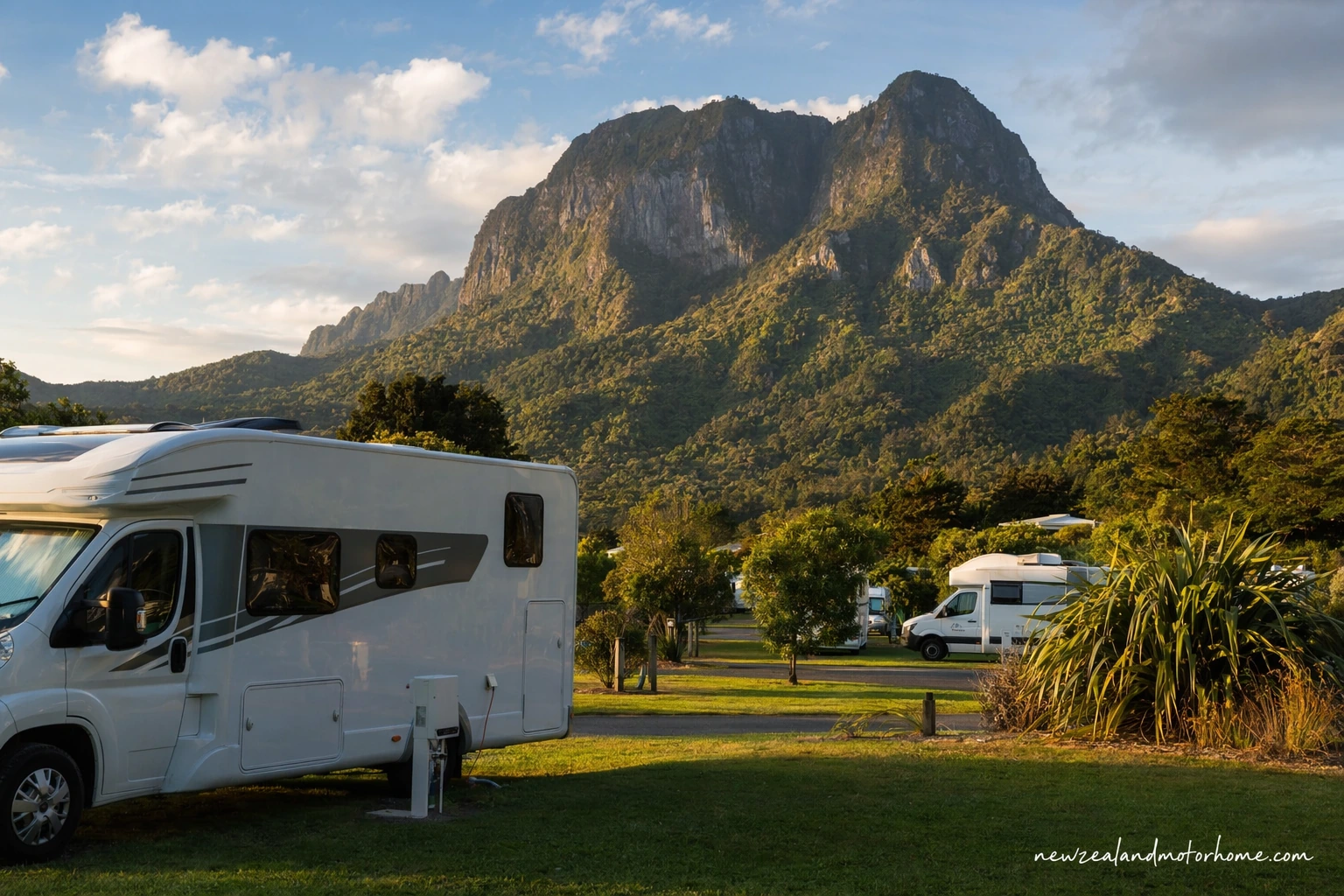
- Best with 4–6 nights
- Book powered sites in summer
- Certified self-contained rules apply
- Narrow coastal roads
- Services cluster in main towns
The Coromandel suits a slow campervan loop: park up near the sand for two nights, refill water, empty the cassette, then edge around to the next bay rather than trying to see the whole peninsula in one rush. Holiday parks Coromandel-wide are not evenly spaced, but the main coastal towns and beach settlements give you workable powered sites, unpowered grass sites and a few practical service stops.
This guide is written for self-drive motorhome travellers: where the van fits, which bases unlock which beaches and walks, how freedom camping rules work, and what to watch on the narrow coastal roads. Use it to compare campsites Coromandel travellers actually rely on, from Thames and Coromandel Town to Whitianga, Hahei, Tairua and Whangamatā.
How holiday parks are spread around the Coromandel
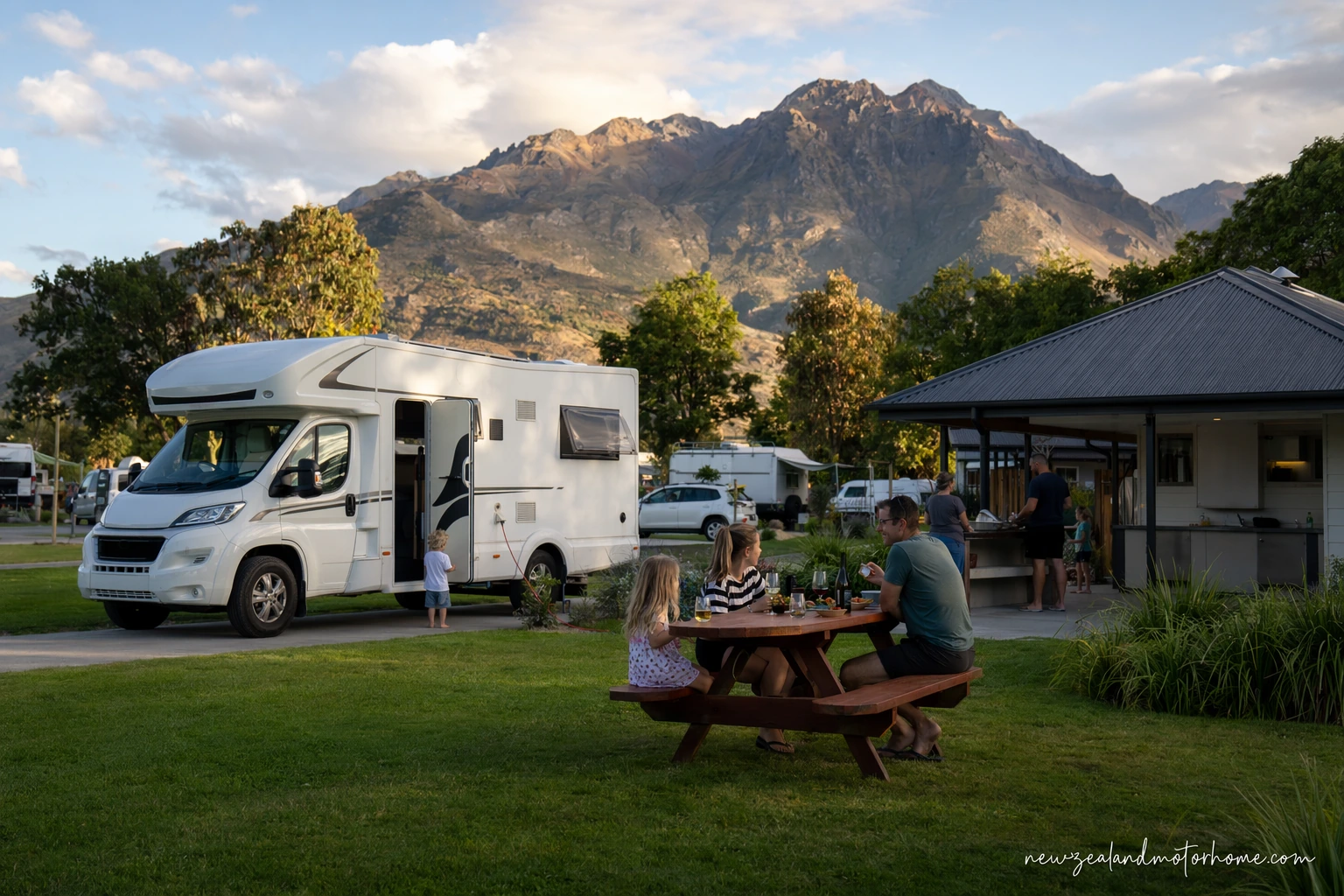
The peninsula is best thought of as a horseshoe. Thames is the practical western gateway, Coromandel Town is the quieter upper-west base, Whitianga and Mercury Bay cover the central east coast, and the south-east beach towns — Tairua, Pauanui and Whangamatā — work well when you are looping back towards Auckland, Tauranga or Rotorua.
Most campgrounds Coromandel travellers use sit close to beaches, estuaries or town edges rather than beside major highways. That is lovely once you are parked, but it means you should check arrival instructions before towing into a tight beachfront lane in a larger motorhome. A site inside a holiday park is often easier than hunting for kerbside parking near a popular beach after lunch.
- Thames: good for first-night positioning, supermarket top-ups, fuel and servicing before the coastal road.
- Coromandel Town: handy for Driving Creek, local food, harbour views and the road north towards Colville.
- Whitianga / Mercury Bay: the most useful east-coast base for beaches, boat trips and a choice of powered sites Coromandel visitors often want in peak season.
- Hahei / Hot Water Beach: best when you want to walk or soak without shifting the van through crowded day-parking areas.
- Tairua / Whangamatā: good southern bases for surf beaches, harbour walks and an easier exit from the peninsula.
Choosing a base: beach time, bush walks or an easy service stop
Rather than chasing a generic top 10 holiday park Coromandel list, choose your overnight base by what you want to do without moving the van. In summer, the difference between a beachside site and a site ten minutes inland can be the difference between walking to the water in jandals and circling for a legal daytime park in a high-roof motorhome.
For a relaxed campervan rhythm, stay two nights on at least one coast. Thames and Coromandel Town are practical and less frantic than the headline beach settlements. Whitianga gives you the broadest choice of shops, eateries, fuel and marine activities. Hahei and Hot Water Beach are more about access: you are paying for the convenience of leaving the van safely on site while you walk, shuttle or wander to the shore.
- First night after Auckland: Thames or the lower western coast keeps the drive short and lets you stock the fridge before smaller roads.
- Classic beach stay: Whitianga, Hahei or Hot Water Beach puts you close to the coast without relying on limited day parking.
- Quieter northern feel: Coromandel Town or Colville suits smaller vans and travellers who enjoy slower harbourside stops.
- Southbound exit: Tairua or Whangamatā works well before continuing to the Bay of Plenty, Rotorua or back across to Waikato.
If you want help matching site nights to driving days, mention your van length, self-containment status and must-see beaches through our plan-your-trip chat and we can help shape a realistic loop.
Powered sites, unpowered sites and what to book ahead
Powered sites Coromandel holiday parks offer are worth booking early from late December through January, on long weekends and around school holidays. The same applies if you need a hardstand for a heavier motorhome, are travelling with a larger van, or want to be within walking distance of Hot Water Beach, Hahei or the Whitianga waterfront.
Unpowered grass sites can suit certified self-contained campervans with solar, but do not assume they will be available on arrival in peak season. Coastal ground can also be soft after heavy rain, so ask the park about suitable pitches if your van is long, rear-wheel drive, or low under the overhang. In shoulder seasons, you will usually have more choice and more space to open the side door without feeling boxed in.
- Book powered sites when: you need reliable charging, are running medical equipment, want to use an electric heater, or plan several wet days.
- Consider unpowered when: your house battery and solar are healthy, you are moving every day or two, and you still have access to dump and water facilities.
- Ask before arriving: whether the site is level, whether large motorhomes can turn easily, and whether awnings are allowed on that pitch.
- Check lead rules: use only an approved camping power lead and keep it fully uncoiled, as NZ parks take electrical safety seriously.
Freedom camping rules and why holiday parks still matter here
The Coromandel has some of the country’s most watched freedom camping areas. Rules vary by council area and by individual reserve, and many beachfront car parks are either prohibited or restricted to certified self-contained vehicles in marked spaces only. Always check the current council map and the sign at the actual car park, not just a camping app pin.
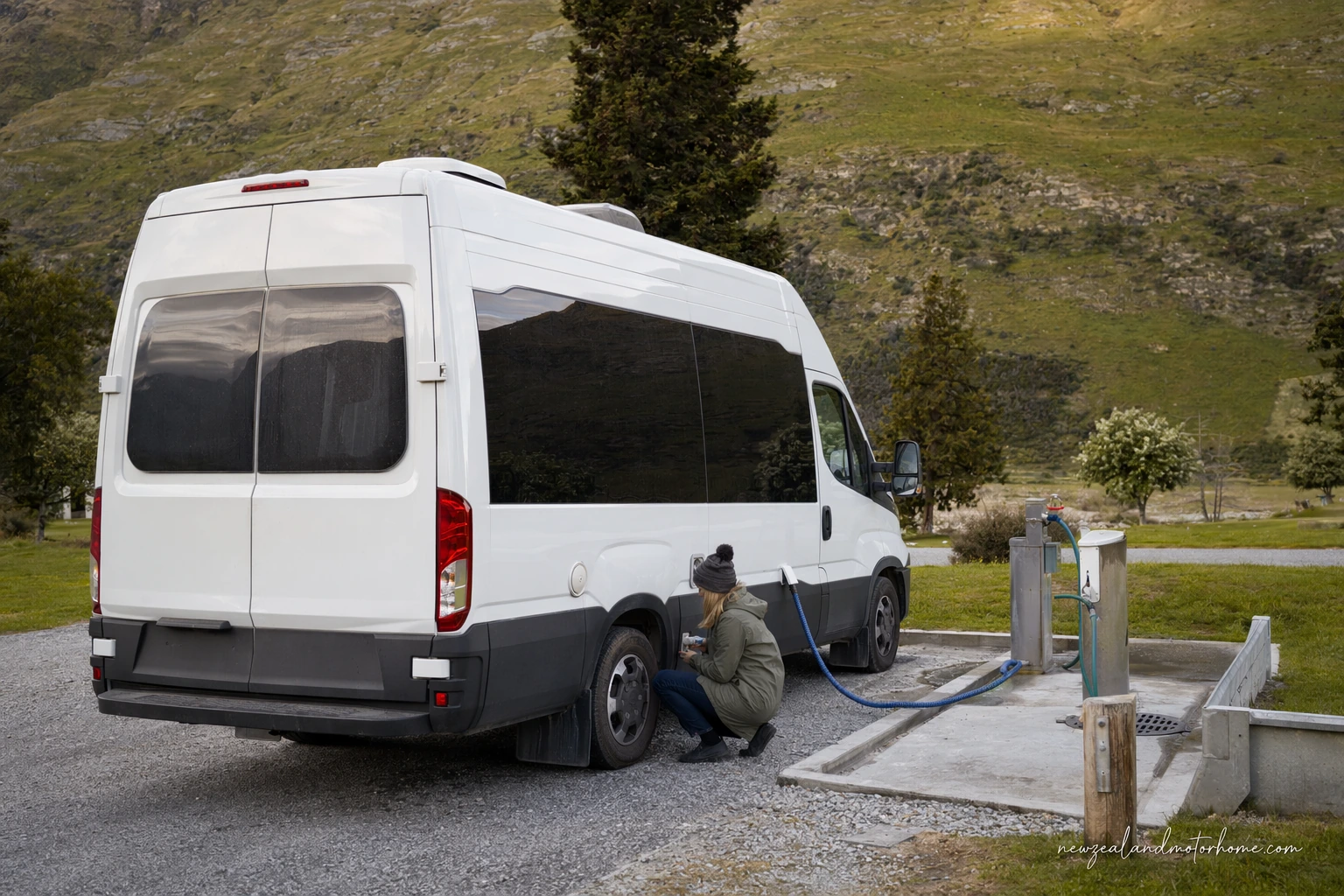
Even with a certified self-contained motorhome, holiday parks are useful on this peninsula because they solve several jobs at once: legal overnight parking, showers, rubbish disposal, laundry, fresh water and often a dump point. That matters when beach settlements are busy and when public toilets or casual parking areas are under pressure.
- Carry proof: your van’s self-containment certification should be current and visible where required.
- Do not assume: a seafront car park allows overnight stays just because other vans are there.
- Arrive before dark: small designated freedom camping areas can fill early in summer.
- Use parks to reset: a paid night every few days helps with water, waste, laundry and battery charging.
Dump stations, fresh water, LPG and food top-ups
Plan your services before driving into the smaller bays. Larger holiday parks often have fresh-water taps, rubbish areas and dump points for guests, while public dump stations are generally clustered around the main towns rather than every beach. Thames, Coromandel Town, Whitianga and the larger south-eastern settlements are the places to think about cassette emptying, grey-water disposal and a proper grocery top-up.
Not every park offers LPG bottle fills or swaps, and not every small settlement has the hours you expect, especially outside summer. If your hire campervan uses LPG for cooking, hot water or heating, top up before heading north or into a two-night beach stay. The same applies to drinking water: fill when you have a proper potable tap, not from a beach shower or random roadside hose.
- Before leaving Thames: check fuel, groceries, fresh water and toilet cassette capacity.
- Before remote northern roads: confirm LPG and fuel range, especially if you are heading beyond Coromandel Town.
- Before Hahei or Hot Water Beach: arrive with the fridge stocked so you can park the van and walk.
- Before departure day: use a legal dump station so you are not returning the hire van with full waste tanks.
Driving between Coromandel campsites in a motorhome
Distances on the map can be misleading. The western coastal road and the east-coast links have bends, short passing opportunities and places where a high or long motorhome needs a calmer pace. Let local traffic pass where safe, keep left, and avoid planning a tight check-in after a late Auckland departure.
State Highway 25 is the main loop road, and SH25A is the common cross-peninsula link between Kōpū and Hikuai. Some scenic side roads, including routes across the ranges or towards the far north, can be narrow, steep, gravel in places or restricted by rental agreements. If you are in a larger motorhome, stick to the main sealed routes unless you have checked both the road conditions and your hire terms.
- Large van note: take extra care on tight coastal corners and one-lane bridges; mirrors matter.
- Weather note: heavy rain can bring slips, surface flooding and temporary road closures on Coromandel hill roads.
- Arrival note: reach beach holiday parks in daylight so you can see site markers, trees and low branches.
- Parking note: if a beach car park looks full, do not squeeze a motorhome into unsafe edges; return later or walk from your park.
Common questions
Do I need to book holiday parks in the Coromandel ahead?
Yes for summer, long weekends and school holidays, especially if you need a powered site or have a larger motorhome. Outside peak periods you may find more flexibility, but popular beach bases like Hahei, Hot Water Beach and Whitianga can still book out around events and fine-weather weekends.
Can I freedom camp around the Coromandel in a certified self-contained van?
Sometimes, but only where the local council rules and on-site signs allow it. Many beachfront and reserve areas are restricted or prohibited, and designated spaces can be limited. Treat freedom camping as a backup for specific legal spots, not as a guaranteed nightly plan.
Which Coromandel base is best for a first campervan night after Auckland?
Thames is often the easiest first stop because it keeps the drive manageable and has practical services nearby. It is a good place to fill water, stock groceries, check fuel and settle into the van before taking on the narrower coastal roads.
Are Coromandel holiday parks suitable for large motorhomes?
Many are, but site access varies. Ask about site length, turning room, low trees, hardstand options and whether the approach road suits your vehicle. Beachfront lanes can be tighter than they look on a map.
Where should I plan to empty waste and refill fresh water?
Use holiday park facilities when you stay, and plan public dump station stops around larger towns such as Thames, Coromandel Town, Whitianga and the south-eastern settlements. Always use a legal dump point for toilet cassette and grey water, and only fill drinking water from a potable tap.
How many nights should I allow for a campervan loop of the Coromandel?
Three nights gives you a quick taste, but four to six nights feels better in a motorhome because the roads are slower and the beaches reward unhurried stops. Build in at least one two-night stay so you are not packing up the van every morning.
Have a planner shape this for your dates
Send a short outline — your dates, party size, and the kind of trip you want. A planner replies with a vehicle recommendation, a paced route, and the realistic budget.