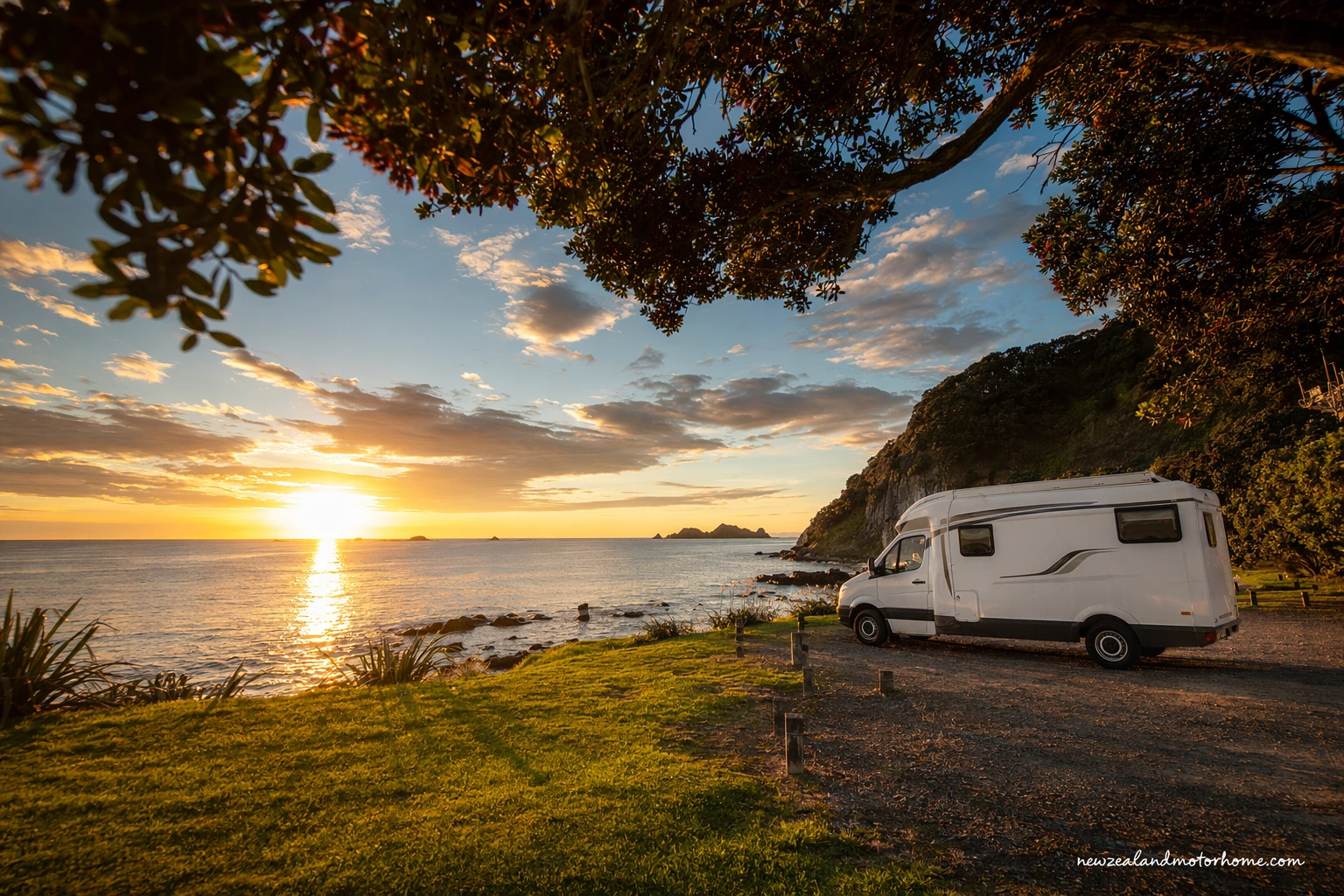
- Best months: March-April
- Also good: Oct-Nov
- Allow 4-6 days by van
- Book summer powered sites
- Certified self-contained only
The Coromandel is brilliant by campervan, but it changes sharply with the season. In January the same beach car park that feels sleepy at 8am can be full by lunch; in May you may have a headland lookout almost to yourself, with a powered site easy to find and room to open the van door without brushing the next awning.
For most self-drive motorhome travellers, the best time to visit Coromandel NZ is late February to April, then again from October to early December. You still get warm-enough beach days, more relaxed holiday-park availability, and easier driving on the narrow coastal roads than during the Christmas rush.
This guide covers Coromandel weather by month, when to visit Coromandel for beaches and walks, what is usually open, how freedom camping rules affect overnight stops, and the road and service details that matter when you are driving and sleeping in your hired van.
The short answer: late summer and autumn suit campervans best
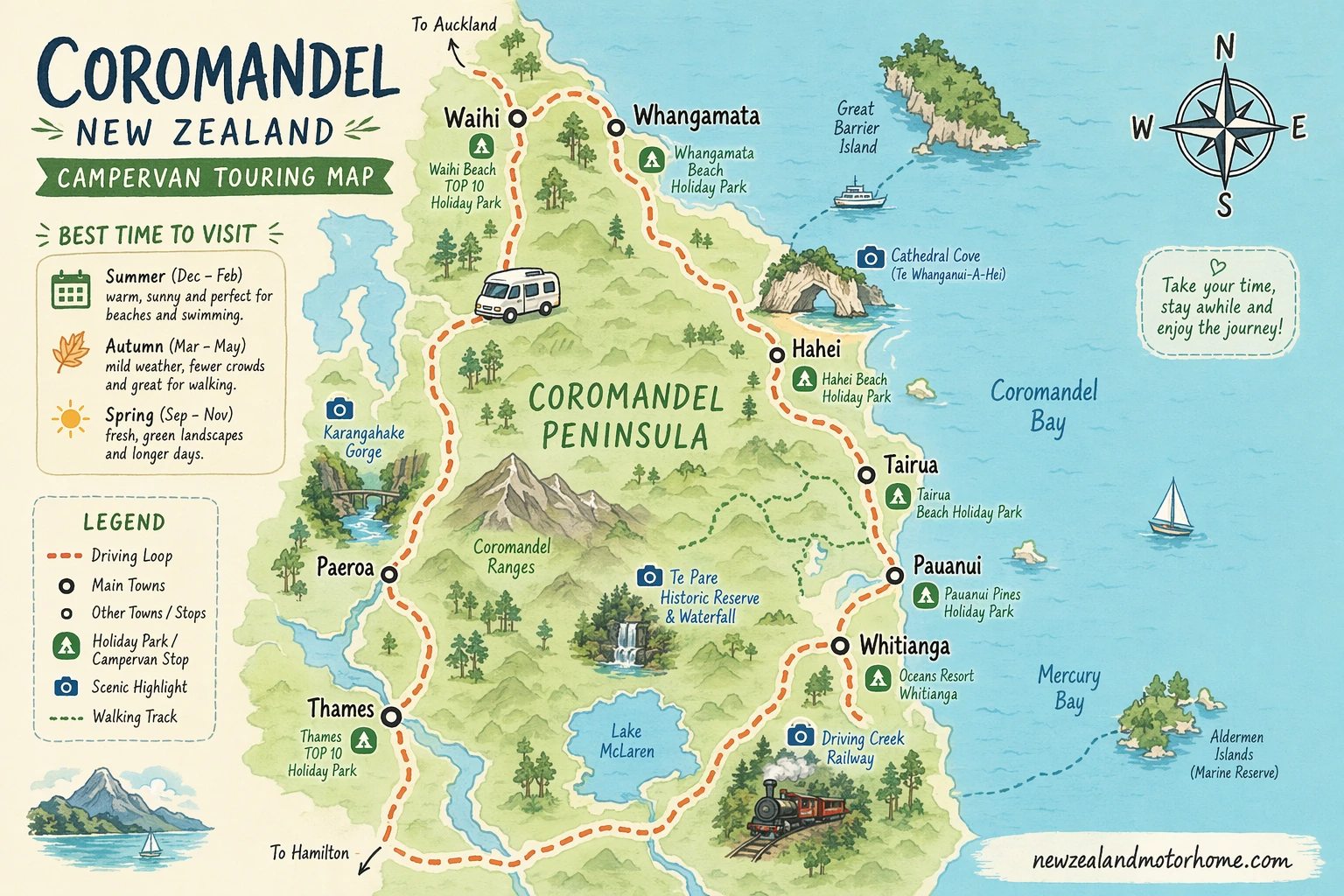
If you can choose your dates, aim for late February, March or April. The sea is still warm from summer, daylight is generous, and the big New Zealand school-holiday pressure has eased. It is a particularly good window if you want to base the van at Whitianga, Hahei, Tairua or Coromandel Town for two nights rather than moving every day.
October and November are the next-best months. You may get a few spring showers and cooler evenings, but roads and campgrounds are calmer, native bush is fresh, and popular van parking areas around Cathedral Cove, Hot Water Beach and the Thames coast are easier to deal with.
- Best all-round campervan months: March, April, October and November.
- Best beach-weather month with fewer crowds: February after the main holiday rush.
- Most crowded period: late December through January, especially near Hahei, Whitianga and beach settlements.
- Quietest touring months: June to August, though weather and daylight limit plans.
Coromandel weather by month for van travel
Coromandel weather by month is less about hard borders and more about patterns. Summer is warm, humid and busy; autumn is settled and pleasant; winter is mild but wetter; spring can swing between crisp blue days and sudden rain. Because the peninsula is hilly and exposed on both coasts, one side can feel completely different from the other on the same day.
For campervan travellers, weather affects more than the view. It changes whether you want a powered site for heating and charging, whether gravel access roads feel worth it, and how early you need to arrive at small beach car parks before turning the van around becomes awkward.
- December to February: warmest beach weather, longest daylight, high demand for powered and unpowered sites.
- March to May: often settled, good for walking, easier holiday-park availability outside Easter and long weekends.
- June to August: cooler nights, more rain, quieter roads, useful to book powered sites if you prefer heating.
- September to November: changeable spring weather, improving daylight, good for flexible itineraries.
Summer: great swimming, tight parking and booked-out sites
Summer is when the Coromandel looks like the postcards: pōhutukawa, kayaks, jandals and warm evenings outside the van. It is also when a long or high motorhome needs the most patience. Beach access roads, supermarket car parks and day-use areas can fill early, and some popular stops have limited manoeuvring room for larger vehicles.
If you travel from late December through January, book holiday parks well ahead, especially for powered sites near Hot Water Beach, Hahei, Whitianga, Whangamatā and Coromandel Town. Do not rely on finding a legal freedom camping space at the end of the day; local rules are strict, and many attractive beachfront reserves are not overnight options unless clearly signposted for certified self-contained vehicles.
- Arrive at beach car parks early, then leave the van parked and walk or use local shuttles where available.
- Keep fresh water topped up; queues at dump stations and water points can build during peak holiday weeks.
- Check your LPG level before heading to smaller northern settlements, where refill options may be limited or seasonal.
- Allow extra time on SH25, as traffic slows through townships and around one-lane bridges or tight coastal bends.
Autumn and spring: the sweet spot for a relaxed loop
Autumn is the season we would choose for a first Coromandel campervan loop. March and April often bring settled days, softer light and fewer people at the classic stops. You can take your time between Thames, Coromandel Town, Kūaotunu, Whitianga and the eastern beaches without feeling you have to win a race for the last space.
Spring is similar in crowd levels, though less predictable for weather. October and November work well if you like walks, hot pools, cafés and coast roads more than long swims. Powered sites are easier to secure than in midsummer, and you have more freedom to adjust your route if wind or rain makes one coast less inviting.
- Good overnight rhythm: two nights around Whitianga or Hahei, one near Coromandel Town, and one on the Thames or western coast side.
- Use powered sites after wet driving days to dry towels, charge devices and run heating without worrying about house-battery levels.
- Check seasonal opening hours for smaller food stops, activity operators and remote campgrounds before committing to a late arrival.
- If you want help matching your dates to site availability and driving time, you can talk to us before locking in the route.
Winter: quiet roads, moody coast and more weather planning
Winter is not a bad time to visit Coromandel by motorhome, but it suits travellers who are happy with a slower, weather-led trip. The peninsula is quieter, powered sites are usually easier to find, and the bush and harbours can be beautiful after rain. The trade-off is shorter daylight, cooler evenings and a higher chance of slips, surface water or road works after heavy weather.
Before taking a larger van onto remote northern roads towards places like Port Jackson or Fletcher Bay, check current road conditions and campground access. Some roads are narrow, winding and partly exposed, and they can feel very different in rain or strong wind. If your hire agreement restricts unsealed roads, follow that first.
- Plan shorter driving days so you are not arriving at a rural campground in the dark.
- Use holiday parks in Thames, Coromandel Town or Whitianga as practical bases for laundry, dump stations, fresh water and mains power.
- Keep an eye on wind warnings if your van is high-sided, especially on exposed coastal stretches.
- Carry a flexible food plan; smaller settlements may have reduced winter hours.
Freedom camping, holiday parks and services by season
The Coromandel has freedom camping opportunities, but it is not a place to wing it in any random beach car park. You need a certified self-contained vehicle, and you must follow the current council signage and maps for each district. In busy areas, legal overnight spaces can be limited, time-restricted or closed to camping, so plan a proper holiday-park or DOC-style campground backup.
Holiday parks are the easiest option if you want showers, laundry, dump stations, fresh water and a powered site. They are especially useful at the start or end of a Coromandel loop when you need to reset the van before heading towards Auckland, Tauranga or the Waikato. Unpowered sites are fine in settled weather, but in winter or after several cloudy days, power can make van life much easier.
- Peak summer: book well ahead and avoid arriving late without a confirmed overnight stop.
- Shoulder season: more room to choose between powered and unpowered sites, though weekends can still fill.
- Winter: check which campgrounds and facilities remain open before driving into more remote corners.
- Every season: empty wastewater only at approved dump stations and refill fresh water where it is clearly provided for campervans.
Common questions
What is the best month to visit Coromandel NZ in a campervan?
March is often the best single month for a campervan trip: warm water, settled weather and fewer peak-summer crowds. April is also excellent, especially if you prefer quieter campgrounds and easier van parking.
Is January too busy for a Coromandel motorhome trip?
January is workable, but you need to book holiday parks early and start day trips early. Expect busy beach car parks, slower roads and fewer legal freedom camping options available at short notice.
Can I freedom camp around the Coromandel?
Only where local rules allow it, and only in a certified self-contained campervan. Always check current council signage or maps, as many beachfront reserves and town car parks are day-use only or have strict limits.
Are Coromandel roads suitable for large motorhomes?
Main routes such as SH25 are commonly driven by motorhomes, but they are winding, narrow in places and slower than the map suggests. Take extra care with vehicle length and height on side roads, gravel access roads and small coastal parking areas.
Is winter worth it in a campervan?
Yes, if you like quiet roads, powered sites and a flexible plan. Build in weather days, check road conditions after heavy rain, and choose overnight stops with good facilities so the van stays comfortable.
Have a planner shape this for your dates
Send a short outline — your dates, party size, and the kind of trip you want. A planner replies with a vehicle recommendation, a paced route, and the realistic budget.