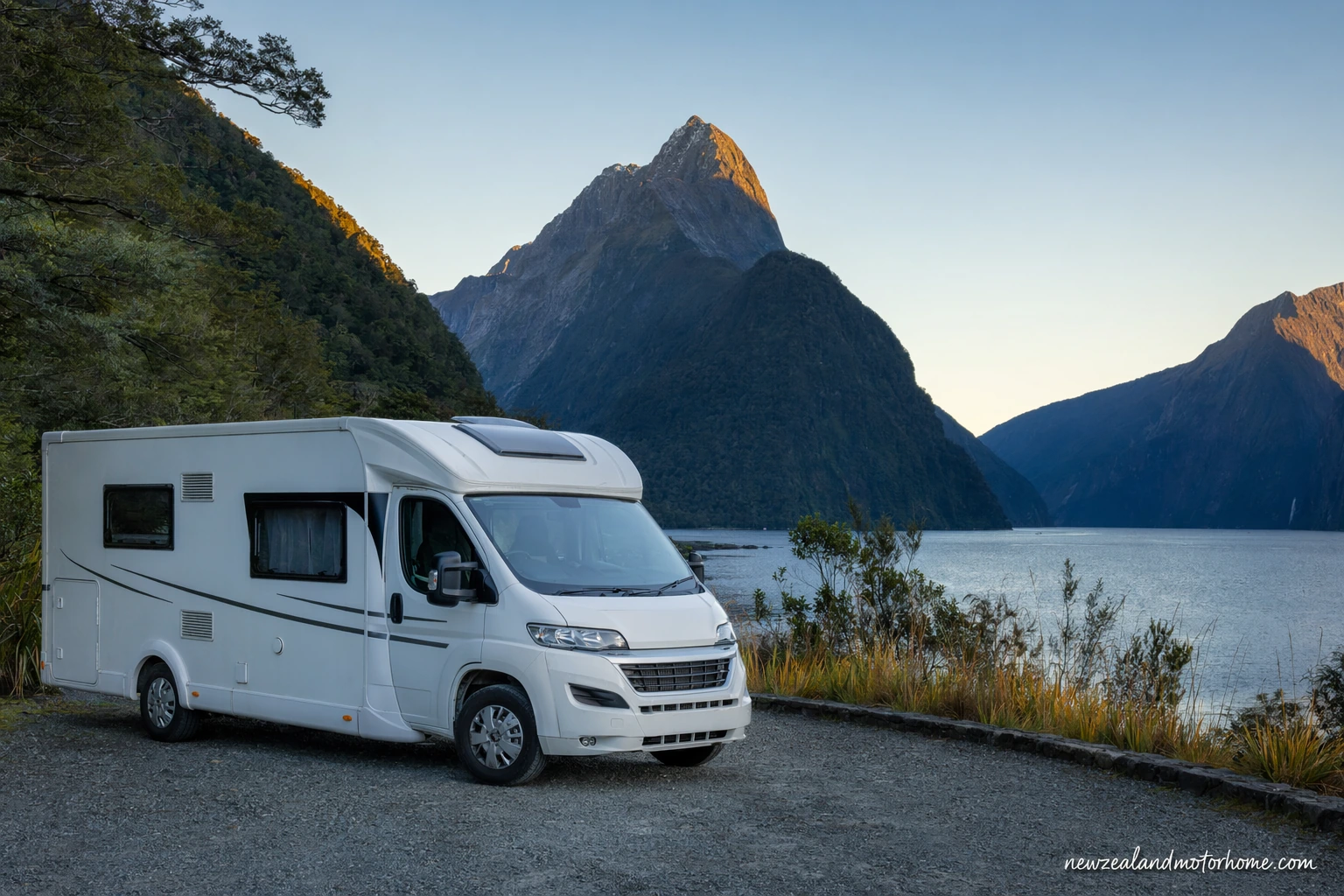
- Allow 2–4 days
- No fuel on Milford Road
- Self-contained rules apply
- Powered sites in Te Anau and Manapouri
- Large vans need alpine-road care
Fiordland rewards slow driving. In a campervan, the best stops are not just the famous viewpoints; they are the places where you can actually pull in safely, brew a cuppa out of the wind, fill fresh water, empty the toilet cassette, and choose a sensible overnight before the Milford Road gets narrow and alpine.
This guide is for self-drive travellers sleeping in their hired van. It covers the best campervan stops Fiordland offers around Te Anau, Manapouri, the Milford Road and Piopiotahi Milford Sound, with notes on where a motorhome fits, where to stay in a campervan in Fiordland, and how freedom camping in Fiordland really works on the ground.
Te Anau: the practical launch pad before the fiords
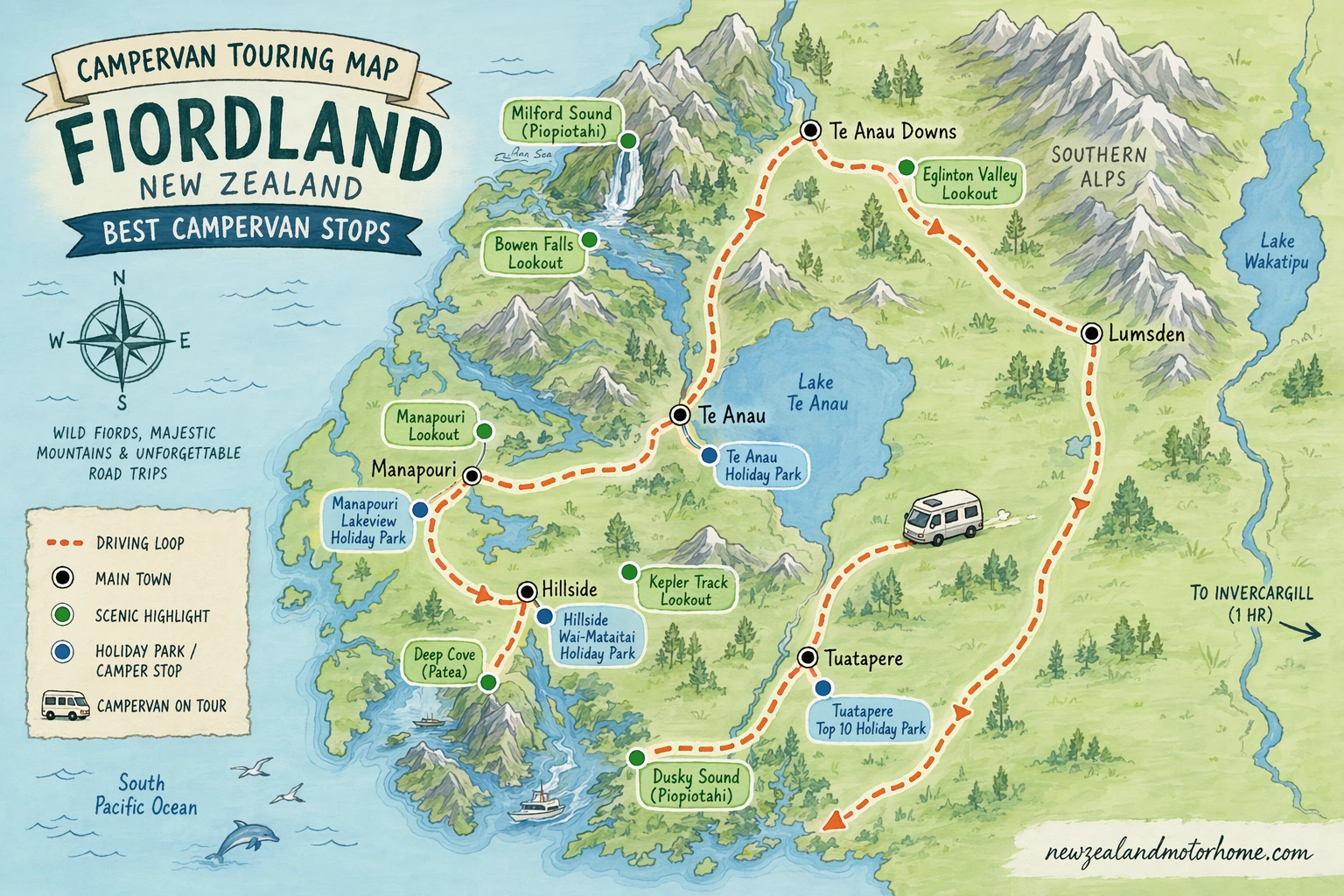
Te Anau is the place to get your van sorted before you point the bonnet towards Milford Sound. Treat it as more than a quick fuel stop: this is where you should top up groceries, check LPG, refill fresh water if your site allows it, and empty waste at an approved dump station before heading into country with fewer services.
For parking, the lakefront is the nicest leg-stretch, but be respectful of time limits and avoid blocking car spaces with a long rear overhang. Larger motorhomes are usually happier in the wider public parking areas a short walk back from the lake edge, especially when the cruise buses and day traffic are moving through town.
- Best for: first or last Fiordland night, groceries, fuel, dump station access and powered sites.
- Where the van fits: holiday parks and wider town parking areas; watch lakefront angle parks in a long vehicle.
- Overnight style: powered and unpowered holiday park sites, plus any designated self-contained areas only where current signs allow.
- Before leaving: fill the fuel tank; there is no fuel on the Milford Road or at Milford Sound for normal campervan planning.
Milford Road pull-ins that are worth slowing down for
The drive from Te Anau to Piopiotahi Milford Sound is the classic Fiordland campervan run, but it is not a road to rush. The best stops come in a sequence: open valley views, beech forest, mirror-still lakes, alpine walls, then the Homer Tunnel and the steep drop towards the fiord.
Eglinton Valley is one of the easiest scenic pull-ins for a motorhome, with broad views and space to step away from the traffic flow. Mirror Lakes is better treated as a short walk stop rather than a picnic stop; parking can fill quickly and longer vans need to tuck in neatly. Lake Gunn and the nearby nature walk suit travellers who want a forest break, while The Divide is a useful larger parking area for walkers and a good point to reassess weather before the alpine section.
- Eglinton Valley: wide, open roadside stopping; good for photos and a quick van check.
- Mirror Lakes: popular and tight at peak times; arrive early or keep moving if the bays are full.
- Lake Gunn: forest, lake views and DOC-style camping nearby; sandflies can be fierce.
- The Divide: larger car park, walking access and a sensible pause before higher road sections.
- Homer Tunnel area: alpine conditions, no casual lingering in signed no-stopping zones, and extra care with brakes on the descent.
DOC-style overnights and the truth about freedom camping
If you are searching for freedom camping Fiordland options, start with the reality: this is a protected, tightly managed place, and rules change by road, season and land manager. Do not assume a pretty lay-by is an overnight spot. Look for current signage, official camping information, and the requirements for certified self-contained vehicles.
Along the Milford Road, DOC campgrounds such as the larger forest and lakeside sites are the usual choice for van travellers who want an unpowered night between Te Anau and Milford Sound. They are scenic and simple rather than serviced: expect toilets, no powered hook-up, limited or no treated water, and no dump station. Arrive with your fresh tank filled, grey water capacity available, and toilet cassette empty.
- Best fit: compact campervans and mid-sized motorhomes; larger vans should check access roads, turning space and ground conditions before committing.
- Power: generally unpowered, so manage house battery use and heating expectations.
- Water and waste: do not rely on campground water; dump in Te Anau or another approved facility.
- Self-containment: carry proof of certification and only stay where overnight camping is explicitly permitted.
Piopiotahi Milford Sound: parking the van, then walking in
Milford Sound is a day-stop for most campervan travellers, and the key is to separate driving time from exploring time. The final stretch after the Homer Tunnel is steep, winding and spectacular, with drivers needing full attention rather than a rolling photo session. Use marked pull-ins only and avoid stopping in avalanche, rockfall or no-stopping zones.
At Piopiotahi, follow signs to visitor parking and allow time to walk from the parking area to the foreshore and cruise terminal. Longer motorhomes should look for spaces that allow a clean exit without reversing into busy pedestrian traffic. In peak season, arriving earlier in the morning or later in the afternoon can make the difference between a relaxed park and a slow circuit of full bays.
- Van services: do not expect fuel, supermarket supplies, LPG fills or a dump station at Milford Sound.
- Overnighting: use only designated accommodation or camping facilities; do not sleep in the visitor car park.
- Weather note: heavy rain is normal here, and waterfalls can appear everywhere; keep dry layers accessible, not buried under the bed platform.
- Driving note: use low gear on descents and give the brakes a rest where it is safe to pull off.
Manapouri and the quieter southern edge
Manapouri is a gentler stop if Te Anau feels busy. It is handy for Doubtful Sound departure days, lakefront wandering and a calmer powered-site night before or after the Milford Road. If you are deciding where to stay campervan Fiordland style, pairing a serviced night in Te Anau or Manapouri with an unpowered DOC night often works better than trying to free-camp your way through the whole region.
Parking around Lake Manapouri is more relaxed than Milford Sound, but still keep to marked areas and avoid soft verges after rain. Some side roads towards lakes, river mouths and forest edges can be narrow, gravelly or less forgiving for long wheelbase motorhomes, so read road signs and turn back early if the surface or turning room looks wrong.
- Best for: slower lake time, Doubtful Sound connections and a quieter serviced overnight.
- Van fit: standard campervans are easy; larger motorhomes should avoid tight lake access tracks unless signed and clearly suitable.
- Services: plan fresh water, rubbish and toilet dumping around recognised facilities rather than remote scenic stops.
- Road feel: fewer dramatic alpine pinch points than Milford Road, but more temptation to follow small side roads that may not suit a big van.
How to string the stops into a sensible campervan route
A comfortable Fiordland campervan loop is less about ticking off every viewpoint and more about keeping services, weather and driver fatigue in balance. For two nights, stay in Te Anau, drive part of the Milford Road with a DOC-style overnight if conditions suit, then continue to Milford Sound and return. For three or four nights, add Manapouri and give yourself a buffer day for rain, road delays or simply wanting to sit by the lake.
Try not to drive Te Anau to Milford Sound, do a cruise or long walk, and then push all the way out of Fiordland in the same day in winter or poor weather. The road is beautiful but demanding, and campervans handle differently when wet, loaded and descending. If you want help shaping the right overnight sequence for your van size and travel month, you can send your rough dates through the plan-your-trip step and we will sanity-check the route.
- 2 days: Te Anau services, selected Milford Road stops, Milford Sound day visit, return to Te Anau.
- 3 days: add an unpowered Milford Road campground night if you are self-contained and conditions suit.
- 4 days: include Manapouri or a weather buffer so the fiords are not rushed.
- Always: check current road conditions, avalanche advisories in season, and overnight camping rules before you leave mobile coverage.
Common questions
Can I freedom camp in Fiordland in a campervan?
Only in places where overnight camping is currently allowed, and usually only if your campervan is certified self-contained. Fiordland has sensitive public land, changing rules and strong enforcement, so do not treat scenic lay-bys as free camps. Use official signs, council information and DOC camping areas before settling in for the night.
Where should I stay in a campervan before driving to Milford Sound?
Te Anau is the most practical base because it has fuel, groceries, holiday parks, water and dump station access. Manapouri is quieter and works well if you also want Doubtful Sound or a calmer lakefront stop. Many travellers use a serviced night before an unpowered Milford Road campground night.
Is the Milford Road suitable for large motorhomes?
Yes, many large motorhomes drive it, but the road is alpine, steep in sections and busy around key stops. Use low gear on descents, pull over only in marked safe areas, and allow more time than the map suggests. In winter or during heavy rain, check conditions before leaving Te Anau.
Are there dump stations and fresh-water fills on the Milford Road?
Do not rely on van services along the Milford Road. Empty the toilet cassette and grey water at an approved dump station before you go, and fill fresh water in Te Anau or at your holiday park if permitted. DOC-style camps are scenic but usually not full-service motorhome stops.
Do I need powered sites in Fiordland?
You can mix powered and unpowered nights, but powered sites are useful after cold, wet days when batteries, heaters and drying gear get a workout. If your van has limited solar or you are travelling in winter, plan regular powered nights in Te Anau or Manapouri. Unpowered DOC camps are best when you arrive charged, watered and with waste tanks under control.
How many days should I allow for the best campervan stops in Fiordland?
Two days is the minimum for Te Anau, the Milford Road and Milford Sound without rushing too much. Three to four days is better for a DOC campground night, Manapouri, weather delays and slower roadside walks. Fiordland is one of those regions where an extra night often improves the whole drive.
Have a planner shape this for your dates
Send a short outline — your dates, party size, and the kind of trip you want. A planner replies with a vehicle recommendation, a paced route, and the realistic budget.